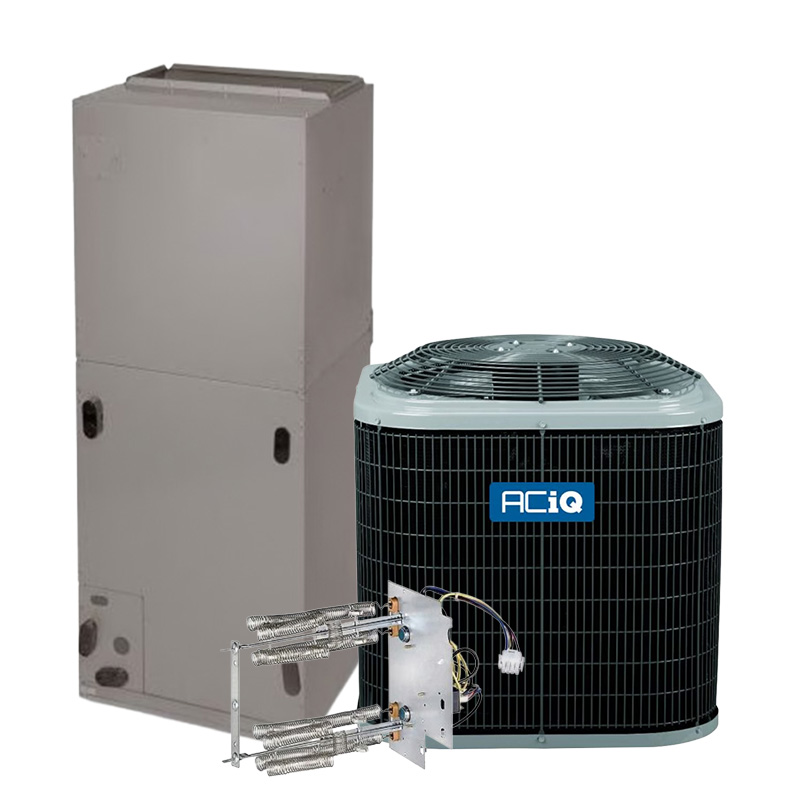
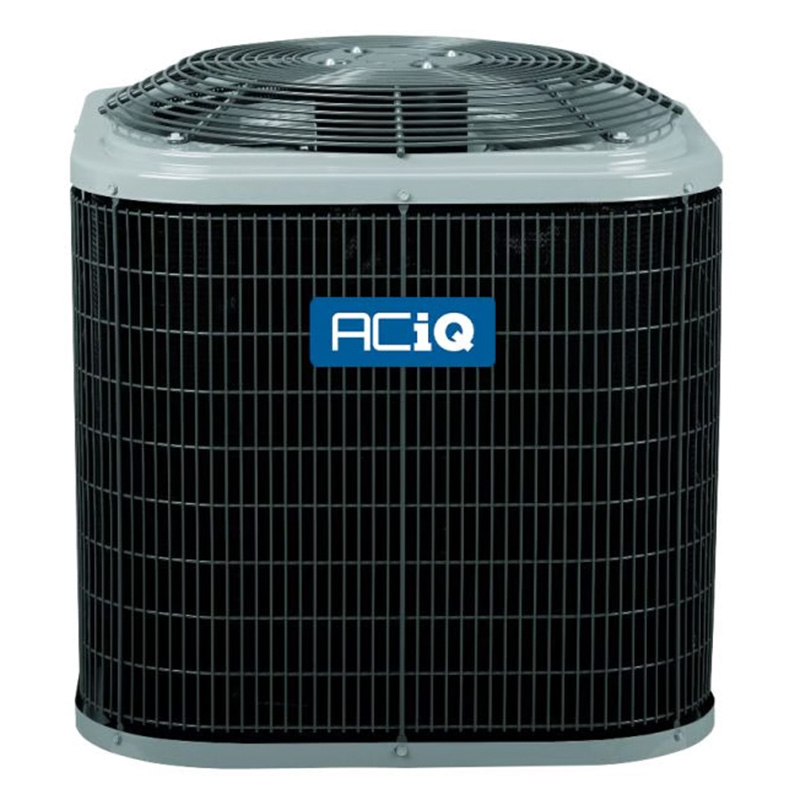
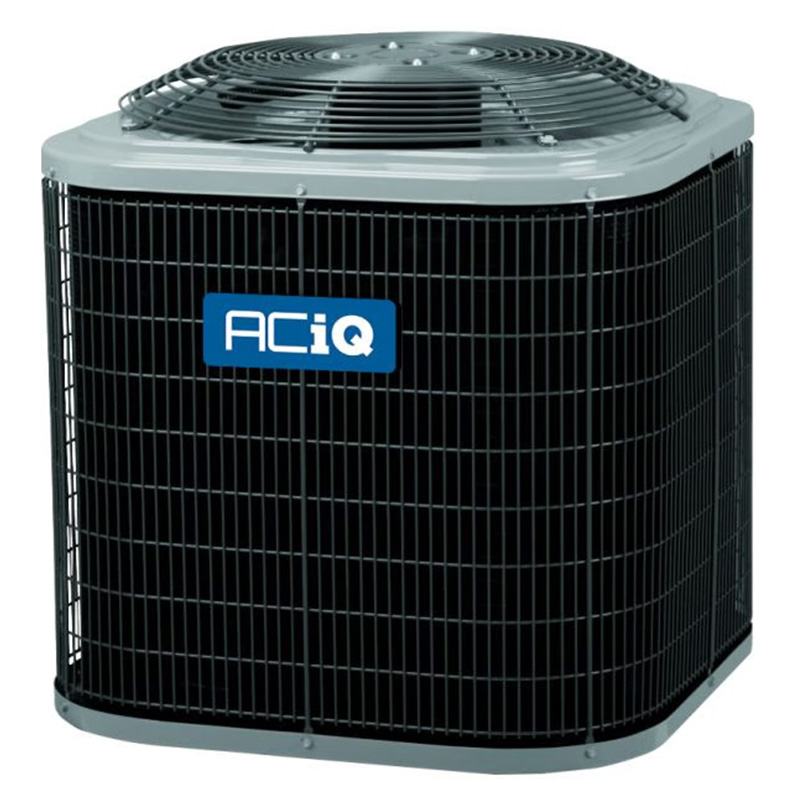
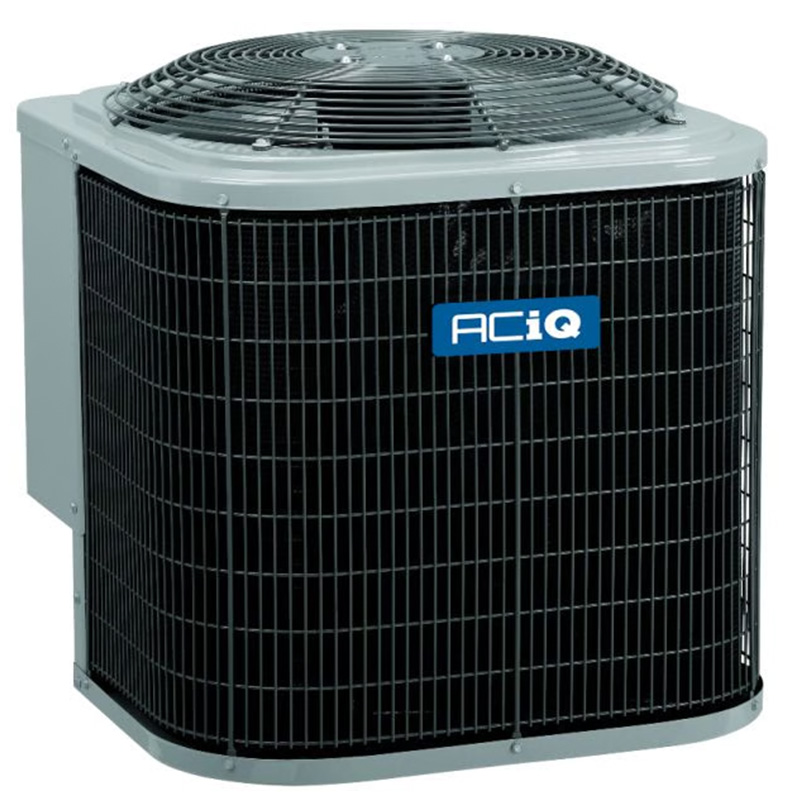
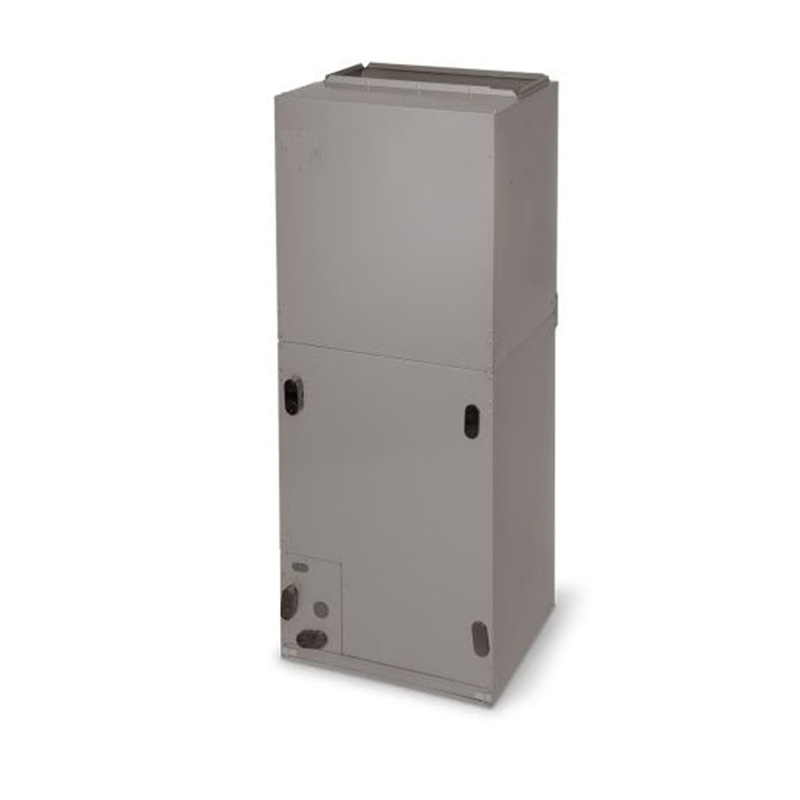
ACiQ 3.5 Ton Heat Pump AC System | 15 SEER2 AC | 21" Wide Variable Speed Multi-Positional Modular Air Handler | R454B
View on AC Direct see your lowest price →Check current price on AC Direct →
Key features
- 15 SEER2 efficiency rating meets current federal minimums with modest headroom above baseline
- Variable-speed air handler modulates airflow for quieter operation and improved humidity control
- 21-inch-wide cabinet fits tight closets, utility rooms, and manufactured-home installations
- R-454B refrigerant is EPA-compliant and ready for the ongoing R-410A phase-out
- Multi-positional installation supports upflow, downflow, and horizontal configurations
- 12-year parts warranty included at purchase price with no dealer markup required
About this system
The ACiQ 3.5-ton heat pump system pairs a 15 SEER2-rated outdoor condenser with a 21-inch-wide variable-speed multi-positional modular air handler, making it one of the more flexible ducted split options in this efficiency tier. The narrow 21-inch cabinet width is a genuine advantage in tight mechanical rooms, closets, and manufactured-home installations where a standard-width air handler simply will not fit. R-454B refrigerant replaces the older R-410A that is being phased out under EPA regulations, so this system is built to current and near-future refrigerant standards rather than requiring a future retrofit.
At 3.5 tons, this unit is sized for homes roughly in the 1,600-to-2,200 square-foot range depending on climate, insulation, and window load. The variable-speed air handler modulates airflow continuously rather than running at a fixed speed, which typically results in quieter operation, more even temperature distribution, and better humidity control compared with single-stage or two-stage equipment. The heat pump configuration handles both heating and cooling from one outdoor unit, which can lower operating costs versus a gas furnace plus AC combination in moderate climates. Buyers in very cold climates should confirm the unit’s low-ambient heating capacity and consider a supplemental heat strip for backup.
The ACiQ 3.5-ton 15 <a href="https://hvac.best/glossary/seer2/">SEER2</a> heat pump system delivers solid efficiency and genuine installation flexibility at a price that undercuts most name-brand equivalents by a meaningful margin. The variable-speed air handler and narrow cabinet are real practical advantages, not just marketing language. The honest caveat is that long-term reliability is still unproven, and the undisclosed manufacturer makes parts sourcing and service history harder to verify than with an established brand.
Overall score is the average of the five ratings above.
What we like
- Price undercuts Carrier, Trane, and Lennox equivalents at similar efficiency without sacrificing variable-speed technology
- 21-inch air handler width opens installation options in spaces where standard-width units will not fit
- Variable-speed motor provides noticeably quieter operation and steadier humidity control versus single-stage alternatives
- R-454B refrigerant keeps the system compliant with current regulations and avoids a near-term refrigerant retrofit
- 12-year parts warranty ships with the unit rather than requiring dealer registration or an upcharge
Trade-offs
- Long-term reliability is genuinely unknown: Consumer Reports has not yet ranked the brand and independent multi-year data is thin
- The actual manufacturer is not disclosed, which complicates cross-referencing parts availability and factory service bulletins
- No factory dealer network means service quality depends entirely on whichever independent contractor the homeowner locates
- 15 SEER2 is adequate but not high-efficiency, so buyers in hot climates with high runtime hours will see lower operating cost savings than a 17-plus SEER2 system would deliver
What homeowners and pros say about ACiQ
Homeowner feedback collected in the first few years of ACiQ’s market presence points consistently to three themes: the equipment runs quietly once installed, early performance matches the rated specs, and when buyers have had questions the direct-sales support team has been responsive. Those impressions are encouraging, but they come from a brand new enough that Consumer Reports has not yet accumulated the long-term data needed to assign a reliability score. That absence is not a red flag by itself, but it does mean a buyer is accepting more uncertainty than they would with a Carrier or Trane system that carries years of documented field history. Forum discussion about the likely manufacturer occasionally references the ICP and Carrier family of brands, which would imply shared components and manufacturing standards, but that connection remains unconfirmed and should not be treated as a verified fact when making a purchasing decision.
HVAC contractors who encounter ACiQ equipment in the field tend to note the same structural trade-off that shows up in owner forums: because the manufacturer is not disclosed and the brand sells direct rather than through distribution, cross-referencing parts and accessing factory service documentation is less straightforward than with a name-brand unit. The documented failure modes to watch for in early-generation inverter and variable-speed systems generally include capacitor degradation, refrigerant coil integrity over time, and compressor longevity under sustained high-load conditions. None of those failure modes have been documented as ACiQ-specific problems at this point, but they are the categories a service technician will evaluate at maintenance visits. The 12-year parts warranty provides a meaningful backstop if components do fail within that window, though labor costs remain the homeowner’s responsibility and finding a contractor familiar with the brand can take extra legwork.
Sources: Consumer Reports heat pump ratings, HVACDirect on the ACiQ brand, AHRI Directory of Certified Product Performance, U.S. DOE appliance and equipment efficiency standards.
What it costs to run
At 15 SEER2, cooling this 3.5-ton system for a typical 1200-hour cooling season at the U.S. average electricity rate of $0.17/kWh works out to roughly $571 per year in cooling, about $68 less per year than a minimum-efficiency 13.4 SEER2 unit of the same size. Your real cost depends on your climate and local rate.
Method: (42,000 BTU/hr ÷ 15 SEER2) × 1200 hours ÷ 1000 × $0.17/kWh. Rate source: U.S. EIA average; cooling hours: moderate-climate estimate.
How it compares
| Brand | Comparable model | SEER2 | Stage | Price position |
|---|---|---|---|---|
| ACiQ | 3.5-Ton 15 SEER2 Variable-Speed Heat Pump with Modular Air Handler | 15 | Variable | Value pick |
| Carrier | Performance 17 (25HCB6) | 17 | Two-stage | Notably higher than ACiQ |
| Trane | XR15 Heat Pump (4TWR5) | 15 | Single-stage | Moderately higher than ACiQ |
| Lennox | Merit ML15XP1 Heat Pump | 15 | Single-stage | Moderately higher than ACiQ |
Competitor rows are comparable single-stage units at similar efficiency; price is relative position, not a quote.
Questions about this system
Can I install this system myself, or do I need a licensed HVAC contractor?
You need a licensed HVAC technician for any system using R-454B refrigerant because EPA Section 608 requires certification to purchase and handle regulated refrigerants. Beyond the legal requirement, improper line set brazing, vacuum procedure, or refrigerant charge will void the warranty and can damage the compressor early in its life. Budget for professional installation costs when comparing this system against contractor-supplied alternatives.
Will any HVAC contractor service this system, or do I need an ACiQ-authorized technician?
ACiQ sells direct and does not maintain a factory dealer or service network, so you are responsible for finding a qualified independent contractor. Most licensed HVAC technicians can service the equipment, but because the actual manufacturer is not publicly disclosed, your technician may have difficulty cross-referencing service bulletins or sourcing OEM parts quickly compared with a brand that has a transparent supply chain.
Is 15 SEER2 enough efficiency, or should I spend more for a higher-rated system?
15 SEER2 meets the current federal minimum for most of the country and is a reasonable choice if upfront cost is the primary concern or if the system will see moderate annual runtime. In climates with long, hot summers and high cooling hours, the operating-cost gap between a 15 SEER2 and a 17-to-18 SEER2 system can meaningfully shorten the payback period on the more efficient option, so it is worth running a simple energy calculation for your location before deciding.
How does the 21-inch air handler width compare to standard units, and does the narrower cabinet affect performance?
Most residential air handlers are 17.5 to 21 inches wide at the standard size and can run wider at larger tonnages, so 21 inches at 3.5 tons is genuinely compact and useful in closets, alcoves, or manufactured-home furnace bays. The narrower profile does not inherently reduce capacity or efficiency as long as the unit is properly matched to the outdoor condenser, which it is in this factory-matched system.
What happens to my 12-year warranty if ACiQ or AC Direct changes ownership or exits the market?
This is a legitimate concern with any direct-to-consumer value brand. The warranty is backed by ACiQ and AC Direct as the selling entity, not a disclosed third-party insurer, so if the company were to exit the market the warranty claim process could become difficult. Buyers should weigh this against the price savings and consider whether an extended labor warranty purchased through a local contractor adds a layer of protection.
Specifications
| Cooling capacity | 3.5 Ton |
| Efficiency | 15 SEER2 |
| Refrigerant | R-454B |