ACiQ 3.5 Ton Package Unit AC With 90000 BTU 81% AFUE Gas Furnace | 13.4 SEER2 Downflow / Horizontal Airflow | R454B
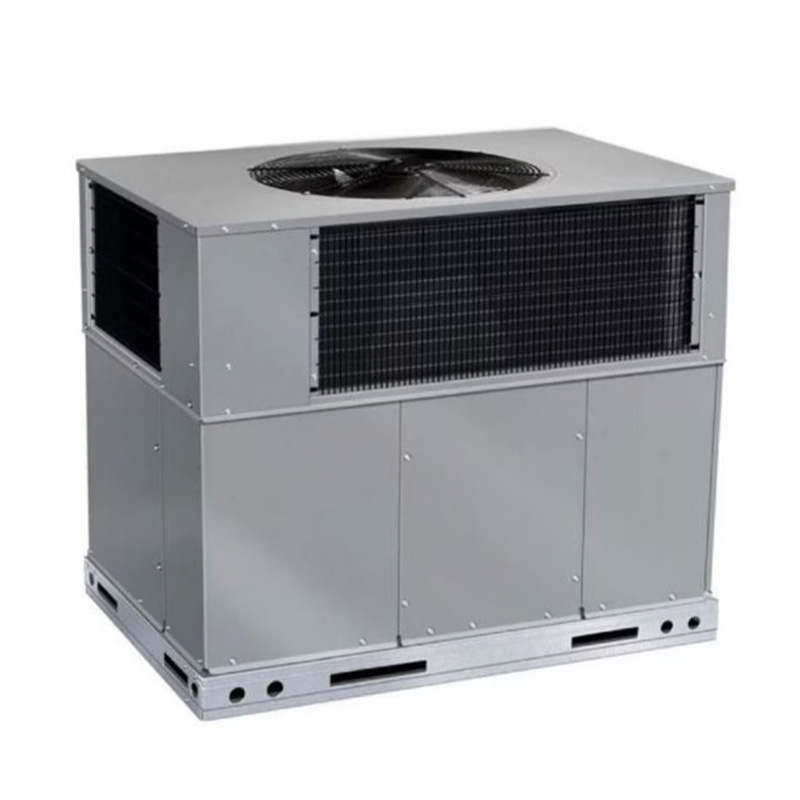
View on AC Direct see your lowest price →Check current price on AC Direct →
Key features
- 3.5-ton cooling capacity rated at 13.4 SEER2 for federal minimum compliance
- 90,000 BTU gas furnace section at 81% AFUE in a single outdoor cabinet
- Downflow and horizontal airflow configurations for slab, rooftop, or crawlspace installs
- R-454B refrigerant with lower global-warming potential than R-410A
- Sold factory-direct with no dealer markup and a 12-year parts warranty
- Single-cabinet all-in-one design eliminates the need for a separate indoor air handler or furnace
About this system
The ACiQ 3.5-ton packaged gas-electric unit combines a 13.4 SEER2-rated cooling system with a 90,000 BTU, 81% AFUE gas furnace in a single outdoor cabinet. That configuration makes it well suited to homes or light commercial spaces that lack indoor mechanical closets, including manufactured homes, slab-on-grade ranches, and buildings where ductwork runs through a crawlspace or attic from a rooftop or side-yard unit. The downflow and horizontal airflow options give installers flexibility in mounting orientation, which can reduce labor time and curb costs on a retrofit job.
At 13.4 SEER2, the cooling side clears the current federal minimum efficiency floor but sits at the lower end of the efficiency spectrum. Buyers looking to minimize summer utility bills will want to weigh the modest upfront savings against the higher operating cost versus 15 SEER2-plus alternatives. The 81% AFUE rating on the furnace section is similarly entry-level: about one in five BTUs of gas is exhausted rather than delivered to the living space. For climates with mild or moderate heating seasons, that trade-off is easier to accept. For colder regions with long winters, a higher-AFUE system will typically pay back the price difference over time. The unit uses R-454B refrigerant, a lower-global-warming-potential alternative to R-410A, which positions it for regulatory compliance well into the next decade.
This ACiQ packaged unit is a competitively priced option for homeowners who need an all-in-one gas-electric system and are not prioritizing top-tier efficiency. The 13.4 SEER2 and 81% AFUE ratings are honest entry-level numbers, and the value proposition rests almost entirely on the factory-direct price and 12-year warranty rather than on efficiency or verified long-term durability. It is a reasonable buy for the right application, but buyers should go in with clear eyes about what the specs deliver.
Overall score is the average of the five ratings above.
What we like
- Factory-direct pricing undercuts comparable name-brand packaged units by a meaningful margin
- 12-year parts warranty is longer than many competing units at this price tier
- R-454B refrigerant meets emerging low-GWP regulations and avoids near-term refrigerant obsolescence
- Combined gas-electric cabinet simplifies installation where no indoor mechanical space exists
- Early owner feedback points to quiet operation and responsive ACiQ customer support
Trade-offs
- 81% AFUE is among the lowest efficiency ratings available, increasing long-term heating costs versus 90%+ AFUE alternatives
- 13.4 SEER2 is at the federal minimum and will produce higher cooling utility bills than mid- or high-efficiency options
- Undisclosed manufacturer makes parts cross-referencing and long-term service history harder to verify
- No dealer network means warranty service depends on finding an independent contractor willing to work on the brand, which varies by region
What homeowners and pros say about ACiQ
Early owners of ACiQ packaged and split systems frequently mention that the equipment runs quieter than the older units it replaced and that ACiQ’s direct customer support team responds quickly to questions before and after the sale. Those are real points in the brand’s favor. At the same time, the brand is new enough that Consumer Reports has not yet accumulated sufficient data to assign it a reliability score, so the positive owner sentiment is based on a short ownership window rather than years of field performance. Forum communities have noted that because the actual manufacturer is not publicly named, tracking down cross-referenced parts or pulling service bulletins for a given failure mode is less straightforward than with a Carrier or Trane unit where the parts lineage is well documented.
On the specific failure modes worth watching, ACiQ is too new for a statistically established pattern, but the broader packaged unit category and the unverified manufacturer connection to the ICP and Carrier family of equipment means that the common packaged unit vulnerabilities, including capacitor degradation in high-heat climates, refrigerant coil leak susceptibility over time, and compressor longevity under heavy cycling loads, are the areas that future owners and independent reviewers will be watching most closely as the brand accumulates more years in the field. The lack of a dealer network is a structural factor, not a quality defect, but it does mean that finding a contractor already familiar with the unit for a mid-cycle repair is a real-world friction point that buyers in less-populated areas should factor in before purchase.
Sources: Consumer Reports heat pump ratings, HVACDirect on the ACiQ brand, AHRI Directory of Certified Product Performance, U.S. DOE appliance and equipment efficiency standards.
What it costs to run
At 13.4 SEER2, cooling this 3.5-ton system for a typical 1200-hour cooling season at the U.S. average electricity rate of $0.17/kWh works out to roughly $639 per year in cooling, about $0 less per year than a minimum-efficiency 13.4 SEER2 unit of the same size. Your real cost depends on your climate and local rate.
Method: (42,000 BTU/hr ÷ 13.4 SEER2) × 1200 hours ÷ 1000 × $0.17/kWh. Rate source: U.S. EIA average; cooling hours: moderate-climate estimate.
How it compares
| Brand | Comparable model | SEER2 | Stage | Price position |
|---|---|---|---|---|
| ACiQ | 3.5 Ton Gas-Electric Package Unit 13.4 SEER2 / 81% AFUE | 13.4 | Single-stage | Value pick |
| Carrier | WeatherMaster 50XC Series | 14.0-16.0 | Single-stage / two-stage | Noticeably higher than ACiQ |
| Trane | YCD/YCC Precedent Gas-Electric Package | 14.0-15.0 | Single-stage | Moderately higher than ACiQ |
| Lennox | LRP16GE Packaged Gas-Electric | 16.0 | Single-stage | Significantly higher than ACiQ |
Competitor rows are comparable single-stage units at similar efficiency; price is relative position, not a quote.
Questions about this system
Can this unit be installed on a rooftop as well as on a ground-level slab?
Yes. The downflow and horizontal airflow configurations support both rooftop curb mounts and ground-level slab installations, but you should confirm the specific orientation with your installer before ordering because the duct collar position differs between configurations. Always verify local code requirements for rooftop equipment.
Is 81% AFUE going to cost me noticeably more to heat my home compared to a 96% AFUE unit?
In a heating-heavy climate, yes, the difference is real. An 81% AFUE furnace loses roughly 19 cents of every dollar of gas to exhaust, while a 96% AFUE unit loses about 4 cents. Over a full heating season, that gap can add up to hundreds of dollars depending on your local gas rates and how many heating degree days your location sees. In mild climates with short winters the payback period for a higher-AFUE unit stretches out, making 81% more defensible.
If the unit needs a warranty repair, how do I find a technician who will work on an ACiQ system?
ACiQ sells direct and does not maintain a factory dealer network, so warranty service goes through independent HVAC contractors in your area. You will need to locate a licensed contractor willing to work on the brand, and coverage is honored by ACiQ directly rather than through a local dealer. Confirming contractor availability in your region before purchase is a practical step, especially in rural areas.
Why does this unit use R-454B instead of R-410A, and does that affect servicing costs?
R-454B is a lower-global-warming-potential refrigerant introduced in response to federal and international phase-down rules targeting high-GWP refrigerants like R-410A. Practically speaking, it requires tools and equipment certified for A2L refrigerants, and not every contractor in the field has updated their equipment yet. It is worth asking your installer whether they are equipped to handle R-454B before scheduling service.
Does ACiQ have enough of a track record that I should feel confident about long-term reliability?
That is the honest weak point of the brand right now. Early owner reviews are largely positive for quiet operation and initial performance, but Consumer Reports has not yet assigned ACiQ a reliability score because there is insufficient long-term data. The actual manufacturer is not publicly disclosed, which makes it harder to cross-reference against a known reliability history. If verified multi-year reliability data is a priority, an established name brand with a Consumer Reports track record is a lower-risk choice.
Specifications
| Cooling capacity | 3.5 Ton |
| Efficiency | 13.4 SEER2 |
| Furnace output | 90000 BTU |
| Furnace efficiency | 81% AFUE |
| Configuration | Downflow |
| Refrigerant | R-454B |