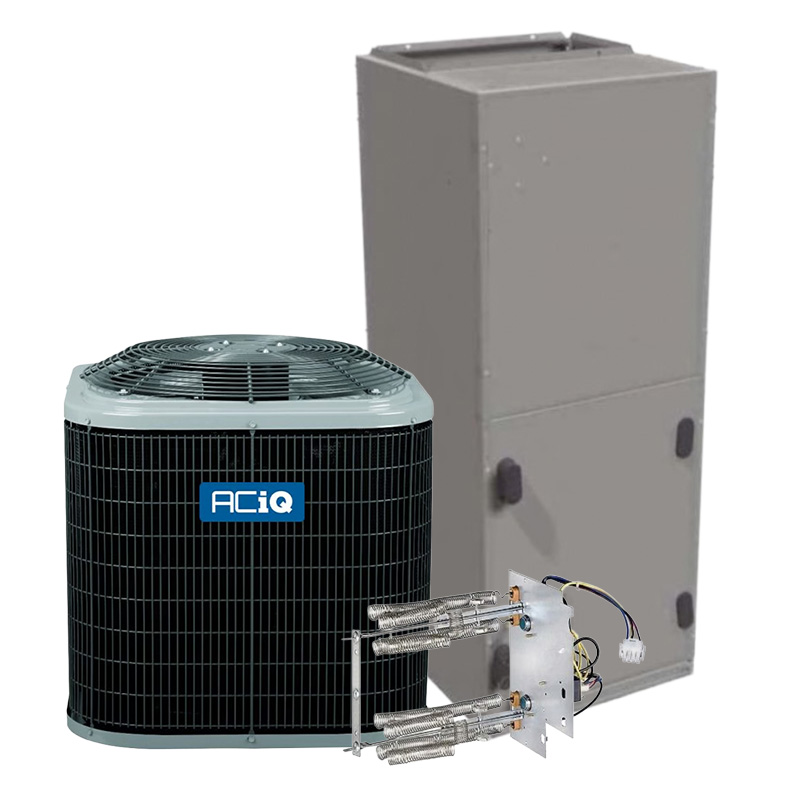
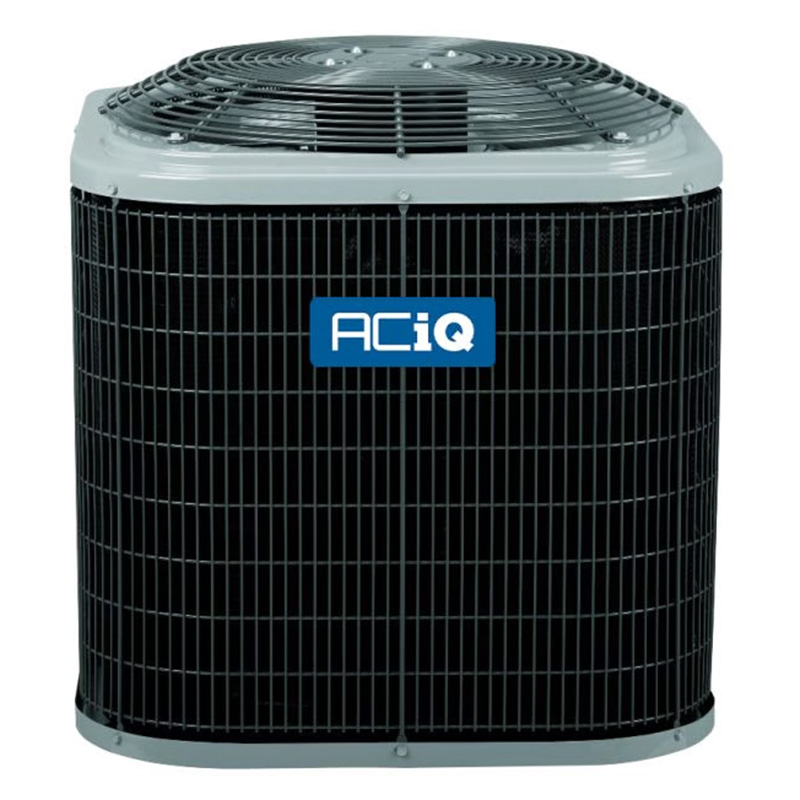
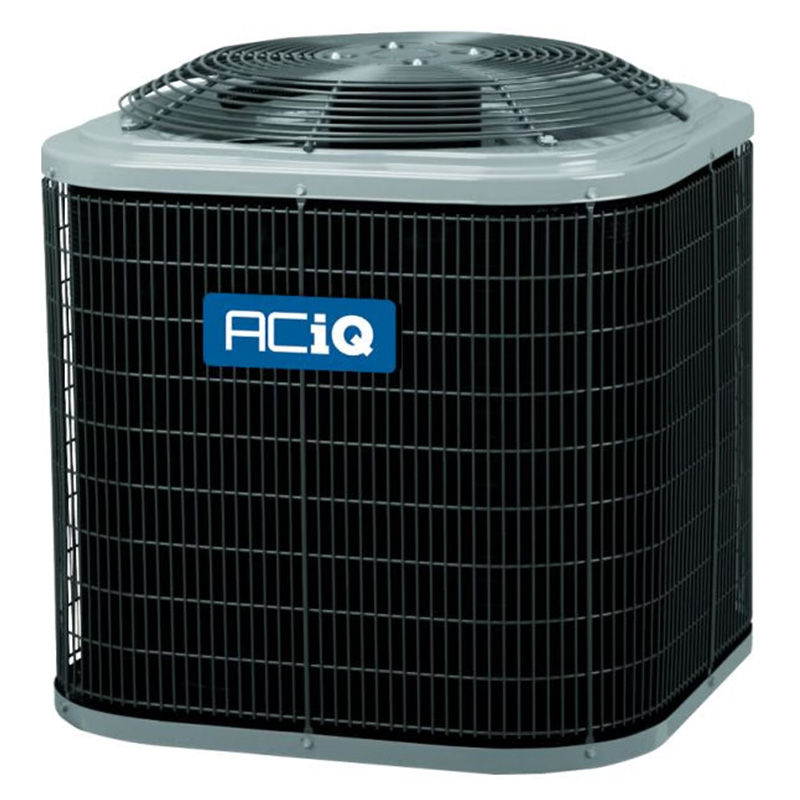
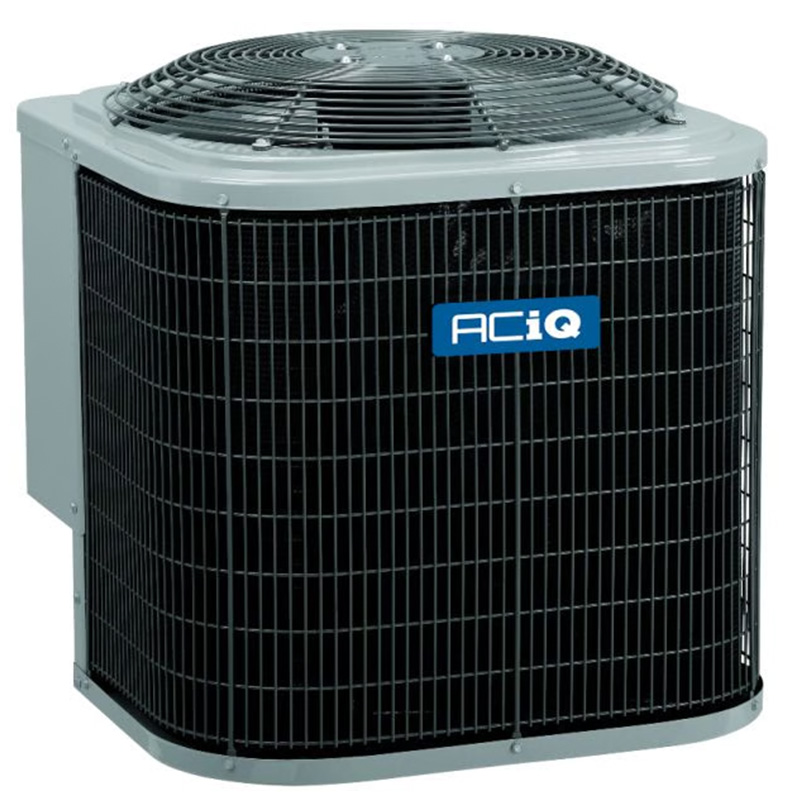
ACiQ 3 Ton Air Conditioning With Electric Heat System | 14.5 SEER2 AC | 17.5" Wide Multi-Positional Air Handler | R454B
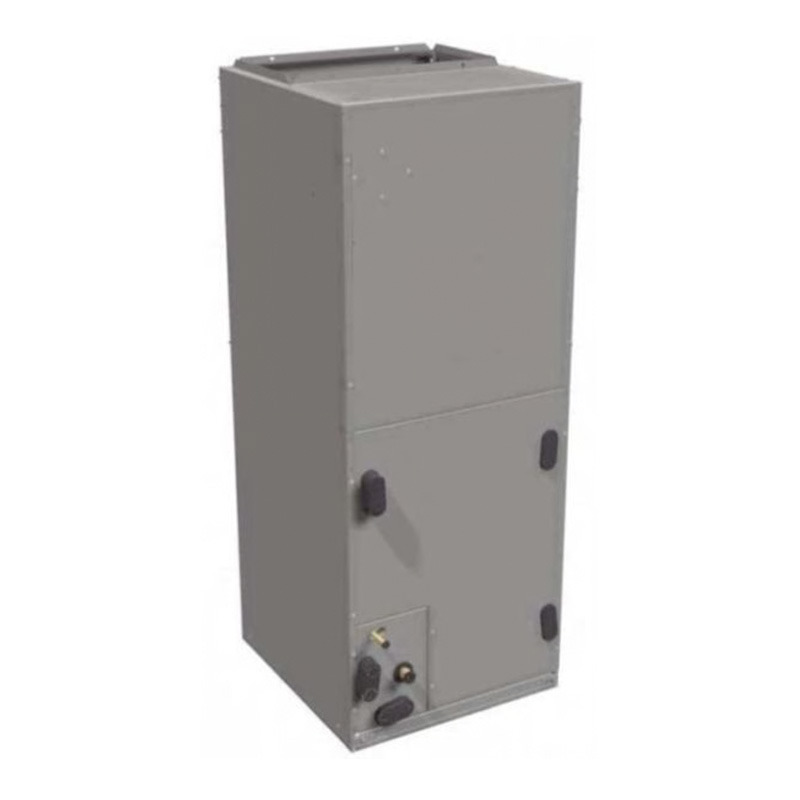
View on AC Direct see your lowest price →Check current price on AC Direct →
Key features
- 14.5 SEER2 cooling efficiency, meeting or exceeding 2023 federal minimums for most U.S. climate regions
- 17.5-inch wide multi-positional air handler fits upflow, downflow, and horizontal configurations for tight installations
- R-454B refrigerant: lower global-warming potential than R-410A, A2L mildly flammable classification
- Electric heat strips integrated into the air handler, eliminating the need for a separate gas furnace
- Sold factory-direct through AC Direct with no dealer markup applied to the unit price
- 12-year parts warranty included without dealer registration requirements
About this system
The ACiQ 3-Ton Air Conditioning with Electric Heat System pairs a 14.5 SEER2 condensing unit with a 17.5-inch wide multi-positional air handler that uses electric heat strips rather than a gas furnace. That narrow cabinet width matters: at 17.5 inches, this air handler fits closets, alcoves, and utility rooms that would reject a standard 21-inch unit, making it a practical choice for condos, townhomes, smaller ranch-style homes, and add-on spaces where footprint is a genuine constraint. The system is sized for approximately 1,400 to 1,800 square feet of well-insulated living space, depending on climate zone and local load calculations.
On the refrigerant side, R-454B is the low-GWP replacement for R-410A now required under updated EPA rules. It runs at similar pressures to R-410A, so most certified technicians can work with it without retooling, but it is mildly flammable (A2L classification), meaning some older or unventilated equipment rooms may need a quick safety review before installation. The 14.5 SEER2 rating lands just above the federal minimum for most U.S. regions, which keeps purchase price accessible without reaching the steeper cost of 17-plus SEER2 premium tiers. For homeowners who want a code-compliant, reasonably efficient replacement without paying for efficiency they will not fully recoup, this tier is a rational middle ground.
The ACiQ 3-ton electric heat system earns its place as a cost-conscious, code-compliant option for homeowners who need a slim-cabinet air handler and are not chasing top-tier efficiency. The 14.5 SEER2 rating and direct-sale pricing undercut most name-brand alternatives at this efficiency tier, and the 12-year warranty is genuinely competitive. The real trade-off is the brand's short track record and the added service complexity that comes with buying outside a traditional dealer network.
Overall score is the average of the five ratings above.
What we like
- 17.5-inch cabinet width opens installation options that standard-width units cannot match
- Factory-direct pricing removes dealer markup, typically placing it well below Carrier, Trane, and Lennox equivalents at the same SEER2 tier
- 12-year parts warranty is longer than the 5-to-10-year coverage common on many competing systems
- R-454B refrigerant is future-proofed against the ongoing phase-down of higher-GWP refrigerants
- Early owner feedback consistently points to quiet operation and responsive ACiQ customer support
Trade-offs
- Consumer Reports has not yet ranked ACiQ due to insufficient long-term reliability data, so independent verification of durability is still limited
- The actual manufacturing source is not disclosed, making parts cross-referencing and service history harder to verify than with a named-brand unit
- No proprietary dealer network means finding a contractor experienced specifically with ACiQ equipment takes more effort in some markets
- Electric heat strips are less efficient than a heat pump for heating-dominant climates, which can raise winter operating costs significantly compared to a heat pump split system
What homeowners and pros say about ACiQ
Homeowners who have purchased ACiQ systems report that quiet operation and solid cooling performance are the most common early positives, and ACiQ’s direct customer support line receives generally favorable marks in early Google dealer reviews. However, it is important to be clear-eyed about what is not yet known: Consumer Reports has not ranked ACiQ because the brand is too new to have generated the multi-year reliability data that rating requires. That absence is not a red flag, but it is a genuine information gap. Buyers who have come from established brands should understand they are accepting some uncertainty about long-term compressor lifespan and coil durability in exchange for a lower purchase price and a stronger warranty on paper.
On the contractor side, the two documented friction points are the undisclosed manufacturer and the lack of a factory service network. When a technician encounters an unfamiliar ACiQ unit, cross-referencing parts to a known manufacturer family is not straightforward, since the OEM source has not been confirmed despite forum speculation about an ICP or Carrier connection. That can slow down parts sourcing on an older or out-of-warranty repair. For this specific system, the electric heat configuration also means a technician needs to be comfortable with both the refrigerant circuit and the heat strip assembly. Neither issue is a dealbreaker, but homeowners should brief their chosen contractor on the brand before scheduling installation rather than assuming familiarity.
Sources: Consumer Reports heat pump ratings, HVACDirect on the ACiQ brand, AHRI Directory of Certified Product Performance, U.S. DOE appliance and equipment efficiency standards.
What it costs to run
At 14.5 SEER2, cooling this 3-ton system for a typical 1200-hour cooling season at the U.S. average electricity rate of $0.17/kWh works out to roughly $506 per year in cooling, about $42 less per year than a minimum-efficiency 13.4 SEER2 unit of the same size. Your real cost depends on your climate and local rate.
Method: (36,000 BTU/hr ÷ 14.5 SEER2) × 1200 hours ÷ 1000 × $0.17/kWh. Rate source: U.S. EIA average; cooling hours: moderate-climate estimate.
How it compares
| Brand | Comparable model | SEER2 | Stage | Price position |
|---|---|---|---|---|
| ACiQ | 3-Ton 14.5 SEER2 AC with Electric Heat / 17.5" Multi-Positional Air Handler | 14.5 | Single-stage | Value pick |
| Carrier | Comfort 24ACC636A003 with FB4C Air Handler | 14.5 | Single-stage | Moderately higher through dealer installation |
| Trane | XR14c with Air Handler (TAM series) | 14.5 | Single-stage | Moderately to significantly higher through dealer installation |
| Lennox | Merit ML14XC1 with CBX25UH Air Handler | 14.5 | Single-stage | Moderately higher through dealer installation |
Competitor rows are comparable single-stage units at similar efficiency; price is relative position, not a quote.
Questions about this system
Can I install this system myself, or do I need a licensed HVAC contractor?
A licensed HVAC technician is required to handle R-454B refrigerant under EPA Section 608 rules, and most local codes require permitted installation for any central HVAC system. Because R-454B is an A2L mildly flammable refrigerant, the technician should also confirm that the installation space meets any applicable ventilation guidelines before commissioning the system.
Why is the air handler only 17.5 inches wide, and does that limit airflow or capacity?
The 17.5-inch width is a design choice to fit closet and alcove installations that cannot accommodate a standard 21-inch cabinet. At 3 tons, the unit is engineered to move the required airflow through that narrower profile, but proper duct sizing is still critical. Have your contractor verify that existing ductwork can deliver adequate static pressure for the system to perform at rated capacity.
How does R-454B differ from R-410A, and will my existing contractor be able to work on it?
R-454B has a lower global-warming potential than R-410A and operates at similar pressures, so most EPA-certified technicians can handle it with minimal adjustment. The key difference is its A2L mild flammability rating, which requires using R-454B-rated tools and observing basic safety precautions. Most contractors working on new equipment in 2024 and beyond will already be familiar with it.
If I need warranty service, how does that work when ACiQ does not have its own dealer network?
ACiQ warranty claims are handled through independent licensed HVAC contractors, and ACiQ's support team can help coordinate service. The practical implication is that you are responsible for finding a qualified local technician rather than calling a branded dealer, which can slow down service in areas where contractors are less familiar with ACiQ equipment. Keeping your installation paperwork and model information accessible will speed up any warranty interaction.
Is a 3-ton unit with electric heat strips the right choice for my home if I also need winter heating?
Electric resistance heat strips are straightforward and reliable, but they operate at roughly 100 percent efficiency, while a heat pump can deliver 200 to 300 percent or more in heating output per unit of electricity consumed. If your winters are mild and heating is a secondary concern, this system is a reasonable choice. If your home relies heavily on electric heat through a cold season, running costs will be substantially higher than with a heat pump system of similar cooling capacity.
Specifications
| Cooling capacity | 3 Ton |
| Efficiency | 14.5 SEER2 |
| Refrigerant | R-454B |