ACiQ 3 Ton Heat Pump AC Condenser | 16.1 SEER2 High Efficiency Inverter R454B (ACIQ-36-EHPD)
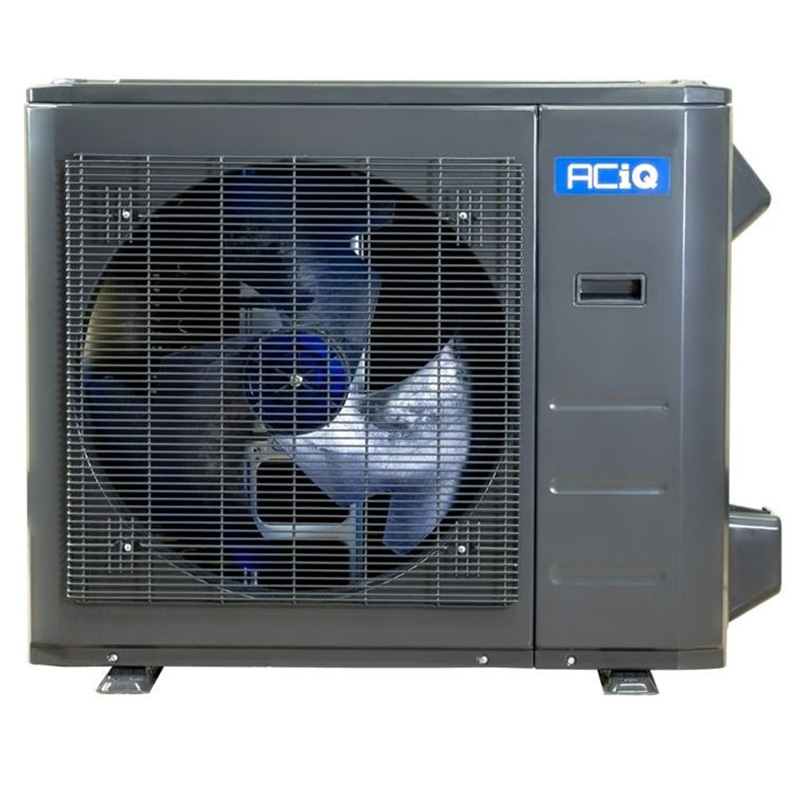
View on AC Direct see your lowest price →Check current price on AC Direct →
Key features
- 16.1 SEER2 inverter-driven variable-speed compressor for modulated capacity
- R-454B low-GWP refrigerant, compliant with the ongoing industry phase-out of R-410A
- 3-ton (36,000 BTU nominal) capacity suited to medium-sized conditioned spaces
- 12-year parts and compressor warranty included, no dealer registration required
- Sold factory-direct through AC Direct, eliminating dealer markup from the price
- Variable-speed operation supports quieter running and improved dehumidification vs. single-stage units
About this system
The ACiQ 3-Ton 16.1 SEER2 Inverter Heat Pump Condenser (ACIQ-36-EHPD) is a variable-speed, R-454B refrigerant unit designed for homeowners who want above-baseline efficiency without paying the premium that established brand names command. At 3 tons, it is sized for roughly 1,400 to 1,800 square feet of well-insulated space, though your actual load calculation will determine fit. The 16.1 SEER2 rating clears the federal minimum for most U.S. climate regions and puts it in a genuine mid-high efficiency tier, meaning real-world energy bills should be meaningfully lower than a standard 14 SEER2 single-stage unit, though it stops short of the 18-plus SEER2 class where premium inverter systems operate.
The switch to R-454B refrigerant is worth noting: this low-global-warming-potential refrigerant is where the industry is heading as R-410A is phased out, so the unit is future-proofed from a refrigerant standpoint. The inverter-driven compressor modulates capacity rather than cycling on and off at full blast, which supports quieter operation, more consistent indoor temperatures, and better humidity control compared to single-stage equipment. ACiQ is AC Direct’s house brand, and while the actual manufacturing source is not publicly confirmed, forum research points toward the ICP and Carrier family of factories, though that remains unverified. What is confirmed is that you are buying direct without a dealer markup, and the 12-year warranty ships with the unit rather than requiring dealer registration to unlock.
The ACIQ-36-EHPD offers genuine mid-high efficiency inverter technology at a price point that undercuts most name brands by a noticeable margin, making it a credible option for budget-conscious buyers who are comfortable with a newer brand. The 12-year warranty and R-454B refrigerant are real strengths, but the lack of a dealer network and limited long-term reliability data are honest trade-offs that buyers should weigh before purchasing.
Overall score is the average of the five ratings above.
What we like
- 16.1 SEER2 inverter performance at a price typically associated with lower-efficiency single-stage equipment
- R-454B refrigerant future-proofs the system against ongoing R-410A phase-out costs
- 12-year warranty ships with the unit without requiring a dealer to register or activate it
- Variable-speed compressor delivers quieter operation and steadier indoor temperatures than single-stage competitors
- Factory-direct pricing removes the distributor and dealer markup layers from the purchase
Trade-offs
- Consumer Reports has not yet ranked ACiQ due to insufficient long-term field data, so reliability comparisons to Carrier or Trane are not yet possible on equal terms
- The undisclosed manufacturer makes cross-referencing parts, service bulletins, and technician familiarity harder than with a named-brand unit
- No proprietary dealer network means installation and warranty service depend entirely on independent contractors, who may be unfamiliar with the brand
- Being a newer brand, resale value and appraiser recognition when selling a home may lag behind established names
What homeowners and pros say about ACiQ
Early owner feedback on ACiQ equipment, including units in the inverter heat pump line, clusters around three themes: quieter-than-expected operation once running, performance that matches or exceeds what was advertised, and responsive customer support from AC Direct when questions arise. These accounts are encouraging, but it is important to state plainly that Consumer Reports has not yet ranked ACiQ because there is not enough long-term field data to generate a statistically meaningful reliability score. That is not a red flag on its own, it is simply a fact about a newer brand, and buyers should weigh it accordingly rather than treating early positive reviews as equivalent to a decade of tracked performance data.
On the contractor side, the two friction points that come up consistently are the undisclosed manufacturer and the R-454B refrigerant. Technicians who encounter an ACiQ unit for the first time sometimes have difficulty cross-referencing parts or service bulletins because there is no publicly named factory to reference. The specific failure modes worth watching as the brand matures are the ones common to inverter equipment broadly: capacitor degradation under high-cycle conditions, refrigerant coil integrity over time, and long-term compressor lifespan under variable-load operation. None of these are documented as ACiQ-specific problems yet, but they are the categories where longer field data will eventually tell a clearer story. For buyers who prioritize price and are comfortable with some uncertainty, the value proposition is real. For buyers who want the reassurance of a deep service network and ranked reliability data, the established brands remain the lower-risk option.
Sources: Consumer Reports heat pump ratings, HVACDirect on the ACiQ brand, AHRI Directory of Certified Product Performance, U.S. DOE appliance and equipment efficiency standards.
What it costs to run
At 16.1 SEER2, cooling this 3-ton system for a typical 1200-hour cooling season at the U.S. average electricity rate of $0.17/kWh works out to roughly $456 per year in cooling, about $92 less per year than a minimum-efficiency 13.4 SEER2 unit of the same size. Your real cost depends on your climate and local rate.
Method: (36,000 BTU/hr ÷ 16.1 SEER2) × 1200 hours ÷ 1000 × $0.17/kWh. Rate source: U.S. EIA average; cooling hours: moderate-climate estimate.
How it compares
| Brand | Comparable model | SEER2 | Stage | Price position |
|---|---|---|---|---|
| ACiQ | ACIQ-36-EHPD | 16.1 | Variable | Value pick |
| Carrier | Performance 17 Heat Pump (25HPB6) | 17.0 | Variable | Moderately higher, with dealer network and full brand recognition |
| Trane | XR17 Heat Pump | 17.0 | Two-stage | Moderately higher, backed by extensive dealer and service network |
| Lennox | Merit ML17XP1 Heat Pump | 17.0 | Single-stage | Comparable to or slightly above ACiQ, with established reliability data |
Competitor rows are comparable single-stage units at similar efficiency; price is relative position, not a quote.
Questions about this system
Can any licensed HVAC contractor install this unit, or do I need a certified ACiQ dealer?
Any licensed HVAC contractor who is EPA 608 certified and experienced with inverter heat pumps can install this system. ACiQ does not operate a proprietary dealer network, so you are responsible for sourcing your own installer. It is worth confirming upfront that your chosen contractor is comfortable working with inverter-driven equipment and R-454B refrigerant, as not all technicians have hands-on experience with the newer refrigerant yet.
Does the 12-year warranty require professional installation or dealer registration to be valid?
The 12-year warranty ships with the unit and does not require a dealer to register it, which is one of ACiQ's genuine selling points. You should still read the warranty documentation carefully for conditions around licensed installation and proper refrigerant handling, as those requirements are standard across the industry and are likely to apply here as well.
Who actually makes this unit, and will my HVAC technician be able to find parts?
ACiQ is AC Direct's house brand and the manufacturing source is not publicly disclosed. Forum research points toward the ICP and Carrier family of factories, but that is unconfirmed. The uncertainty around parts sourcing and technician familiarity is a real trade-off: if a repair is needed, your contractor may have a harder time cross-referencing components than they would with a unit from a publicly named manufacturer.
Is 16.1 SEER2 meaningfully more efficient than the minimum required, and will it lower my electric bill?
The current federal minimum for most U.S. climate regions is 14 SEER2 or 15 SEER2 depending on location, so 16.1 SEER2 is a real step above the floor. Combined with inverter-driven modulation, you should see lower operating costs compared to a minimum-efficiency single-stage unit, particularly in climates with long cooling seasons or where the system runs at partial load frequently. The savings gap versus a 14 SEER2 unit is genuine but not dramatic; payback period depends on your local utility rates and run hours.
Why does this unit use R-454B instead of R-410A, and does that affect service costs?
R-454B is a lower-global-warming-potential refrigerant that the industry is transitioning to as the EPA phases out R-410A production and imports. Using R-454B now means you are unlikely to face the kind of refrigerant availability and cost issues that owners of older R-22 and R-410A systems encountered during phase-down periods. The practical consideration today is confirming that your installing contractor has the equipment and certification required to handle R-454B, as not all technicians have updated their recovery and charging tools yet.
Specifications
| Cooling capacity | 3 Ton |
| Efficiency | 16.1 SEER2 |
| Refrigerant | R-454B |