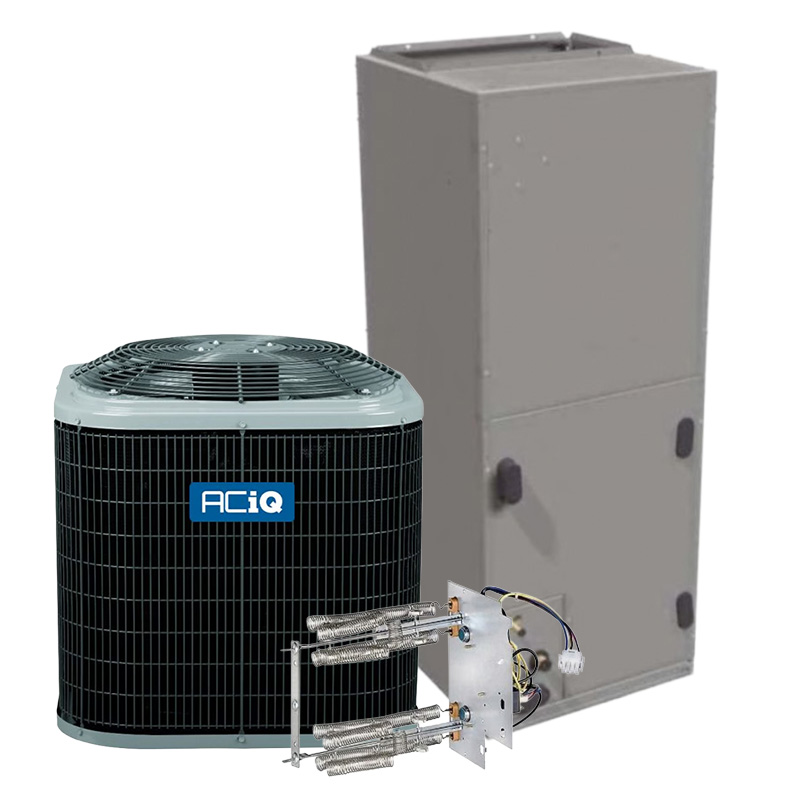
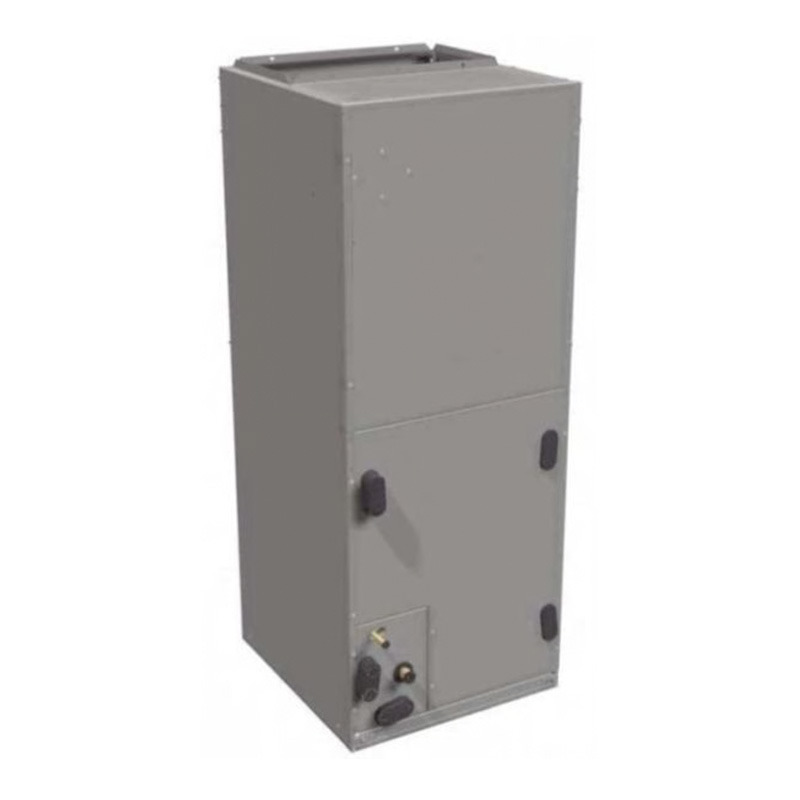
ACiQ 3 Ton Heat Pump AC System | 15.2 SEER2 AC | 21" Wide Multi-Positional Air Handler | R454B
View on AC Direct see your lowest price →Check current price on AC Direct →
Key features
- 15.2 SEER2 efficiency rating meets current federal minimums with a small margin
- 3-ton capacity suited to approximately 1,500 to 2,100 sq ft depending on load
- 21-inch wide multi-positional air handler fits attic, closet, or basement installs
- R-454B refrigerant complies with low-GWP regulatory direction replacing R-410A
- Sold factory-direct with no dealer markup and a 12-year parts warranty included
- Designed for ducted split-system installation with standard line set compatibility
About this system
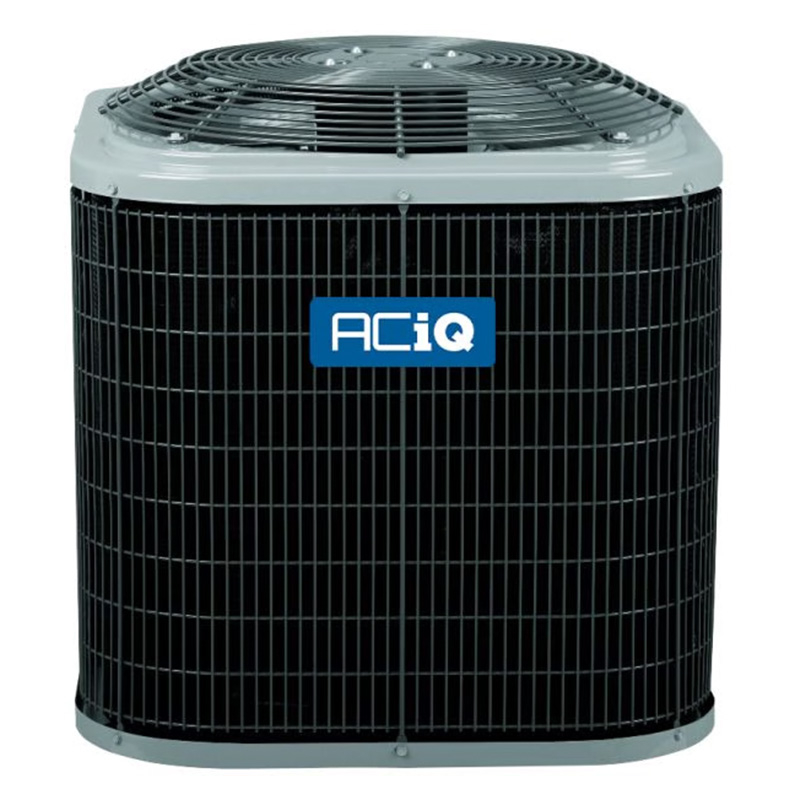
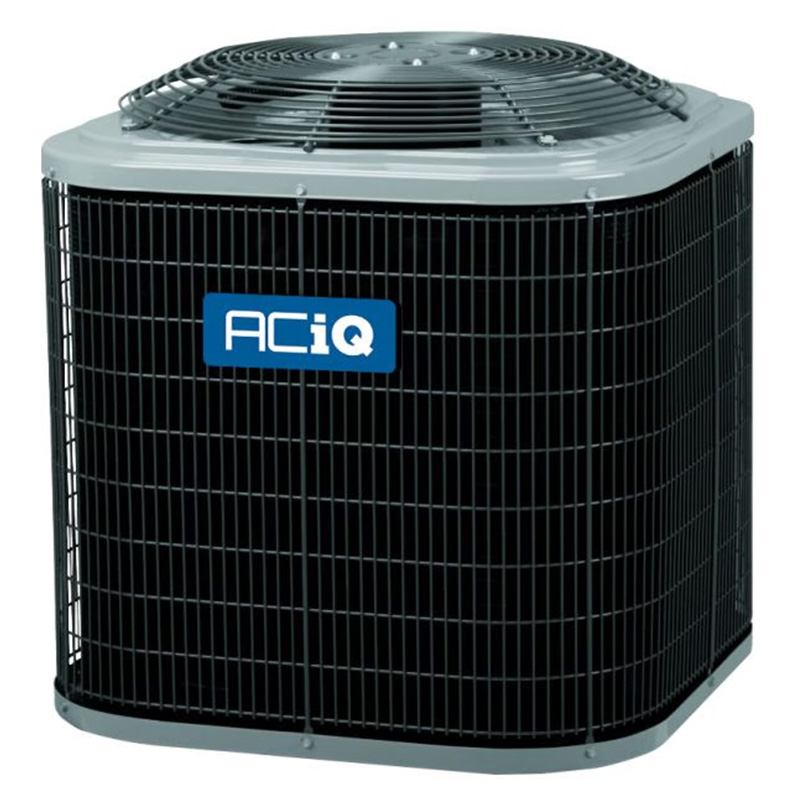
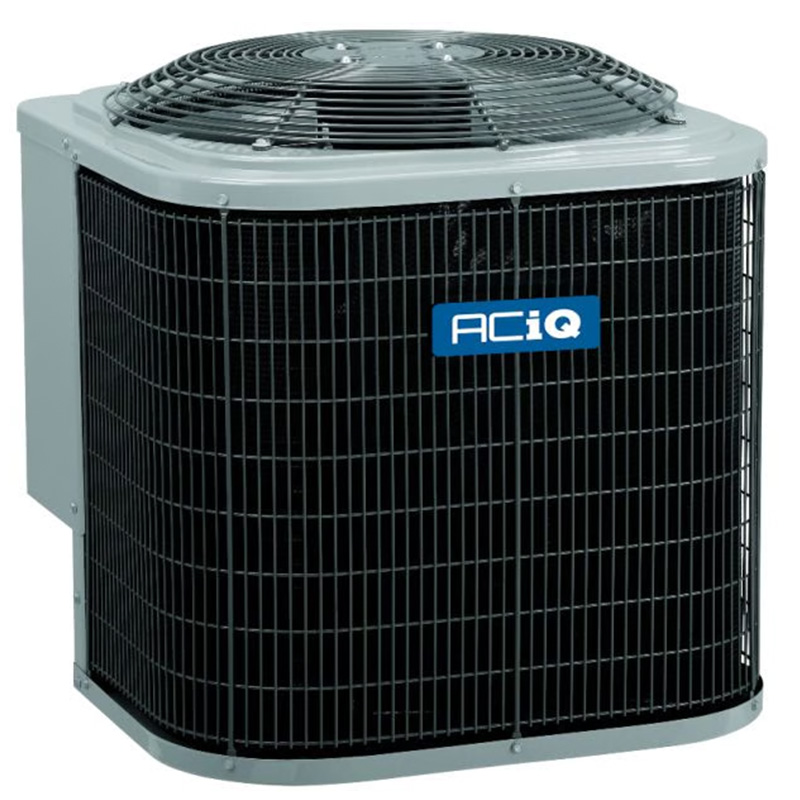
The ACiQ 3-ton 15.2 SEER2 heat pump system pairs a single-speed or single-stage outdoor condensing unit with a 21-inch wide multi-positional air handler, giving installers the flexibility to orient the unit horizontally or vertically to fit attic, closet, or basement spaces where a wider cabinet simply won’t fit. At 15.2 SEER2, the system clears the federal minimum efficiency threshold for most U.S. climate zones with a modest cushion, landing it in the entry-level-to-mid-efficiency tier rather than the premium inverter class. The R-454B refrigerant is a lower-global-warming-potential replacement for R-410A, meaning this system is positioned for regulatory compliance as the industry phases down older refrigerants.
This setup suits homeowners replacing an aging R-22 or R-410A system on a budget, buyers in moderate climates who run their equipment seasonally rather than year-round, and anyone who wants a heat pump without paying name-brand dealer markup. The 3-ton sizing covers roughly 1,500 to 2,100 square feet depending on insulation, climate zone, and local load calculations. It is not a variable-speed system, so it will cycle on and off at full capacity rather than modulating output, which matters for humidity control and noise in climates with long, humid summers.
The ACiQ 3-ton 15.2 SEER2 heat pump is a solid budget-to-mid-range option for homeowners who need a straightforward single-stage replacement without paying name-brand premiums. It delivers acceptable efficiency and a genuinely competitive warranty, but buyers should understand that the single-stage operation and thin long-term reliability record are real trade-offs at this price point. It earns its place as a value pick, not a best-in-class performer.
Overall score is the average of the five ratings above.
What we like
- Factory-direct pricing undercuts Carrier, Trane, and Lennox equivalents by a meaningful margin
- 12-year parts warranty ships standard without requiring dealer registration or added cost
- 21-inch wide air handler opens up install locations that standard-width cabinets cannot fit
- R-454B refrigerant is forward-compatible with tightening EPA refrigerant regulations
- Early owner feedback consistently highlights quiet operation and responsive customer support
Trade-offs
- Single-stage operation means full-capacity cycling, which is less precise for humidity control than variable-speed alternatives
- Undisclosed manufacturer makes parts cross-referencing and service history harder to verify for technicians
- No established long-term reliability data and Consumer Reports has not yet ranked the brand
- Service depends entirely on independent contractors since ACiQ has no dedicated dealer network
What homeowners and pros say about ACiQ
Early owners of ACiQ equipment frequently point to quieter-than-expected operation and competitive pricing as the standout positives, and the brand’s customer support responsiveness gets consistent mentions in owner forums and Google dealer reviews. That said, Consumer Reports has not yet ranked ACiQ due to insufficient long-term data, which is an honest limitation for a brand that is still building its reliability record in the field. Independent long-term data simply does not exist yet the way it does for Carrier, Trane, or Lennox equipment that has been tracked for decades.
HVAC technicians working on ACiQ equipment in the field note that the undisclosed OEM creates a real practical issue: without knowing the original manufacturer, cross-referencing parts, service bulletins, or failure patterns is harder than it would be with a named brand. Documented concerns specific to the brand and its likely manufacturing lineage include capacitor failures in the first few years of operation, refrigerant coil leaks, and uncertainty about long-term compressor lifespan under heavy-use conditions. None of these are unique to ACiQ, but the thin data trail means there is less collective knowledge for a technician to draw on when diagnosing an unusual problem. For buyers who have a reliable independent HVAC contractor and are comfortable with that trade-off in exchange for the price and warranty advantage, the value proposition is real.
Sources: Consumer Reports heat pump ratings, HVACDirect on the ACiQ brand, AHRI Directory of Certified Product Performance, U.S. DOE appliance and equipment efficiency standards.
What it costs to run
At 15.2 SEER2, cooling this 3-ton system for a typical 1200-hour cooling season at the U.S. average electricity rate of $0.17/kWh works out to roughly $483 per year in cooling, about $65 less per year than a minimum-efficiency 13.4 SEER2 unit of the same size. Your real cost depends on your climate and local rate.
Method: (36,000 BTU/hr ÷ 15.2 SEER2) × 1200 hours ÷ 1000 × $0.17/kWh. Rate source: U.S. EIA average; cooling hours: moderate-climate estimate.
How it compares
| Brand | Comparable model | SEER2 | Stage | Price position |
|---|---|---|---|---|
| ACiQ | 3-Ton 15.2 SEER2 Heat Pump with 21" Multi-Positional Air Handler | 15.2 | Single-stage | Value pick |
| Carrier | Comfort 15 (25HCE Series) | 15+ | Single-stage | Moderately higher due to dealer network and brand premium |
| Trane | XR15 Heat Pump | 15+ | Single-stage | Moderately to significantly higher with dealer installation required |
| Lennox | Merit ML15XP1 Heat Pump | 15+ | Single-stage | Comparable to Carrier, higher than ACiQ with dealer pricing built in |
Competitor rows are comparable single-stage units at similar efficiency; price is relative position, not a quote.
Questions about this system
Does the 12-year warranty require me to register the unit or use a specific contractor?
ACiQ's 12-year parts warranty ships standard without dealer markup or registration tied to an authorized dealer network. You should confirm current registration requirements directly with ACiQ at purchase, since warranty terms can change and some manufacturers require owner registration within a set window to activate the full term.
Who actually manufactures this unit, and will a local HVAC tech be able to service it?
ACiQ is AC Direct's house brand and the actual manufacturer is not publicly disclosed, though forum speculation points to the ICP and Carrier family without confirmation. Most licensed HVAC technicians can service any heat pump system, but the undisclosed OEM means your tech may not be able to cross-reference parts or service history as easily as with a named brand, which is worth discussing with your contractor before you buy.
Is 15.2 SEER2 good enough, or should I pay more for a higher-efficiency unit?
15.2 SEER2 meets federal minimum standards for most U.S. regions and will run adequately, but it is near the bottom of the efficiency scale for new equipment. If your home is in a climate zone where the heat pump runs most of the year, the energy savings from a 17 to 20 SEER2 inverter system can offset the higher upfront cost over the equipment's lifespan, so it is worth running the numbers for your local utility rates.
Can this air handler really be installed in any position, and does that affect performance?
Multi-positional means the air handler is engineered to be installed in upflow, downflow, or horizontal configurations without requiring a separate cabinet for each orientation, which is useful in tight or unconventional spaces. Performance is not meaningfully affected by orientation as long as the drain pan and refrigerant lines are properly configured for the chosen position, which your installer should confirm during setup.
What refrigerant does this system use and will it be hard to service in the future?
This system uses R-454B, a lower-global-warming-potential refrigerant that the industry is adopting as R-410A is phased down under EPA regulations. R-454B is becoming more widely stocked, but it is still newer than R-410A so you may find fewer technicians with hands-on experience with it today, though that gap is closing quickly as more equipment ships with A2L refrigerants like R-454B.
Specifications
| Cooling capacity | 3 Ton |
| Efficiency | 15.2 SEER2 |
| Refrigerant | R-454B |