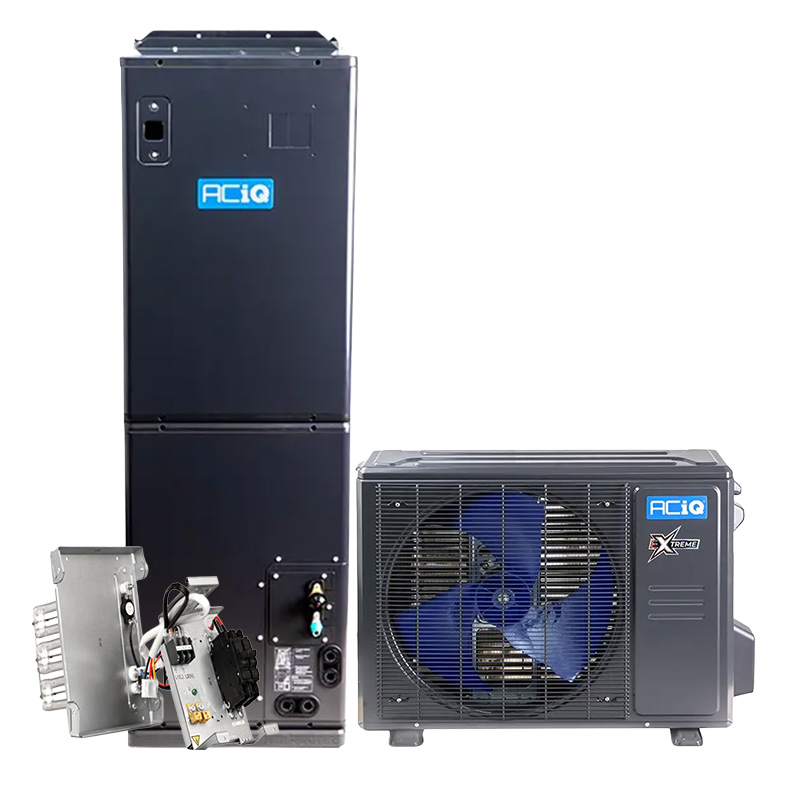
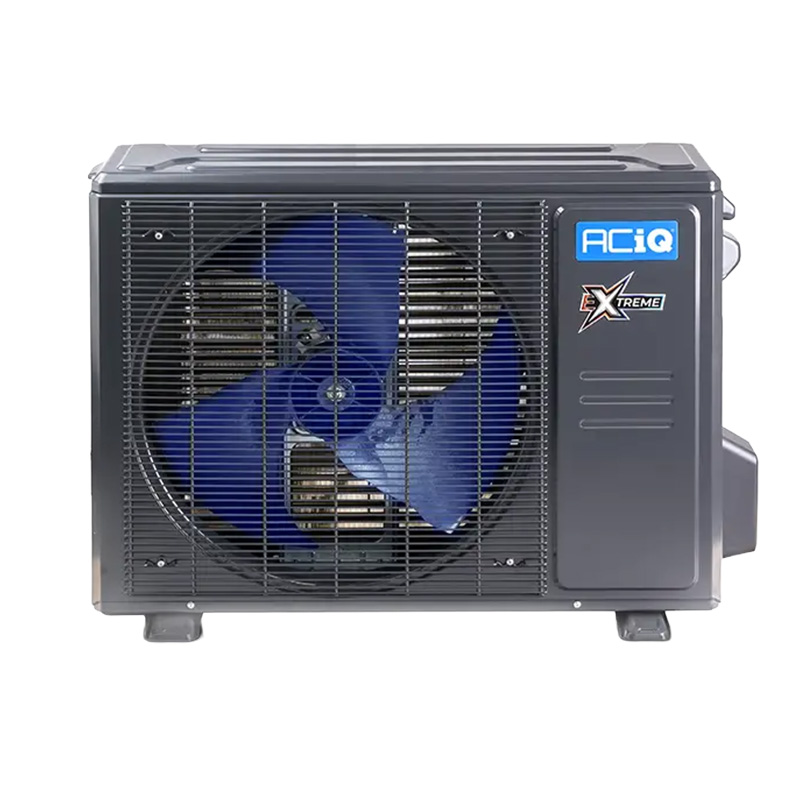
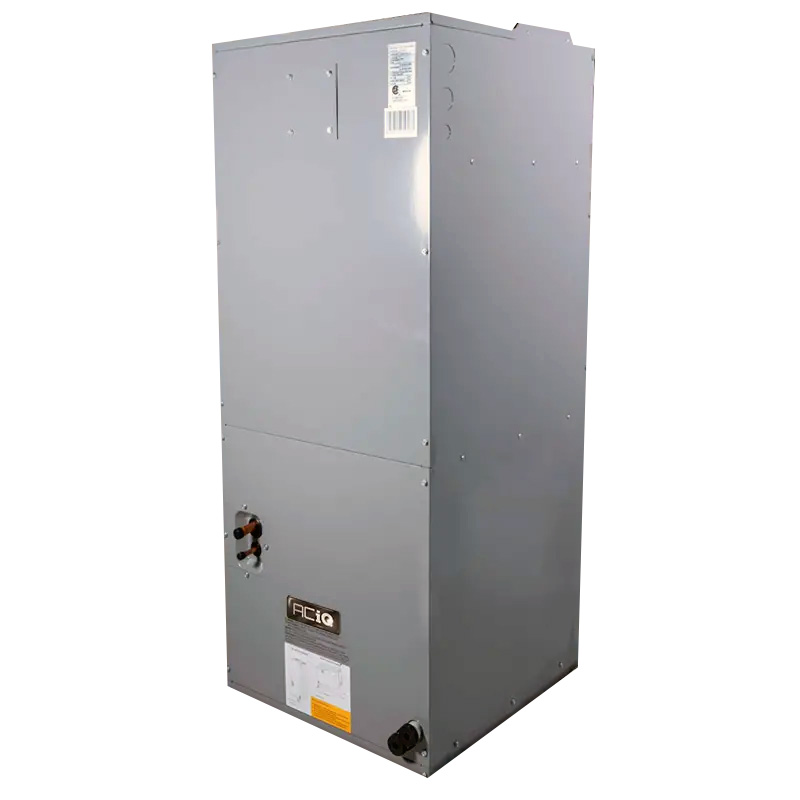
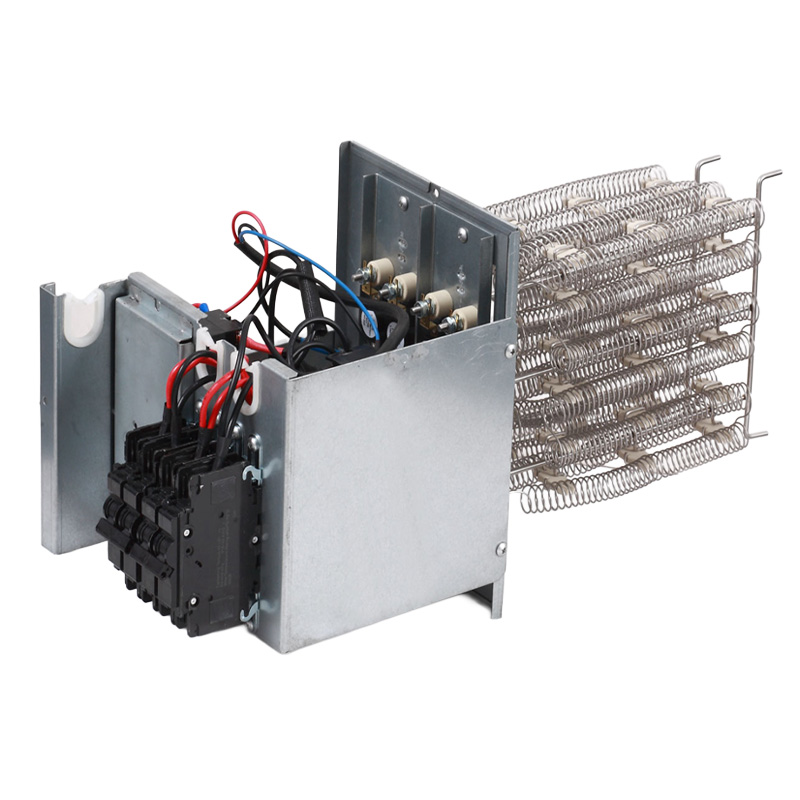
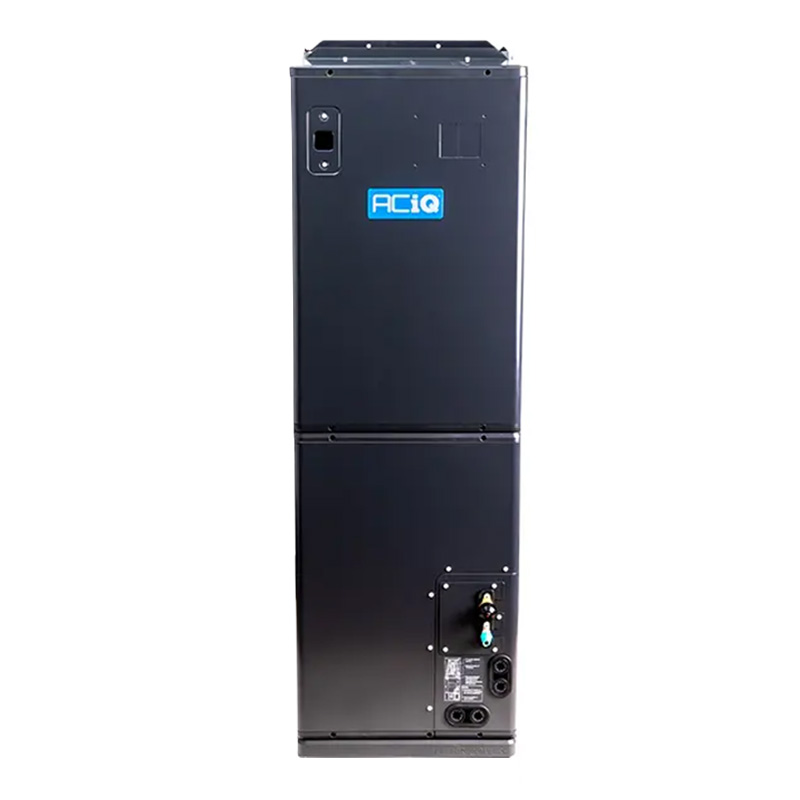
ACiQ 3 Ton Split Heat Pump AC System | 18 SEER2 High Efficiency Inverter Heats Down To -22° F and Beyond| Extreme+ Series R454B
View on AC Direct see your lowest price →Check current price on AC Direct →
Key features
- 18 SEER2 variable-speed inverter compressor for continuous capacity modulation
- Rated for heating operation down to -22 degrees Fahrenheit, suitable as a primary heat source in cold climates
- R-454B refrigerant, a lower-GWP alternative to R-410A meeting current EPA transition guidelines
- 12-year parts and compressor warranty included without dealer markup
- Quiet partial-load operation typical of inverter-driven systems
- Sold factory-direct, eliminating dealer margin from the purchase price
About this system
The ACiQ Extreme+ 3-ton 18 SEER2 split heat pump is a cold-climate inverter system designed for homes that need year-round comfort without the compromises of older single-stage equipment. Running on R-454B, a lower-global-warming-potential refrigerant that increasingly replaces R-410A as the industry standard, this system is built around a variable-speed inverter compressor that modulates output continuously rather than cycling on and off. The result is steadier indoor temperatures, lower electricity bills compared to single- or two-stage alternatives, and quieter operation at partial load, which is how the system runs the majority of the time.
The headline specification worth scrutinizing is the -22 degrees Fahrenheit heating threshold. Most standard heat pumps lose usable heating capacity around 20 to 30 degrees Fahrenheit and require a backup heat source below that point. This unit is rated to extract heat from outdoor air well below zero, making it a realistic primary heating system for cold northern climates and a potential gas-furnace replacement for moderate climates. At 3 tons and 18 SEER2, it sits in the high-efficiency tier without reaching the premium stratosphere, which is a reasonable balance for a value-oriented house brand. This system suits medium to large homes in the 1,500 to 2,400 square foot range, depending on insulation quality, local climate, and load calculations performed by the installing contractor.
The ACiQ Extreme+ 3-ton 18 SEER2 delivers genuine cold-climate inverter performance at a price that undercuts established name brands by a meaningful margin, making it a compelling option for budget-conscious buyers who are comfortable hiring their own independent HVAC contractor. The trade-off is real: the brand is new enough that long-term reliability data is thin, the actual manufacturer is undisclosed, and servicing a warranty claim without a dealer network requires more effort from the homeowner. For buyers who do their homework on installation quality and contractor selection, the value proposition is strong; for those who want the reassurance of a decades-long brand track record, the math gets closer.
Overall score is the average of the five ratings above.
What we like
- 18 SEER2 efficiency qualifies for federal tax credits and reduces operating costs versus conventional systems
- Variable-speed inverter compressor provides consistent comfort and low-noise partial-load operation
- -22 degrees Fahrenheit heating rating makes it a credible primary heat source in harsh winters
- 12-year warranty ships with the unit at no additional cost, matching or beating most name-brand coverage
- Factory-direct pricing removes dealer markup, producing a lower upfront cost than comparable-spec equipment from Carrier or Trane
Trade-offs
- Brand is relatively new and Consumer Reports has not yet assigned a reliability ranking due to insufficient long-term data
- Undisclosed manufacturer makes it harder to cross-reference parts availability, service bulletins, or compressor lineage
- No proprietary dealer or service network means warranty work depends entirely on finding a willing independent contractor
- R-454B refrigerant is newer and mildly flammable (A2L classification), which requires contractors trained and equipped for A2L handling, potentially narrowing installer options
What homeowners and pros say about ACiQ
Early owners of ACiQ systems, including this Extreme+ series, report quiet operation at partial load and performance that matches the rated specifications, which aligns with the inverter technology at the core of the design. Consumer Reports has not yet ranked ACiQ because the brand is too new to have generated the long-term reliability data the organization requires, so glowing short-term owner reports need to be weighed against the absence of independent multi-year evidence. The specific failure modes that matter most for any inverter heat pump system are capacitor degradation, refrigerant coil leaks, and compressor lifespan under cold-climate cycling stress. Because the manufacturer is undisclosed, there is no public service bulletin history or independent repair-frequency database to consult for this equipment the way there is for a Carrier or Trane unit with decades of field data.
HVAC contractors who have installed ACiQ units tend to note that the equipment itself performs as advertised, but opinions split on the direct-sale model. Contractors who rely on dealer relationships to drive equipment sales are structurally unlikely to recommend it, while independent installers focused on labor revenue are generally more neutral. The practical concern professionals raise most often is parts logistics: without a confirmed parent brand, sourcing a replacement board or coil on a tight timeline is less predictable than it would be for a unit from a manufacturer with a national parts distribution network. For homeowners, the calculus is straightforward: the lower upfront cost and strong warranty coverage are real, and the long-term reliability question is genuinely open rather than answered.
Sources: Consumer Reports heat pump ratings, HVACDirect on the ACiQ brand, AHRI Directory of Certified Product Performance, U.S. DOE appliance and equipment efficiency standards.
What it costs to run
At 18 SEER2, cooling this 3-ton system for a typical 1200-hour cooling season at the U.S. average electricity rate of $0.17/kWh works out to roughly $408 per year in cooling, about $140 less per year than a minimum-efficiency 13.4 SEER2 unit of the same size. Your real cost depends on your climate and local rate.
Method: (36,000 BTU/hr ÷ 18 SEER2) × 1200 hours ÷ 1000 × $0.17/kWh. Rate source: U.S. EIA average; cooling hours: moderate-climate estimate.
How it compares
| Brand | Comparable model | SEER2 | Stage | Price position |
|---|---|---|---|---|
| ACiQ | Extreme+ Series 3-Ton 18 SEER2 R-454B | 18 | Variable | Value pick |
| Carrier | Infinity 18 Heat Pump (25VNA8) | 18+ | Variable | Significantly higher than ACiQ |
| Trane | XV18 Heat Pump | 18 | Variable | Significantly higher than ACiQ |
| Lennox | Elite XP18 Heat Pump | 18 | Variable | Higher than ACiQ |
Competitor rows are comparable single-stage units at similar efficiency; price is relative position, not a quote.
Questions about this system
Will this heat pump actually keep my house warm at temperatures below zero without a gas furnace backup?
The system is rated to operate and produce heat down to -22 degrees Fahrenheit, which is more capable than most standard heat pumps. However, rated operating range and delivered heating capacity are different things: output drops as outdoor temperatures fall, so in very cold climates a load calculation by your contractor should confirm whether 3 tons is sufficient for your home's heat loss at design temperatures, and whether supplemental electric resistance backup is still advisable.
Who actually manufactures ACiQ equipment, and does it matter for parts and repairs?
ACiQ is AC Direct's house brand and the actual OEM manufacturer has not been publicly disclosed, though forum discussion has pointed toward the ICP and Carrier family without confirmation. It does matter practically: if a part fails, your contractor cannot simply look up an equivalent part number from a known parent brand, which can slow down repairs compared to servicing a Carrier or Lennox unit with a fully documented parts tree.
My contractor says he has never worked on ACiQ and does not want to touch it. Is that a real problem?
It is a legitimate concern to take seriously. ACiQ is sold direct rather than through a dealer network, so there is no factory-trained service channel. You will need to find an independent contractor willing to service it, and the undisclosed manufacturer makes some contractors hesitant. Confirming parts availability and your contractor's comfort level before purchase is a reasonable step.
Does the R-454B refrigerant require anything special from my installer?
Yes. R-454B is classified A2L, meaning it is mildly flammable under specific conditions. Installers need EPA Section 608 certification as always, but also should be familiar with A2L handling procedures and ideally have equipment calibrated for the refrigerant. Most larger HVAC shops are already preparing for the industry-wide R-454B transition, but it is worth confirming your installer's experience before scheduling.
How does the 12-year warranty work if I bought the system online and there is no dealer involved?
ACiQ includes the 12-year parts and compressor warranty with the unit without requiring dealer registration or markup, which is a genuine advantage over brands that tie warranty length to dealer activation. You will need to keep purchase documentation and confirm with ACiQ's support team what the claims process looks like, since warranty service is fulfilled through independent contractors rather than a company-run service network.
Specifications
| Cooling capacity | 3 Ton |
| Efficiency | 18 SEER2 |
| Refrigerant | R-454B |