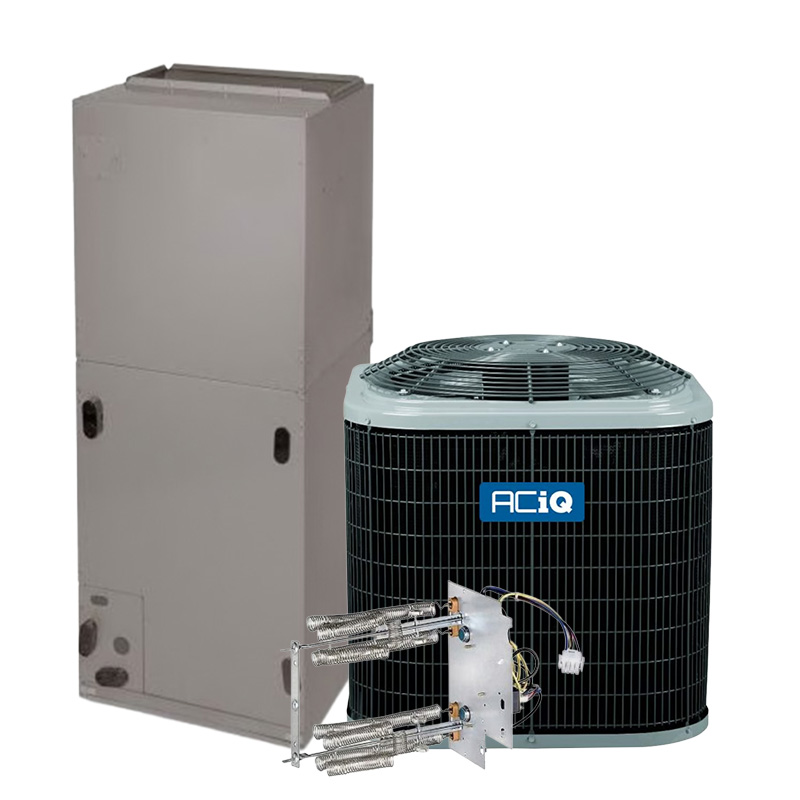
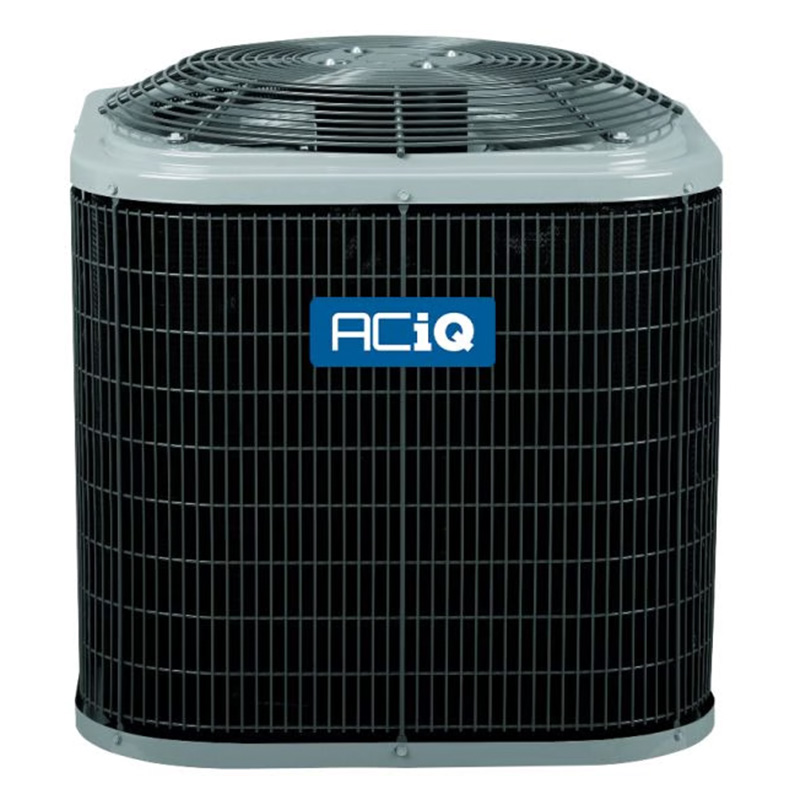
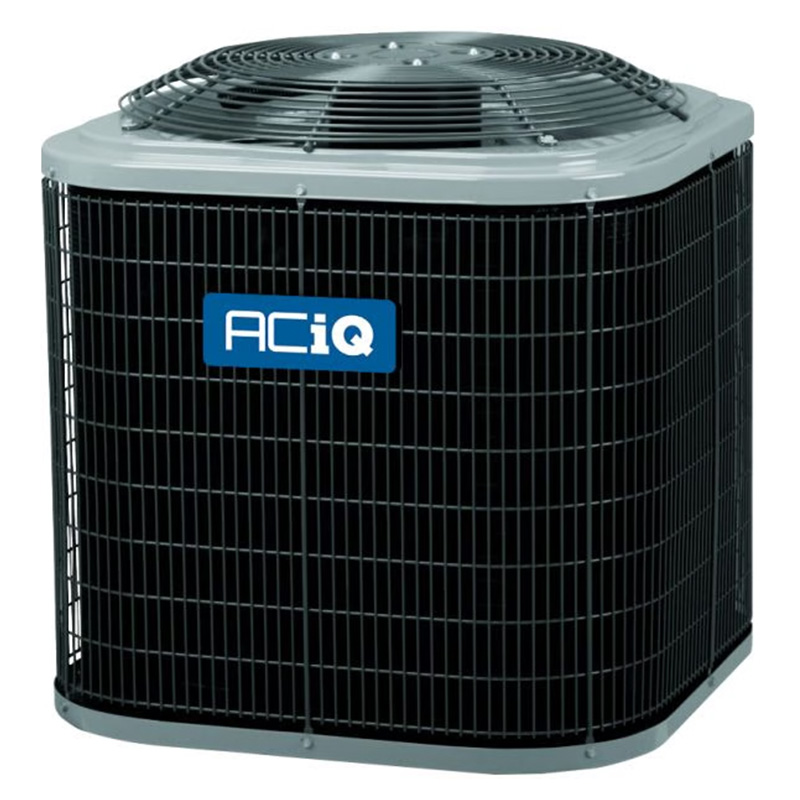
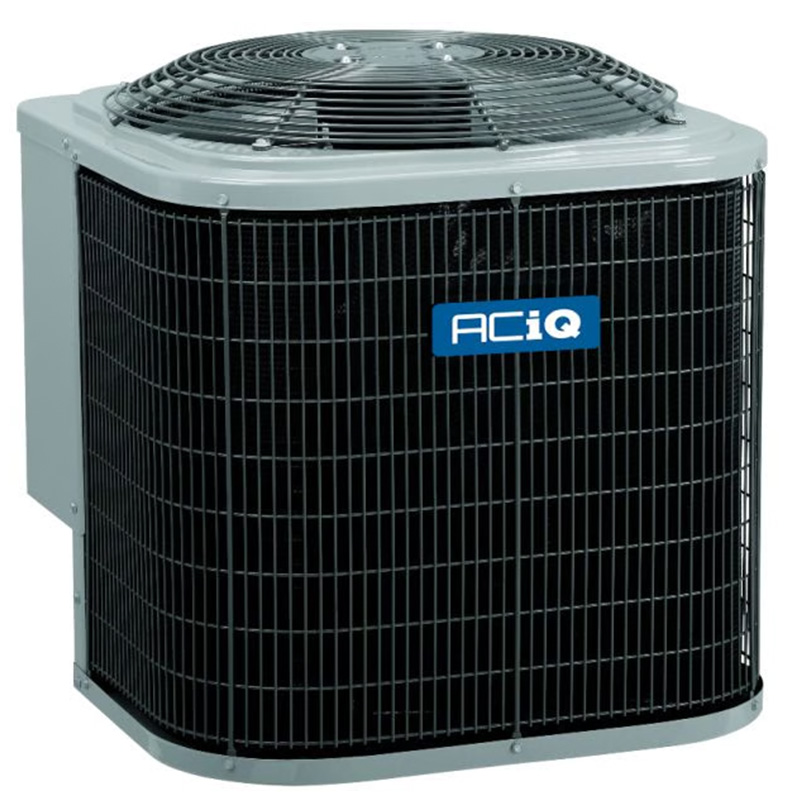
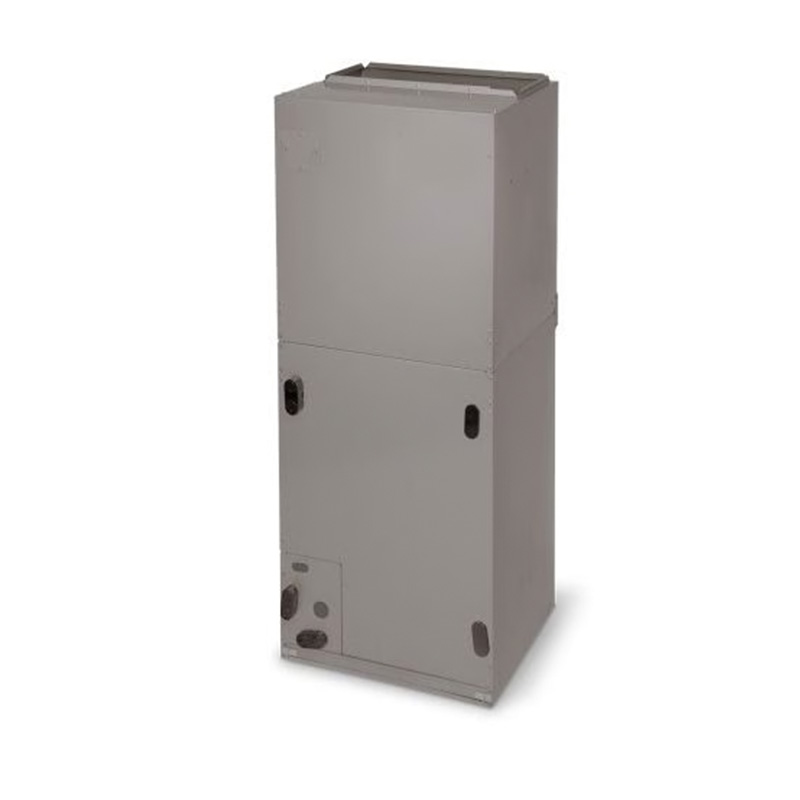
ACiQ 4 Ton AC With Electric Heat System | 15.2 SEER2 AC | 21" Wide Variable Speed Multi-Positional Modular Air Handler | R454B
View on AC Direct see your lowest price →Check current price on AC Direct →
Key features
- 15.2 SEER2 variable-speed condenser rated for 4-ton / 48,000 BTU cooling capacity
- 21-inch-wide multi-positional air handler fits upflow, downflow, and horizontal installations
- Variable-speed ECM blower motor reduces sound output and improves humidity control
- R-454B refrigerant complies with AIM Act phase-down requirements for future serviceability
- Electric heat strips provide supplemental or primary heat without a gas line
- 12-year parts warranty included with no dealer markup baked into the price
About this system
The ACiQ 4-Ton AC with Electric Heat System pairs a 15.2 SEER2 split-system condenser with a 21-inch-wide variable-speed multi-positional modular air handler and transitions to the newer R-454B refrigerant. The 4-ton capacity is sized for roughly 1,800 to 2,400 square feet of conditioned space depending on climate, insulation, and load, so a proper Manual J calculation before purchase is worth the time. The variable-speed air handler lets the system run at lower capacities most of the time, which smooths out temperature swings, reduces humidity better than a single-stage unit, and keeps sound levels noticeably lower during normal operation.
The 21-inch cabinet width is a deliberate engineering choice that fits into tighter mechanical closets and utility chases where a wider air handler simply will not go, making this a reasonable option for retrofit projects in existing homes. The electric heat strips replace a gas furnace as the heating source, so this configuration suits climates where winters are mild enough that a heat pump is not strictly necessary or where natural gas is unavailable. Buyers should note that operating costs for electric resistance heat run higher than a heat pump or gas furnace in cold climates, so this setup is best suited to the Sun Belt and similar regions.
The ACiQ 4-ton 15.2 SEER2 system delivers mid-tier efficiency and genuine variable-speed comfort at a price that consistently undercuts name brands by a meaningful margin. The 12-year warranty and R-454B refrigerant readiness are real advantages, but the undisclosed manufacturer, thin long-term reliability data, and the absence of a dealer service network are legitimate risks buyers should weigh before committing. For budget-focused owners in mild climates who have a trusted independent HVAC contractor lined up, the value case is solid.
Overall score is the average of the five ratings above.
What we like
- Retail price undercuts comparable Carrier, Trane, and Lennox systems by a significant margin
- Variable-speed ECM blower improves dehumidification and reduces temperature swings versus single-stage equipment
- 12-year parts warranty ships standard without dealer markup inflating the final cost
- R-454B refrigerant positions the system ahead of older R-410A units facing supply and cost pressure
- 21-inch narrow air handler opens retrofit options in homes with tight mechanical closet dimensions
Trade-offs
- Manufacturer identity is not disclosed, making it harder to cross-reference parts availability or service records with a known factory
- Consumer Reports has not yet assigned a reliability score due to insufficient long-term field data
- No factory dealer network means warranty service depends entirely on finding a willing independent contractor
- Electric resistance heat strips carry significantly higher operating costs than a heat pump or gas furnace in cold climates
What homeowners and pros say about ACiQ
Early owner feedback on ACiQ equipment trends positive on the things that matter most at install time: quieter-than-expected operation from the variable-speed blower, straightforward communication with support when questions arise, and no obvious fit or finish shortcuts on the cabinet and coil construction. Because the brand is relatively new to the market, Consumer Reports has not yet assigned it a reliability score, and that absence of independent long-term data is the honest caveat that shapes how both homeowners and contractors talk about it. The enthusiasm in early reviews is real, but it is enthusiasm from owners who are still within the first few years of a system that has a 12-year warranty horizon.
On the contractor side, the most common reservation is not about the equipment itself but about the service model. Independent technicians point out that the undisclosed manufacturer makes it harder to source parts through familiar distributor channels and that cross-referencing components against a known factory parts system is not as straightforward as it is with a Carrier or Trane unit. The documented risk factors to keep in mind for any system in this class include refrigerant circuit integrity over time, ECM blower module longevity, and compressor durability beyond the ten-year mark. None of these have surfaced as widespread ACiQ-specific complaints yet, but the brand simply has not been in enough homes long enough to know whether they will. Buyers who go in with realistic expectations and a good local contractor are reporting solid results so far.
Sources: Consumer Reports heat pump ratings, HVACDirect on the ACiQ brand, AHRI Directory of Certified Product Performance, U.S. DOE appliance and equipment efficiency standards.
What it costs to run
At 15.2 SEER2, cooling this 4-ton system for a typical 1200-hour cooling season at the U.S. average electricity rate of $0.17/kWh works out to roughly $644 per year in cooling, about $87 less per year than a minimum-efficiency 13.4 SEER2 unit of the same size. Your real cost depends on your climate and local rate.
Method: (48,000 BTU/hr ÷ 15.2 SEER2) × 1200 hours ÷ 1000 × $0.17/kWh. Rate source: U.S. EIA average; cooling hours: moderate-climate estimate.
How it compares
| Brand | Comparable model | SEER2 | Stage | Price position |
|---|---|---|---|---|
| ACiQ | 4-Ton 15.2 SEER2 Variable-Speed System with Electric Heat | 15.2 | Variable | Value pick |
| Carrier | Comfort 24ACC636A003 with FV4C air handler | 15.2 | Single-stage | Moderately higher, dealer markup included |
| Trane | XR15 with TAM9 air handler | 15.0-15.2 | Single-stage | Moderately to significantly higher with dealer network pricing |
| Lennox | Merit ML14XC1 with CBX32MV air handler | 15.2 | Single-stage / variable blower | Significantly higher at retail through authorized dealers |
Competitor rows are comparable single-stage units at similar efficiency; price is relative position, not a quote.
Questions about this system
Can any licensed HVAC contractor install and service this system, or does it require a certified ACiQ dealer?
Any licensed HVAC contractor who works with R-454B refrigerant and variable-speed equipment can install and service it. ACiQ sells direct and has no proprietary dealer network, so you will need to find an independent contractor yourself. Confirm before hiring that your contractor is comfortable with the specific air handler wiring and communicating thermostat setup, since variable-speed modular systems have more commissioning steps than a basic single-stage unit.
Will the 12-year warranty hold if I install this myself or hire a contractor who is not factory-authorized?
ACiQ requires installation by a licensed HVAC professional to validate the warranty, but because there is no factory-authorized dealer network, any licensed contractor qualifies. Keep your installation invoice and equipment registration paperwork, since warranty claims will ask for proof of licensed installation. A DIY installation would void the coverage.
Is 15.2 SEER2 worth it over a 14.3 SEER2 system for a 4-ton unit, and what does the difference mean on my electric bill?
At 4 tons, the efficiency gap between 14.3 and 15.2 SEER2 translates to a modest reduction in cooling season energy use, typically worth somewhere in the range of a few percent annually depending on run hours and local electricity rates. The variable-speed compressor matters more for comfort and humidity control than the SEER2 number alone does. In hot climates with long cooling seasons, the efficiency premium can offset part of the price difference over time, but payback math varies widely by location.
Why does this system use R-454B instead of R-410A, and does that affect future service costs?
R-454B is a lower global-warming-potential refrigerant introduced under EPA AIM Act requirements, and new residential equipment sold in many states must use it or a similar alternative going forward. R-410A supply is not disappearing immediately, but its availability and price will tighten as the phase-down progresses, so an R-454B system is better positioned for lower long-term refrigerant service costs. Technicians need specific equipment and training to handle R-454B safely, so confirm your contractor is equipped for it before scheduling service.
Who actually manufactures ACiQ equipment, and does it matter for parts sourcing?
The manufacturer is not publicly disclosed by AC Direct, and while forum discussion points toward the ICP and Carrier manufacturing family, that has not been officially confirmed. In practical terms it means you cannot straightforwardly cross-reference ACiQ part numbers against a known factory parts catalog the way you can with a Carrier or Trane unit. Parts availability has not been reported as a widespread problem by early owners, but it is a real consideration if you are thinking about service ten or more years from now.
Specifications
| Cooling capacity | 4 Ton |
| Efficiency | 15.2 SEER2 |
| Refrigerant | R-454B |