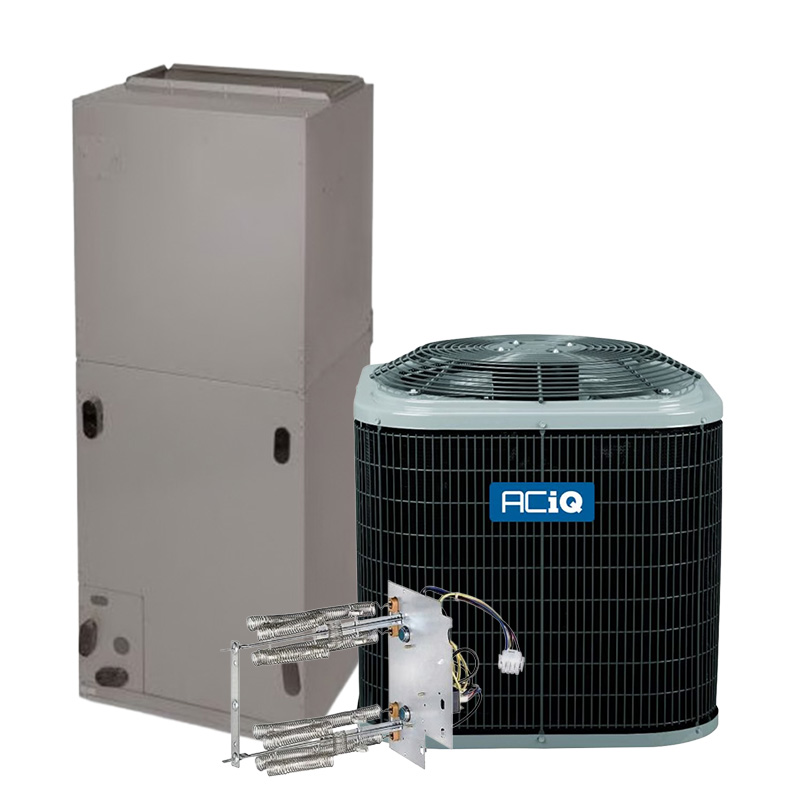
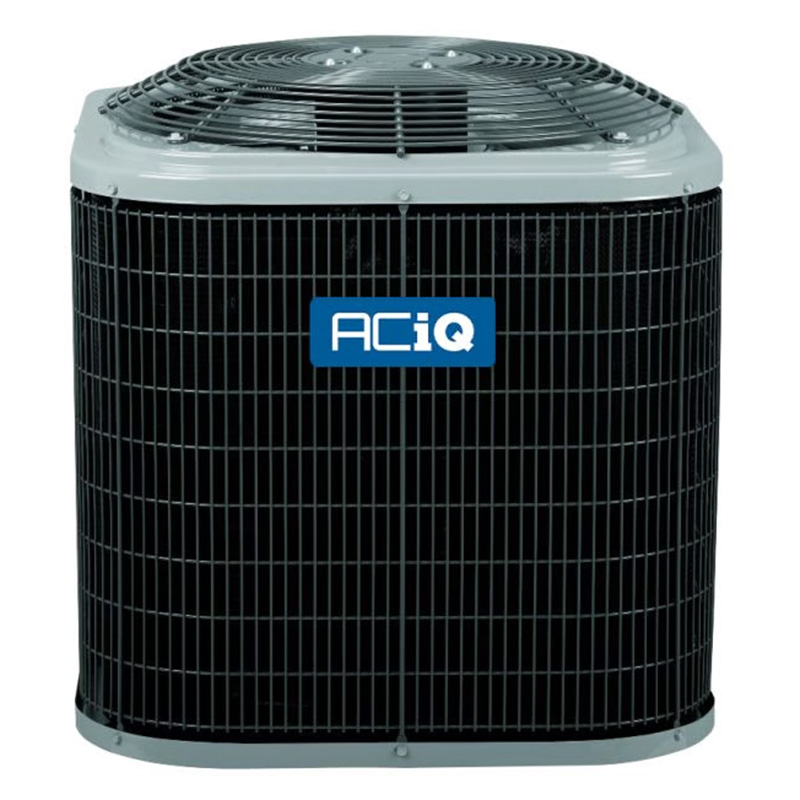
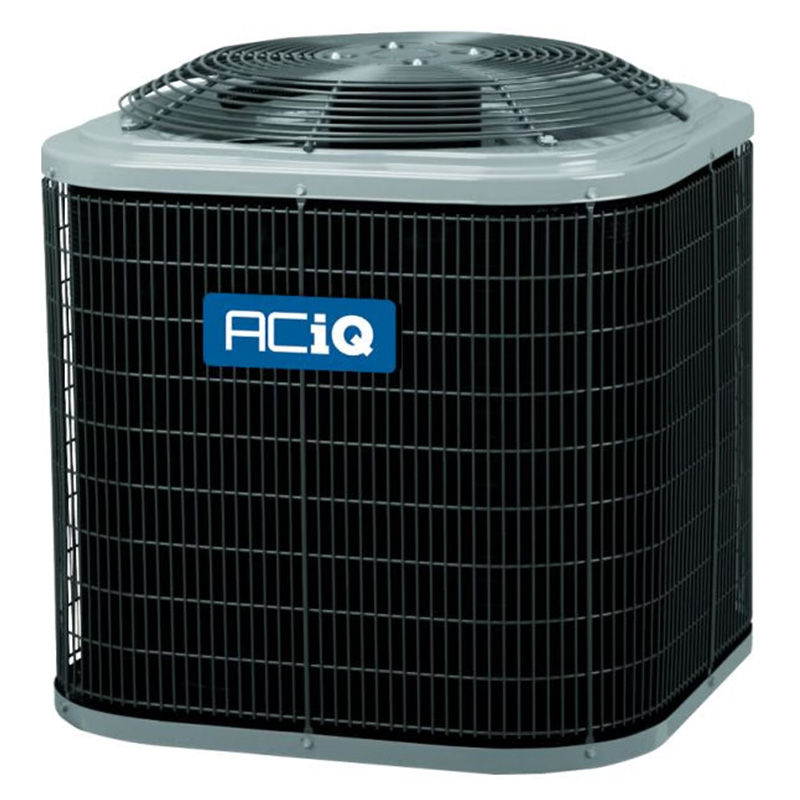
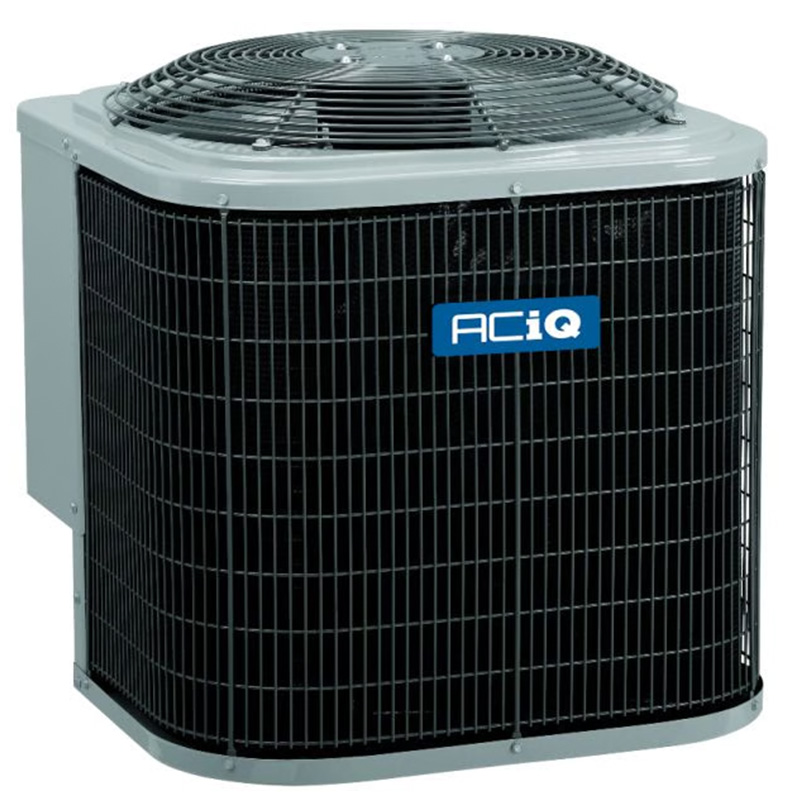
ACiQ 4 Ton AC With Electric Heat System | 15.2 SEER2 AC | 24" Wide Variable Speed Multi-Positional Modular Air Handler | R454B
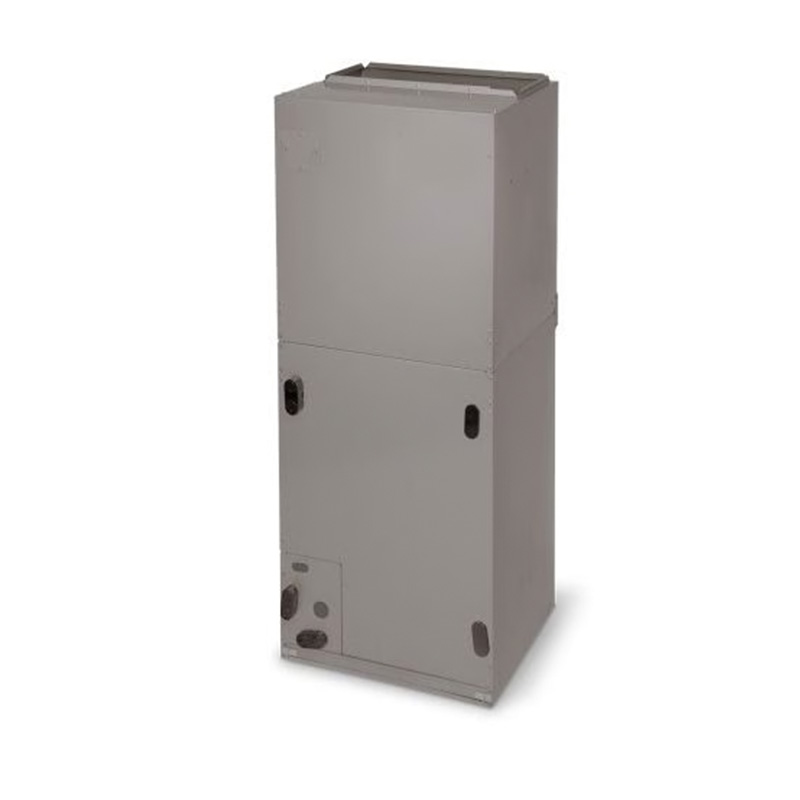
View on AC Direct see your lowest price →Check current price on AC Direct →
Key features
- 15.2 SEER2 efficiency rating, exceeding 2023 federal minimums for most U.S. climate regions
- Variable-speed air handler for continuous modulation of airflow and improved humidity control
- 24-inch wide cabinet fits standard filter grilles and tight mechanical room footprints
- Multi-positional design supports upflow, downflow, and horizontal installation
- R-454B refrigerant compliant with EPA phase-down regulations replacing R-410A
- 12-year parts warranty included with registration, no dealer markup applied
About this system
The ACiQ 4-Ton R-454B System pairs a 15.2 SEER2 air conditioner with a 24-inch wide, variable-speed multi-positional modular air handler, making it a strong fit for larger homes in the 2,200 to 2,800 square foot range that need flexible installation options. The modular air handler can be configured for upflow, downflow, or horizontal applications, which removes a common constraint when replacing older equipment in finished basements, closets, or attic spaces. Running on R-454B refrigerant, this system is ahead of the regulatory curve as older R-410A equipment phases out under updated EPA rules.
At 15.2 SEER2, this system sits just above the federal minimum efficiency thresholds that took effect in 2023, which means real energy savings over older 13 or 14 SEER equipment without the premium price tag of 18-plus SEER2 inverter systems. The variable-speed air handler is the standout component here: it modulates airflow continuously rather than cycling on and off at full blast, which improves humidity control, reduces hot and cold spots, and cuts the noise level noticeably compared to single-speed units. Buyers stepping up from a basic builder-grade system will feel the difference in comfort more than the efficiency number alone suggests.
The ACiQ 4-Ton 15.2 SEER2 system offers a genuine combination of variable-speed comfort and competitive pricing that undercuts name-brand equivalents by a meaningful margin. The trade-off is a newer brand with limited long-term reliability data and a service model that depends entirely on finding your own independent contractor. For budget-conscious buyers who do their homework on local service support, it is a reasonable bet.
Overall score is the average of the five ratings above.
What we like
- Variable-speed air handler improves comfort and humidity control beyond what the SEER2 number alone reflects
- R-454B refrigerant future-proofs the system against ongoing R-410A phase-out regulations
- Multi-positional modular air handler covers a wide range of installation configurations
- 12-year parts warranty with no dealer markup is among the stronger coverage tiers at this price point
- Early owner feedback consistently notes quieter-than-expected operation compared to prior single-speed systems
Trade-offs
- ACiQ is a newer brand with no Consumer Reports reliability ranking and thin long-term field data
- The undisclosed manufacturer makes it harder to cross-reference parts availability or service bulletins
- No dealer network means you must source and vet your own installation and warranty-service contractor
- 15.2 SEER2 is solid but trails the 17-plus SEER2 ratings available from premium brands at higher price points
What homeowners and pros say about ACiQ
Early owner feedback gathered across forums and retailer review sections points to quieter-than-expected operation as the most common positive observation, which aligns with what variable-speed blower technology typically delivers compared to single-speed equipment. Responsive customer support from AC Direct is also mentioned regularly, particularly around order and shipping questions. Consumer Reports has not yet assigned ACiQ a reliability score due to insufficient long-term field data, which is an honest limitation of a newer house brand rather than a red flag, but it does mean buyers are working without an independent benchmark. The brand’s undisclosed manufacturing origin is the most cited concern among HVAC professionals online, since it complicates parts cross-referencing and makes it harder to draw on established service histories when something does go wrong.
For this specific 4-ton variable-speed configuration, the conversation among contractors tends to focus on two practical issues: sourcing R-454B certified technicians in markets where A2L transition is still in progress, and the absence of a branded dealer network to handle warranty service calls. Because ACiQ sells direct, the homeowner owns the job of finding and vetting a qualified independent contractor, which is straightforward in most metro areas but can be a real obstacle in rural markets. Long-term failure mode data specific to ACiQ equipment is not yet available in any systematic form, and until Consumer Reports or a comparable independent body can accumulate enough field units to score reliability, buyers are relying primarily on early ownership reports and reasonable inferences from the likely manufacturing lineage rather than hard failure-rate data.
Sources: Consumer Reports heat pump ratings, HVACDirect on the ACiQ brand, AHRI Directory of Certified Product Performance, U.S. DOE appliance and equipment efficiency standards.
What it costs to run
At 15.2 SEER2, cooling this 4-ton system for a typical 1200-hour cooling season at the U.S. average electricity rate of $0.17/kWh works out to roughly $644 per year in cooling, about $87 less per year than a minimum-efficiency 13.4 SEER2 unit of the same size. Your real cost depends on your climate and local rate.
Method: (48,000 BTU/hr ÷ 15.2 SEER2) × 1200 hours ÷ 1000 × $0.17/kWh. Rate source: U.S. EIA average; cooling hours: moderate-climate estimate.
How it compares
| Brand | Comparable model | SEER2 | Stage | Price position |
|---|---|---|---|---|
| ACiQ | 4-Ton 15.2 SEER2 Variable-Speed Split with R-454B Air Handler | 15.2 | Variable | Value pick |
| Carrier | Comfort 16 (24ACC6) | 15.2-16 | Single-stage | Moderately higher, sold through dealer network with markup |
| Trane | XR15 | 15-15.6 | Single-stage | Moderately higher, dealer-installed with regional pricing variation |
| Lennox | Merit ML15XC1 | 15.5 | Single-stage | Comparable to Carrier, higher than ACiQ with dealer and install fees |
Competitor rows are comparable single-stage units at similar efficiency; price is relative position, not a quote.
Questions about this system
Will a standard independent HVAC contractor be able to service this system, or do I need a specialist?
Any licensed HVAC technician certified for R-454B refrigerant handling can service this system mechanically. The main difficulty is that because the actual manufacturer is not disclosed, the contractor cannot easily look up brand-specific service histories or cross-reference parts under a parent brand name, which can slow diagnostics on less common component failures.
Does the 12-year warranty require professional installation to remain valid?
Yes, like virtually all residential HVAC warranties, ACiQ's 12-year parts coverage requires installation by a licensed HVAC contractor and equipment registration within the required window after installation. Self-installation or unregistered equipment typically drops coverage to a shorter default period, so confirm registration requirements at purchase.
Is R-454B refrigerant significantly different to work with compared to R-410A for my installer?
R-454B is mildly flammable (A2L classification), which means technicians need updated certification and appropriate equipment to handle it safely. Most contractors in 2024 and 2025 are already transitioning to A2L-rated tools and procedures, but it is worth confirming your chosen installer is current before scheduling the job.
How much larger is a 4-ton system than what most homes need, and how do I know if this size is right?
A 4-ton unit is generally sized for homes in the 2,000 to 2,800 square foot range depending on climate zone, insulation quality, and window area. Oversizing is a common mistake that causes short-cycling and poor humidity control even with a variable-speed air handler, so a proper Manual J load calculation by your contractor before purchase is strongly recommended.
What does multi-positional modular air handler actually mean for my installation?
It means the air handler cabinet can be physically oriented and configured for upflow (air exits the top), downflow (air exits the bottom), or horizontal flow to suit the space where it is being installed. The modular aspect allows field adjustments to the cabinet without requiring a completely different unit, which reduces the chance of an installer substituting a different model due to space constraints.
Specifications
| Cooling capacity | 4 Ton |
| Efficiency | 15.2 SEER2 |
| Refrigerant | R-454B |