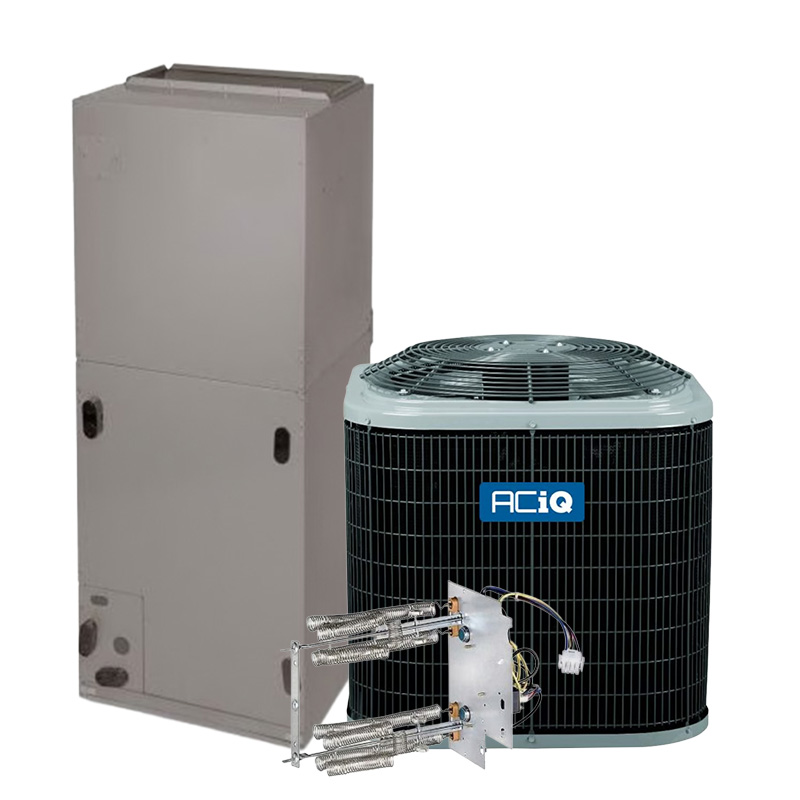
ACiQ 4 Ton AC With Electric Heat System | 15.5 SEER2 AC | 24" Wide Variable Speed Multi-Positional Modular Air Handler | R454B
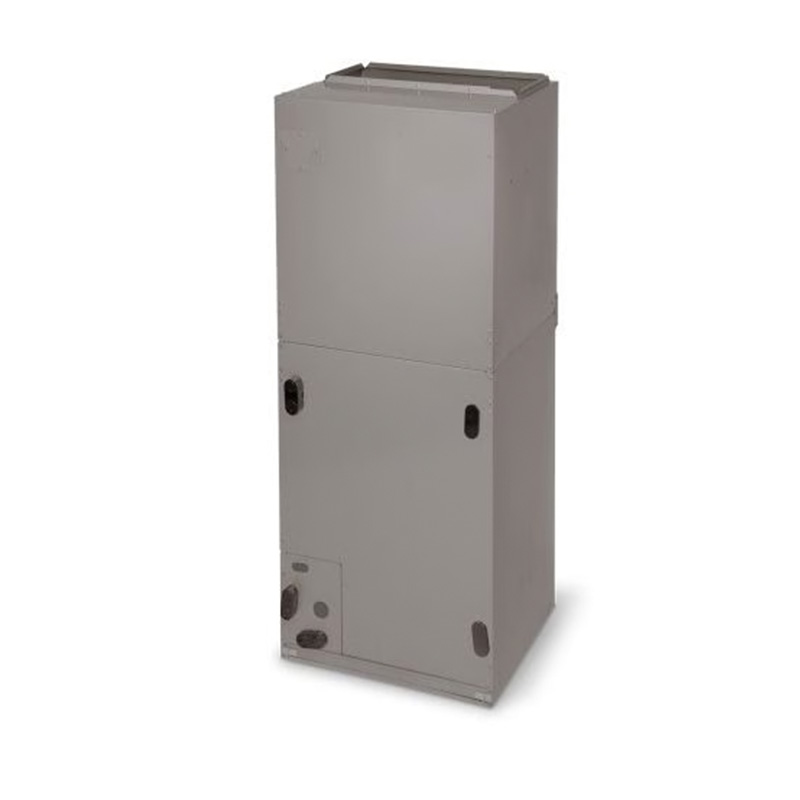
View on AC Direct see your lowest price →Check current price on AC Direct →
Key features
- 15.5 SEER2 efficiency rating, above federal minimums for most U.S. climate zones
- Variable-speed air handler for continuous airflow modulation and improved humidity control
- R-454B refrigerant, a lower-GWP alternative to R-410A meeting current regulatory standards
- 24-inch wide multi-positional cabinet fits upflow, downflow, and horizontal installations
- Electric heat strips included, providing heating without a separate furnace or heat pump
- 12-year parts warranty shipped direct, with no dealer markup added to coverage
About this system
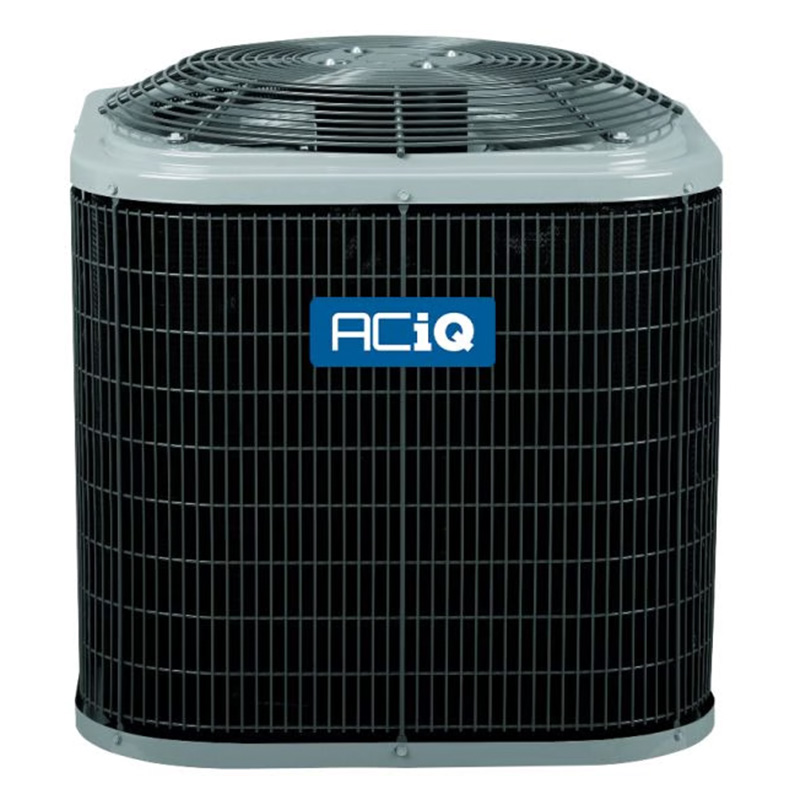
The ACiQ 4-Ton AC with Electric Heat System pairs a 15.5 SEER2 cooling-only condensing unit with a 24-inch wide, variable-speed, multi-positional modular air handler that runs on R-454B refrigerant. The result is a mid-efficiency split system sized for larger homes, typically in the 2,000 to 2,600 square foot range depending on climate and insulation. The variable-speed air handler modulates airflow continuously rather than cycling on and off at full blast, which tends to reduce temperature swings, lower humidity, and cut operating noise compared to single-stage equipment. Electric heat strips in the air handler handle heating duty, making this a practical choice in mild-winter climates where a heat pump is not a priority but reliable cooling is.
At 15.5 SEER2, this system sits above the federal minimum for most U.S. climate zones but below the 17-plus SEER2 tier that commands a significant price premium. That puts it in a sensible middle ground for buyers who want meaningfully better efficiency than a baseline unit without paying for top-tier ratings they may never fully recover in energy savings. R-454B is a lower global-warming-potential refrigerant that replaces R-410A, so this system is positioned for current and near-future regulatory standards. The modular, multi-positional air handler can be installed in upflow, downflow, or horizontal configurations, which matters in attic, closet, and basement installations where clearance is tight. Buyers replacing an existing system or building new in a warmer climate zone who want inverter-driven comfort without a name-brand markup are the core audience here.
The ACiQ 4-Ton 15.5 SEER2 system delivers genuine variable-speed comfort and a 12-year warranty at a price that undercuts comparable name-brand equipment by a meaningful margin. The trade-off is a newer brand with limited long-term reliability data, an undisclosed manufacturer that complicates parts sourcing, and no factory dealer network to lean on if service gets complicated. For budget-aware buyers in warm climates who have a competent independent HVAC contractor lined up, it is a credible option, but it asks for more trust than an established brand with a documented service history.
Overall score is the average of the five ratings above.
What we like
- Price undercuts Carrier, Trane, and Lennox equipment at similar efficiency by a notable margin
- Variable-speed air handler improves comfort and humidity control versus single or two-stage alternatives
- 12-year parts warranty included without dealer-network markup or registration hoops
- R-454B refrigerant aligns with current and anticipated regulatory direction, avoiding a near-term refrigerant transition
- Multi-positional air handler simplifies installation in attic, closet, and basement configurations
Trade-offs
- Brand is relatively new and Consumer Reports has not yet assigned a reliability score due to insufficient long-term data
- The actual manufacturer is not disclosed, making parts cross-referencing and service history verification harder than with name brands
- No factory dealer network means service quality depends entirely on the independent contractor you hire
- Electric heat strips are less efficient than a heat pump in climates with meaningful winters, raising operating costs if heating load is substantial
What homeowners and pros say about ACiQ
Early owner feedback on ACiQ equipment trends positive on the fundamentals that matter most at installation time: units are reported to run quietly, cool effectively, and the company’s direct-sale support team draws generally favorable comments for responsiveness. Because ACiQ is a newer brand, Consumer Reports has not yet assigned it a reliability score, noting there is not enough long-term data to rate it with confidence. That absence is not a red flag on its own, but it is an honest data gap buyers should weigh. The undisclosed manufacturing origin is the other piece that comes up in contractor discussions: without knowing which factory produced the equipment, technicians cannot easily cross-reference parts availability or draw on years of service pattern knowledge the way they can with Carrier or Trane hardware.
Among the specific failure concerns relevant to any newer inverter-driven system in this class, the issues most worth asking about are coil integrity over time, compressor longevity under real-world cycling conditions, and the availability of replacement components if the brand’s product line shifts. Electric heat strip reliability is generally straightforward, but the variable-speed inverter board is a higher-cost failure point if it occurs outside the warranty window. The 12-year parts warranty provides meaningful coverage against those scenarios during the period when they are most likely to appear, which is a genuine advantage over brands whose standard coverage runs five to ten years. Independent contractors in areas where ACiQ has a growing install base report that the equipment performs as specified at startup, and the direct-to-consumer pricing gives homeowners real room to negotiate on installation labor without feeling like the equipment itself was a budget compromise.
Sources: Consumer Reports heat pump ratings, HVACDirect on the ACiQ brand, AHRI Directory of Certified Product Performance, U.S. DOE appliance and equipment efficiency standards.
What it costs to run
At 15.5 SEER2, cooling this 4-ton system for a typical 1200-hour cooling season at the U.S. average electricity rate of $0.17/kWh works out to roughly $632 per year in cooling, about $99 less per year than a minimum-efficiency 13.4 SEER2 unit of the same size. Your real cost depends on your climate and local rate.
Method: (48,000 BTU/hr ÷ 15.5 SEER2) × 1200 hours ÷ 1000 × $0.17/kWh. Rate source: U.S. EIA average; cooling hours: moderate-climate estimate.
How it compares
| Brand | Comparable model | SEER2 | Stage | Price position |
|---|---|---|---|---|
| ACiQ | 4-Ton 15.5 SEER2 Variable-Speed AC with Electric Heat | 15.5 | Variable | Value pick |
| Carrier | Comfort 24ACC636A003 with FV4C Air Handler | 15.2-16 | Single-stage | Noticeably higher than ACiQ for comparable or lower efficiency |
| Trane | XR15 with TAM7 Air Handler | 15.0-15.5 | Single-stage | Higher than ACiQ, with established dealer network and long reliability record factored in |
| Lennox | Merit ML14XC1 with CBX32MV Air Handler | 15.0-15.5 | Two-stage or variable depending on pairing | Higher than ACiQ at similar efficiency tier, with broader parts network |
Competitor rows are comparable single-stage units at similar efficiency; price is relative position, not a quote.
Questions about this system
Who actually makes this ACiQ system, and does it matter for parts availability?
ACiQ is AC Direct's house brand, and the underlying manufacturer has not been publicly disclosed. Forum discussion points toward the ICP and Carrier family of manufacturers, but that is unconfirmed. It does matter practically: unlike buying a Carrier or Trane unit where a technician can cross-reference parts histories and OEM suppliers immediately, the undisclosed origin can slow down parts sourcing if something needs replacement outside of a standard warranty claim.
Is 15.5 SEER2 worth the upgrade over a minimum-efficiency unit, or should I spend more for higher SEER2?
For most climates, 15.5 SEER2 offers a real efficiency gain over the federal minimum and will reduce operating costs compared to a baseline unit, with reasonable payback over the system's life. Jumping to 17 or 18 SEER2 adds cost upfront and the energy savings payback period extends considerably, especially if you run the system fewer months per year. For a cooling-heavy climate where the unit runs much of the year, the higher tier becomes more justifiable.
Will any licensed HVAC contractor be able to install and service this system?
Any licensed HVAC contractor certified to handle R-454B refrigerant can install it, since the system uses standard split-system configurations. The catch is that ACiQ sells direct rather than through a dealer network, so your contractor may not be familiar with the brand. It is worth confirming in advance that your contractor is comfortable with the equipment and understands how to access warranty support if a component fails.
How does the electric heat in this system work, and is it practical for winter heating?
The air handler includes electric resistance heat strips, which convert electricity directly to heat at roughly 100 percent efficiency at the strip level but at a higher operating cost per BTU than a heat pump, which moves heat rather than generating it. In climates where winter temperatures rarely drop below freezing and heating is a secondary concern, this setup is practical and keeps the system cost lower. In colder climates with extended heating seasons, the operating cost of electric strips versus a heat pump or gas furnace can be significant.
What does the 12-year warranty actually cover, and are there registration requirements?
ACiQ's 12-year warranty covers parts, which is a longer coverage window than many name brands offer at the standard level. Because the system ships direct without dealer markup, the warranty is built into the purchase price rather than being an upsell. You should confirm the specific registration requirements and any labor coverage limitations directly with ACiQ at time of purchase, since labor costs on warranty repairs are typically the buyer's responsibility with most HVAC manufacturers.
Specifications
| Cooling capacity | 4 Ton |
| Efficiency | 15.5 SEER2 |
| Refrigerant | R-454B |