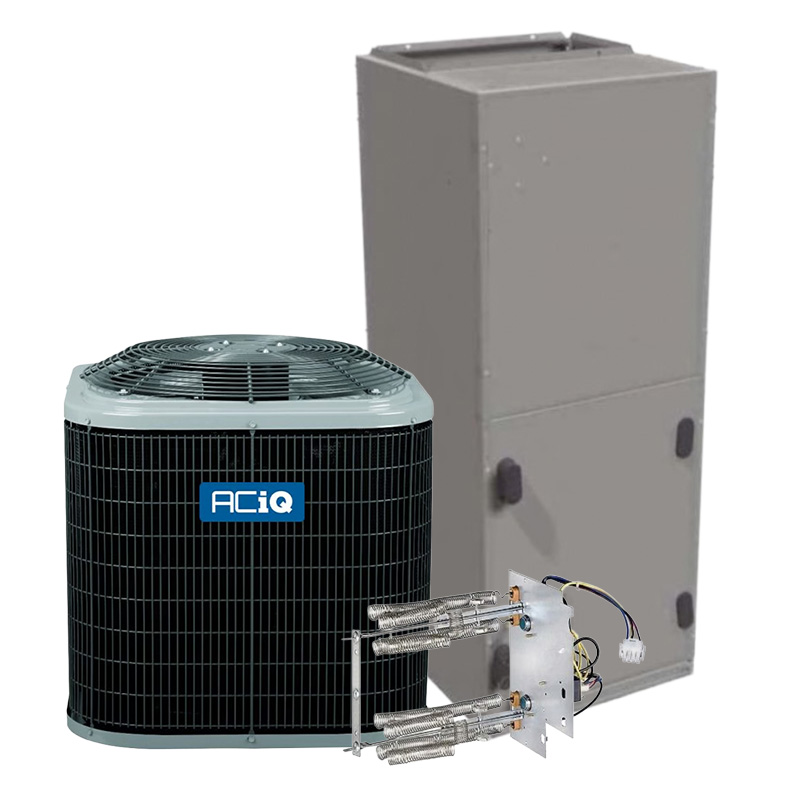
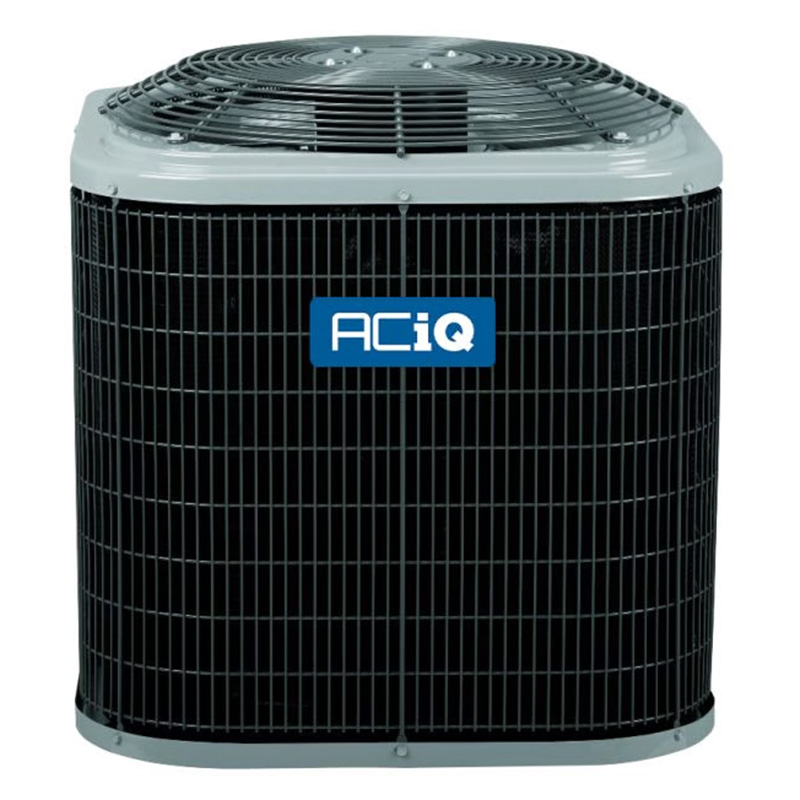
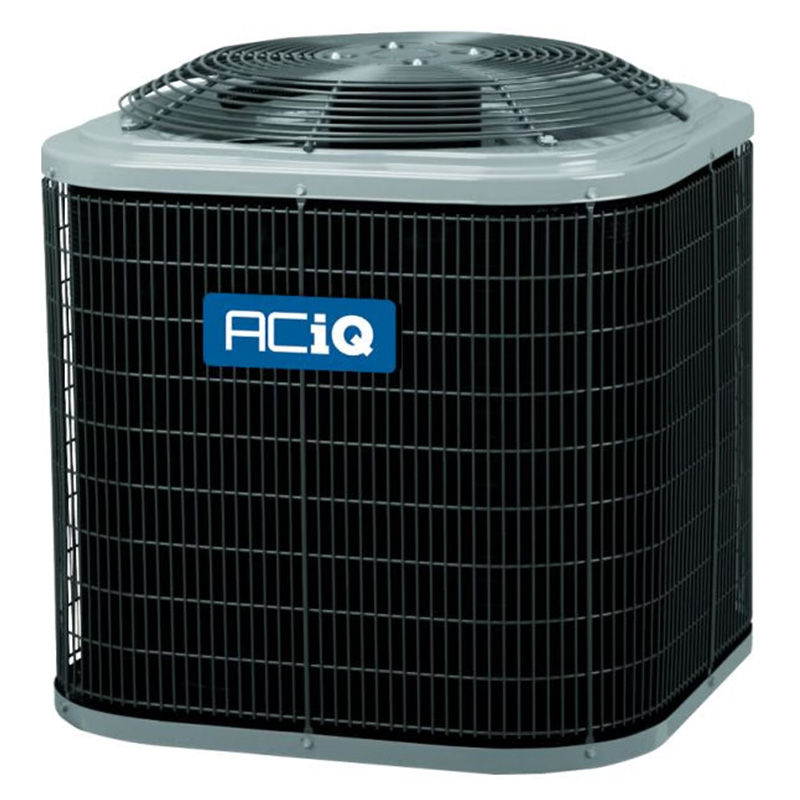
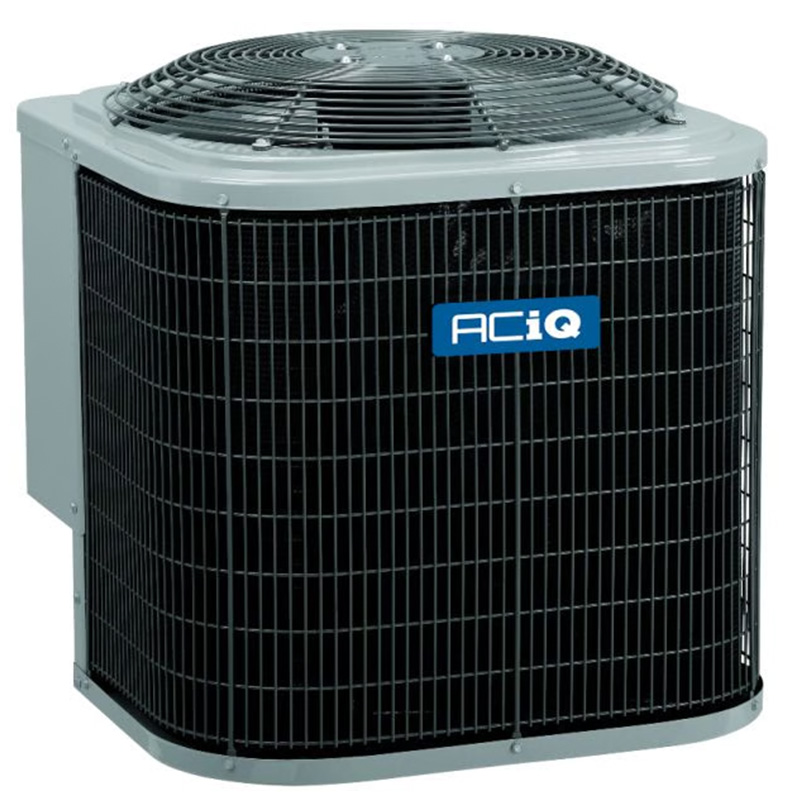
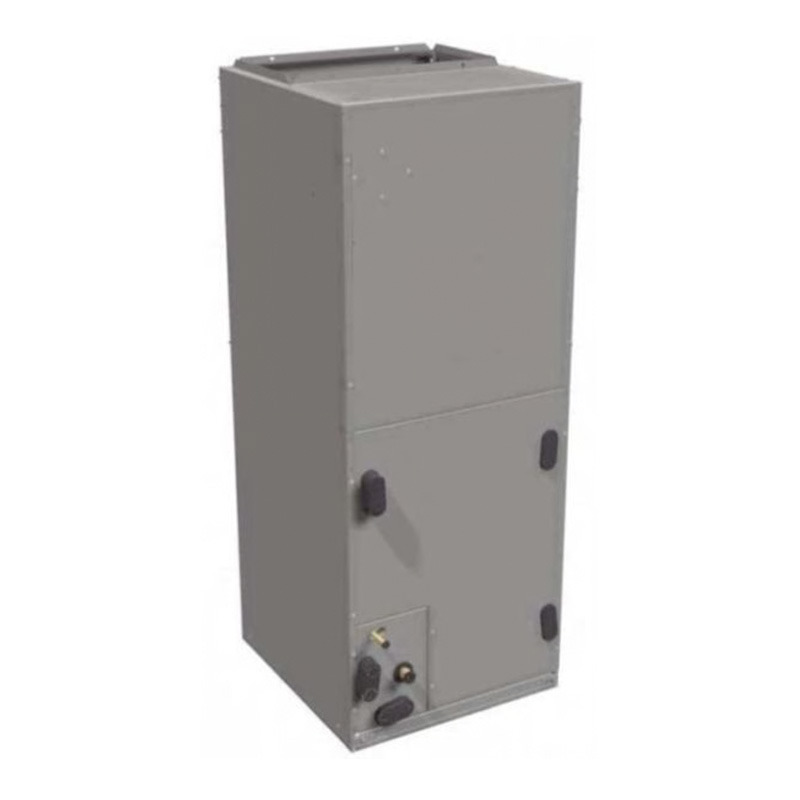
ACiQ 4 Ton Air Conditioning With Electric Heat System | 14 SEER2 AC | 21" Wide Multi-Positional Air Handler | R454B
View on AC Direct see your lowest price →Check current price on AC Direct →
Key features
- 4-ton cooling capacity with 14 SEER2 efficiency rating
- 21-inch wide multi-positional air handler fits upflow, downflow, and horizontal installs
- R-454B refrigerant: lower global-warming-potential, EPA-compliant next-gen refrigerant
- Electric heat strips integrated into air handler for year-round comfort
- 12-year parts warranty included at purchase price with no dealer markup
- Sold factory-direct, eliminating distributor and dealer margin from the price
About this system
The ACiQ 4-Ton 14 SEER2 Air Conditioning with Electric Heat System is a straight-cool split system paired with a multi-positional electric air handler, designed for larger homes typically in the 2,000 to 2,600 square foot range depending on local climate and insulation. The 21-inch-wide air handler fits upflow, downflow, and horizontal configurations, which gives installers real flexibility in tight mechanical rooms, closets, or attic spaces. Refrigerant is R-454B, the lower-GWP replacement for R-410A that is now standard on new equipment under current EPA guidelines, so this system is forward-compatible with evolving regulations rather than a unit you will struggle to service in five years.
At 14 SEER2, this system sits at the federal minimum efficiency threshold for most U.S. climate regions, which means it will keep you comfortable without the premium price of a 16 or 18 SEER2 system. That trade-off makes sense for homeowners in milder climates, rental property owners, or buyers replacing aging equipment on a tighter budget who want reliable cooling and electric heat strips without the added complexity of a heat pump refrigerant cycle. The electric heat side covers shoulder-season and backup heating needs, though operating costs for electric resistance heat are higher than a heat pump in sustained cold weather, so this configuration is best suited to warmer climates where heating demand is secondary to cooling.
The ACiQ 4-Ton 14 SEER2 electric heat system delivers a competitive entry-level package at a price that clearly undercuts name-brand equivalents, and the 12-year warranty provides meaningful long-term coverage. The trade-offs are real: minimum-efficiency cooling means higher monthly utility costs versus mid-tier alternatives, and the brand's short market history means long-term reliability data is still thin. For budget-conscious buyers in warm climates who have a trusted independent contractor, this is a credible option; for buyers who want decades of documented reliability data behind their purchase, established brands still hold the edge.
Overall score is the average of the five ratings above.
What we like
- Significantly lower purchase price than comparable Carrier, Trane, or Lennox units at the same efficiency tier
- 12-year parts warranty ships with the unit, not gated behind dealer registration or markup
- R-454B refrigerant is EPA-forward and will not face the regulatory phase-out pressure that R-410A equipment faces
- Multi-positional 21-inch air handler simplifies installation in a wide range of home configurations
- Early owner feedback consistently notes quiet operation and responsive customer support from AC Direct
Trade-offs
- 14 SEER2 is minimum federal efficiency, so monthly energy costs will run higher than a 16+ SEER2 system over the equipment's lifespan
- The actual manufacturer is undisclosed, making it harder for technicians to cross-reference parts, service bulletins, or failure history
- No dealer network means warranty service depends entirely on finding a willing independent contractor, which can be a challenge in some markets
- Long-term reliability is genuinely unknown: Consumer Reports has not yet ranked ACiQ, and the brand lacks the multi-decade field data that Carrier or Trane carries
What homeowners and pros say about ACiQ
Homeowners who have installed ACiQ equipment through AC Direct frequently mention the price gap as the deciding factor, and early reports on quiet operation and straightforward startup have been largely positive. That said, the feedback pool is still relatively shallow because the brand is new to the market, and Consumer Reports has not yet gathered enough long-term data to assign ACiQ a reliability score. What is documented is this: the undisclosed manufacturer relationship makes it genuinely harder for independent technicians to cross-reference service history, and if a contractor has not worked with ACiQ equipment before, sourcing the right replacement parts can take longer than with a brand that has a fully public parts ecosystem.
HVAC professionals on trade forums tend to be cautious rather than dismissive about ACiQ. The prevailing opinion is that the equipment appears well-built at the price point, likely sharing lineage with better-known brands, but pros are honest that they cannot confirm that and do not have years of callbacks to draw on. The specific failure modes to watch for in this category of equipment broadly include capacitor degradation, refrigerant coil leaks, and long-term compressor wear, and without a documented ACiQ-specific service history it is not yet clear whether this brand outperforms, matches, or lags the industry on those fronts. The 12-year parts warranty is a real differentiator and provides meaningful protection, but labor is on the homeowner, so building a relationship with a local contractor before you need emergency service is genuinely important with a direct-sold brand like this one.
Sources: Consumer Reports heat pump ratings, HVACDirect on the ACiQ brand, AHRI Directory of Certified Product Performance, U.S. DOE appliance and equipment efficiency standards.
What it costs to run
At 14 SEER2, cooling this 4-ton system for a typical 1200-hour cooling season at the U.S. average electricity rate of $0.17/kWh works out to roughly $699 per year in cooling, about $32 less per year than a minimum-efficiency 13.4 SEER2 unit of the same size. Your real cost depends on your climate and local rate.
Method: (48,000 BTU/hr ÷ 14 SEER2) × 1200 hours ÷ 1000 × $0.17/kWh. Rate source: U.S. EIA average; cooling hours: moderate-climate estimate.
How it compares
| Brand | Comparable model | SEER2 | Stage | Price position |
|---|---|---|---|---|
| ACiQ | 4-Ton 14 SEER2 AC with Electric Heat, Multi-Positional Air Handler | 14 | Single-stage | Value pick |
| Carrier | Comfort 24ACC4 with FE4A Air Handler | 14-15 | Single-stage | Moderately higher, plus typical dealer installation markup |
| Trane | XR14c with TAM7 Air Handler | 14-15 | Single-stage | Higher than ACiQ, with dealer network pricing adding to total installed cost |
| Lennox | Merit ML14XC1 with CBX25UH Air Handler | 14 | Single-stage | Higher purchase and installation cost, with Lennox dealer margin built in |
Competitor rows are comparable single-stage units at similar efficiency; price is relative position, not a quote.
Questions about this system
Can any licensed HVAC contractor install and service this system, or does it require an ACiQ-certified technician?
Any licensed HVAC contractor can install and service this system; there is no proprietary certification required. The practical challenge is that because the actual manufacturer is not publicly disclosed, your technician cannot easily pull up manufacturer service history or cross-reference parts under a sister brand, so you will want a contractor comfortable working with equipment they may not have encountered before.
Is 14 SEER2 going to cost me significantly more to run than a higher-efficiency unit?
Yes, over time the difference is real. A 16 SEER2 system uses roughly 12 percent less electricity for the same cooling output, and a 18 SEER2 system around 22 percent less. In a hot climate running the system heavily for five or more months a year, a more efficient unit can offset a higher purchase price within several years. If you are in a mild climate or replacing equipment you plan to sell the home with soon, 14 SEER2 is harder to justify from a pure operating-cost standpoint.
What does the 12-year warranty actually cover, and what do I need to do to keep it valid?
ACiQ's 12-year warranty covers parts on the system when purchased through AC Direct. You will need to register the product after installation and ensure the system is installed by a licensed contractor; unregistered or improperly installed units typically fall back to a shorter base warranty. Read the warranty documentation carefully for exclusions around refrigerant leaks, coil corrosion, and labor costs, which are commonly excluded from parts-only coverage.
Why does this system use electric heat strips instead of a heat pump, and is that a problem in my climate?
Electric resistance heat strips are simpler, less expensive, and very reliable, but they are significantly more expensive to operate than a heat pump when temperatures drop. In climates where you need heat for only a few weeks a year, the cost difference is minor and the simplicity is a genuine advantage. If your winters are long or temperatures regularly fall below 35 to 40 degrees Fahrenheit, a heat pump system would deliver meaningfully lower heating bills over the life of the equipment.
Will R-454B refrigerant be easy to service and recharge going forward, or is it hard to find?
R-454B is a newer refrigerant but it is the industry-standard replacement for R-410A on new equipment, so availability is growing steadily. Most HVAC distributors that already stock R-410A are transitioning to carry R-454B. It is a mildly flammable refrigerant classified A2L, which means your contractor will need proper handling equipment and training, but this is increasingly standard across the industry rather than a niche requirement.
Specifications
| Cooling capacity | 4 Ton |
| Efficiency | 14 SEER2 |
| Refrigerant | R-454B |