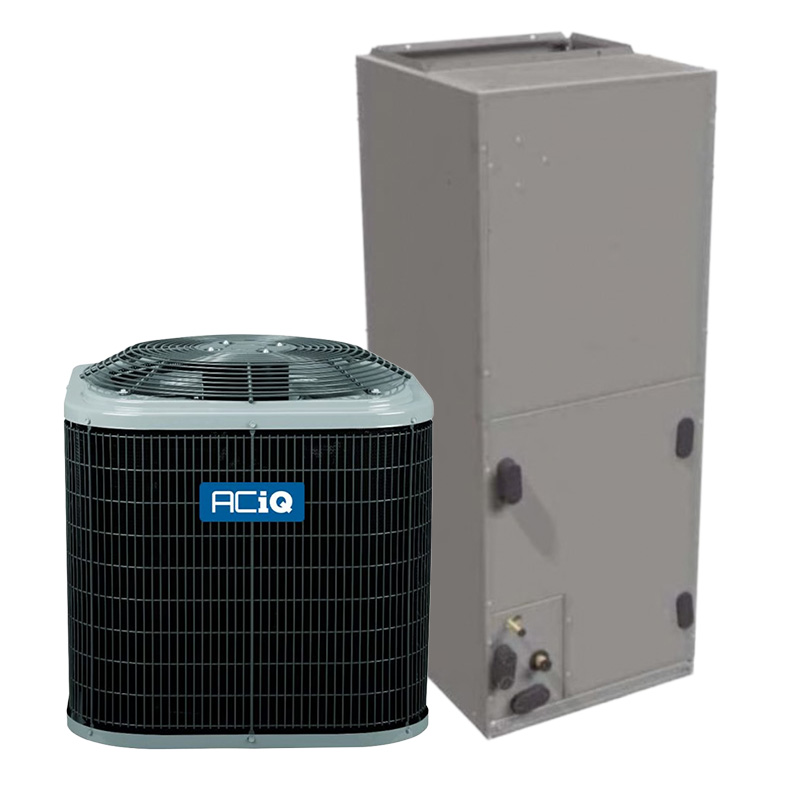
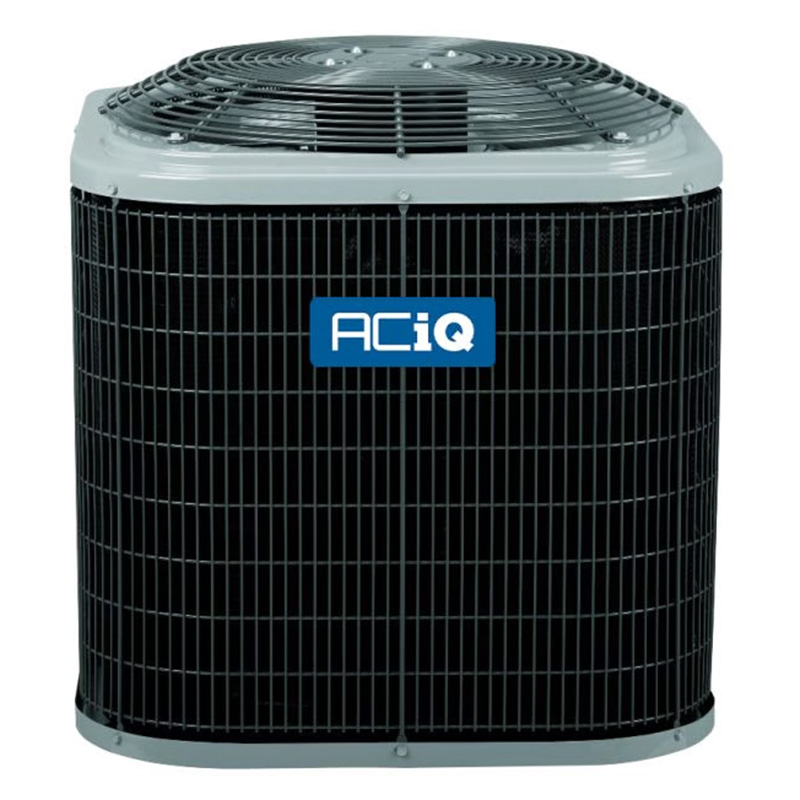
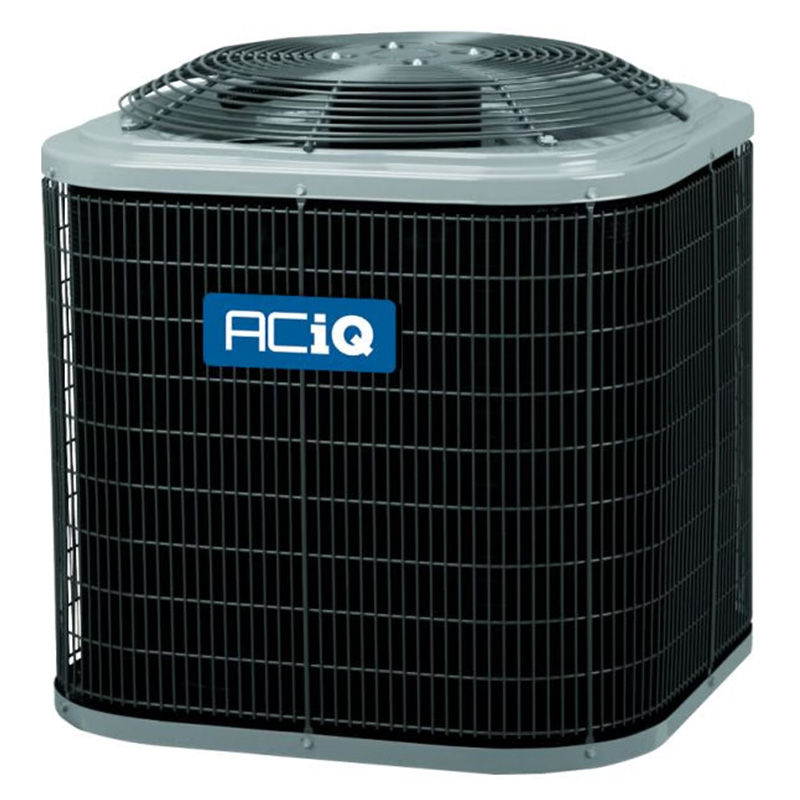
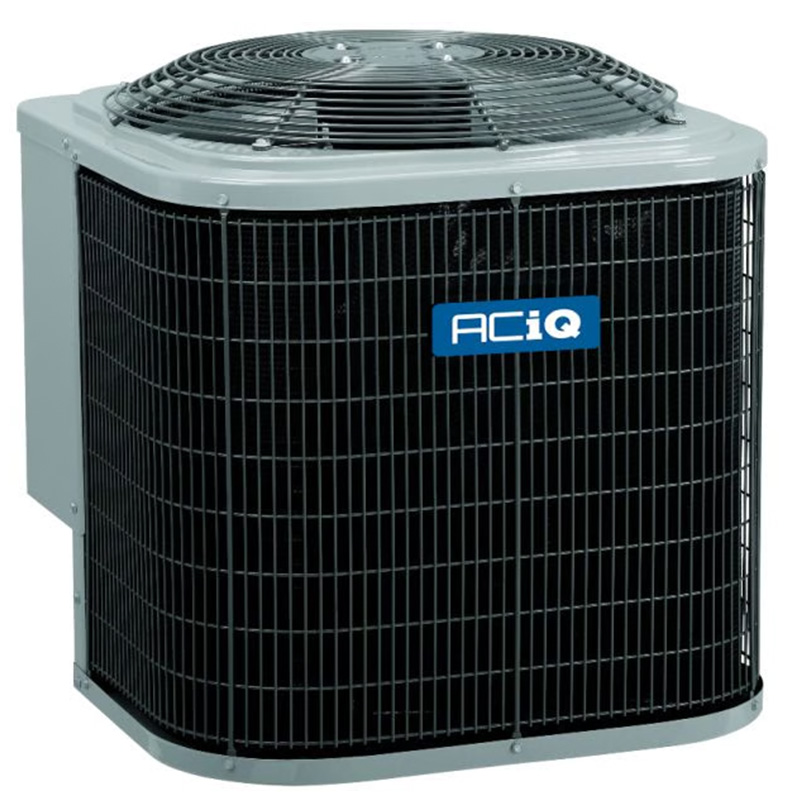
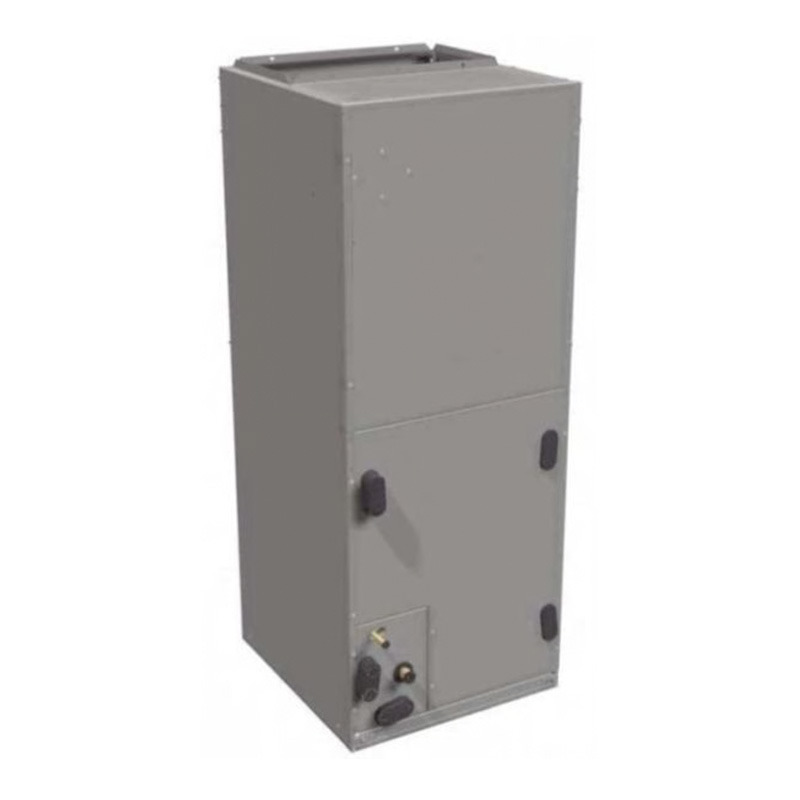
ACiQ 4 Ton Cooling Only Air Conditioning System | 14 SEER2 AC | 21" Wide Multi-Positional Air Handler | R454B
View on AC Direct see your lowest price →Check current price on AC Direct →
Key features
- 4-ton cooling capacity suited to larger homes in the 2,000–2,600 sq ft range
- 14 SEER2 efficiency rating meets federal minimum standards for most U.S. regions
- R-454B refrigerant complies with current EPA regulations and avoids R-410A phase-out concerns
- 21-inch wide multi-positional air handler installs in upflow, downflow, or horizontal orientation
- Cooling-only configuration pairs with existing furnaces or electric heat strips
- Sold direct with a 12-year parts warranty and no dealer markup built into the price
About this system
The ACiQ 4-Ton Cooling Only system pairs a 14 SEER2-rated condensing unit with a 21-inch wide multi-positional air handler, making it a straightforward split-system replacement or new-install option for larger homes typically in the 2,000 to 2,600 square foot range, depending on climate zone and insulation. The system runs on R-454B refrigerant, a lower-global-warming-potential alternative to R-410A that aligns with current EPA regulations and positions the equipment for long-term serviceability as the industry phases out older refrigerants. With no heating component, this configuration suits climates where a separate furnace or heat pump is already handling winter loads, or where electric resistance heat strips in the air handler cover the occasional cold snap.
The 21-inch cabinet width on the air handler is a practical detail worth noting. Multi-positional units can be installed in upflow, downflow, or horizontal configurations, which gives installers flexibility in tight mechanical rooms, closets, or attic spaces. At 4 tons and 14 SEER2, this is an entry-level efficiency system, meeting the federal minimum for most northern regions and sitting just above the 2023 southern minimum, so it is not a high-efficiency choice but it is a code-compliant one at a price point that reflects that positioning. Buyers who prioritize lower upfront cost over long-term utility savings, or who are replacing a 10 SEER or 12 SEER legacy system and will see meaningful improvement regardless, are the clearest fit for this equipment.
The ACiQ 4-ton 14 SEER2 cooling-only system earns its place as a budget-conscious replacement option for homeowners who need reliable, code-compliant cooling without paying a premium for brand recognition or high-efficiency ratings. The direct-to-consumer pricing and 12-year warranty are genuine advantages, but the undisclosed manufacturer and thin long-term reliability data mean buyers are accepting more uncertainty than they would with a Carrier or Trane. It is a reasonable calculated risk for cost-focused buyers, not a slam dunk for those who prioritize proven track records.
Overall score is the average of the five ratings above.
What we like
- Competitive upfront price that undercuts most name-brand equivalents at the same efficiency tier
- 12-year parts warranty shipped standard, with no dealer markup inflating the cost basis
- R-454B refrigerant is forward-compatible with evolving EPA regulations
- Multi-positional air handler adds installation flexibility in constrained spaces
- Early owner reports consistently cite quiet operation and responsive customer support
Trade-offs
- Undisclosed manufacturer makes parts cross-referencing and service history harder to verify than with name brands
- No independent long-term reliability data; Consumer Reports has not yet assigned a reliability score
- 14 SEER2 is entry-level efficiency, so operating costs will be higher than 16 SEER2 or above alternatives over a 10-plus year lifespan
- Direct-sale model means no local dealer network, so finding experienced local contractors familiar with the brand can require extra legwork
What homeowners and pros say about ACiQ
Homeowners who have installed ACiQ equipment tend to report positive first impressions, pointing to quieter-than-expected operation and a support team that is relatively easy to reach compared to experiences with some larger brands. Early reviews on Google and dealer aggregator sites skew favorable, though it is worth emphasizing that the brand is still accumulating the years of field data needed for a meaningful reliability picture. Consumer Reports has not yet assigned ACiQ a reliability score due to insufficient long-term data, which is not a condemnation but is an honest gap buyers should factor in. The specific failure modes most worth watching in any system at this price tier include capacitor degradation in hot climates, refrigerant coil integrity over time, and compressor longevity past the eight-to-ten-year mark. Because ACiQ’s manufacturer is not publicly disclosed, cross-referencing whether those components share a lineage with better-documented brands is difficult, and that opacity is a legitimate concern.
HVAC contractors who encounter ACiQ systems in the field generally find the equipment straightforward to work on, since the configurations follow standard industry conventions rather than proprietary quirks. The friction point contractors most often raise is the direct-sale model: because there is no local distributor relationship, getting technical support or warranty parts can involve more back-and-forth with ACiQ directly rather than a local rep who knows the contractor by name. For homeowners, the clearest practical advice from the field is to confirm your contractor has R-454B recovery equipment before booking the install, and to register the warranty promptly to lock in the 12-year coverage, which is one of the stronger standard warranty positions in this price segment.
Sources: Consumer Reports heat pump ratings, HVACDirect on the ACiQ brand, AHRI Directory of Certified Product Performance, U.S. DOE appliance and equipment efficiency standards.
What it costs to run
At 14 SEER2, cooling this 4-ton system for a typical 1200-hour cooling season at the U.S. average electricity rate of $0.17/kWh works out to roughly $699 per year in cooling, about $32 less per year than a minimum-efficiency 13.4 SEER2 unit of the same size. Your real cost depends on your climate and local rate.
Method: (48,000 BTU/hr ÷ 14 SEER2) × 1200 hours ÷ 1000 × $0.17/kWh. Rate source: U.S. EIA average; cooling hours: moderate-climate estimate.
How it compares
| Brand | Comparable model | SEER2 | Stage | Price position |
|---|---|---|---|---|
| ACiQ | 4-Ton Cooling Only 14 SEER2 with Multi-Positional Air Handler | 14 | Single-stage | Value pick |
| Carrier | Comfort 24ACC4 Series | 14–15 | Single-stage | Moderately higher than ACiQ |
| Trane | XR14c Series | 14–15 | Single-stage | Moderately higher than ACiQ |
| Lennox | Merit ML14XC1 Series | 14–15 | Single-stage | Moderately to significantly higher than ACiQ |
Competitor rows are comparable single-stage units at similar efficiency; price is relative position, not a quote.
Questions about this system
Can any licensed HVAC contractor install and service this system, or do I need an ACiQ-authorized dealer?
Any licensed HVAC contractor can install and service the system since it uses standard refrigerant connections and components. ACiQ sells direct rather than through a dealer network, so there are no authorized-dealer requirements, but you should confirm the contractor is comfortable working with R-454B refrigerant and has the appropriate recovery equipment, as some older service shops have not yet updated their tools for newer refrigerants.
R-454B is new to me. Will refrigerant be easy to find if the system needs a recharge in five or ten years?
R-454B is being adopted broadly across the HVAC industry as manufacturers comply with EPA AIM Act rules phasing down high-GWP refrigerants, so availability is expected to grow rather than shrink over the coming decade. It is a reasonable long-term choice compared to systems still using R-410A, which faces its own phase-down, though any refrigerant availability depends on market conditions at the time of service.
The manufacturer is not disclosed. How do I source replacement parts if something fails out of warranty?
ACiQ sells parts directly through AC Direct, and forum discussion suggests the equipment shares lineage with the ICP and Carrier product family, though that is unconfirmed. The practical implication is that parts sourcing is more dependent on ACiQ's own supply chain than it would be with a brand whose manufacturer is publicly known, which is a real trade-off to weigh against the lower purchase price.
Is 14 SEER2 going to cost me significantly more to run than a higher-efficiency option?
At 4 tons, upgrading from 14 SEER2 to 16 SEER2 can reduce cooling energy consumption by roughly 12 to 14 percent, which translates to real savings in hot climates with long cooling seasons but may take many years to recoup through the higher upfront cost of a more efficient unit. If you are in a mild climate or replacing a very old low-SEER system, the efficiency gap matters less than if you are in Phoenix or Houston running the system six months a year.
The air handler is listed as 21 inches wide. Will that fit in a standard closet or utility room designed for older equipment?
Many older utility closets and alcoves were built around 17-inch or 19-inch air handlers, so the 21-inch width is worth measuring against your existing rough opening before purchasing. The multi-positional design helps with orientation flexibility, but width clearance is fixed and a tight fit can complicate installation and future service access.
Specifications
| Cooling capacity | 4 Ton |
| Efficiency | 14 SEER2 |
| Refrigerant | R-454B |