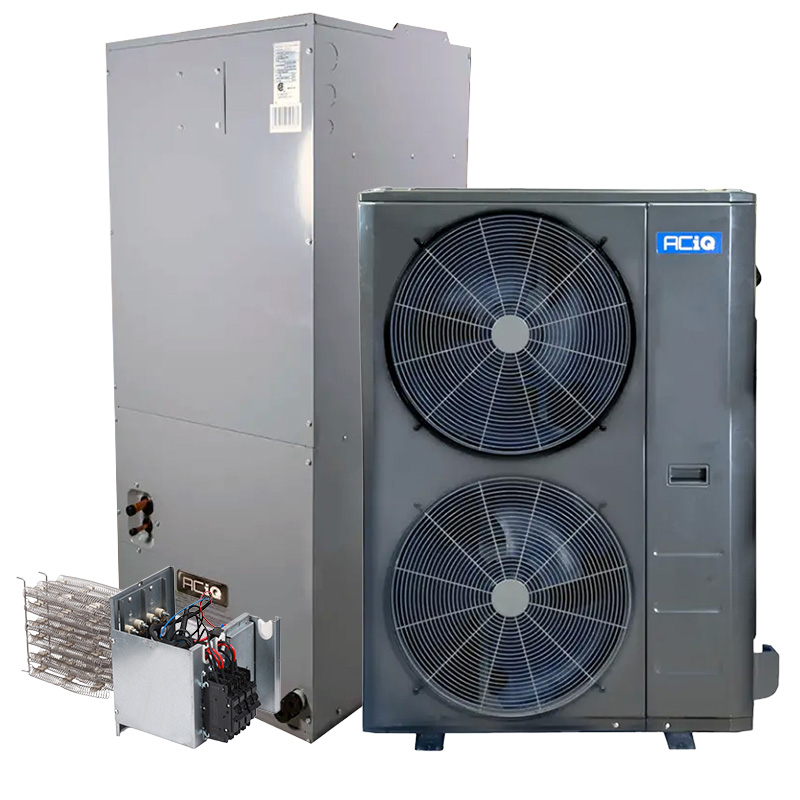
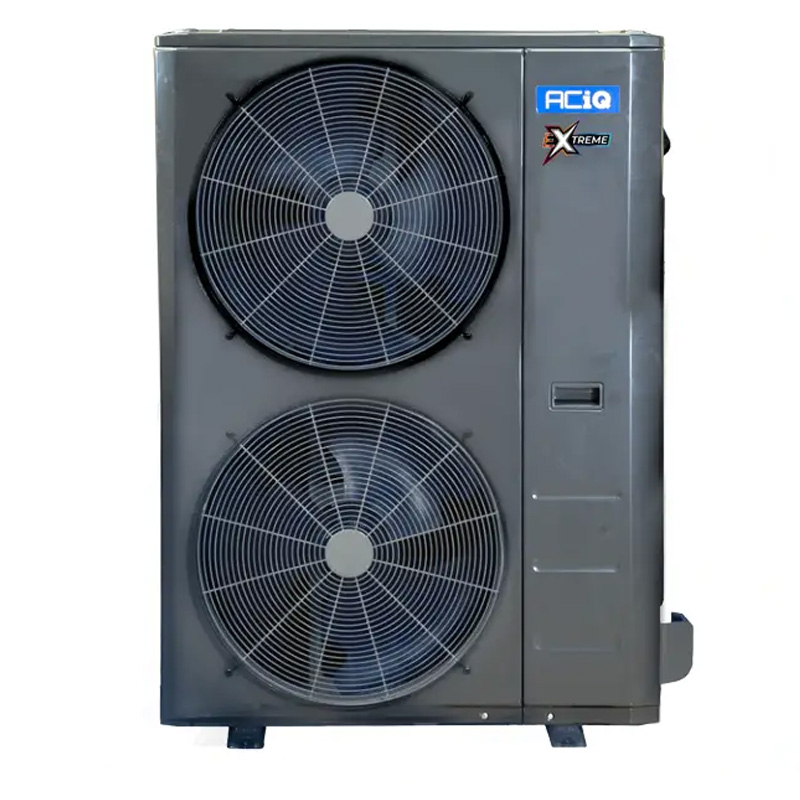
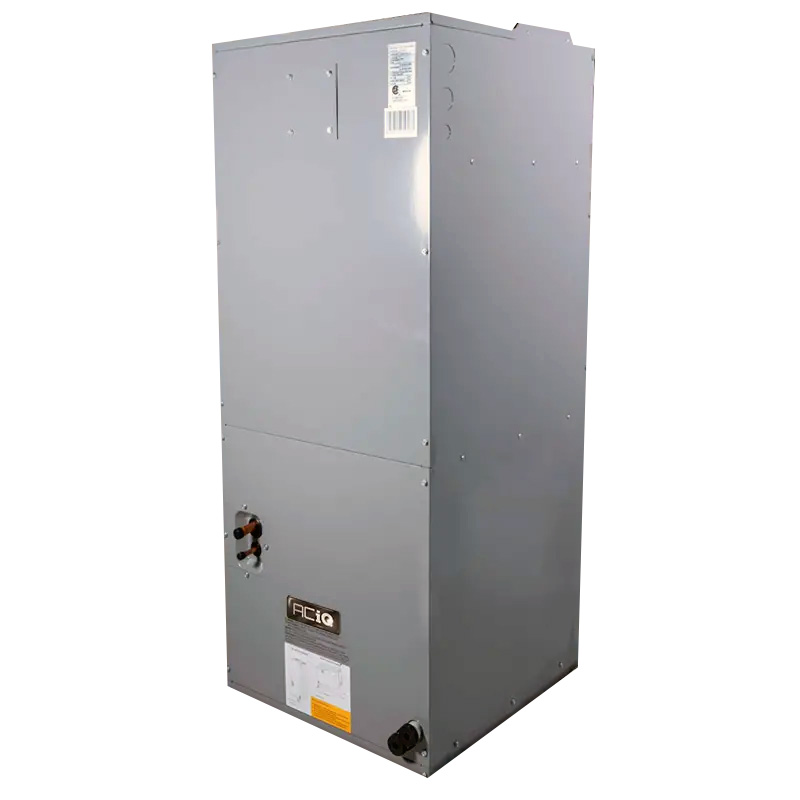
ACiQ 5 Ton Split Heat Pump AC System | 15.2 SEER2 High Efficiency Inverter Heats Down To 5° F and Beyond | R454B
View on AC Direct see your lowest price →Check current price on AC Direct →
Key features
- 15.2 SEER2 inverter-driven compressor for variable-capacity operation
- Rated heating performance at 5°F and below, supporting cold-climate primary heat use
- R-454B low-GWP refrigerant, compliant with current and anticipated EPA phasedown rules
- 5-ton capacity suited to larger residential applications, approximately 2,400 to 3,000 sq ft
- 12-year parts warranty included, no dealer markup required for coverage
- Sold factory-direct through AC Direct, bypassing traditional dealer distribution costs
About this system
The ACiQ 5-ton split heat pump system targets larger homes, typically in the 2,400 to 3,000 square foot range depending on climate and insulation, that need serious heating and cooling capacity without the premium markup of a Carrier or Trane dealer installation. At 15.2 SEER2, this unit clears the federal minimum efficiency threshold for most regions and sits in the entry-to-mid efficiency tier, not the top of the inverter class but meaningfully better than single-stage systems from just a few years ago. The inverter-driven compressor modulates output rather than cycling on and off, which translates to steadier temperatures, lower sound levels during normal operation, and reduced electrical demand spikes.
The standout spec for a heat pump at this price point is the rated heating performance down to 5 degrees Fahrenheit and below, which makes it a plausible primary heating source in moderate cold-climate zones rather than just a shoulder-season supplement. It uses R-454B refrigerant, a lower global-warming-potential alternative to the R-410A that is being phased out, meaning this system is forward-compatible with evolving EPA regulations. Five-ton capacity is at the upper end of residential sizing, so proper Manual J load calculation before purchase is not optional; an oversized unit will short-cycle and underperform regardless of its efficiency rating.
The ACiQ 5-ton heat pump delivers competitive inverter technology and a cold-climate heating spec at a price that undercuts name-brand equivalents by a meaningful margin, making it a reasonable choice for cost-conscious buyers who have a qualified independent contractor lined up. The trade-off is real: the brand is new enough that long-term reliability data simply does not exist yet, the manufacturer identity is unconfirmed, and service logistics without a dealer network require more legwork from the homeowner. Buyers who can accept those uncertainties get solid specs; buyers who prioritize proven track records should look at established brands.
Overall score is the average of the five ratings above.
What we like
- Factory-direct pricing undercuts comparable name-brand inverter heat pumps by a notable margin
- Inverter compressor provides variable-capacity operation for quieter, more consistent comfort
- Heating rated to 5°F and beyond gives real cold-climate flexibility uncommon at this price tier
- R-454B refrigerant is forward-compatible with EPA phasedown regulations, reducing future compliance risk
- 12-year parts warranty is competitive and does not depend on dealer registration for full coverage
Trade-offs
- No Consumer Reports reliability ranking exists yet due to insufficient long-term field data
- Undisclosed manufacturer makes parts cross-referencing and service history harder to verify than with named brands
- No factory dealer network means finding a qualified local contractor for installation and warranty service falls entirely on the homeowner
- 15.2 SEER2 is solid but sits near the lower end of the inverter class; buyers in high-cooling-cost climates may want to evaluate higher-SEER2 options
What homeowners and pros say about ACiQ
Early owner feedback collected on platforms like Google and AC Direct’s own review pages tends to cluster around three themes for ACiQ systems generally: quieter operation than the older single-stage units they replaced, reliable performance through the first cooling and heating seasons, and a customer support team that is reachable when questions come up. Those are encouraging signals, but it is worth noting that Consumer Reports has not yet assigned ACiQ a reliability score because the brand is too new to have the volume of long-term field data that scoring requires. Owners who bought two or three years ago are still within the window where most systems perform well regardless of brand, so the real test of compressor longevity and coil integrity is still ahead.
On the professional side, the reception from independent HVAC contractors is mixed in ways that matter for a 5-ton purchase. Some technicians appreciate that the factory-direct model keeps costs down for their customers and find the equipment straightforward to commission. Others flag the undisclosed manufacturer as a practical inconvenience: when a capacitor fails or a coil develops a leak, which are the documented failure modes most commonly discussed in HVAC service forums for newer inverter systems of this class, the inability to cross-reference parts by parent brand can slow down sourcing. Service also depends entirely on independent contractors since there is no dealer network, which puts more responsibility on the homeowner to establish that relationship before a problem occurs rather than after.
Sources: Consumer Reports heat pump ratings, HVACDirect on the ACiQ brand, AHRI Directory of Certified Product Performance, U.S. DOE appliance and equipment efficiency standards.
What it costs to run
At 15.2 SEER2, cooling this 5-ton system for a typical 1200-hour cooling season at the U.S. average electricity rate of $0.17/kWh works out to roughly $805 per year in cooling, about $108 less per year than a minimum-efficiency 13.4 SEER2 unit of the same size. Your real cost depends on your climate and local rate.
Method: (60,000 BTU/hr ÷ 15.2 SEER2) × 1200 hours ÷ 1000 × $0.17/kWh. Rate source: U.S. EIA average; cooling hours: moderate-climate estimate.
How it compares
| Brand | Comparable model | SEER2 | Stage | Price position |
|---|---|---|---|---|
| ACiQ | 5-Ton 15.2 SEER2 Inverter Heat Pump | 15.2 | Variable | Value pick |
| Carrier | Performance 17 Heat Pump (25HPB6) | 17.0 | Variable | Significantly higher with dealer markup and installation |
| Trane | XR15 Heat Pump (4TWR5) | 15.6 | Single-stage | Higher than ACiQ through dealer channel |
| Lennox | Merit ML15XP1 Heat Pump | 15.1 | Single-stage | Comparable to moderately higher through Lennox dealer network |
Competitor rows are comparable single-stage units at similar efficiency; price is relative position, not a quote.
Questions about this system
Will this heat pump actually keep my home warm when temperatures drop below 10°F, or do I still need a backup furnace?
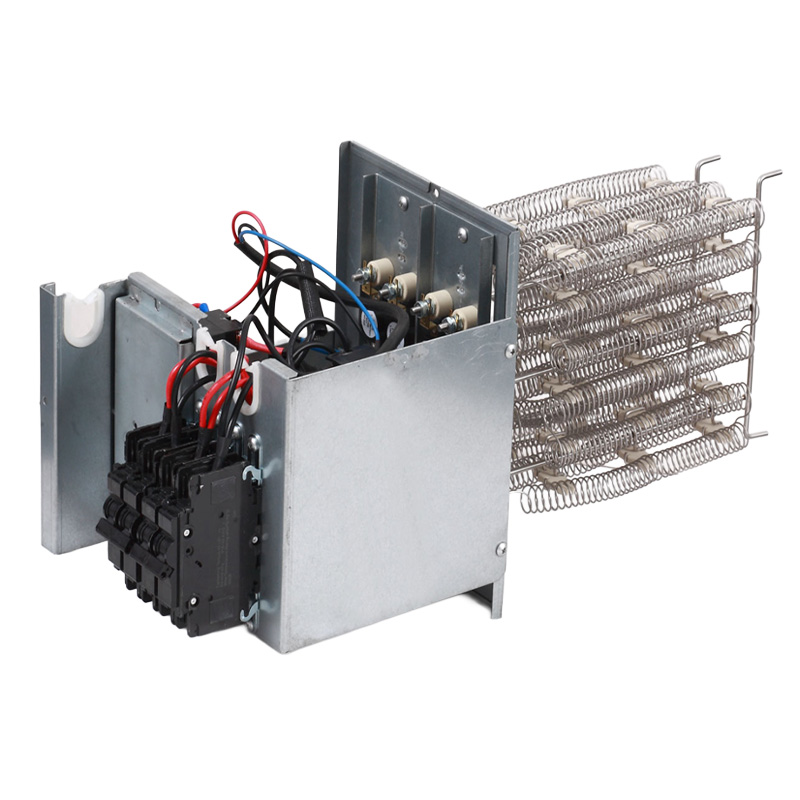
ACiQ rates this unit to heat at 5°F and beyond, which means it maintains meaningful heating output at low ambient temperatures, but output capacity does decrease as temperatures fall. In climates that regularly see extended periods below 0°F, a backup heat source, whether electric auxiliary strips or a gas furnace in a dual-fuel setup, is still a practical consideration. For most moderate cold-climate zones, it can function as primary heat.
How do I get warranty service if there is no local ACiQ dealer?
ACiQ warrants the parts for 12 years, but service is performed by independent HVAC contractors rather than a factory dealer network. You are responsible for finding a licensed local contractor willing to work on the system, and labor is not covered under the warranty. Confirming a contractor is comfortable servicing ACiQ equipment before you purchase is a practical step worth taking.
Is R-454B refrigerant something local technicians will be familiar with, or will it be hard to find service?
R-454B is part of the refrigerant transition away from R-410A and is increasingly common in newer systems, but it is not yet as universally stocked as R-410A was at its peak. Most established HVAC contractors are becoming familiar with it, but it is worth confirming your local technician has the appropriate equipment and certifications to handle it before you need emergency service.
Is 5 tons definitely the right size, or should I be concerned about buying too much capacity?
Five tons is at the upper boundary of residential sizing and is appropriate for genuinely large homes in warm climates or somewhat smaller homes in very hot climates, but it is frequently oversold. An oversized inverter system will run less efficiently and can cause humidity problems even though it will cool the space. A proper Manual J load calculation by a qualified contractor is the only reliable way to confirm whether 5 tons is correct for your home.
Who actually manufactures ACiQ equipment, and does it matter for parts availability?
ACiQ is AC Direct's house brand and the actual manufacturer is not publicly disclosed. Forum discussion has pointed toward the ICP and Carrier family of manufacturers, but this is unconfirmed. It matters in a practical sense because you cannot simply cross-reference parts by manufacturer if something needs replacement, which can slow down repairs compared to a brand with a fully transparent supply chain and national parts distribution.
Specifications
| Cooling capacity | 5 Ton |
| Efficiency | 15.2 SEER2 |
| Refrigerant | R-454B |