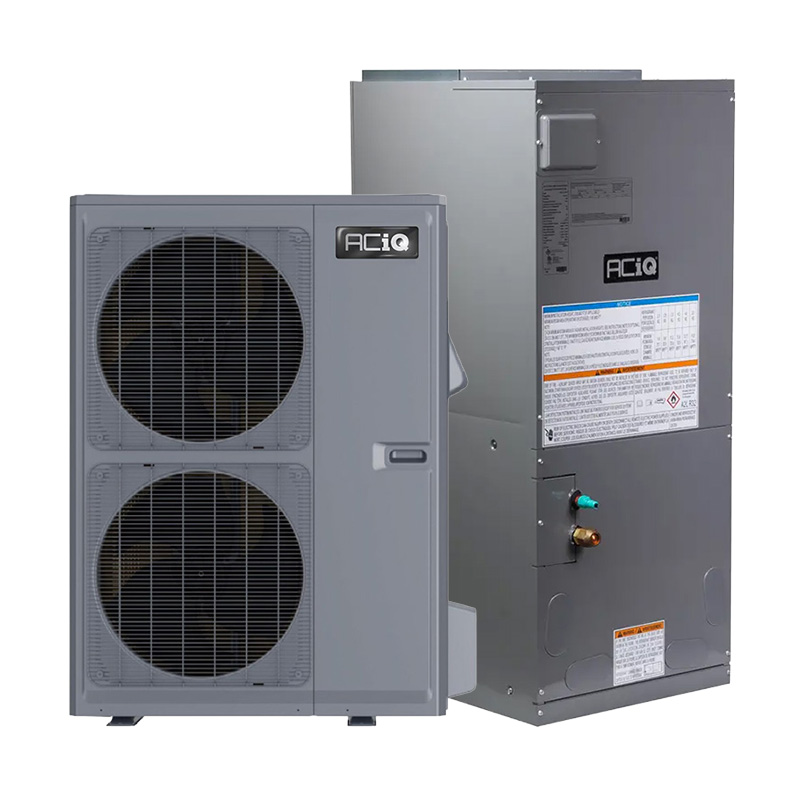
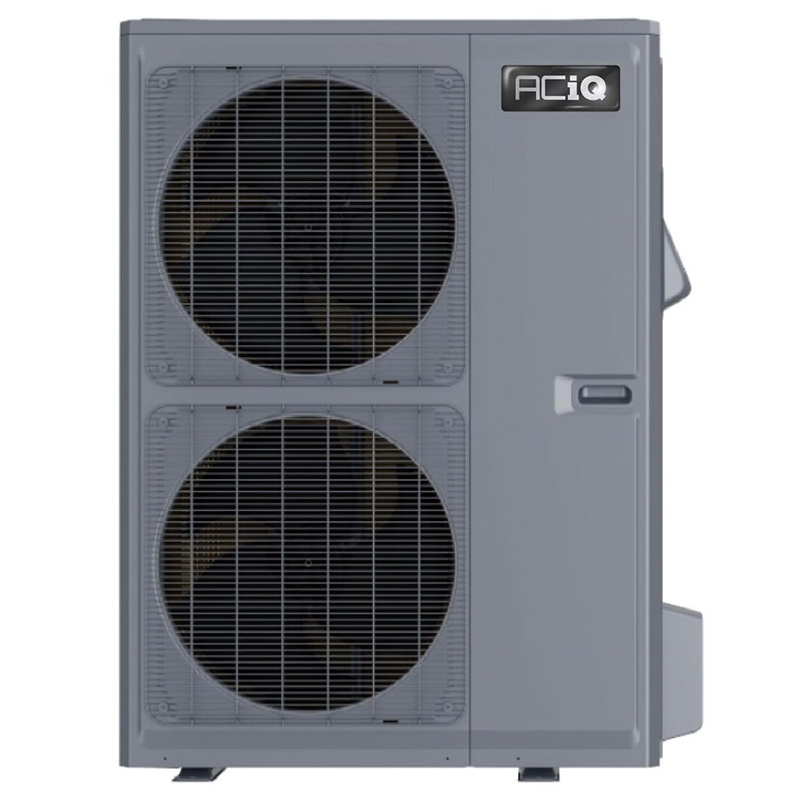
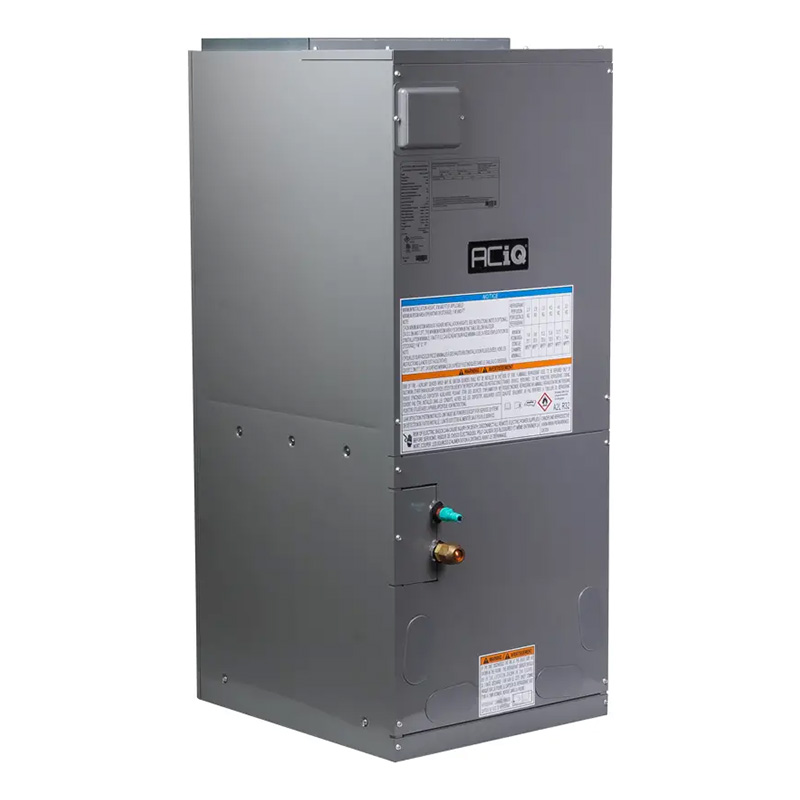
ACiQ 5 Ton Split Heat Pump AC System | 18.5 SEER2 High Efficiency Inverter Heats Down To -22° F and Beyond | R32
View on AC Direct see your lowest price →Check current price on AC Direct →
Key features
- 18.5 SEER2 variable-speed inverter compressor for high-efficiency cooling and heating
- Rated for heating operation down to -22°F ambient, reducing reliance on backup resistance heat
- R-32 refrigerant with lower global warming potential than R-410A
- 5-ton capacity suited to larger homes, approximately 2,400 to 3,000+ sq ft depending on load
- 12-year parts warranty included without dealer markup
- Sold factory-direct, undercutting comparable-spec name-brand systems on purchase price
About this system
The ACiQ 5-ton 18.5 SEER2 inverter heat pump is a high-capacity cold-climate system aimed at larger homes, typically in the 2,400 to 3,000 square foot range depending on climate zone and insulation. At 18.5 SEER2 it sits in the upper tier of efficiency for ducted split heat pumps, meaningfully above the federal minimums and in territory previously dominated by premium brands at significantly higher prices. The R-32 refrigerant charge is worth noting: R-32 has a lower global warming potential than the R-410A it replaces and is becoming the industry standard, which should ease future service availability.
The headline specification that sets this unit apart from standard heat pumps is its rated heating performance down to -22 degrees Fahrenheit. Most conventional heat pumps lose meaningful capacity around 0 to 5 degrees Fahrenheit and shut off entirely well above that threshold, forcing a handoff to expensive electric resistance backup heat. A system rated to this low an ambient temperature is genuinely useful in cold-climate regions like the upper Midwest, New England, and mountain states where a standard heat pump would need heavy supplemental backup. The variable-speed inverter compressor is the technology that makes this possible, modulating output continuously rather than cycling on and off, which also contributes to the high SEER2 rating and quieter operation.
The ACiQ 5-ton 18.5 SEER2 cold-climate heat pump offers a genuinely competitive combination of efficiency, cold-weather capability, and price that is hard to match among name brands. The trade-off is real: the brand is newer, long-term reliability data is thin, the manufacturer is undisclosed, and direct-sale support depends entirely on finding a competent independent contractor willing to service it. Buyers who can accept that uncertainty get a well-specified system at a meaningful cost advantage.
Overall score is the average of the five ratings above.
What we like
- 18.5 SEER2 efficiency rating is well above minimum standards and competitive with premium inverter systems
- Rated heating capability to -22°F makes it a legitimate all-season solution in cold climates
- R-32 refrigerant is forward-compatible and easier to handle than refrigerants being phased out
- 12-year parts warranty is stronger coverage than many name-brand systems at this price tier
- Factory-direct pricing removes dealer markup, resulting in a lower out-of-pocket system cost
Trade-offs
- ACiQ is a newer brand with no Consumer Reports reliability ranking and limited independent long-term data
- The actual manufacturer is not disclosed, complicating parts sourcing and cross-referencing service history
- No factory dealer network means you are responsible for finding and vetting your own installation contractor
- A 5-ton system at this efficiency tier requires careful Manual J load calculation; oversizing at this capacity is a real risk and hurts both comfort and efficiency
What homeowners and pros say about ACiQ
Early owners of ACiQ systems report quiet operation and solid first-season performance as consistent themes across independent review platforms. Consumer Reports has not yet assigned ACiQ a reliability score because the brand is too new for the long-term failure data that informs their rankings, and that absence of data cuts both ways: there is no documented pattern of widespread failures, but there is also no independent confirmation that performance holds up over a decade or more. Because the actual manufacturer behind ACiQ has not been disclosed, owners and technicians cannot easily cross-reference service bulletins or parts histories from related product lines, which is a practical complication if a repair is needed outside of warranty.
HVAC contractors who have worked on ACiQ systems note that the variable-speed inverter technology itself is not unusual and does not require exotic tools, but they also flag that diagnosing and sourcing parts for a brand without a named manufacturer behind it can take longer than for a Carrier or Trane. The specific failure modes documented for newer inverter brands generally fall into three categories: control board and inverter drive issues, refrigerant circuit concerns including coil integrity, and long-term compressor reliability over the full warranty period, none of which are unique to ACiQ but none of which have been ruled out by years of field data either. For buyers who are price-sensitive and comfortable doing their own contractor vetting, the ACiQ value proposition is real; for buyers who want the reassurance of an established service infrastructure, that comfort costs more with a name brand.
Sources: Consumer Reports heat pump ratings, HVACDirect on the ACiQ brand, AHRI Directory of Certified Product Performance, U.S. DOE appliance and equipment efficiency standards.
What it costs to run
At 18.5 SEER2, cooling this 5-ton system for a typical 1200-hour cooling season at the U.S. average electricity rate of $0.17/kWh works out to roughly $662 per year in cooling, about $251 less per year than a minimum-efficiency 13.4 SEER2 unit of the same size. Your real cost depends on your climate and local rate.
Method: (60,000 BTU/hr ÷ 18.5 SEER2) × 1200 hours ÷ 1000 × $0.17/kWh. Rate source: U.S. EIA average; cooling hours: moderate-climate estimate.
How it compares
| Brand | Comparable model | SEER2 | Stage | Price position |
|---|---|---|---|---|
| ACiQ | 5-Ton 18.5 SEER2 Cold-Climate Inverter Heat Pump | 18.5 | Variable | Value pick |
| Carrier | Infinity 20 Heat Pump (25VNA0) | Up to 20 SEER2 | Variable | Significantly higher, plus dealer installation markup |
| Trane | XV20i Heat Pump (4TWV0) | Up to 20 SEER2 | Variable | Significantly higher, plus dealer installation markup |
| Lennox | XP21 Heat Pump | Up to 18.3 SEER2 | Variable | Higher, plus dealer installation markup |
Competitor rows are comparable single-stage units at similar efficiency; price is relative position, not a quote.
Questions about this system
Will this system actually heat my house when it is 10 or 20 degrees below zero outside?
The unit is rated to maintain heating operation down to -22°F ambient, which is a legitimate cold-climate specification made possible by the variable-speed inverter compressor. However, rated operation at extreme temperatures does not mean rated capacity: heating output at -22°F will be substantially lower than at milder temperatures, and a correct Manual J load calculation for your specific home is essential to confirm the 5-ton size is appropriate before you commit.
Who actually manufactures ACiQ equipment, and will I be able to get parts in five or ten years?
ACiQ is the house brand of AC Direct, and forum speculation points toward the ICP and Carrier manufacturing family, though the actual manufacturer has not been publicly confirmed. Parts availability is a legitimate open question for a newer brand, and the undisclosed manufacturer relationship makes cross-referencing parts harder than with a named brand. The 12-year warranty provides some protection, but you should ask your contractor about their parts sourcing experience before purchasing.
Can any HVAC contractor install this, or does it require a specialist?
Any licensed HVAC contractor can legally install this system, but because it uses R-32 refrigerant and variable-speed inverter technology, you want a contractor who is specifically familiar with both. R-32 requires different handling procedures than R-410A, and inverter commissioning and diagnostics differ from single-stage equipment. Since ACiQ sells direct and has no dealer network, finding and vetting that contractor is entirely on you.
How does the 12-year warranty work when there is no dealer network?
ACiQ's 12-year parts warranty is registered directly and does not require a dealer to activate, which is one genuine advantage of the direct-sale model. Labor, however, is not covered, and you will need to work with an independent contractor for any warranty repair. Keep all registration paperwork and installation documentation, because warranty claims are processed through ACiQ directly.
Is 5 tons the right size for my house, or should I consider the 4-ton unit?
A 5-ton system serves roughly 2,400 to 3,000 square feet under typical conditions, but the correct answer depends on your climate zone, insulation quality, window area, and air sealing, not just square footage. Oversizing a variable-speed inverter system is less harmful than oversizing single-stage equipment because the compressor can modulate down, but a system that is too large will still cycle more than ideal and can cause humidity problems. A Manual J load calculation by your contractor before purchase is strongly recommended at this capacity.
Specifications
| Cooling capacity | 5 Ton |
| Efficiency | 18.5 SEER2 |
| Refrigerant | R-32 |