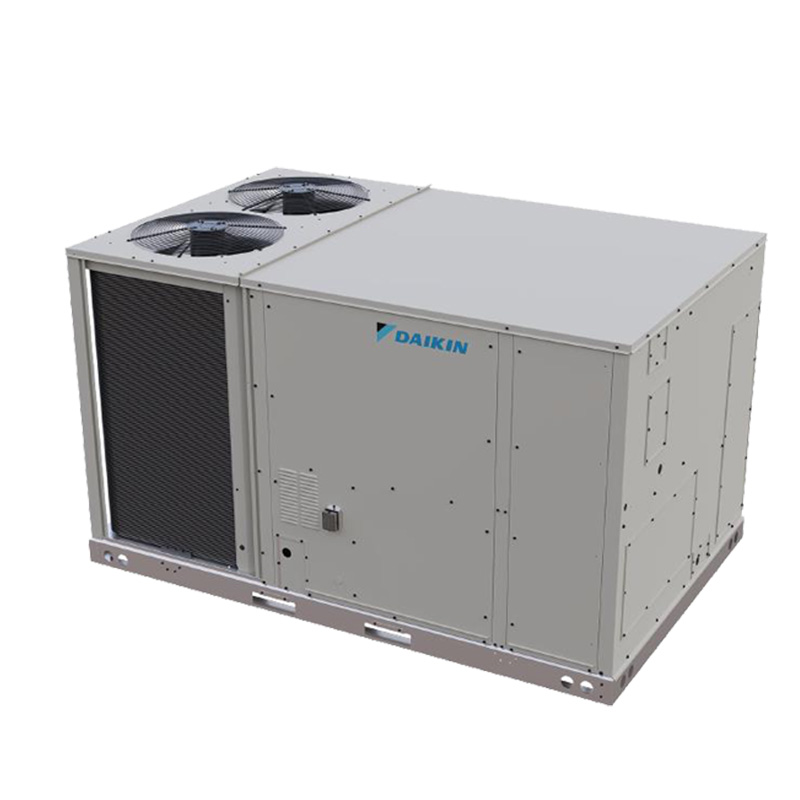
Daikin 10 Ton AC And 240000 BTU Gas/Electric Commercial Package Unit – 14.8 IEER, Two Stage, 81% AFUE, R32
View on AC Direct see your lowest price →Check current price on AC Direct →
Key features
- 240,000 BTU (10-ton) cooling capacity for large commercial applications
- Two-stage compressor operation for reduced cycling and better part-load efficiency
- 14.8 IEER commercial efficiency rating
- 81% AFUE gas heating section in a combined gas/electric package
- R-32 refrigerant with lower global warming potential than R-410A
- Single-cabinet package design simplifies rooftop or ground-level installation
About this system
The Daikin 10-ton, 240,000 BTU gas/electric commercial package unit is built for large commercial spaces that need serious cooling and heating capacity in a single rooftop or ground-mounted cabinet. At 10 tons, this unit is sized for small office buildings, larger retail spaces, warehouses with moderate load requirements, or facilities running multiple occupied zones from one unit. The two-stage operation means the compressor can run at a reduced capacity during lighter load conditions rather than cycling on and off at full blast, which reduces temperature swings, lowers wear on components, and trims energy consumption compared to a single-stage unit of the same size.
The 14.8 IEER (Integrated Energy Efficiency Ratio) is a respectable figure for a commercial package unit in this capacity class, though it sits in the mid-range tier rather than at the top of what modern equipment can achieve. The gas heating section carries an 81% AFUE rating, meaning roughly 19 cents of every fuel dollar goes up the flue rather than into the building. That is a standard-efficiency gas section and will cost more to operate over a heating season compared to a 90%+ condensing unit, but it keeps the mechanical footprint simpler and first cost lower. R-32 refrigerant is a lower global-warming-potential option compared to the older R-410A that still dominates much of the commercial package market, which is a meaningful consideration for operators watching environmental compliance timelines.
This unit delivers solid two-stage efficiency in a proven single-cabinet format from the world's largest HVAC manufacturer, and R-32 refrigerant puts it ahead of most competitors on environmental compliance. However, the 81% AFUE gas section is a genuine efficiency gap for heating-heavy climates, and Daikin's documented parts availability and customer service shortfalls are a real operational risk at commercial scale.
Overall score is the average of the five ratings above.
What we like
- Two-stage operation cuts cycling losses and maintains steadier temperatures under variable loads
- R-32 refrigerant positions the unit ahead of R-410A equipment for future refrigerant compliance
- 14.8 IEER is competitive efficiency for a commercial rooftop package in this capacity class
- Daikin's build quality is consistently recognized by HVAC experts and Consumer Reports for long service life
- Single-cabinet package unit reduces installation complexity versus split commercial systems
Trade-offs
- 81% AFUE gas heating is standard efficiency only, adding real fuel cost versus condensing-grade alternatives in cold climates
- Electronic control boards and circuit boards are the most commonly reported failure point, and getting replacement parts or warranty support from Daikin draws consistent complaints
- At 10 tons, compressor replacement or major repair is a significant cost event, and some users report compressor performance degradation before expected service life
- Daikin's customer service and warranty claims process receives poor marks on complaint-focused review channels, which is a meaningful risk when a commercial unit goes down mid-season
What homeowners and pros say about Daikin
Among HVAC professionals who work with commercial package equipment, Daikin earns consistent respect for build quality and component longevity. Experts and Consumer Reports place Daikin among the longer-lasting brands in the industry, and that reputation carries over to their commercial line. The trade-off that comes up repeatedly in the field is parts and support: when a control board fails or a warranty claim needs processing, Daikin’s service infrastructure draws complaints for slow response and parts lead times. On complaint-focused channels like PissedConsumer, Daikin scores around 1.4 out of 5, though that audience skews heavily toward customers who had problems, not the majority whose units ran without incident for years. The specific failure modes worth watching on this class of unit are electronic control and circuit board faults, which are the most commonly reported breakdown type, compressor performance loss over time, and units growing noisier with rattling or humming as they age.
For a 10-ton commercial unit, the stakes on any unplanned downtime are high, and facilities operators should treat the documented parts availability complaints as a real planning factor rather than background noise. Lining up a commercial Daikin dealer with dedicated parts access before installation, and registering the unit within 60 days to secure the 12-year parts warranty, are practical steps that can change the service experience significantly. Operators in heating-heavy climates should also weigh the 81% AFUE gas section honestly: the unit is competitive on cooling efficiency with the 14.8 IEER rating and benefits from R-32 refrigerant ahead of most competitors, but the heating efficiency gap is a genuine long-term operating cost that belongs in the total cost of ownership calculation.
Sources: PissedConsumer Daikin reviews, AHRI Directory of Certified Product Performance, U.S. DOE appliance and equipment efficiency standards, Daikin product specifications.
How it compares
| Brand | Comparable model | SEER2 | Stage | Price position |
|---|---|---|---|---|
| Daikin | 10-Ton Gas/Electric Commercial Package Unit (this unit) | N/A (IEER 14.8) | Two-stage | Premium-tier commercial pricing |
| Carrier | WeatherMaster 50XC / 50XCQ Series (10-ton) | N/A (IEER varies by config) | Two-stage | Comparable premium commercial pricing, often slightly higher than Daikin in this tonnage |
| Trane | Precedent TC/WC Series (10-ton) | N/A (IEER mid-range commercial) | Single-stage or two-stage depending on configuration | Comparable to Daikin; Trane typically at the high end of the commercial package market |
| Lennox | LGH/LCH Series (10-ton commercial packaged) | N/A (IEER varies) | Single-stage standard, two-stage available | Generally comparable to slightly below Daikin and Carrier in this class |
Competitor rows are comparable single-stage units at similar efficiency; price is relative position, not a quote.
Questions about this system
Is 81% AFUE going to cost me significantly more to heat compared to a higher-efficiency unit?
Yes, compared to a 90% or higher AFUE condensing unit, you are losing roughly 9 to 19 additional cents of every heating dollar to exhaust. On a 10-ton commercial unit running through a cold winter, that gap adds up. If heating loads are modest or your climate is mild, the difference is smaller and may be offset by simpler maintenance.
What does two-stage mean in practice for my building?
Two-stage means the compressor runs at a lower capacity during cooler days or lighter occupancy loads, and only ramps to full capacity when demand requires it. This reduces short-cycling, keeps humidity control more consistent, and reduces the mechanical stress that comes with constant full-load start and stop cycles.
Why does this unit use R-32 instead of R-410A, and does that affect service?
R-32 has a global warming potential roughly two-thirds lower than R-410A, which aligns with ongoing refrigerant regulations moving away from higher-GWP options. R-32 is mildly flammable (A2L classification), so servicing technicians need specific training and tools. Not every commercial HVAC technician in your area may be equipped for it yet, so confirm local service availability before purchasing.
What are the most common repairs I should plan for on this unit?
Based on documented Daikin failure patterns, electronic control boards and circuit board errors are the most frequently reported issue, sometimes causing the unit to go unresponsive or throw fault codes. Compressor performance loss over time is also reported. Budgeting for a service contract that covers controls diagnostics and having a local commercial Daikin dealer identified before a failure occurs will reduce downtime risk.
What do I need to do to protect the 12-year parts warranty?
Daikin requires product registration within 60 days of installation to qualify for the full 12-year parts warranty. Without registration, coverage drops to a shorter standard term. Make sure your installer registers the unit at the time of commissioning and that you retain proof of that registration.
Specifications
| Cooling capacity | 10 Ton |
| Furnace output | 240000 BTU |
| Furnace efficiency | 81% AFUE |
| Refrigerant | R-32 |