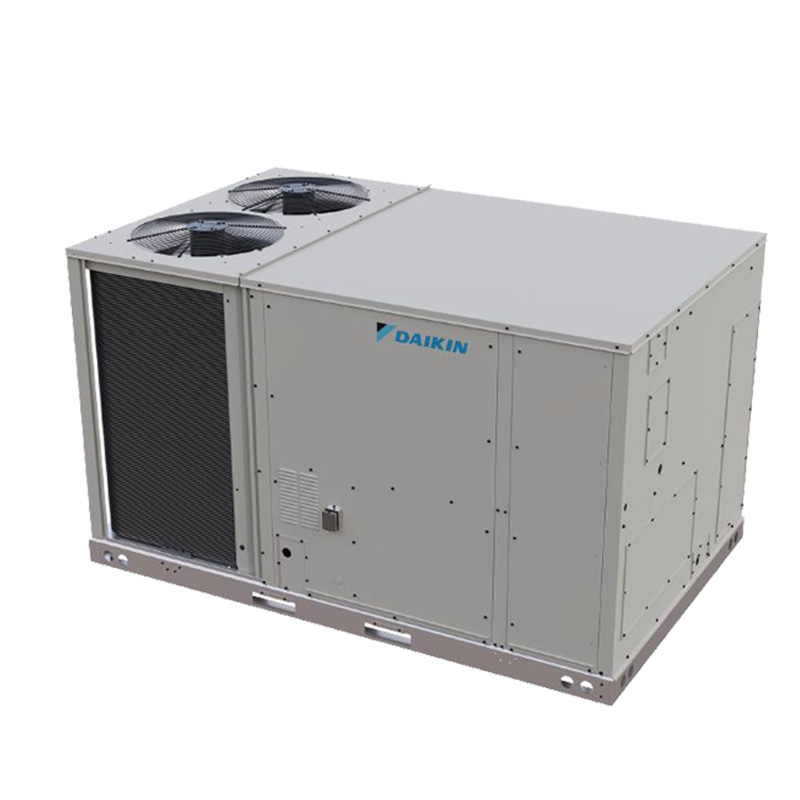
Daikin 10 Ton Commercial Package Unit AC Cooling Only – 15.2 IEER, 208-230/3/60, Two Stage, R32
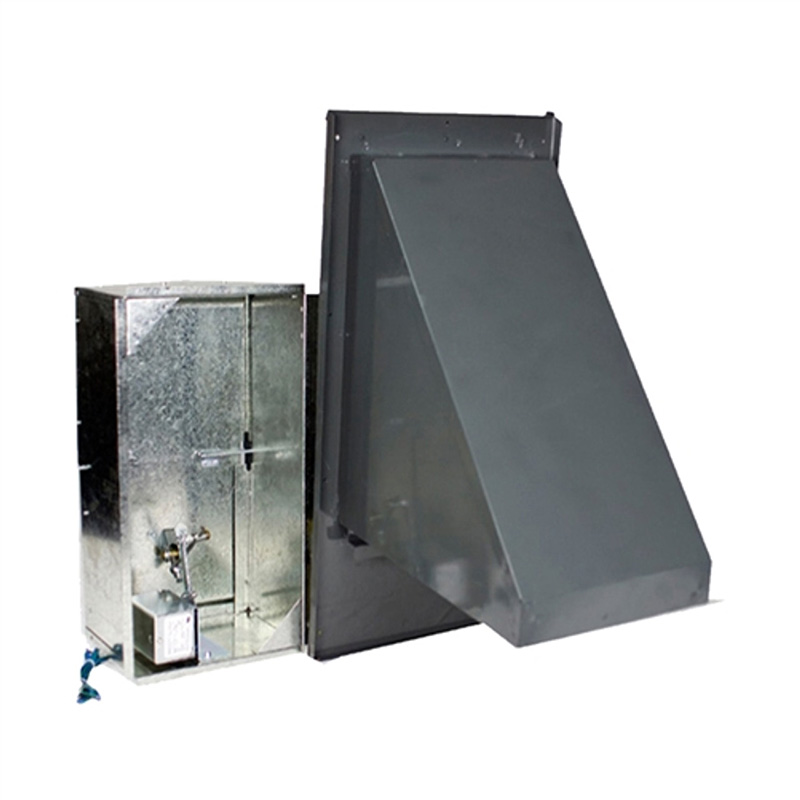
View on AC Direct see your lowest price →Check current price on AC Direct →
Key features
- 10-ton cooling-only commercial package unit for rooftop or ground-mount installation
- Two-stage compressor for reduced energy use at partial load and fewer temperature swings
- 15.2 IEER efficiency rating, mid-to-upper tier for commercial packaged cooling
- R-32 refrigerant with lower global warming potential than R-410A
- 208-230/3/60 electrical configuration requires three-phase commercial power
- 12-year parts warranty available with registration within 60 days of installation
About this system
The Daikin 10-ton commercial package unit is a rooftop or ground-mount cooling-only system built for mid-size commercial applications: retail spaces, light industrial buildings, restaurants, and office suites that need a single, self-contained solution without a separate condenser and air handler. At 10 tons of cooling capacity, it handles roughly 3,000 to 4,500 square feet of commercial space depending on insulation, internal heat loads, and local climate. The two-stage compressor operation is the standout mechanical feature here: the unit runs at a reduced capacity during lighter cooling loads and only ramps to full output when conditions demand it, which smooths out temperature swings, reduces short-cycling, and cuts energy consumption compared to a single-stage unit of the same tonnage.
The 15.2 IEER (Integrated Energy Efficiency Ratio) is the relevant efficiency metric for commercial package equipment, and at this rating the unit sits at a solid mid-to-upper tier for 10-ton commercial packaged cooling. It uses R-32 refrigerant, a lower global-warming-potential option compared to the R-410A it replaces, which is increasingly relevant for facilities with sustainability reporting requirements or states moving toward refrigerant regulations. The 208-230/3/60 electrical configuration means three-phase power is required, which is standard in commercial construction but rules out most residential and light-commercial single-phase installations entirely. Buyers should confirm phase availability and proper disconnect sizing before purchasing.
This Daikin 10-ton package unit delivers genuine two-stage efficiency and a premium build that holds up well over years of commercial use, backed by one of the stronger parts warranties in the segment if you register in time. The premium price, documented electronic control issues, and historically inconsistent parts support mean it rewards buyers who have a qualified Daikin commercial service network nearby and can absorb a higher upfront cost in exchange for long-term durability.
Overall score is the average of the five ratings above.
What we like
- Two-stage operation meaningfully reduces energy draw during partial-load hours, which represent the majority of operating time in most climates
- 15.2 IEER is a competitive efficiency rating for 10-ton commercial package cooling
- R-32 refrigerant positions the system ahead of regulatory curves in states restricting high-GWP refrigerants
- Daikin is consistently rated among the longer-lasting commercial HVAC brands by industry experts and Consumer Reports
- 12-year parts warranty is above average for commercial package equipment when registered within 60 days
Trade-offs
- Electronic control boards and circuit board errors are the most frequently documented failure mode, occasionally leaving the unit unresponsive or stuck displaying error codes
- Parts availability and warranty service handling draw consistent complaints, which is a real operational risk for a commercial facility that cannot tolerate extended downtime
- Premium price point is higher than comparable Carrier, Trane, or Lennox commercial package units at similar efficiency
- Compressor failures and gradual noise increases (rattling or humming on start and stop) are documented over time and worth factoring into maintenance planning
What homeowners and pros say about Daikin
Among HVAC professionals who work in commercial construction, Daikin’s package units earn respect for build quality and longevity. Industry experts and Consumer Reports consistently place Daikin among the longer-lasting commercial brands, and that reputation holds for their packaged rooftop equipment as well. Contractors who work regularly in Daikin’s commercial service network tend to be more confident recommending the brand; those outside well-supported markets are more cautious, partly because of documented complaints about parts lead times and warranty processing. Facilities managers who have run Daikin equipment for a decade or more often report fewer mechanical surprises than with lower-cost alternatives, which matters when downtime in a commercial space carries real revenue consequences.
On complaint-aggregator sites, Daikin scores poorly, with PissedConsumer showing roughly 1.4 out of 5 across a complaint-heavy review pool. Those reviews are dominated by price shock and service frustration rather than systematic mechanical failure, and that skew is worth keeping in mind. The specific failure modes that do appear in documented reports are worth planning for: electronic control board errors are the most common, sometimes leaving the unit unresponsive or generating error codes that require a service call; compressor issues including gradual cooling loss have been reported; and units can develop rattling or humming noise over time, particularly at startup and shutdown. None of these are unique to Daikin in the commercial segment, but given that parts availability complaints are a recurring theme, having a service agreement in place before the unit goes into operation is a practical precaution rather than an optional upgrade.
Sources: PissedConsumer Daikin reviews, AHRI Directory of Certified Product Performance, U.S. DOE appliance and equipment efficiency standards, Daikin product specifications.
How it compares
| Brand | Comparable model | SEER2 | Stage | Price position |
|---|---|---|---|---|
| Daikin | 10-Ton Cooling-Only Commercial Package Unit, Two-Stage, R-32 | N/A (15.2 IEER) | Two-stage | Premium price point |
| Carrier | WeatherMaker 48XC (10-ton commercial package) | N/A (IEER rated) | Two-stage | Slightly below Daikin, widely available |
| Trane | Precedent TC (10-ton commercial package cooling-only) | N/A (IEER rated) | Single-stage or two-stage depending on configuration | Comparable to Carrier, below Daikin |
| Lennox | LCA (10-ton commercial package cooling-only) | N/A (IEER rated) | Two-stage | Comparable to or slightly above Carrier, below Daikin |
Competitor rows are comparable single-stage units at similar efficiency; price is relative position, not a quote.
Questions about this system
Does this unit work on single-phase power, or do I absolutely need three-phase service at my building?
Three-phase power is required. The 208-230/3/60 rating means the unit will not operate on a standard single-phase commercial or residential service. Confirm with your electrician or utility that three-phase power is available and that your disconnect and breaker sizing match the unit's minimum circuit ampacity before ordering.
What does the 12-year parts warranty actually cover, and what can void it?
Daikin's 12-year parts warranty covers manufacturer defects in the parts themselves, but it requires registration within 60 days of installation to activate. Missing that window typically drops coverage to a shorter default period. Labor is not included, and warranty service must be performed by a licensed HVAC contractor; consistent complaints exist about processing times and parts availability through Daikin's service network, so document everything.
How much harder does a two-stage compressor actually work compared to a single-stage unit of the same tonnage?
A two-stage unit runs at reduced capacity, often around 65 to 70 percent of full output, during the many hours when cooling demand is moderate. It only shifts to full capacity during peak load periods. This reduces runtime at full draw, lowers energy consumption noticeably over a full cooling season, and reduces wear compared to a single-stage unit that cycles hard on and off at full tonnage every time.
Why does this unit use R-32 instead of R-410A, and does that affect servicing costs?
R-32 has a global warming potential roughly one-third that of R-410A, which is why manufacturers are transitioning to it ahead of regulatory deadlines. Practically, R-32 requires technicians with the appropriate certification and equipment for handling mildly flammable A2L refrigerants, so confirm that your service contractor is equipped and certified before the first service call. Refrigerant cost and availability are currently reasonable for R-32.
What are the most common problems reported on Daikin commercial package units like this one?
The most consistently documented issues are electronic control and circuit board failures that can leave the unit throwing error codes or not responding to commands, compressor problems including gradual loss of cooling capacity or outright failure, and increasing noise over time including rattling or humming at startup and shutdown. Parts availability and slow warranty service resolution are the most frequent complaints when something does go wrong.
Specifications
| Cooling capacity | 10 Ton |
| Refrigerant | R-32 |