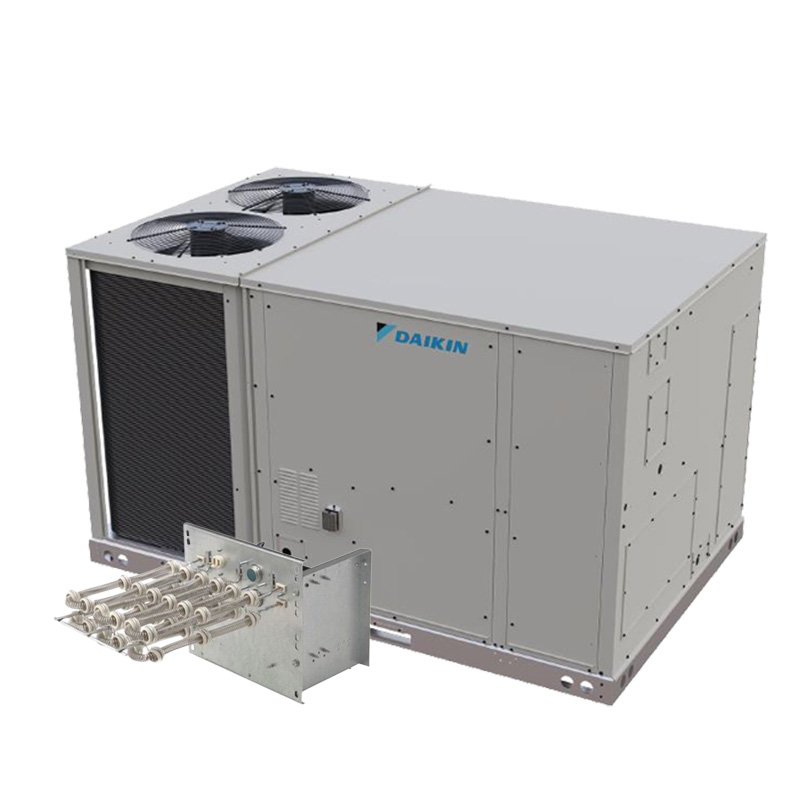
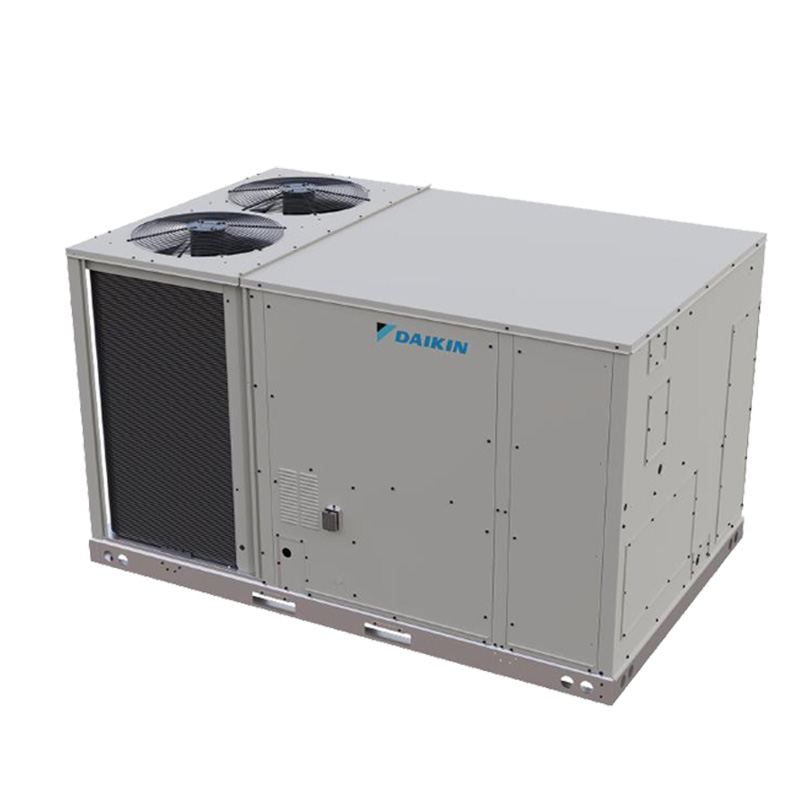
Daikin 10 Ton Commercial Package Unit Heat Pump AC – 15.2 IEER, 208-230/3/60, Two Stage, R32
View on AC Direct see your lowest price →Check current price on AC Direct →
Key features
- 10-ton cooling and heating capacity for medium-to-large commercial spaces
- Two-stage compressor for part-load efficiency and reduced short-cycling
- 15.2 IEER integrated efficiency rating for commercial package heat pumps
- R-32 refrigerant with lower global warming potential than R-410A
- 208-230V / 3-phase / 60Hz electrical configuration for commercial power supply
- 12-year parts warranty with registration within 60 days of installation
About this system
The Daikin 10-ton commercial package unit heat pump is built for medium-to-large commercial applications where a single rooftop or ground-level unit must handle both heating and cooling for a substantial footprint. At 10 tons of capacity, this unit is sized for spaces roughly in the 8,000 to 12,000 square foot range depending on climate, insulation, and load calculations. The two-stage compressor lets the unit run at a lower capacity during moderate conditions and ramp up only when peak demand requires it, which reduces short-cycling, extends compressor life, and helps maintain more consistent indoor temperatures than a single-stage counterpart.
The 15.2 IEER (Integrated Energy Efficiency Ratio) rating reflects solid mid-to-upper-tier commercial efficiency for a package heat pump in this class. R-32 refrigerant is a meaningful upgrade over older R-410A units: it has a lower global warming potential, slightly better thermodynamic properties, and is the direction the industry is moving. The 208-230/3/60 electrical configuration means this unit requires three-phase power, which is standard in commercial construction but rules it out for most residential or light commercial buildings that only have single-phase service. Buyers should confirm three-phase availability at the installation site before purchasing.
Daikin positions this unit at the premium end of the commercial package market, and it shows in the build tolerances and expected service life. That said, the premium price tag, documented parts availability friction, and the need for Daikin-trained commercial technicians mean total cost of ownership depends heavily on who services it and how quickly warranty claims are resolved. This unit suits facilities managers and commercial contractors who want a long-lived, efficient platform and have access to qualified service networks.
This is a well-engineered commercial package heat pump from the world's largest HVAC manufacturer, and the two-stage operation plus R-32 refrigerant give it a genuine efficiency and environmental edge over many competitors in its class. The trade-offs are real: premium pricing, a service network that can be slow on parts and warranty resolution, and documented electronic control issues mean buyers need a reliable local Daikin commercial service partner before committing. For facilities with access to qualified technicians and a long investment horizon, the build quality and expected lifespan justify the cost.
Overall score is the average of the five ratings above.
What we like
- Two-stage compression reduces energy consumption during part-load conditions compared to single-stage units
- R-32 refrigerant offers lower global warming potential and is better positioned for long-term regulatory compliance
- Daikin is consistently rated among the longest-lasting HVAC brands by industry experts and Consumer Reports
- 15.2 IEER places this unit at solid efficiency for the commercial package heat pump segment
- 12-year parts warranty is competitive for commercial equipment when properly registered
Trade-offs
- Parts availability and warranty claim handling are the most frequently documented service complaints for Daikin commercial units
- Electronic control board errors are the most common failure mode and can leave the system throwing error codes or unresponsive
- Three-phase power requirement eliminates this unit from consideration for any site without 3-phase electrical service
- Premium price point is higher than many comparable commercial package units from Carrier or Trane
What homeowners and pros say about Daikin
On professional forums and commercial HVAC service boards, Daikin’s commercial equipment earns consistent respect for build quality and longevity. Industry experts and Consumer Reports place Daikin among the longer-lasting brands, and many commercial contractors who have worked with the equipment long-term report fewer compressor failures and structural issues compared to some competitors at similar tonnage. That reputation for durability is a genuine and recurring theme in the professional community, distinct from what you see on consumer complaint channels.
The other side of that picture is well-documented. Daikin’s score on PissedConsumer sits at roughly 1.4 out of 5, a heavily complaint-skewed channel to be sure, but the specific complaints point to consistent patterns: electronic control board and circuit board failures that can leave units unresponsive or stuck in error code loops, compressor performance degradation over time, units growing noisier with rattling and humming on start and stop cycles, and persistent frustration with parts lead times and warranty claim handling. Facilities managers who have gone through a warranty repair describe the process as slow and sometimes requiring escalation. The practical advice from experienced commercial buyers is consistent: secure a local Daikin-authorized commercial contractor with a real parts inventory before the unit ever goes on the roof, because when a control board fails in July, the service relationship you built before the purchase is the only thing standing between you and a multi-week wait.
Sources: PissedConsumer Daikin reviews, AHRI Directory of Certified Product Performance, U.S. DOE appliance and equipment efficiency standards, Daikin product specifications.
How it compares
| Brand | Comparable model | SEER2 | Stage | Price position |
|---|---|---|---|---|
| Daikin | 10-Ton Commercial Package Heat Pump, Two-Stage, R-32, 15.2 IEER | N/A (IEER: 15.2) | Two-stage | Premium tier |
| Carrier | WeatherMaster 50XC Series (10-ton commercial package heat pump) | N/A (IEER rated) | Two-stage | Comparable to slightly below Daikin at this tonnage |
| Trane | Precedent WCY Series (10-ton commercial package heat pump) | N/A (IEER rated) | Single or two-stage depending on configuration | Comparable premium tier, with broader parts network |
| Lennox | LRP16HP Series (commercial package heat pump, available at 10-ton) | N/A (IEER rated) | Two-stage | Similar premium positioning, slightly narrower commercial service network than Carrier or Trane |
Competitor rows are comparable single-stage units at similar efficiency; price is relative position, not a quote.
Questions about this system
Does this unit require three-phase power, and what happens if my building only has single-phase service?
Yes, the 208-230/3/60 rating means three-phase power is required. Single-phase service cannot run this unit without a phase converter, which adds cost and complexity and is generally not recommended for equipment of this size. Verify your building's electrical service with your electrician before purchasing.
What does the 12-year parts warranty actually cover, and are there conditions I need to meet?
The 12-year parts warranty covers components including the compressor and major parts, but it requires the unit to be registered with Daikin within 60 days of installation. Missing that window typically drops coverage to a shorter standard period. Labor is not included, and Daikin's documented service complaints suggest warranty parts fulfillment can be slow, so build that into your maintenance planning.
What are the most common problems reported with Daikin commercial package units?
The most documented failure modes are electronic control board and circuit board errors, which can leave the unit unresponsive or displaying error codes. Compressor issues resulting in reduced cooling output or outright failure have also been reported, along with increasing noise over time including rattling or humming on startup and shutdown. Parts availability delays compound all of these issues when service is needed.
Is R-32 refrigerant a practical advantage, or is it mainly a marketing point?
R-32 has real technical and regulatory advantages: its global warming potential is roughly one-third that of R-410A, it has better heat transfer properties that can contribute to efficiency, and it is the refrigerant the industry is actively transitioning toward under current environmental regulations. The practical implication for buyers is that R-32 should remain serviceable and available longer-term as R-410A faces phase-down restrictions.
How does two-stage operation affect energy bills and comfort compared to a single-stage unit of the same tonnage?
Two-stage operation means the compressor can run at a lower capacity during mild conditions rather than cycling fully on and off. This reduces energy consumption during the majority of hours when you are not at peak load, limits temperature swings, and reduces wear from frequent start-stop cycles. For a 10-ton commercial unit that runs many hours per day, the efficiency gain over a single-stage unit at the same tonnage can be meaningful over a full season.
Specifications
| Cooling capacity | 10 Ton |
| Refrigerant | R-32 |