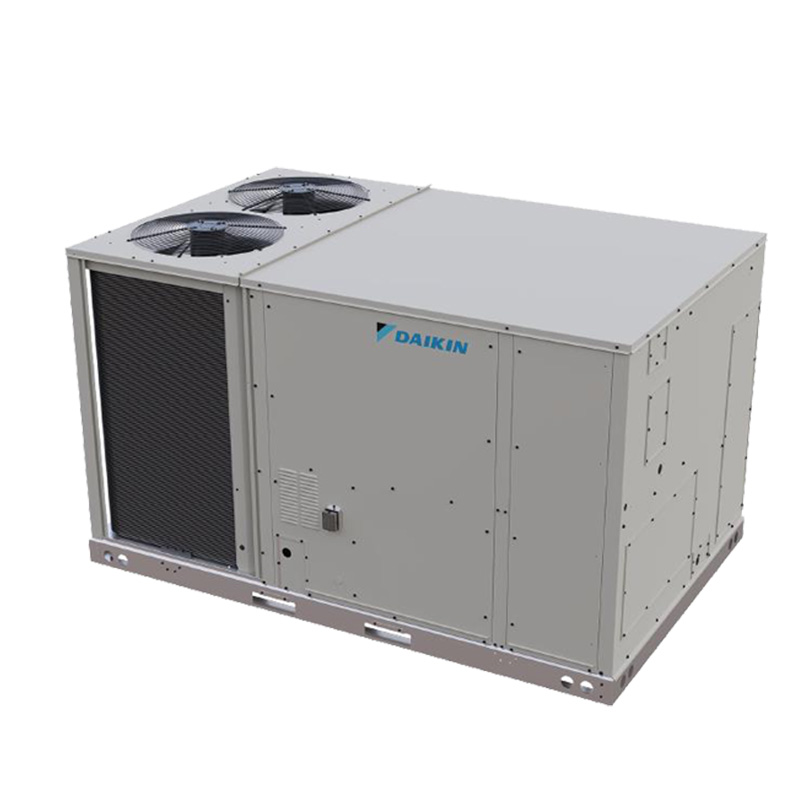
Daikin 12.5 Ton AC And 180000 BTU Gas/Electric Commercial Package Unit – 14.2 SEER2, Two Stage, 81% AFUE, R32
View on AC Direct see your lowest price →Check current price on AC Direct →
Key features
- 12.5-ton / 180,000 BTU cooling capacity for large commercial applications
- Two-stage compressor for improved humidity control and reduced short-cycling
- 14.2 SEER2 efficiency rating meets current federal minimum for this equipment class
- 81% AFUE gas heat section integrated into a single rooftop package cabinet
- R-32 refrigerant with lower global warming potential than R-410A
- 12-year parts warranty available with registration within 60 days of installation
About this system
The Daikin 12.5-ton commercial package unit is a rooftop-ready gas/electric system built for medium to large commercial spaces — think retail buildings, warehouses, light industrial facilities, or large office suites pushing 10,000 to 15,000 square feet depending on climate and load. At 180,000 BTU of cooling capacity and an 81% AFUE gas furnace section, it handles serious heating and cooling demand from a single self-contained cabinet, eliminating the need for separate indoor and outdoor equipment.
The 14.2 SEER2 rating lands at the federal minimum threshold for commercial packaged equipment of this class, so you are not paying a premium for top-tier efficiency — operating costs will be higher than a 16+ SEER2 variable-speed alternative. The two-stage compressor is a meaningful real-world upgrade over single-stage, allowing the unit to run at a lower output during milder conditions, which improves humidity control, reduces short-cycling, and lowers wear on components compared to a unit that hammers on and off at full blast. R-32 refrigerant is a lower global-warming-potential choice compared to legacy R-410A and is increasingly the industry standard going forward.
This is a Daikin product, which means premium build quality and a reputation for long service life, but also a premium purchase price and the well-documented challenge of getting parts and warranty service resolved quickly when something goes wrong. For a facility manager or business owner who wants a single-manufacturer rooftop solution and can budget for the upfront cost, this unit makes a strong case. If operating efficiency or service responsiveness tops your priority list, the trade-offs are worth examining carefully before committing.
The Daikin 12.5-ton package unit delivers solid build quality and a useful two-stage compressor in a proven commercial rooftop format, and Daikin's reputation for durability holds up at this equipment tier. However, the 14.2 SEER2 and 81% AFUE specs are baseline performers, not efficiency leaders, and the brand's documented struggles with parts availability and warranty handling are a legitimate concern for a commercial buyer who cannot afford extended downtime.
Overall score is the average of the five ratings above.
What we like
- Two-stage operation improves comfort, humidity control, and component longevity versus single-stage alternatives
- Daikin is consistently recognized by HVAC experts and Consumer Reports as one of the longer-lasting commercial brands
- R-32 refrigerant is forward-compatible with tightening environmental regulations
- Self-contained package configuration simplifies rooftop installation and reduces refrigerant line runs
- 12-year parts warranty is competitive for the commercial packaged unit segment when registered on time
Trade-offs
- 14.2 SEER2 is the regulatory floor, not a high-efficiency offering, so long-term energy costs will be higher than premium-tier alternatives
- 81% AFUE gas heat is below the 90%+ AFUE threshold many buyers target for heating-heavy climates
- Documented electronic control board failures and compressor faults can leave a commercial facility without conditioning, and parts sourcing delays compound the problem
- Daikin scores roughly 1.4 out of 5 on PissedConsumer, with pricing and warranty service resolution as the dominant complaints — a real operational risk at commercial scale
What homeowners and pros say about Daikin
Among HVAC professionals who work regularly with commercial rooftop equipment, Daikin occupies a respected but nuanced position. The brand’s hardware is consistently cited by industry experts and Consumer Reports as among the longer-lasting in its class, and technicians who work on Daikin commercial units often note that the core mechanical components hold up well under sustained load. That reputation for durability is a real asset for a 12.5-ton rooftop unit expected to run for 15 to 20 years in a demanding commercial environment. The two-stage compressor on this unit specifically draws positive notice for its contribution to longer component life and steadier building comfort.
The other side of the conversation is harder to ignore. Daikin scores approximately 1.4 out of 5 on PissedConsumer, a complaint-heavy channel, with the dominant grievances centering on price shock and warranty service resolution rather than the equipment failing immediately. The specific failure modes that show up in commercial service records are worth knowing before you buy: electronic control boards and circuit boards are the most common culprit when a unit goes unresponsive or throws error codes, compressor faults are a documented risk, and units can become progressively noisier over time with rattling or humming at startup. For a commercial facility manager, the bigger operational concern is parts availability — Daikin’s supply chain for replacement boards and specialized components draws consistent criticism, and a unit that sits down while waiting on a backordered part is a real business problem that the equipment’s long-term durability reputation does not fully offset.
Sources: PissedConsumer Daikin reviews, AHRI Directory of Certified Product Performance, U.S. DOE appliance and equipment efficiency standards, Daikin product specifications.
What it costs to run
At 14.2 SEER2, cooling this 12.5-ton system for a typical 1200-hour cooling season at the U.S. average electricity rate of $0.17/kWh works out to roughly $2155 per year in cooling, about $129 less per year than a minimum-efficiency 13.4 SEER2 unit of the same size. Your real cost depends on your climate and local rate.
Method: (150,000 BTU/hr ÷ 14.2 SEER2) × 1200 hours ÷ 1000 × $0.17/kWh. Rate source: U.S. EIA average; cooling hours: moderate-climate estimate.
How it compares
| Brand | Comparable model | SEER2 | Stage | Price position |
|---|---|---|---|---|
| Daikin | 12.5-Ton Gas/Electric Commercial Package Unit (this unit) | 14.2 | Two-stage | Value pick |
| Carrier | WeatherMaster 48/50XC Series (12.5-ton class) | 14.0-15.0 | Two-stage | Priced comparably to slightly above this Daikin unit depending on configuration |
| Trane | Precedent WCD/WCH Series (12.5-ton class) | 14.0-15.2 | Two-stage | Generally priced at a modest premium over this Daikin unit |
| Lennox | LGH/LCH Commercial Rooftop Series (12.5-ton class) | 14.0-16.0 | Two-stage to variable | Higher-efficiency configurations carry a notable price premium over this Daikin unit |
Competitor rows are comparable single-stage units at similar efficiency; price is relative position, not a quote.
Questions about this system
Does the 12-year parts warranty cover the compressor on this unit?
Yes, the 12-year parts warranty includes the compressor, but only if the unit is registered with Daikin within 60 days of installation. Missing that window typically drops coverage to a shorter base period, so registration immediately after startup is critical. Be aware that parts availability and warranty claim processing are the most frequently cited service complaints from Daikin commercial customers.
Is 14.2 SEER2 going to be a problem for energy costs in a commercial building?
It will not disqualify the unit from use, but 14.2 SEER2 is the current federal minimum for commercial packaged equipment in this capacity range, meaning you are not gaining any efficiency advantage over a baseline competitor. For a building running HVAC heavily across long daily hours, the difference between this and a 16 SEER2 unit adds up in utility costs over a 15 to 20 year equipment life.
What are the most common failure points to watch for on Daikin commercial package units?
Electronic control board and circuit board faults are the most frequently documented issue, sometimes causing the unit to become unresponsive or display error codes. Compressor cooling loss or outright failure is the next most serious concern. Units can also develop increasing noise over time, including rattling or humming on start-up and shutdown, which often signals mounting or mechanical wear worth investigating early.
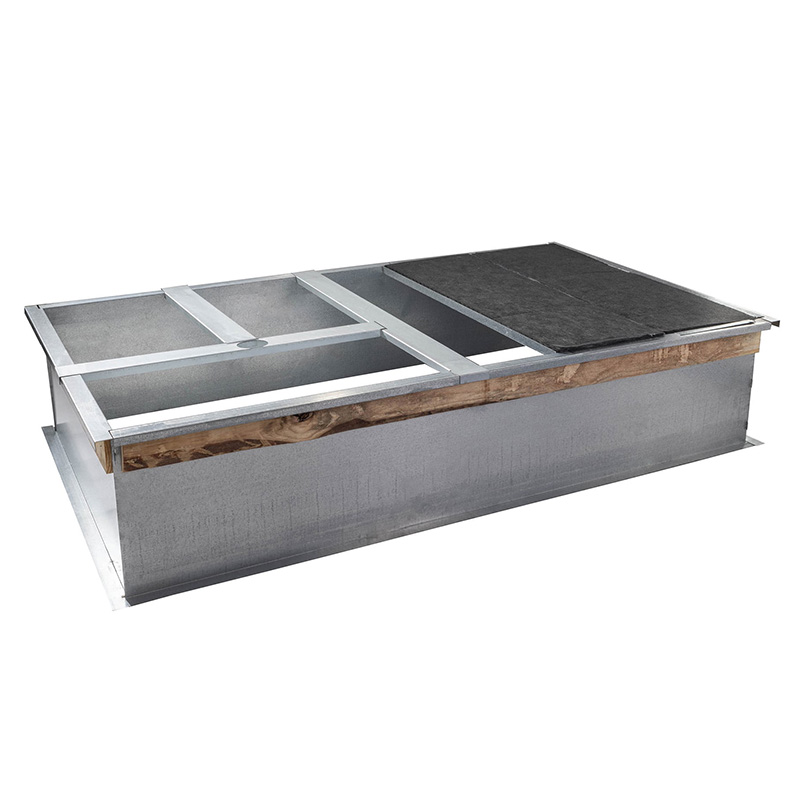
Can this unit be used as a replacement drop-in for an existing 12.5-ton rooftop unit?
Possibly, but not automatically. The R-32 refrigerant circuit, electrical connection requirements, gas supply sizing, and curb dimensions all need to match the existing installation. R-32 also requires technicians with specific handling certification. A qualified commercial HVAC contractor should verify compatibility with your existing curb, ductwork, controls, and gas supply before ordering.
How does the two-stage compressor actually help in a commercial setting compared to single-stage?
In a large commercial space, loads vary throughout the day, and a single-stage compressor can only run at full capacity or off. The two-stage design lets the unit match output to actual demand, which reduces short-cycling, improves moisture removal at partial load, and reduces mechanical stress on the compressor over time. For buildings with variable occupancy or long operating hours, this translates to better comfort consistency and potentially longer compressor life.
Specifications
| Cooling capacity | 12.5 Ton |
| Efficiency | 14.2 SEER2 |
| Furnace output | 180000 BTU |
| Furnace efficiency | 81% AFUE |
| Refrigerant | R-32 |