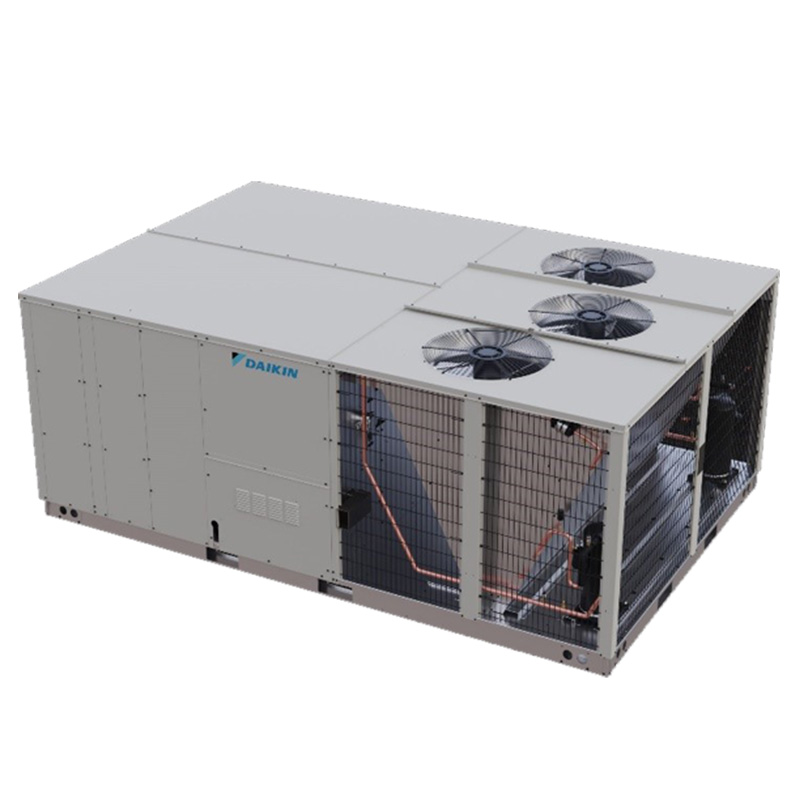
Daikin 15 Ton Commercial Package Unit AC Cooling Only – 14.2 IEER, 208-230/3/60, Two Stage, R32
View on AC Direct see your lowest price →Check current price on AC Direct →
Key features
- 15-ton cooling capacity for medium to large commercial spaces
- Two-stage compressor for part-load efficiency and reduced short-cycling
- 14.2 IEER efficiency rating, above code-minimum for commercial RTUs
- R-32 refrigerant with lower global warming potential than R-410A
- Three-phase 208-230/60Hz power for standard commercial electrical service
- Self-contained package unit design simplifies rooftop or ground-level installation
About this system
The Daikin 15-Ton Commercial Package Unit is a self-contained rooftop or pad-mounted cooling-only system built for medium to large commercial applications: retail spaces, light industrial buildings, restaurants, offices, and multi-tenant suites that need serious cooling capacity without a split-system installation. At 15 tons, it handles roughly 8,000 to 12,000 square feet depending on load, and the two-stage compressor means it can run at a reduced capacity during milder conditions rather than short-cycling at full blast, which helps stabilize zone temperatures and reduce electricity consumption over a full cooling season.
The 14.2 IEER (Integrated Energy Efficiency Ratio) is the commercial equivalent of SEER2 for packaged rooftop equipment. It sits in a solid mid-to-upper efficiency bracket for commercial RTUs at this tonnage, not at the absolute ceiling of what the market offers but meaningfully better than code-minimum units. R-32 refrigerant is a forward-looking choice: lower global warming potential than R-410A, higher energy density, and increasingly the direction the industry is heading as R-410A is phased down. Three-phase 208-230V power is standard for commercial installations of this size, so the electrical infrastructure is typically already in place in the buildings this unit suits.
Daikin is the world’s largest HVAC manufacturer and brings genuine engineering depth to this category. Commercial package units at 15 tons are specified and installed by mechanical contractors, not homeowners, so the buyer experience is different from residential equipment. Budget for a licensed commercial HVAC contractor, crane time if the unit goes on the roof, and proper electrical coordination. This is not a drop-in replacement job even when the tonnage matches.
The Daikin 15-Ton Commercial RTU is a well-built, above-average-efficiency cooling package that suits buyers who prioritize equipment longevity and refrigerant futureproofing over the lowest upfront price. The two-stage operation and 14.2 IEER deliver real operating cost benefits over a long service life, but buyers should go in clear-eyed about Daikin's documented parts availability and service response issues, and should register the warranty within 60 days without exception.
Overall score is the average of the five ratings above.
What we like
- Two-stage operation reduces energy use during part-load conditions, which represent the majority of operating hours
- 14.2 IEER is above code-minimum efficiency for commercial RTUs at this tonnage
- R-32 refrigerant positions the unit well ahead of the R-410A phasedown
- Daikin is consistently rated among the longer-lasting commercial HVAC brands by industry experts
- Self-contained package design eliminates the need for separate indoor air handler and refrigerant line sets
Trade-offs
- Electronic control board failures are the most frequently reported Daikin failure mode, potentially causing unresponsive units or persistent error codes
- Parts availability and warranty claim handling are consistent pain points across Daikin's service network
- Premium brand pricing means higher upfront cost than several comparable commercial RTU options
- 12-year parts warranty requires registration within 60 days of installation; missing that window drops coverage significantly
What homeowners and pros say about Daikin
Facilities managers and commercial HVAC contractors who have worked with Daikin commercial package units generally echo what industry durability rankings reflect: the equipment tends to hold up well over long service lives when it is properly installed and maintained. Daikin consistently appears among the longer-lasting commercial HVAC brands in expert assessments, and contractors who specialize in Daikin commercial equipment report fewer catastrophic early failures than they see with some lower-cost alternatives. That reputation for longevity is a legitimate reason to pay the premium price, particularly for owner-operators who plan to stay in a building for 15 or more years.
The consistent friction points are harder to ignore, however. PissedConsumer shows roughly 1.4 out of 5 across Daikin reviews, a heavily complaint-skewed channel to be sure, but the specific grievances that appear repeatedly are worth taking seriously: electronic control board errors that leave units throwing codes or not responding, compressor performance degradation, and most critically, difficulty getting parts quickly and navigating warranty claims. These are not isolated complaints. For a 15-ton commercial unit, a multi-day or multi-week parts delay during peak cooling season is a real operational risk. The documented failure modes, particularly circuit board faults and compressor issues, are not unusual for the category, but Daikin’s parts supply chain has drawn more criticism than Carrier’s or Trane’s on this dimension. Buyers who already have a strong local Daikin commercial contractor relationship are in a much better position than those relying on the manufacturer’s own service response.
Sources: PissedConsumer Daikin reviews, AHRI Directory of Certified Product Performance, U.S. DOE appliance and equipment efficiency standards, Daikin product specifications.
How it compares
| Brand | Comparable model | SEER2 | Stage | Price position |
|---|---|---|---|---|
| Daikin | 15-Ton Cooling-Only Commercial Package Unit (this unit) | N/A (14.2 IEER) | Two-stage | Premium tier |
| Carrier | WeatherMaster 50XC Series, 15-Ton | N/A (IEER-rated commercial) | Two-stage | Similar premium tier, slightly wider parts network availability |
| Trane | Precedent Series PKG, 15-Ton | N/A (IEER-rated commercial) | Two-stage | Comparable premium pricing, broad commercial service network |
| Lennox | Landmark Series LGH/LCH, 15-Ton | N/A (IEER-rated commercial) | Two-stage | Similar premium segment, narrower commercial dealer network than Carrier or Trane |
Competitor rows are comparable single-stage units at similar efficiency; price is relative position, not a quote.
Questions about this system
What does the 14.2 IEER actually mean for my monthly energy costs compared to a standard commercial RTU?
IEER (Integrated Energy Efficiency Ratio) measures efficiency across a range of operating conditions, not just at peak load. A 14.2 IEER unit will consume meaningfully less electricity than a code-minimum unit rated around 11-12 IEER over a full cooling season, because most real-world operating hours occur at partial load where two-stage units like this one run more efficiently. The exact dollar savings depend on local utility rates, building load profile, and hours of operation.
Why does this unit use R-32 refrigerant, and does that affect service costs?
R-32 has a global warming potential roughly 68% lower than R-410A and is being adopted industry-wide as R-410A faces a phasedown under EPA regulations. Service technicians need EPA 608 certification to handle it, which is the same requirement as R-410A, but not all commercial HVAC contractors currently stock R-32 or have experience with it. Confirm your service contractor is equipped for R-32 before committing to installation.
How critical is the 60-day warranty registration window, and what happens if we miss it?
Missing the 60-day registration window after installation is a real risk on Daikin commercial equipment. The 12-year parts warranty is contingent on timely registration; without it, coverage defaults to a shorter base warranty. Given that parts availability is already a documented weakness in Daikin's service network, losing the extended parts coverage would be a significant financial exposure on a unit of this size and cost.
What is involved in installing a 15-ton commercial package unit, and can my existing mechanical contractor handle it?
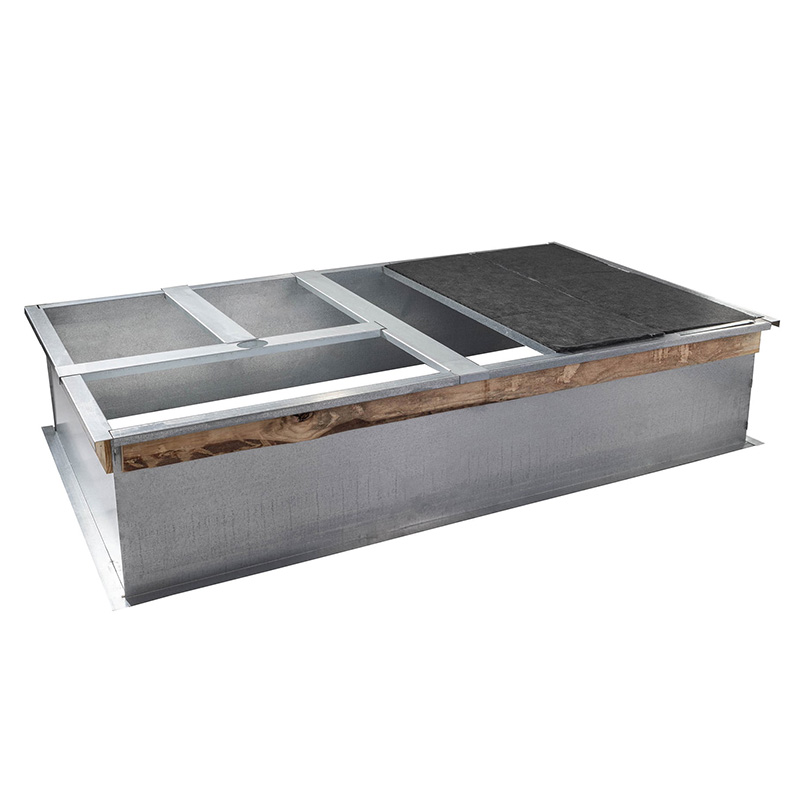
A 15-ton rooftop package unit installation requires a licensed commercial HVAC contractor, a crane or mechanical lift if the unit is going on the roof, coordination with a licensed electrician for three-phase 208-230V service, and proper structural assessment of the curb or pad. This is not a residential HVAC job, and the contractor should have specific experience with commercial RTU replacements and Daikin commercial equipment in particular.
What are the most common failure points on Daikin commercial package units that I should watch for after installation?
Electronic control boards and circuit boards are the most documented failure mode on Daikin commercial equipment, sometimes causing the unit to become unresponsive or display persistent error codes. Compressor issues, including gradual loss of cooling capacity, have also been reported. Units can develop rattling or humming on startup and shutdown as they age. Establishing a preventive maintenance contract with a qualified commercial contractor will catch most of these issues before they become full failures.
Specifications
| Cooling capacity | 15 Ton |
| Refrigerant | R-32 |