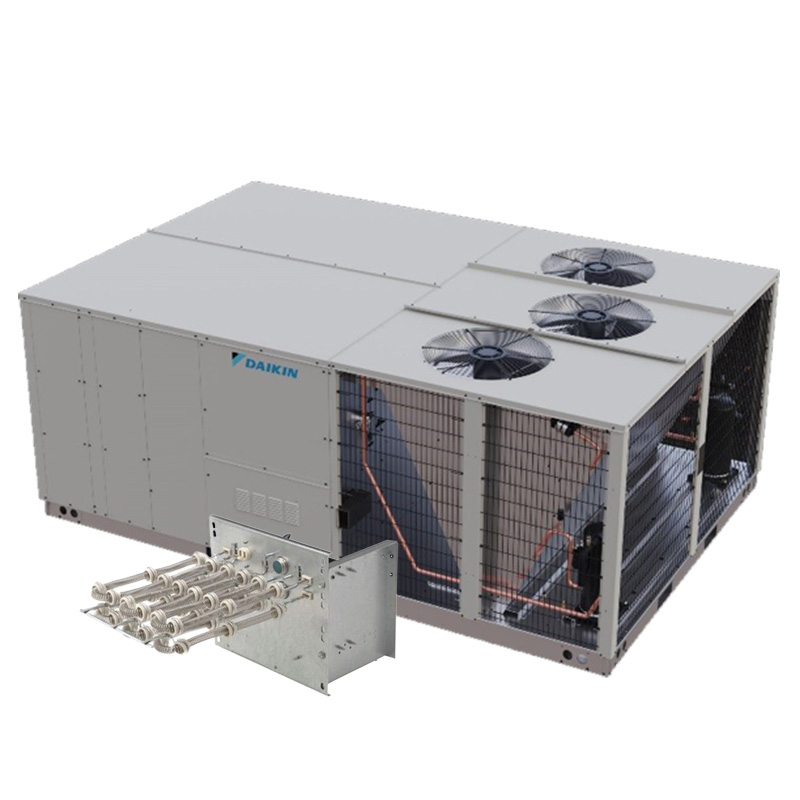
Daikin 15 Ton Commercial Package Unit AC With Electric Heat – 14.2 IEER, 460/3/60, Two Stage, R32
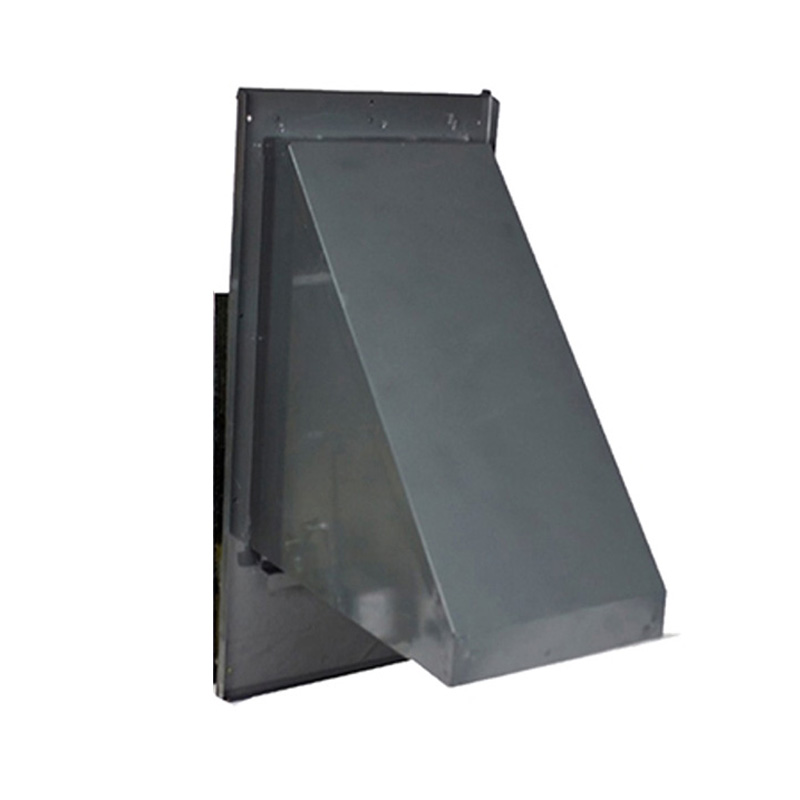
View on AC Direct see your lowest price →Check current price on AC Direct →
Key features
- 15-ton cooling capacity for medium-to-large commercial applications
- 14.2 IEER efficiency rating, above federal minimum for this class
- Two-stage compressor reduces energy use and improves humidity control at partial load
- R-32 refrigerant with lower global warming potential than R-410A
- 460/3/60 three-phase electrical configuration for standard commercial service
- Electric heat strips provide supplemental or primary heat without gas piping
About this system
The Daikin 15-ton commercial package unit is a self-contained rooftop or ground-level system designed for medium-to-large commercial spaces such as retail buildings, warehouses, light industrial facilities, and multi-zone office suites. At 15 tons of cooling capacity, it handles roughly 9,000 to 12,000 square feet depending on insulation, ceiling height, and internal heat loads. The unit ships ready to connect to existing ductwork, which simplifies installation compared to split systems, and the 460/3/60 electrical configuration is standard for commercial three-phase service found in most U.S. commercial buildings.
The 14.2 IEER (Integrated Energy Efficiency Ratio) rating is a commercially relevant benchmark rather than the residential SEER2 scale. For a package unit at this tonnage, 14.2 IEER sits in the upper-mid efficiency range, meaningfully above minimum federal efficiency thresholds for commercial equipment. Two-stage operation allows the compressor to run at reduced capacity during lighter loads, cutting energy consumption and improving humidity control compared to single-stage units. R-32 refrigerant has a lower global warming potential than the older R-410A it replaces and is increasingly standard in newer Daikin commercial lines. Electric heat strips handle supplemental or primary heating without the need for gas piping, making this unit well-suited to mild climates or buildings where natural gas is unavailable or impractical.
This system is best suited for commercial facility managers and contractors who want a single-source package solution from a manufacturer with a strong global manufacturing track record. It is not a budget buy, and the total cost of ownership calculation should factor in Daikin’s documented service and parts support challenges, particularly for facilities without a preferred Daikin commercial service contractor already in place.
The Daikin 15-ton commercial package unit offers solid efficiency and the build quality expected from the world's largest HVAC manufacturer, making it a credible choice for commercial facilities that want durable, two-stage performance. However, the premium price point and well-documented service and parts support complaints mean buyers should have a qualified Daikin commercial service contractor lined up before purchase. It earns its place on the shortlist but is not without real operational risk.
Overall score is the average of the five ratings above.
What we like
- 14.2 IEER puts it above federal minimum efficiency thresholds for meaningful long-term energy savings
- Two-stage operation reduces runtime costs and delivers better dehumidification during partial-load conditions
- R-32 refrigerant is lower-GWP and aligns with evolving regulatory requirements
- Daikin's manufacturing scale and global track record support robust build quality and long equipment lifespan
- Self-contained package design simplifies installation by eliminating the need for a separate indoor air handler
Trade-offs
- Electronic control board and circuit board errors are a documented recurring failure mode that can leave the unit unresponsive
- Parts availability and warranty claim handling draw consistent complaints, which is a serious concern for commercial facilities that cannot tolerate downtime
- Premium pricing relative to comparable commercial package units from Carrier and Trane
- Electric heat is less efficient than gas in cold climates, raising operating costs significantly if the unit is used as a primary heat source through winter
What homeowners and pros say about Daikin
Daikin’s reputation among HVAC professionals is split along a familiar line: those who focus on equipment longevity tend to rate the brand highly, while those dealing with service logistics after the sale tell a different story. Consumer Reports and industry experts consistently place Daikin among the longer-lasting HVAC brands, citing durable build quality and extended equipment lifespan. That reflects the company’s position as the world’s largest HVAC manufacturer with serious investment in engineering. On the other side, PissedConsumer scores for Daikin sit around 1.4 out of 5, a number that reflects a complaint-heavy review channel dominated by frustration over pricing disputes and service responsiveness rather than early equipment failure per se.
For this specific commercial package unit, the failure modes that come up most in technician reports are worth knowing before you commit. Electronic control board and circuit board errors are the most frequently cited issue, sometimes producing error codes or leaving the unit unresponsive until a board is replaced. Compressor problems, including loss of cooling capacity and outright compressor failure, appear in a subset of cases. Units can also develop noise over time, with rattling or humming on startup and shutdown becoming more pronounced as the system ages. Parts availability and warranty claim processing are the most consistent service complaints across Daikin’s commercial line, which makes having a committed local service contractor critical rather than optional for a 15-ton system where downtime costs real money.
Sources: PissedConsumer Daikin reviews, AHRI Directory of Certified Product Performance, U.S. DOE appliance and equipment efficiency standards, Daikin product specifications.
How it compares
| Brand | Comparable model | SEER2 | Stage | Price position |
|---|---|---|---|---|
| Daikin | 15-Ton Commercial Package Unit, Two-Stage, R-32 | 14.2 IEER | Two-stage | Premium tier |
| Carrier | WeatherMaster 50XC Series (15-ton) | ~14.0 IEER | Two-stage | Comparable premium pricing, slightly broader service network |
| Trane | Voyager II YCD Series (15-ton) | ~13.5 IEER | Single-stage or two-stage depending on configuration | Similar premium range, widely available parts and service |
| Lennox | LGH/LCH 180 Series (15-ton) | ~13.8 IEER | Two-stage | Premium, typically priced close to Daikin with strong dealer network |
Competitor rows are comparable single-stage units at similar efficiency; price is relative position, not a quote.
Questions about this system
What electrical service does this unit require, and is it compatible with typical U.S. commercial buildings?
The unit requires 460-volt, three-phase, 60 Hz power, which is standard in most U.S. commercial buildings. Residential properties and small offices with single-phase service will not be compatible without a significant electrical upgrade, so confirm your service panel configuration with a licensed electrician before ordering.
How does the 14.2 IEER compare to the federal minimum efficiency standard for commercial package units this size?
The U.S. Department of Energy's minimum IEER for commercial package cooling equipment in the 15-ton class is in the 11 to 12 range depending on configuration and climate zone. A 14.2 IEER is meaningfully above that floor, indicating real energy savings over minimum-compliant equipment, though it is not at the top of the premium efficiency tier for commercial rooftop units.
Does two-stage operation actually reduce my energy bills compared to a single-stage 15-ton unit?
Yes, in most commercial applications. Buildings rarely require full cooling capacity at all times, so two-stage compressors run at reduced capacity during lighter load periods, consuming less electricity than a single-stage unit cycling on and off. The savings are most pronounced in climates with long shoulder seasons and buildings with variable occupancy.
What is the warranty, and what do I need to do to get the full 12-year coverage?
Daikin's commercial equipment typically includes a 12-year parts warranty, but coverage requires product registration within 60 days of installation. Missing that registration window drops coverage to the base limited warranty, which is shorter. Keep your installation paperwork and register promptly through Daikin's dealer portal.
How practical is electric heat at 15 tons for a primary heating application in a northern climate?
Electric resistance heat is less efficient than gas in cold climates because it operates at roughly 1:1 energy-to-heat conversion, while gas furnaces can exceed 90 percent efficiency. For primary heating through a cold winter, operating costs will be substantially higher than a gas package unit. This configuration is most cost-effective in mild climates, for supplemental heat, or in buildings where gas service is unavailable.
Specifications
| Cooling capacity | 15 Ton |
| Refrigerant | R-32 |