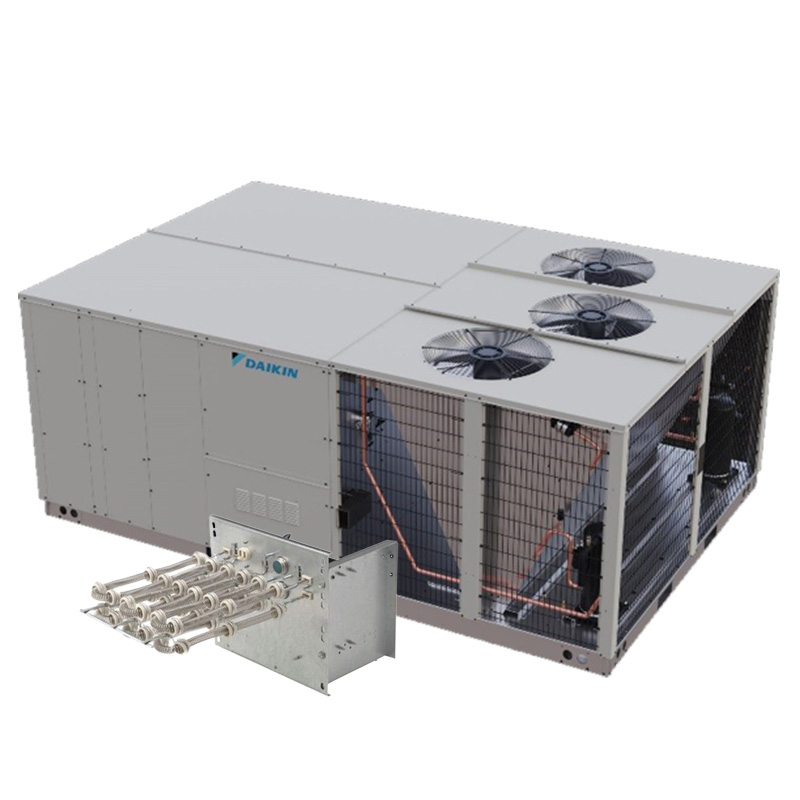
Daikin 25 Ton Commercial Package Unit AC With Electric Heat – 13.2 IEER, 208-230/3/60, Two Stage, R32
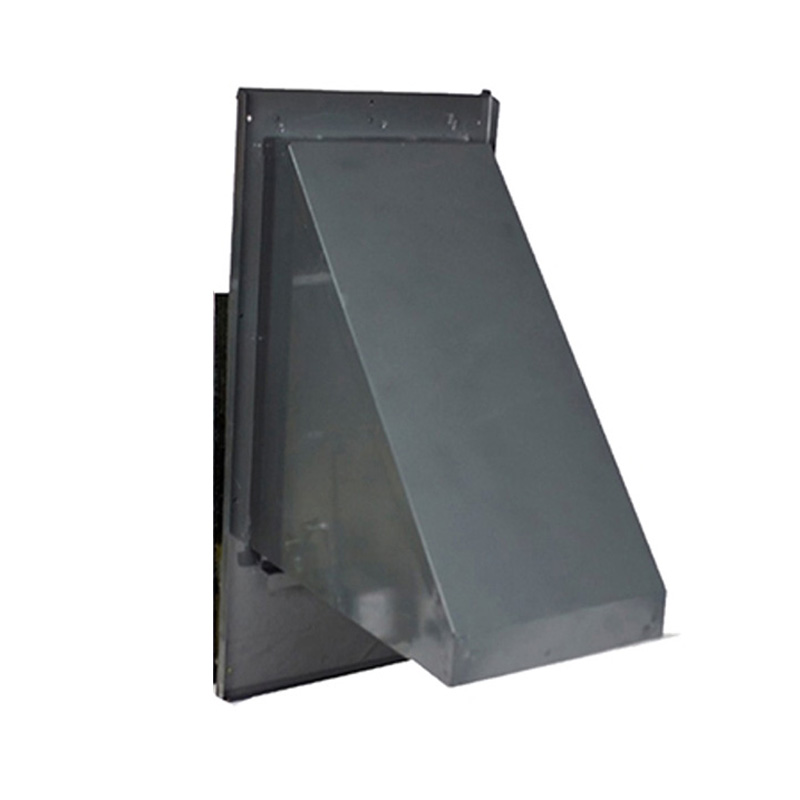
View on AC Direct see your lowest price →Check current price on AC Direct →
Key features
- 25-ton capacity with two-stage compressor for part-load efficiency and reduced humidity fluctuation
- 13.2 IEER efficiency rating meets or exceeds federal commercial unitary equipment minimums
- R-32 refrigerant with approximately 67% lower global warming potential than R-410A
- Electric heat integrated in a single rooftop-ready cabinet, eliminating a separate heat source
- 208-230V / 3-phase / 60Hz power configuration standard for commercial service entrances
- Self-contained package design simplifies roof or pad installation versus split-system alternatives
About this system
The Daikin 25-ton commercial package unit is a self-contained rooftop or ground-level system designed for medium-to-large commercial applications: retail stores, light industrial buildings, schools, and multi-tenant office suites that need a single cabinet to handle both cooling and electric heat. At 25 tons, this unit is sized for spaces roughly in the 15,000 to 25,000 square foot range depending on climate zone, insulation, and occupancy load, so a proper Manual J or equivalent commercial load calculation is essential before specifying it. The two-stage operation lets the compressor run at a reduced capacity during mild weather, which cuts energy consumption, reduces humidity swings, and lowers mechanical wear compared to a single-stage unit cycling on and off at full load.
The 13.2 IEER (Integrated Energy Efficiency Ratio) rating is the commercial-equipment counterpart to residential efficiency metrics. For a 25-ton packaged unit in this class, 13.2 IEER sits in a solid mid-to-upper efficiency band, meeting or exceeding current federal minimum standards for commercial unitary equipment and reflecting the efficiency gains from two-stage operation. R-32 refrigerant is a significant specification detail: it has a global warming potential roughly two-thirds lower than the R-410A it replaces in many lines, and it operates at higher pressures, which means technicians and contractors must verify their equipment and certifications are compatible before service work begins. The 208-230/3/60 electrical configuration requires a three-phase power supply, which is standard in most commercial buildings but must be confirmed at the service entrance before ordering.
This Daikin 25-ton commercial package unit delivers genuine two-stage efficiency and a forward-looking R-32 refrigerant platform in a cabinet that reflects Daikin's reputation for durable build quality. The trade-offs are real: premium acquisition cost, three-phase power requirements that exclude some facilities, and a brand service record that draws consistent complaints about parts availability and support responsiveness. Facilities managers who invest in a qualified Daikin commercial service contractor upfront will get the most out of the hardware.
Overall score is the average of the five ratings above.
What we like
- Two-stage operation reduces energy consumption and mechanical cycling compared to single-stage units of the same capacity
- 13.2 IEER efficiency is competitive within the commercial packaged unit segment at this tonnage
- R-32 refrigerant positions the system ahead of phasedown requirements for higher-GWP refrigerants
- Daikin's build quality and component durability are consistently recognized by HVAC industry experts and Consumer Reports as above average for long-term lifespan
- Single-cabinet package configuration reduces rooftop penetrations and simplifies the mechanical room footprint versus split systems
Trade-offs
- R-32 operates at higher pressures than R-410A, requiring verified technician certification and compatible service equipment, which can limit your pool of qualified local contractors
- Daikin's parts availability and warranty claims handling draw consistent field complaints, which is a material concern when a 25-ton commercial unit goes down
- Electronic control boards and circuit board errors are the most frequently documented failure mode, and a board failure on a large commercial unit can mean extended downtime if parts are not locally stocked
- Premium brand pricing puts the acquisition cost above several established commercial competitors at similar efficiency levels
What homeowners and pros say about Daikin
Among facilities managers and commercial HVAC contractors, Daikin’s hardware reputation generally holds up: industry observers and Consumer Reports place the brand among those with above-average durability and longer expected service life, which matters on a 25-ton unit expected to run for 15 to 20 years. At the same time, PissedConsumer aggregates a rating of roughly 1.4 out of 5 across several dozen reviews, a figure that skews heavily toward price shock and service frustration rather than catastrophic equipment failure. The pattern that shows up repeatedly in field reports is not that the units fall apart early, but that when something does go wrong, specifically the electronic control boards and circuit boards that are the most documented failure point, getting parts quickly and navigating Daikin’s warranty process can be genuinely difficult depending on your region.
Contractors who specialize in Daikin commercial lines tend to be enthusiastic about the build quality and the direction the company is taking with R-32, while generalist commercial service technicians sometimes flag parts lead times and the learning curve around the higher-pressure refrigerant as friction points. The compressor failures and noise complaints that surface in owner feedback are real trade-offs to weigh, not outliers. For a 25-ton commercial installation, the honest takeaway is that Daikin earns its premium price tag on longevity and efficiency when it is supported by a contractor with genuine factory training and local parts access, and it underdelivers on that promise when that support infrastructure is not in place before the unit is commissioned.
Sources: PissedConsumer Daikin reviews, AHRI Directory of Certified Product Performance, U.S. DOE appliance and equipment efficiency standards, Daikin product specifications.
How it compares
| Brand | Comparable model | SEER2 | Stage | Price position |
|---|---|---|---|---|
| Daikin | 25-Ton Commercial Package Unit, Two-Stage, R-32, Electric Heat | N/A (13.2 IEER) | Two-stage | Premium tier |
| Carrier | WeatherMaster 50XC (25-ton class) | N/A (IEER varies by config) | Two-stage | Comparable premium pricing, broad parts network |
| Trane | Precedent 25-ton Rooftop (YSC/YHC series) | N/A (IEER varies by config) | Two-stage | Similar premium tier, widely available service network |
| Lennox | Landmark Series LCA/LGA 25-ton Commercial Package | N/A (IEER varies by config) | Two-stage | Slightly below Daikin at this tonnage in most markets |
Competitor rows are comparable single-stage units at similar efficiency; price is relative position, not a quote.
Questions about this system
Does my building need three-phase power for this unit, and what happens if I only have single-phase service?
Yes, the 208-230/3/60 specification means three-phase power is required at the disconnect. Single-phase service cannot run this unit without a phase converter, which adds cost and a potential point of failure. Confirm your service entrance with your electrical contractor or utility before purchasing.
What does R-32 refrigerant mean for my maintenance contractor?
R-32 is an A2L mildly flammable refrigerant that operates at higher pressures than R-410A. Technicians need specific certification and must use compatible recovery equipment and leak detection tools. Before committing to this unit, verify that your preferred commercial HVAC service contractor is equipped and certified to handle R-32.
How does the 12-year parts warranty work, and what do I need to do to activate it?
Daikin requires product registration within 60 days of installation to unlock the 12-year parts warranty; missing that window drops coverage to a shorter base period. Labor is not included in the parts warranty, so budget for labor costs on any warranty repair, and document your registration confirmation as proof.
What are the most common service issues reported on Daikin commercial package units?
The most frequently documented failure modes are electronic control board and circuit board errors that can leave the unit unresponsive or displaying fault codes, compressor performance degradation or outright failure, and increasing noise over time including rattling or humming on startup and shutdown. Parts availability delays compound these issues, so stocking a spare control board on-site is a precaution some facilities managers take.
Is 13.2 IEER a good efficiency rating for a 25-ton commercial package unit, and will it meet current code?
For a two-stage 25-ton packaged rooftop unit, 13.2 IEER is competitive and meets or exceeds current U.S. federal minimum efficiency standards for this equipment class. It is not at the top of the market, but the two-stage operation meaningfully improves real-world part-load performance over single-stage units with similar nameplate ratings, which is where most commercial buildings spend the majority of their operating hours.
Specifications
| Cooling capacity | 25 Ton |
| Refrigerant | R-32 |