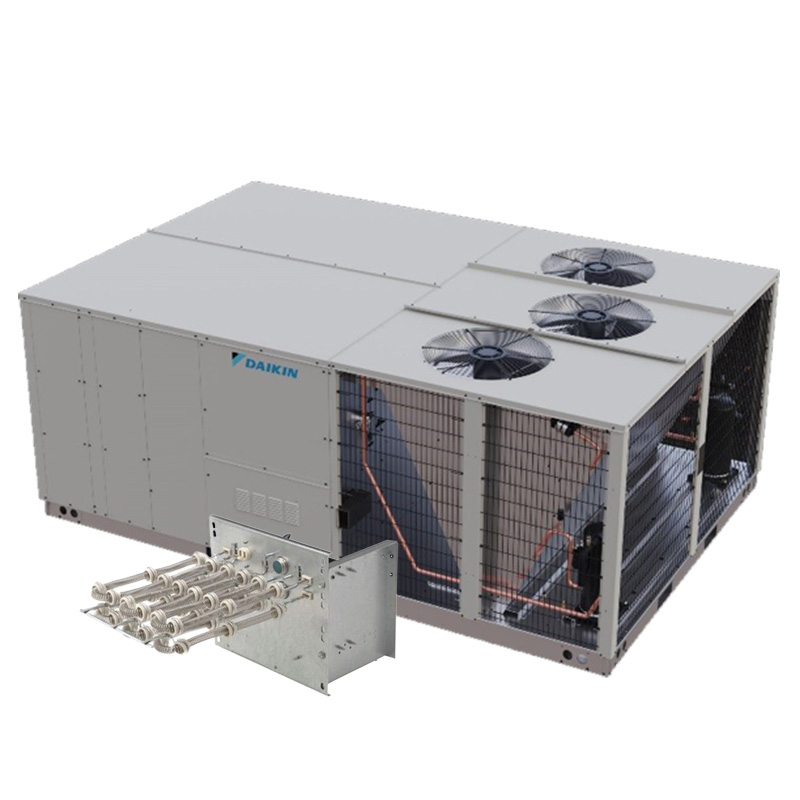
Daikin 25 Ton Commercial Package Unit AC With Electric Heat – 13.2 IEER, 460/3/60, Two Stage, R32
View on AC Direct see your lowest price →Check current price on AC Direct →
Key features
- 25-ton cooling capacity on a single package unit, suited for medium to large commercial buildings
- 13.2 IEER two-stage compressor operation reduces part-load energy use and cycling wear
- R-32 refrigerant with lower global warming potential than R-410A
- 460V/3-phase/60Hz electrical configuration standard for commercial construction
- Integrated electric resistance heat eliminates need for separate gas service
- 12-year parts warranty available with registration within 60 days of installation
About this system
The Daikin 25-ton commercial package unit is a self-contained rooftop or ground-level system designed for medium to large commercial spaces such as retail buildings, light industrial facilities, warehouses, and multi-tenant office suites. At 25 tons of cooling capacity, this unit handles roughly 24,000 to 30,000 square feet of conditioned space depending on climate zone, ceiling height, and building envelope. The two-stage compressor operation means the system runs at a lower capacity stage during moderate load conditions, reducing energy consumption, compressor cycling, and wear compared to a single-stage unit of the same size.
The 13.2 IEER (Integrated Energy Efficiency Ratio) rating is the commercial equivalent of a seasonal efficiency score, measuring part-load performance across a range of operating conditions rather than just peak load. For a 25-ton commercial package unit in this class, 13.2 IEER sits at a solid mid-tier efficiency level, meeting current commercial energy code requirements in most jurisdictions and exceeding the federal minimum for this tonnage range without reaching premium variable-speed territory. The unit runs on 460V/3-phase/60Hz power, which is standard for commercial construction, and uses R-32 refrigerant, a lower global-warming-potential option that is increasingly preferred for new commercial installations over the older R-410A.
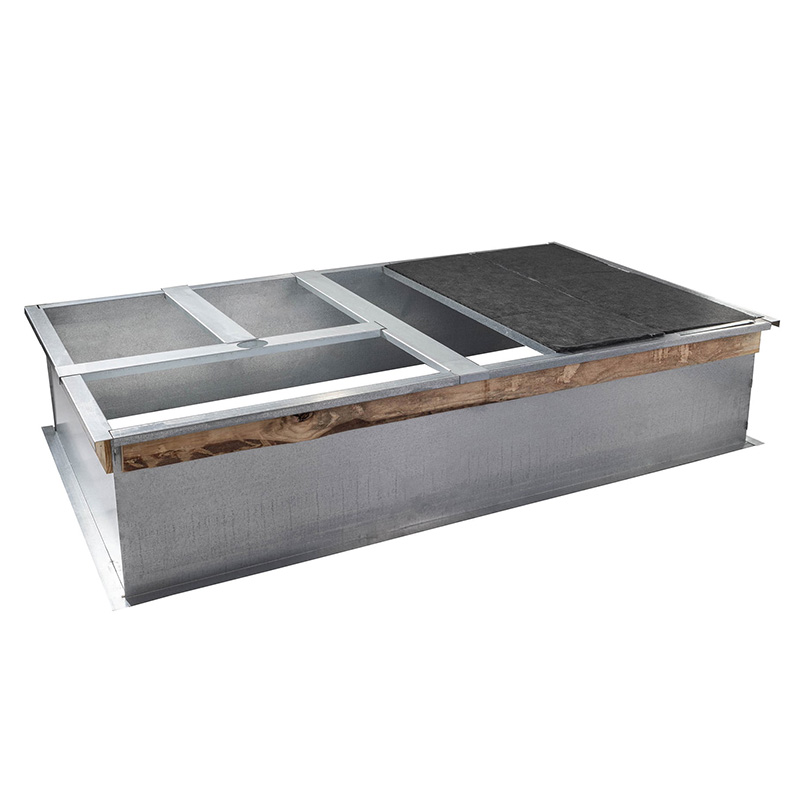
Electric resistance heat is included in the package configuration, making this a true all-in-one solution where gas service is unavailable or cost-prohibitive, though electric heat operating costs will be higher than a gas or heat-pump alternative in cold climates. The package format simplifies installation on rooftop curbs with a single refrigerant circuit and consolidated electrical connection, but the 25-ton size demands careful structural, electrical, and crane planning before commissioning.
The Daikin 25-ton commercial package unit offers a credible combination of two-stage efficiency, a lower-GWP refrigerant, and Daikin's well-documented long-term durability in commercial applications. The 13.2 IEER is code-compliant and competitive for the class, though it does not lead the market, and the premium price tag is a real factor to weigh against Carrier and Trane alternatives. Facilities managers should go in with eyes open about Daikin's parts availability and service response issues, which are consistently cited and matter considerably when a 25-ton unit goes down in summer.
Overall score is the average of the five ratings above.
What we like
- Two-stage compressor reduces energy use and wear during the majority of operating hours when full capacity is not needed
- 13.2 IEER meets or exceeds commercial energy code minimums for this tonnage in most U.S. climate zones
- R-32 refrigerant has roughly 68 percent lower GWP than R-410A, supporting sustainability goals and forward-compatibility
- Daikin equipment is consistently rated by HVAC experts and Consumer Reports among the longer-lasting commercial brands
- All-in-one package format with electric heat simplifies installation where gas infrastructure is absent
Trade-offs
- Electronic controls and circuit boards are the most frequently reported failure point, sometimes causing unresponsive units or persistent error codes
- Parts availability and warranty claim handling draw consistent complaints, a serious concern for a 25-ton commercial unit with downtime stakes
- Electric resistance heat carries high operating costs compared to gas or heat-pump heating in cold climates
- Premium Daikin pricing puts this unit above comparable Carrier and Trane package units at similar IEER levels
What homeowners and pros say about Daikin
Among HVAC professionals who work in commercial applications, Daikin’s equipment earns consistent respect for build quality and long service life. Consumer Reports and industry experts place Daikin among the more durable commercial brands, which matters considerably for a 25-ton rooftop unit expected to run 15 or more years. That durability reputation is real and worth weighing. However, the picture is not entirely positive: on PissedConsumer, Daikin scores approximately 1.4 out of 5, a heavily complaint-skewed channel that reflects real frustrations with service escalation and parts delays rather than unit performance alone. For a commercial package unit at this scale, the consequences of waiting weeks for a control board or compressor component are significant, and that is the trade-off Daikin buyers most consistently report.
The specific failure modes documented for Daikin commercial equipment are worth planning around before commissioning. Electronic control board errors are the most cited issue, sometimes leaving a unit unresponsive or cycling fault codes without an obvious cause. Compressor cooling loss and progressive noise development, including rattling or humming on startup and shutdown, have also been reported. Facilities managers who select this unit are well advised to confirm that their service contractor stocks or can rapidly source Daikin-specific control boards, and to treat the 60-day warranty registration window as a hard deadline rather than an administrative detail. With those precautions in place, the two-stage efficiency, R-32 refrigerant, and Daikin’s underlying build quality make this a competitive choice for the right commercial application.
Sources: PissedConsumer Daikin reviews, AHRI Directory of Certified Product Performance, U.S. DOE appliance and equipment efficiency standards, Daikin product specifications.
How it compares
| Brand | Comparable model | SEER2 | Stage | Price position |
|---|---|---|---|---|
| Daikin | 25-Ton Commercial Package Unit, Two-Stage, R-32, Electric Heat | N/A (13.2 IEER) | Two-stage | Premium tier |
| Carrier | 48XB/XC Commercial Package Unit, 25-ton | N/A (IEER ~12.0-13.5 depending on configuration) | Two-stage | Comparable to slightly below Daikin at this tonnage; broad dealer network often offsets initial cost through service access |
| Trane | Precedent Series 25-Ton Commercial Package Unit | N/A (IEER ~11.5-13.2 depending on configuration) | Single-stage or two-stage | Comparable to Daikin at premium tier; strong commercial parts and service infrastructure |
| Lennox | LGH/LCH 25-Ton Commercial Package Unit | N/A (IEER ~12.0-13.5 depending on configuration) | Single-stage or two-stage | Generally positioned slightly below Daikin at this tonnage class; narrower commercial service network than Carrier or Trane |
Competitor rows are comparable single-stage units at similar efficiency; price is relative position, not a quote.
Questions about this system
Does the 13.2 IEER rating meet current commercial energy codes for a 25-ton package unit?
Yes, 13.2 IEER meets or exceeds the federal minimum efficiency standards for commercial package units in this tonnage class under ASHRAE 90.1 and most state energy codes. It is not the highest tier available, but it will satisfy code compliance for new construction and replacement projects in the majority of U.S. jurisdictions.
What electrical service does this unit require, and is that standard for commercial buildings?
The unit requires 460V/3-phase/60Hz power, which is the standard electrical configuration in U.S. commercial construction. If your building has 208V or 230V three-phase service instead, you will need a transformer or a different unit configuration, so confirm your service voltage with your electrician before ordering.
How does the R-32 refrigerant affect maintenance and future serviceability?
R-32 is an A2L mildly flammable refrigerant that requires technicians with specific handling certification and compatible recovery equipment. It is not interchangeable with R-410A, so confirm your service contractor has R-32 tooling and training. On the positive side, R-32 has a lower environmental impact and is increasingly stocked by commercial distributors as the industry transitions away from R-410A.
What are the most common failure points to watch for on this Daikin commercial unit?
Based on documented Daikin failure patterns, electronic control boards and circuit board errors are the most frequently reported issue, sometimes leaving the unit unresponsive or showing persistent fault codes. Compressor performance degradation and noise development over time have also been reported. Given the parts availability complaints associated with Daikin, it is worth confirming your service contractor has access to Daikin commercial parts before commissioning.
What do I need to do to qualify for the 12-year parts warranty?
The 12-year parts warranty requires product registration within 60 days of installation. Missing that window typically drops coverage to the base warranty period, so registration should be treated as a day-one task, not an afterthought. Confirm with your installing contractor who is responsible for completing registration and get documentation that it was submitted.
Specifications
| Cooling capacity | 25 Ton |
| Refrigerant | R-32 |