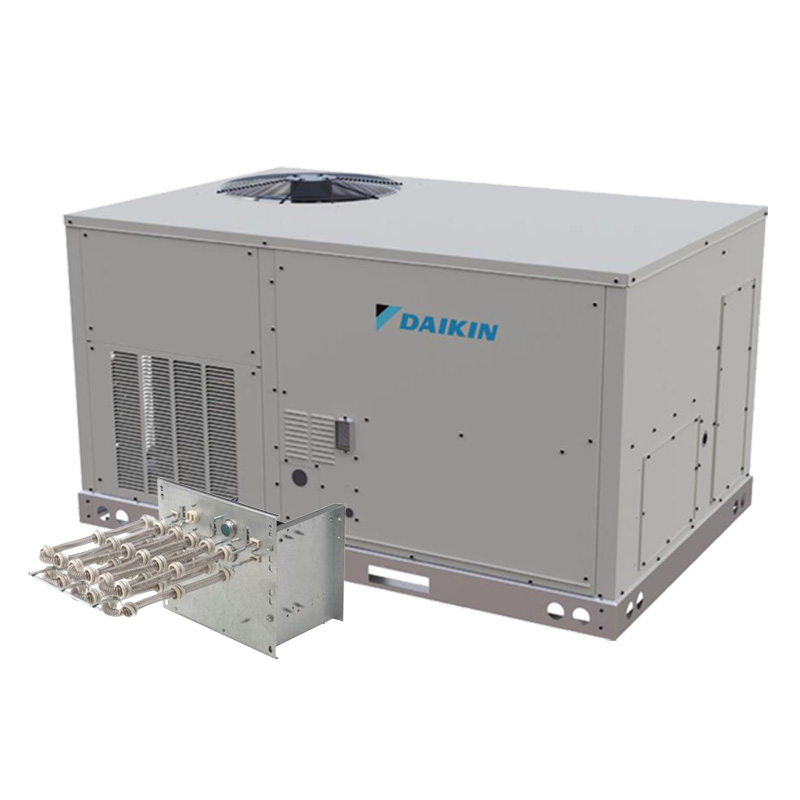
Daikin 3 Ton Commercial Package Unit AC With Electric Heat – 14 SEER2, 208-230/3/60, Single Stage, R32
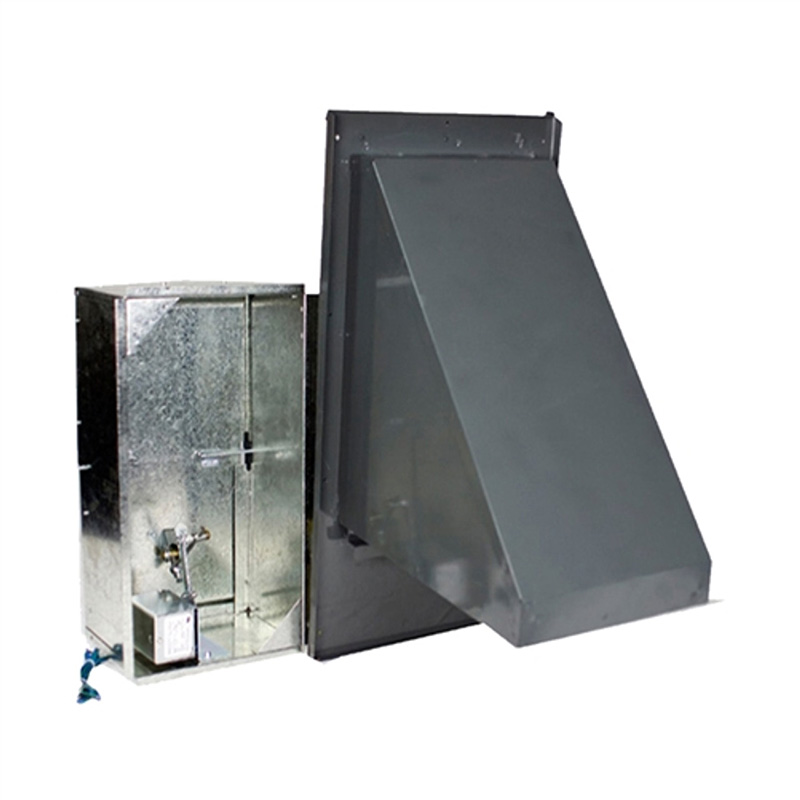
View on AC Direct see your lowest price →Check current price on AC Direct →
Key features
- 3-ton cooling capacity in a self-contained package unit configuration
- 14 SEER2 efficiency rating meets current federal minimums for commercial equipment
- R-32 refrigerant with significantly lower global warming potential than R-410A
- 208-230V / 3-phase / 60 Hz power supply for light commercial electrical service
- Single-stage compressor operation for simplified mechanical design
- Electric heat included, eliminating the need for a separate gas or hydronic heat source
About this system
The Daikin 3-Ton Commercial Package Unit with electric heat is a self-contained rooftop or ground-mount system that combines cooling and electric resistance heating in a single cabinet. Running on 208-230V three-phase power, it is built for light commercial applications where a dedicated electrical service is already in place, such as small offices, retail spaces, restaurants, or multi-tenant buildings. Everything ships in one box, which simplifies installation compared to split systems and reduces the number of refrigerant connections a technician has to make on-site.
At 14 SEER2, this unit meets current federal minimum efficiency standards for its class but does not push into premium efficiency territory. That is an honest trade-off: the single-stage compressor keeps the purchase price lower and the mechanical design simpler, but the system runs at full capacity every time it cycles on rather than modulating to match the actual load. In climates with long, hot seasons, operating costs will be noticeably higher than a two-stage or variable-speed alternative. The R-32 refrigerant is a meaningful step forward, carrying a global warming potential roughly 68 percent lower than the R-410A it replaces and positioning the unit well for evolving regulations. For a light commercial buyer who needs straightforward installation, three-phase compatibility, and the backing of a globally dominant HVAC manufacturer, this package unit is a practical starting point.
This Daikin package unit is a solid, no-frills light commercial workhorse backed by one of the most durable HVAC brands in the industry, but its entry-level SEER2 rating and single-stage operation mean running costs will add up in heavy-use climates. Parts availability and warranty service have been consistent pain points for Daikin owners, and that risk is magnified in a commercial setting where downtime is expensive.
Overall score is the average of the five ratings above.
What we like
- Daikin's build quality and component longevity are consistently rated among the best in the industry by HVAC professionals and Consumer Reports
- All-in-one package configuration reduces installation time and on-site refrigerant handling
- R-32 refrigerant is forward-looking and carries a much lower environmental impact than R-410A
- Three-phase power compatibility makes it a direct fit for most light commercial electrical infrastructure
- 12-year parts warranty (with timely registration) is above average for commercial package equipment
Trade-offs
- 14 SEER2 single-stage operation will produce higher energy bills than two-stage or inverter-driven alternatives over a multi-year ownership period
- Daikin's customer service and parts support draw consistent real-world complaints, which carries extra weight for a commercial owner facing costly downtime
- Electronic control board failures and compressor cooling loss are the most documented failure modes in this product family
- Premium brand pricing means the upfront cost is higher than several competitors offering comparable efficiency ratings
What homeowners and pros say about Daikin
Among HVAC professionals who have worked with Daikin commercial package equipment, the build quality and component longevity are genuine strengths that come up repeatedly. Consumer Reports and experienced installers consistently place Daikin among the longer-lasting brands in the industry, and that reputation holds for the commercial package line. At the same time, the service side of ownership is where the frustration tends to surface. Daikin’s PissedConsumer rating sits at roughly 1.4 out of 5, and while that platform skews heavily toward complaints, the recurring themes of slow warranty processing and difficulty sourcing parts are documented consistently enough to take seriously, especially in a commercial context where a down unit during business hours has a real financial cost.
The specific failure modes that show up in this product family are worth knowing before you commit. Electronic control board and circuit board faults are the most frequently cited issues, sometimes rendering the unit unresponsive or locked in error codes until a technician can physically swap the board. Compressor problems leading to reduced cooling output or outright failure have also been documented, as has a tendency for units to become noisier over time, with rattling or humming noticeable on start-up and shut-down. None of these are unique to Daikin, but the combination of those failure modes with the reported parts availability challenges is something a commercial buyer should factor into their service planning and decide whether an extended service contract makes sense from day one.
Sources: PissedConsumer Daikin reviews, AHRI Directory of Certified Product Performance, U.S. DOE appliance and equipment efficiency standards, Daikin product specifications.
What it costs to run
At 14 SEER2, cooling this 3-ton system for a typical 1200-hour cooling season at the U.S. average electricity rate of $0.17/kWh works out to roughly $525 per year in cooling, about $23 less per year than a minimum-efficiency 13.4 SEER2 unit of the same size. Your real cost depends on your climate and local rate.
Method: (36,000 BTU/hr ÷ 14 SEER2) × 1200 hours ÷ 1000 × $0.17/kWh. Rate source: U.S. EIA average; cooling hours: moderate-climate estimate.
How it compares
| Brand | Comparable model | SEER2 | Stage | Price position |
|---|---|---|---|---|
| Daikin | 3-Ton Commercial Package Unit with Electric Heat (R-32) | 14 | Single-stage | Value pick |
| Carrier | 50XC (WeatherMaster Series) 3-Ton Package Unit | 14-15 | Single-stage | Similar to slightly higher than Daikin |
| Trane | YSC (Precedent Series) 3-Ton Package Unit | 14-15 | Single-stage | Comparable to Daikin, varies by configuration |
| Lennox | LRP14 3-Ton Commercial Package Unit | 14 | Single-stage | Broadly similar to Daikin at this efficiency tier |
Competitor rows are comparable single-stage units at similar efficiency; price is relative position, not a quote.
Questions about this system
Does this unit require three-phase power, and can it run on single-phase service?
Yes, this specific model is rated for 208-230V / 3-phase / 60 Hz and requires a three-phase electrical service. It is not compatible with standard single-phase residential or light commercial service without significant electrical infrastructure changes, so confirm your building's service before ordering.
What does the 12-year parts warranty actually cover, and are there conditions?
Daikin's 12-year parts warranty covers the compressor and most major components, but it requires unit registration within 60 days of installation to be valid. Failing to register in time typically drops coverage to a shorter base period, and Daikin's warranty claims process has drawn consistent complaints from owners about response times and parts availability.
Is R-32 refrigerant harder to service than R-410A, and will local technicians know how to handle it?
R-32 is mildly flammable (A2L classification) and requires technicians with the appropriate equipment and certification to handle it safely. Familiarity is growing quickly as more manufacturers shift to A2L refrigerants, but in some markets you should verify your service provider is already equipped for R-32 before purchase.
What are the most common problems reported by owners of this type of Daikin commercial unit?
The most documented failure modes in Daikin commercial package equipment are electronic control board and circuit board errors that can leave the unit unresponsive or stuck in fault codes, compressor issues that cause loss of cooling capacity, and increasing noise such as rattling or humming on start-up and shut-down. Parts availability and warranty claim handling are the most frequent service complaints.
How does single-stage operation affect performance and electricity costs compared to a two-stage unit?
A single-stage compressor runs at 100 percent capacity every time the unit cycles, regardless of how much cooling is actually needed. On mild days or during shoulder seasons, this leads to short cycling, higher energy consumption per hour of operation, and less precise humidity control compared to a two-stage or variable-speed unit. In climates with long hot seasons or high occupancy loads, the operating cost difference over several years can outweigh the lower upfront purchase price.
Specifications
| Cooling capacity | 3 Ton |
| Efficiency | 14 SEER2 |
| Refrigerant | R-32 |