Daikin 4 Ton AC And 70000 BTU Gas/Electric Commercial Package Unit – 13.7 SEER2, Single Stage, 81% AFUE, R32
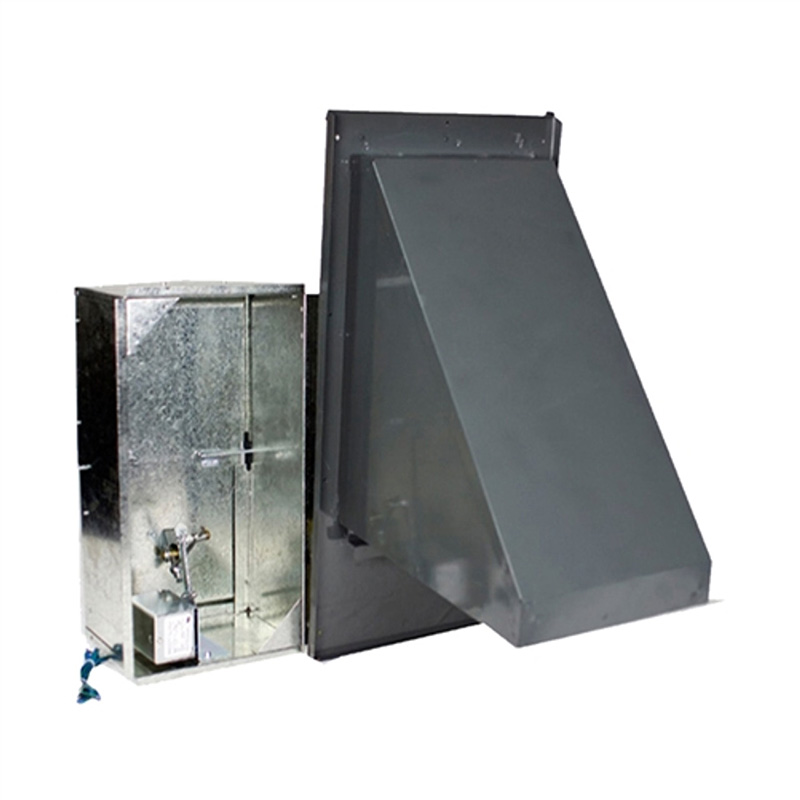
View on AC Direct see your lowest price →Check current price on AC Direct →
Key features
- 4-ton single-stage cooling at 13.7 SEER2, meeting federal minimum efficiency standards
- 70,000 BTU gas heat section at 81% AFUE in a self-contained package cabinet
- R-32 refrigerant with lower global warming potential than R-410A
- All-in-one rooftop or slab-mount package design eliminates indoor air handler
- Daikin's 12-year parts warranty available with registration within 60 days of installation
- Single-stage compressor and gas valve operation for straightforward controls and serviceability
About this system
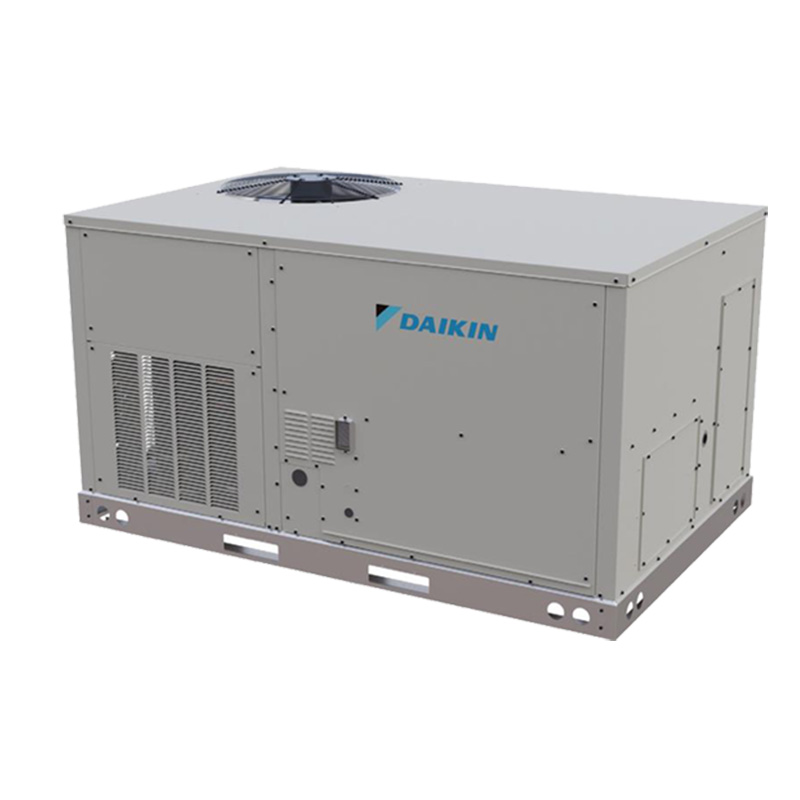
The Daikin 4-Ton Gas/Electric Commercial Package Unit combines a 13.7 SEER2 cooling system with a 70,000 BTU gas furnace section rated at 81% AFUE into a single rooftop or ground-level cabinet. That configuration is purpose-built for light commercial applications such as small retail spaces, restaurants, offices, and multi-zone commercial buildings where all mechanical equipment needs to live outside the conditioned space. A single package unit simplifies the installation footprint considerably compared to a split system, and the R-32 refrigerant gives it a lower global warming potential than the R-410A it replaces.
The 13.7 SEER2 rating sits right at the federal minimum efficiency threshold for new equipment in most U.S. climate zones, so buyers should understand this unit is a compliance-level choice rather than a high-efficiency one. The 81% AFUE gas heat section is similarly entry-level for a furnace, meaning roughly 19 cents of every heating dollar exits as flue gas. Single-stage operation on both cooling and heating means the compressor and gas valve run at full capacity or not at all, which can cause short-cycling in mild weather and more humidity fluctuation than a modulating or two-stage unit would produce. For applications that need straightforward, durable, code-compliant equipment without paying for premium efficiency, this unit is a reasonable fit.
This Daikin package unit is a workmanlike, compliance-level commercial system that leans on Daikin's reputation for durable construction, but the entry-level efficiency scores and single-stage operation mean you are paying a premium brand price for baseline performance. It suits buyers who prioritize long equipment life and a consolidated footprint over efficiency savings or comfort refinement. The documented service and parts support issues are a real concern for commercial operators who cannot afford extended downtime.
Overall score is the average of the five ratings above.
What we like
- All-in-one package cabinet simplifies rooftop installation and reduces refrigerant line set complexity
- Daikin's track record for long equipment lifespan, recognized by Consumer Reports and HVAC professionals
- R-32 refrigerant has roughly one-third the global warming potential of R-410A
- 12-year parts warranty is competitive for a commercial package unit when registration is completed on time
- Single-stage simplicity means fewer variable components and a more straightforward diagnostic process
Trade-offs
- 13.7 SEER2 and 81% AFUE are both at the low end of the efficiency spectrum, so operating costs will be higher than mid- or high-efficiency alternatives
- Single-stage operation leads to on/off cycling in mild conditions, reducing dehumidification performance and comfort consistency
- Daikin's parts availability and warranty claim handling draw consistent complaints, which is a significant risk in a commercial setting
- Documented electronic control board failures and compressor issues can mean extended downtime if local dealer support is weak
What homeowners and pros say about Daikin
Among HVAC professionals, Daikin’s commercial package equipment earns respect for build quality and longevity. Consumer Reports and experienced installers consistently place Daikin among the longer-lasting brands, which matters for commercial operators who want equipment that runs reliably for 15 or more years. That reputation is real, but it coexists with a documented pattern of frustration around service: PissedConsumer scores Daikin at roughly 1.4 out of 5 across several dozen reviews, with recurring themes around parts delays, warranty claim friction, and difficulty reaching knowledgeable support staff. Those are complaint-channel numbers and skew negative by their nature, but the pattern is consistent enough to take seriously before committing to this brand in a market with limited authorized dealers.
The specific failure modes that come up most often in real-world service calls on Daikin commercial equipment include electronic control board and circuit board errors that can leave the unit throwing fault codes or refusing to respond to thermostat commands, compressor problems that show up as gradual loss of cooling capacity or outright failure, and noise issues such as rattling or humming during start and stop cycles that tend to worsen over time. For this particular unit, the R-32 refrigerant also means technicians need to confirm they are certified and equipped to handle it, since it is still less universally stocked than R-410A at many distributors. Buyers who verify strong local Daikin commercial service coverage before purchasing will have a significantly different ownership experience than those who discover thin parts support after the warranty clock is running.
Sources: PissedConsumer Daikin reviews, AHRI Directory of Certified Product Performance, U.S. DOE appliance and equipment efficiency standards, Daikin product specifications.
What it costs to run
At 13.7 SEER2, cooling this 4-ton system for a typical 1200-hour cooling season at the U.S. average electricity rate of $0.17/kWh works out to roughly $715 per year in cooling, about $16 less per year than a minimum-efficiency 13.4 SEER2 unit of the same size. Your real cost depends on your climate and local rate.
Method: (48,000 BTU/hr ÷ 13.7 SEER2) × 1200 hours ÷ 1000 × $0.17/kWh. Rate source: U.S. EIA average; cooling hours: moderate-climate estimate.
How it compares
| Brand | Comparable model | SEER2 | Stage | Price position |
|---|---|---|---|---|
| Daikin | 4-Ton Gas/Electric Commercial Package Unit | 13.7 | Single-stage | Value pick |
| Carrier | WeatherMaster 48/50 Series (50XC) 4-Ton Package Unit | 14.0 | Single-stage | Comparable to slightly higher than this Daikin unit |
| Trane | YCD/YHC 4-Ton Commercial Package Unit | 14.0 | Single-stage | Typically priced at or slightly above this Daikin unit |
| Lennox | LRP16GE 4-Ton Gas/Electric Package Unit | 16.0 | Single-stage | Priced higher than this Daikin unit, reflecting the efficiency premium |
Competitor rows are comparable single-stage units at similar efficiency; price is relative position, not a quote.
Questions about this system
Does the 12-year parts warranty apply automatically or is there something I need to do?
Registration is required within 60 days of installation to unlock the 12-year parts coverage. If you miss that window, the warranty reverts to a shorter base term, so make sure your contractor or you complete the registration promptly after the unit goes in.
Is 81% AFUE acceptable for a commercial gas heating application, or should I be looking at higher-efficiency options?
81% AFUE meets current federal minimum standards for commercial package equipment in most regions, but it means roughly 19% of gas heat is lost up the flue. In climates with long or cold heating seasons, a higher-AFUE unit will reduce operating costs meaningfully over the equipment's life. For mild-winter climates with low annual heating hours, the efficiency gap matters less.
What does single-stage operation mean for a small retail or restaurant space?
Single-stage means the compressor and gas valve run at 100% capacity or shut off completely. In mild weather, the unit tends to satisfy the thermostat quickly and short-cycle, which reduces its ability to pull humidity out of the air and can create uneven temperatures. Spaces with widely varying occupancy loads or high latent heat may benefit more from a two-stage or variable-capacity unit.
Are electronic control board failures a real concern on this unit, and what should I watch for?
Electronic control board and circuit board errors are the most commonly documented failure mode across Daikin commercial and residential equipment. Watch for the unit throwing error codes, becoming unresponsive to thermostat signals, or failing to start the compressor on a call for cooling. Having your service contractor confirm local parts availability before installation is a practical precaution.
Can this unit be used for a ground-level slab installation, or is it rooftop only?
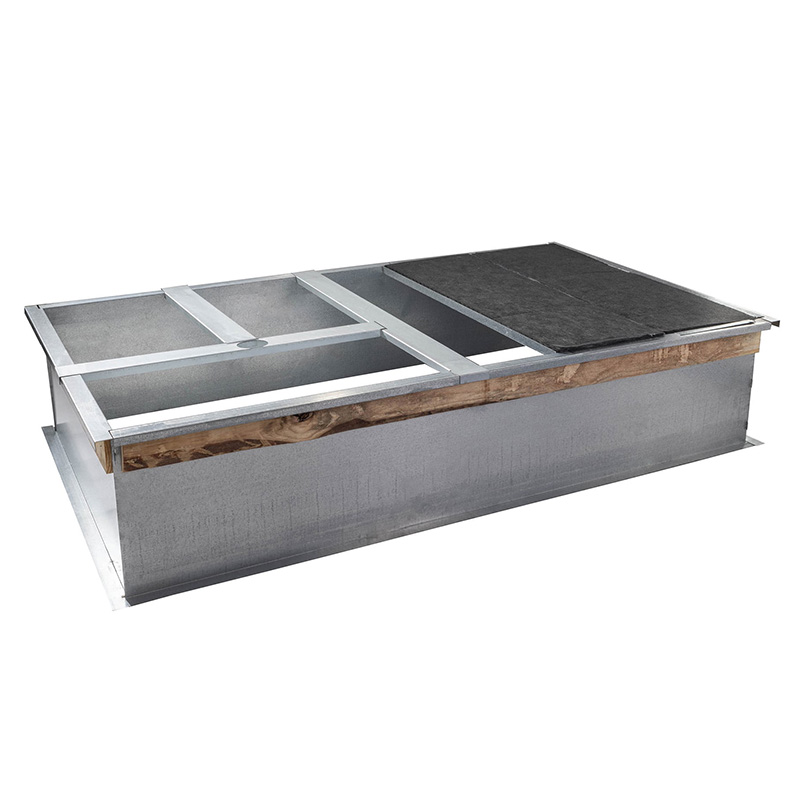
Commercial gas/electric package units like this one are designed for both rooftop curb mounting and ground-level slab installation, provided the condensate, gas supply, electrical, and ductwork connections are configured correctly for the chosen orientation. Confirm with your installer that the specific model's discharge direction matches your duct configuration before ordering.
Specifications
| Cooling capacity | 4 Ton |
| Efficiency | 13.7 SEER2 |
| Furnace output | 70000 BTU |
| Furnace efficiency | 81% AFUE |
| Refrigerant | R-32 |