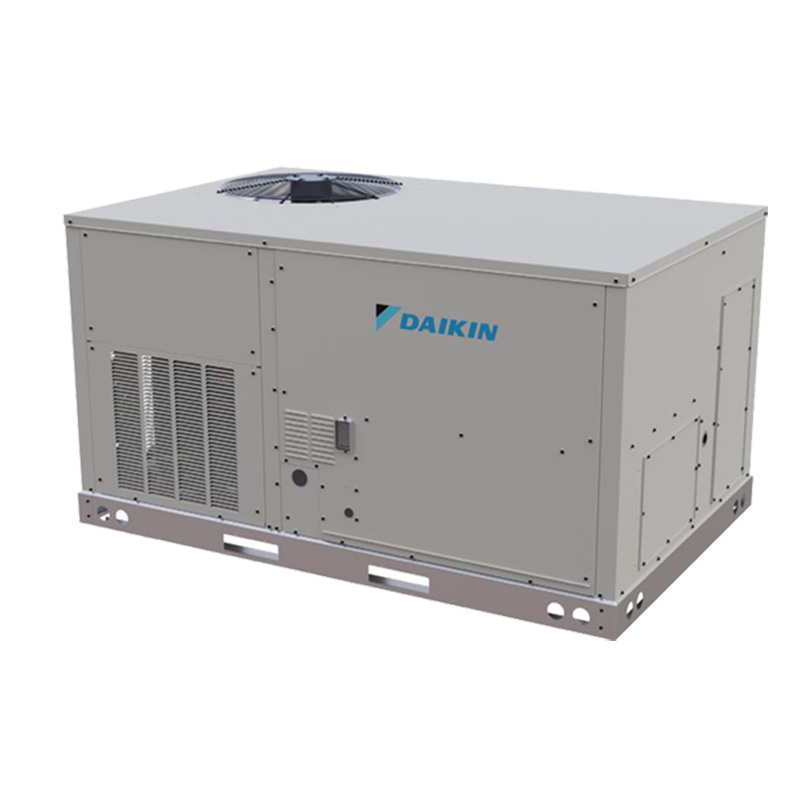
Daikin 4 Ton Commercial Package Unit AC Cooling Only – 13.7 SEER2, 208-230/3/60, Single Stage, R32
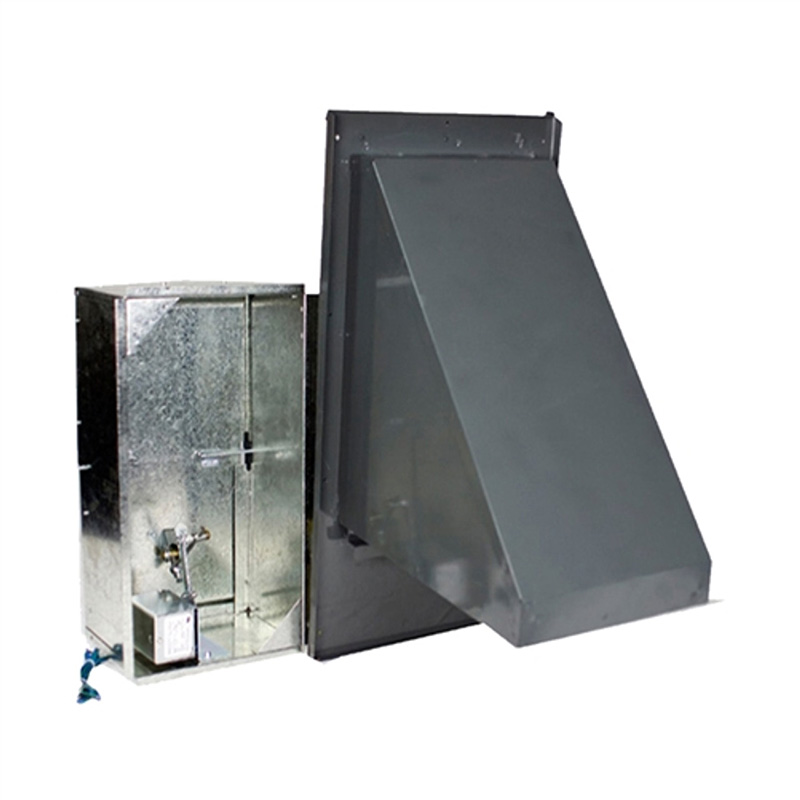
View on AC Direct see your lowest price →Check current price on AC Direct →
Key features
- 13.7 SEER2 cooling efficiency — meets current federal minimum commercial standard
- 4-ton (approx. 48,000 BTU/hr) single-stage cooling-only package unit
- R-32 refrigerant — lower global warming potential than R-410A
- 208-230V / 3-phase / 60Hz power — commercial three-phase applications only
- Self-contained package configuration — no separate outdoor or indoor air handler required
- 12-year parts warranty available with registration within 60 days of installation
About this system
The Daikin 4-Ton Commercial Package Unit delivers cooling-only performance in a self-contained rooftop or ground-level configuration, making it a practical fit for small commercial buildings, light industrial spaces, and large retail suites where a split system would be impractical or code-restricted. At 4 tons it handles roughly 1,400 to 1,800 square feet of well-insulated commercial space, though actual sizing depends heavily on building envelope, occupancy, and local climate. The unit runs on 208-230V three-phase power, so it is strictly a commercial application — residential single-phase installations are not an option here.
The 13.7 SEER2 rating lands at the federal minimum floor for commercial package equipment under current DOE standards, which means this unit meets code but does not deliver the efficiency savings of higher-tier alternatives. For operations where cooling hours are moderate and energy cost is less of a driver than upfront cost and reliability, that trade-off is reasonable. R-32 refrigerant is a meaningful long-term positive: it has a lower global warming potential than the R-410A it replaces, and supply availability is improving as the industry shifts away from older refrigerants. Single-stage operation keeps mechanical complexity low but means the compressor runs at full capacity or not at all, which can cause temperature swings in spaces with variable occupancy loads.
This Daikin commercial package unit is a straightforward, durably built cooling solution for three-phase commercial applications where budget and simplicity matter more than peak efficiency. The 13.7 SEER2 rating is honest entry-level performance, not a standout, and buyers should go in with clear expectations about Daikin's parts availability and service responsiveness before committing. For the right application it is a solid workhorse, but not a unit to choose if long-term operating costs or service responsiveness are top priorities.
Overall score is the average of the five ratings above.
What we like
- Daikin's build quality and component sourcing consistently earn recognition for above-average longevity among HVAC brands
- R-32 refrigerant improves environmental profile and positions the unit well for future regulatory compliance
- Self-contained package design simplifies installation in commercial spaces without mechanical rooms
- Three-phase power compatibility aligns with most light commercial electrical infrastructure
- 12-year parts warranty is competitive for commercial package equipment when registration is completed on time
Trade-offs
- 13.7 SEER2 is the current regulatory minimum — energy costs will be higher over the unit's life than mid- or high-efficiency alternatives
- Single-stage operation provides no capacity modulation, which can result in short-cycling or uneven temperatures in variable-load spaces
- Daikin's parts availability and warranty handling draw consistent real-world complaints, which matters especially when a commercial space is down in summer
- Electronic control boards and circuit boards are the most frequently documented failure point, and sourcing replacements has been a recurring service frustration
What homeowners and pros say about Daikin
Among facilities managers and commercial HVAC contractors who work with Daikin package equipment, the recurring theme is that the hardware itself tends to hold up well over time — Daikin earns consistent recognition from Consumer Reports and industry experts as one of the longer-lasting brands in the commercial space. That reputation carries real weight when you are talking about a rooftop unit expected to run for 15 or more years. The concern that comes up just as consistently is what happens when something does go wrong: parts sourcing delays and warranty handling difficulties are specific, named complaints that appear across service forums and professional reviews, and they are worth planning around rather than dismissing.
PissedConsumer rates Daikin at roughly 1.4 out of 5, which sounds alarming until you account for that platform’s well-known complaint-skew and the fact that it represents a small, self-selected sample of frustrated buyers rather than the full ownership population. The failure modes that do appear in real documentation are specific: electronic control board errors that can leave a unit throwing codes or going unresponsive, compressor degradation over time, and increasing mechanical noise — rattling and humming on start and stop cycles — as units age. For a commercial setting where downtime translates directly to lost business, none of those are trivial. The practical takeaway is to register the warranty promptly, establish a service relationship with a contractor who stocks or can quickly source Daikin commercial parts, and budget for control board issues as a likely eventual repair rather than an if.
Sources: PissedConsumer Daikin reviews, AHRI Directory of Certified Product Performance, U.S. DOE appliance and equipment efficiency standards, Daikin product specifications.
What it costs to run
At 13.7 SEER2, cooling this 4-ton system for a typical 1200-hour cooling season at the U.S. average electricity rate of $0.17/kWh works out to roughly $715 per year in cooling, about $16 less per year than a minimum-efficiency 13.4 SEER2 unit of the same size. Your real cost depends on your climate and local rate.
Method: (48,000 BTU/hr ÷ 13.7 SEER2) × 1200 hours ÷ 1000 × $0.17/kWh. Rate source: U.S. EIA average; cooling hours: moderate-climate estimate.
How it compares
| Brand | Comparable model | SEER2 | Stage | Price position |
|---|---|---|---|---|
| Daikin | 4-Ton Cooling-Only Commercial Package Unit (this unit) | 13.7 | Single-stage | Value pick among commercial package units at this efficiency tier |
| Carrier | WeatherMaster 48XC (4-ton) | 14.0–14.5 | Single-stage | Typically priced slightly above this Daikin unit |
| Trane | Precedent TC (4-ton) | 14.0–14.5 | Single-stage | Typically priced at or above the Carrier equivalent, at the higher end of this tier |
| Lennox | LCA (4-ton commercial package) | 14.0 | Single-stage | Positioned similarly to Carrier in this segment, generally above this Daikin unit |
Competitor rows are comparable single-stage units at similar efficiency; price is relative position, not a quote.
Questions about this system
Does this unit require three-phase power, and can it be adapted for single-phase use?
Yes, the 208-230/3/60 specification means three-phase power is required and is not field-convertible to single-phase. If your building only has single-phase service, you would need a phase converter (which adds cost and a potential failure point) or a different unit rated for single-phase operation.
What does the 12-year parts warranty actually cover, and what can void it?
Daikin's 12-year parts warranty covers the compressor and other major components, but it requires registration within 60 days of the installation date. Missing that window typically drops coverage to a shorter base period. Labor is not included, and warranty service complaints — including parts sourcing delays — are among the most consistent criticisms in real-world owner feedback.
Is 13.7 SEER2 going to cost significantly more to operate than a higher-efficiency unit?
Over a full cooling season, yes — a unit at 15 or 16 SEER2 will consume noticeably less electricity for the same cooling output. The gap matters most in climates with long, hot summers and in spaces with high occupancy or heat gain. For moderate-use applications the payback period on a higher-efficiency unit can stretch beyond five years, making the efficiency trade-off less critical.
What are the most common service issues to watch for with this type of Daikin commercial package unit?
Based on documented patterns for Daikin commercial equipment, electronic control board and circuit board errors are the most frequently reported failure mode, sometimes causing the unit to become unresponsive or display error codes. Compressor performance degradation and increasing operational noise over time — rattling or humming at start and stop — are also documented. Having a commercial HVAC service contract that covers Daikin equipment and can source parts promptly is worth factoring into total cost of ownership.
Why does this unit use R-32 instead of R-410A, and does that affect service or refrigerant availability?
R-32 has a significantly lower global warming potential than R-410A and is being adopted across the commercial HVAC industry ahead of upcoming refrigerant regulations. It is mildly flammable (A2L classification), so technicians servicing the unit need to be certified for A2L refrigerants. Availability is growing and is not currently a concern for commercial service providers, but confirming that your service contractor is A2L-certified before purchase is a practical step.
Specifications
| Cooling capacity | 4 Ton |
| Efficiency | 13.7 SEER2 |
| Refrigerant | R-32 |