Daikin 4 Ton Commercial Package Unit AC With Electric Heat – 13.7 SEER2, 208-230/1/60, Single Stage, R32
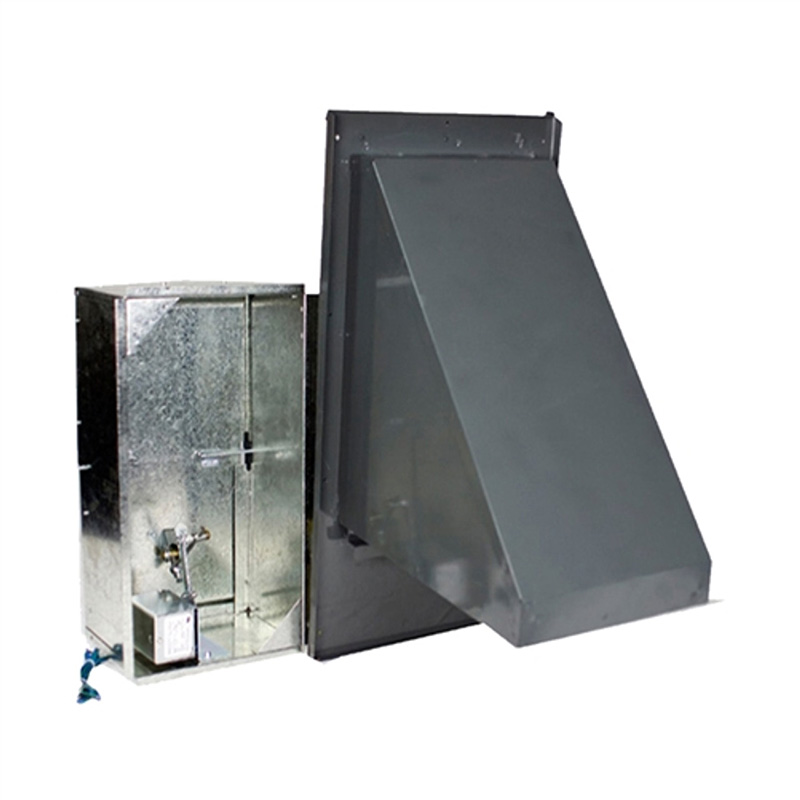
View on AC Direct see your lowest price →Check current price on AC Direct →
Key features
- 13.7 SEER2 single-stage cooling sized at 4 tons for light commercial and large residential use
- R-32 refrigerant with lower global warming potential than legacy R-410A systems
- Self-contained package unit design for rooftop or ground-level slab mounting
- Electric heat included, eliminating the need for a separate furnace or gas line
- 208-230V / 1-phase / 60Hz electrical configuration compatible with standard commercial single-phase service
- 12-year parts warranty available with registration within 60 days of installation
About this system
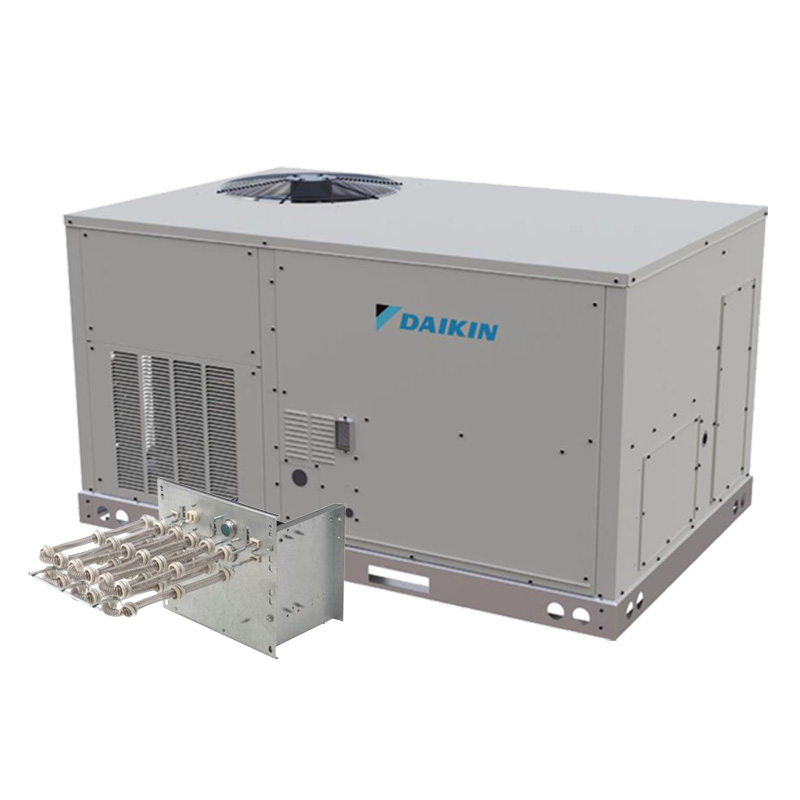
The Daikin 4-Ton Commercial Package Unit combines cooling and electric heat into a single self-contained cabinet designed for rooftop or slab-side mounting on light commercial buildings, larger retail spaces, and multi-zone residential applications. At 4 tons of cooling capacity, it is sized to handle spaces roughly in the 1,800 to 2,400 square foot range, depending on local climate, insulation, and ceiling height. The single-stage compressor runs at one fixed speed, so it either runs at full capacity or it does not run at all, which is straightforward to service but less precise at humidity control compared to two-stage or variable-speed alternatives.
The 13.7 SEER2 rating meets the current federal minimum efficiency standard for many regions and qualifies as a baseline-tier unit, not a high-efficiency one. That is not a criticism for every buyer: commercial package units at this efficiency tier are often chosen when upfront cost, simplicity of service, and known reliability matter more than maximizing monthly energy savings. The R-32 refrigerant charge is a meaningful step forward environmentally, carrying a lower global warming potential than the R-410A it replaces and reflecting where the commercial HVAC industry is heading. The 208-230/1/60 electrical configuration means single-phase power, which is widely available in light commercial settings but should be confirmed against the building’s service panel before purchase.
This Daikin package unit is a solid choice for buyers who prioritize build quality and long service life over cutting-edge efficiency or low upfront cost. At 13.7 SEER2 it sits at the regulatory baseline, so it will not minimize energy bills the way a higher-SEER2 unit would, but it brings Daikin's reputation for durable construction and the practical simplicity of electric heat in a single cabinet. Parts availability and customer service are the known weak spots, and buyers should plan accordingly.
Overall score is the average of the five ratings above.
What we like
- Daikin is consistently recognized by HVAC experts and Consumer Reports as one of the longer-lasting brands, giving this unit a credible durability argument
- Self-contained package configuration simplifies installation where indoor mechanical space is limited or unavailable
- R-32 refrigerant is more environmentally responsible than R-410A and increasingly standard on forward-looking equipment
- Electric heat integration removes dependence on a gas line, reducing installation complexity in all-electric commercial builds
- 12-year parts warranty is competitive for the commercial package segment when registration is completed on time
Trade-offs
- 13.7 SEER2 is the current minimum-efficiency tier, meaning operating costs will be higher over time compared to 15+ SEER2 alternatives
- Single-stage operation gives less humidity control precision and can cause temperature swings in climates with variable loads
- Daikin's parts availability and warranty service draw consistent complaints, and sourcing boards or controls can be slow
- Electronic control boards and circuit boards are the most documented failure point, and repairs can be costly if they occur outside the warranty window
What homeowners and pros say about Daikin
Among HVAC professionals who work on commercial package equipment, Daikin’s build quality and component longevity are generally respected. Consumer Reports and industry experts consistently place Daikin among the brands most likely to deliver a long service life, which matters on a commercial rooftop unit that is expensive and inconvenient to replace. That said, the same installers frequently mention that electronic control board failures are the failure mode to watch for on Daikin equipment, with units sometimes throwing unexplained error codes or going unresponsive in ways that point to board-level issues rather than refrigerant or mechanical problems. Compressor complaints, while less common, do appear in the documented record, particularly on units that have run several seasons.
On owner-review channels, the picture is more mixed. PissedConsumer shows a rating of roughly 1.4 out of 5 across a few dozen reviews, though that platform disproportionately captures frustrated customers and is dominated by complaints about price, parts delays, and warranty handling rather than catastrophic equipment failure. The service and parts availability issue is real and worth taking seriously: sourcing Daikin-specific circuit boards and controls can take longer than comparable Carrier or Trane parts, and warranty claim handling is a recurring friction point. Buyers who have a reliable local Daikin dealer and a service agreement in place report much better experiences than those who rely on ad-hoc repair calls. On balance, this unit suits buyers who want durable hardware and can invest in a proper service relationship from day one.
Sources: PissedConsumer Daikin reviews, AHRI Directory of Certified Product Performance, U.S. DOE appliance and equipment efficiency standards, Daikin product specifications.
What it costs to run
At 13.7 SEER2, cooling this 4-ton system for a typical 1200-hour cooling season at the U.S. average electricity rate of $0.17/kWh works out to roughly $715 per year in cooling, about $16 less per year than a minimum-efficiency 13.4 SEER2 unit of the same size. Your real cost depends on your climate and local rate.
Method: (48,000 BTU/hr ÷ 13.7 SEER2) × 1200 hours ÷ 1000 × $0.17/kWh. Rate source: U.S. EIA average; cooling hours: moderate-climate estimate.
How it compares
| Brand | Comparable model | SEER2 | Stage | Price position |
|---|---|---|---|---|
| Daikin | 4-Ton Commercial Package Unit AC with Electric Heat (this unit) | 13.7 | Single-stage | Value pick |
| Carrier | WeatherMaster 48XC (4-ton) | 14.0-14.5 | Single-stage | Slightly higher than this unit, strong parts network |
| Trane | Precedent YSC (4-ton) | 14.0 | Single-stage | Comparable to slightly higher, broad dealer and parts support |
| Lennox | Landmark LRP16AC (4-ton) | 16.0 | Single-stage | Noticeably higher upfront, stronger efficiency payback in high-use climates |
Competitor rows are comparable single-stage units at similar efficiency; price is relative position, not a quote.
Questions about this system
Does this unit require a separate furnace or air handler, or is it completely self-contained?
It is fully self-contained. The compressor, coil, electric heat strips, and blower are all housed in one cabinet, so no separate indoor unit, air handler, or furnace is needed. You connect supply and return ductwork directly to the unit and provide the electrical service.
What does the 12-year parts warranty actually cover, and what can void it?
The 12-year parts warranty covers manufacturer-defective components when the unit is registered with Daikin within 60 days of installation. Failure to register in time typically drops coverage to a shorter base warranty. Labor is not included, and warranty service complaints are among the most common issues reported by Daikin owners, so keeping installation and registration paperwork organized is important.
Is 13.7 SEER2 going to cost significantly more to operate than a higher-efficiency unit?
Yes, over a full cooling season a 15 or 16 SEER2 unit will use meaningfully less electricity at the same load. The gap matters more in climates with long, hot summers and high electricity rates. For buildings with moderate cooling hours or lower utility costs, the efficiency difference is less dramatic, but it is real and worth factoring into a lifecycle cost comparison before purchase.
What are the most common repair issues to watch for on this type of Daikin unit?
Electronic control boards and circuit boards are the most frequently cited failure mode, sometimes causing the unit to show error codes or become unresponsive. Compressor loss of cooling capacity is also documented, as is increasing operational noise over time. Planning for these potential repairs when evaluating service contract options is a practical step.
Is single-phase 208-230V power adequate for a 4-ton commercial package unit, or will I need three-phase service?
This unit is specifically rated for single-phase 208-230V at 60Hz, so it does not require three-phase power. That makes it compatible with most light commercial buildings and larger residential properties on standard utility service. You should confirm your panel has sufficient amperage capacity and the correct voltage before installation, as 208V and 230V draw slightly different currents.
Specifications
| Cooling capacity | 4 Ton |
| Efficiency | 13.7 SEER2 |
| Refrigerant | R-32 |