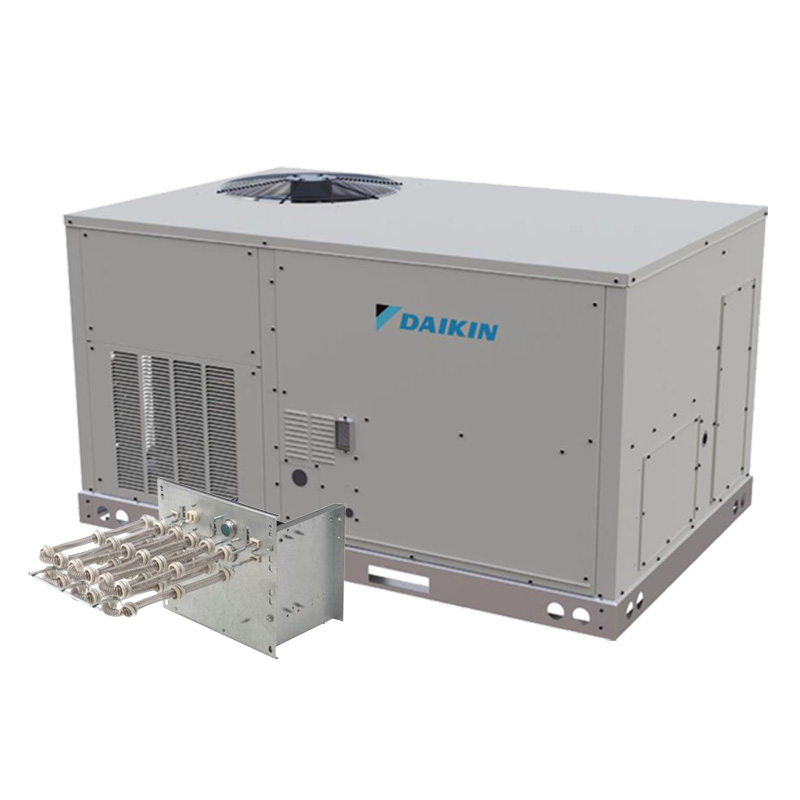
Daikin 5 Ton Commercial Package Unit AC With Electric Heat – 13.7 SEER2, 208-230/3/60, Single Stage, R32
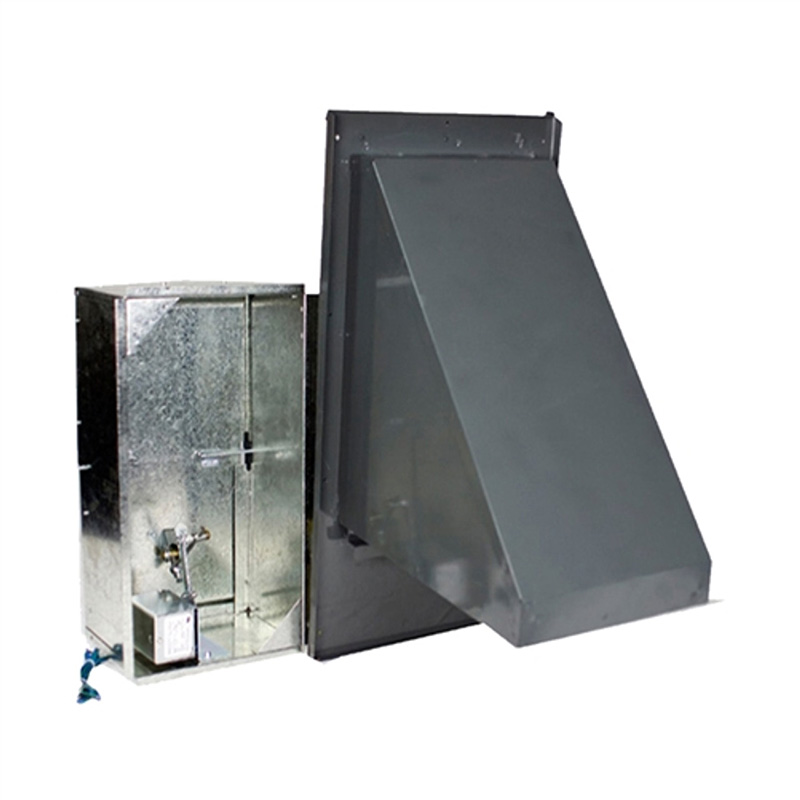
View on AC Direct see your lowest price →Check current price on AC Direct →
Key features
- 5-ton cooling capacity in a self-contained package unit configuration
- 13.7 SEER2 efficiency rating meets current commercial minimum standards
- R-32 refrigerant with lower global warming potential than R-410A
- Three-phase 208-230V/60Hz power for commercial electrical service
- Single-stage compressor operation for straightforward mechanical reliability
- Electric heat strips integrated into the cabinet, eliminating a separate furnace
About this system
This Daikin 5-ton commercial package unit consolidates the air conditioner and electric heat strip into a single rooftop or ground-level cabinet, which makes it a practical choice for small commercial buildings, retail suites, light industrial spaces, and large residential additions where a split system would be impractical. The three-phase 208-230V electrical requirement means it is built for commercial service panels and is not a plug-in solution for a standard home. Single-stage operation keeps the mechanical design simple and the upfront cost lower, though the compressor runs at full capacity or not at all, which can mean short-cycling in mild weather and slightly less humidity control compared to a variable-speed or two-stage counterpart.
At 13.7 SEER2, this unit meets the current minimum efficiency standards for commercial package equipment but sits at the lower end of the efficiency spectrum. Buyers prioritizing energy savings will find the rating adequate rather than impressive. The use of R-32 refrigerant is a meaningful long-term advantage: R-32 has a lower global warming potential than the R-410A it replaces, and it will remain available and cost-effective as the industry moves away from older blends. Daikin, as the world’s largest HVAC manufacturer, has significant experience with R-32 and builds this refrigerant management into its manufacturing at scale.
This Daikin package unit is a solidly built commercial workhorse from the world's largest HVAC manufacturer, and its R-32 refrigerant choice is genuinely forward-looking. The 13.7 SEER2 rating and single-stage operation are honest trade-offs, not flaws, but buyers should go in aware of Daikin's documented parts availability and service-response issues before committing.
Overall score is the average of the five ratings above.
What we like
- Daikin is consistently rated among the longer-lasting HVAC brands by Consumer Reports and HVAC industry experts
- All-in-one package configuration simplifies installation and eliminates refrigerant line sets between indoor and outdoor sections
- R-32 refrigerant offers better long-term availability and a lower environmental footprint than R-410A systems
- Three-phase commercial design is well-matched to the electrical infrastructure of small commercial buildings
- 12-year parts warranty (with timely registration) is competitive for the commercial package unit category
Trade-offs
- Electronic control boards and circuit board errors are the most documented failure mode, occasionally leaving the unit unresponsive or locked out with error codes
- Parts availability and warranty claim handling draw consistent complaints, which matters more in a commercial setting where downtime costs money
- Single-stage operation means the unit cannot modulate output, leading to potential short-cycling and less precise humidity control in shoulder seasons
- 13.7 SEER2 is a baseline efficiency rating; operating costs will be higher over the unit's life than comparable two-stage or variable-speed options
What homeowners and pros say about Daikin
Daikin earns strong marks from HVAC industry experts and Consumer Reports for long-term durability and build quality, placing it consistently among the brands most likely to still be running after 15 or more years. That reputation is meaningful for a commercial package unit where replacement downtime is expensive. However, the picture changes on the service side: PissedConsumer places Daikin at roughly 1.4 out of 5 across several dozen reviews, a score heavily weighted by frustrations with pricing, parts delays, and warranty claim handling. That gap between hardware quality and service experience is the central tension buyers need to weigh. For this specific unit, the R-32 refrigerant choice signals genuine investment in the platform’s longevity, but the three-phase commercial configuration also means service calls will go to commercial HVAC contractors, so vetting your local service provider in advance is not optional.
The specific failure modes documented across Daikin’s commercial line are worth knowing before installation. Electronic control boards and circuit boards are the most cited problem, sometimes locking out the unit entirely with error codes that require a technician to clear. Compressor performance degradation has been reported on some units over time. Units can also grow louder with age, with humming or rattling on start-up and shutdown being a recurring complaint. Parts availability delays turn any of these issues from an inconvenience into a prolonged outage, which is why having a commercial HVAC contractor with Daikin stocking relationships matters. If that support infrastructure exists in your area, the underlying hardware quality is a genuine asset. If it does not, the gap between Daikin’s build reputation and its service reputation becomes a real operational risk.
Sources: PissedConsumer Daikin reviews, AHRI Directory of Certified Product Performance, U.S. DOE appliance and equipment efficiency standards, Daikin product specifications.
What it costs to run
At 13.7 SEER2, cooling this 5-ton system for a typical 1200-hour cooling season at the U.S. average electricity rate of $0.17/kWh works out to roughly $893 per year in cooling, about $20 less per year than a minimum-efficiency 13.4 SEER2 unit of the same size. Your real cost depends on your climate and local rate.
Method: (60,000 BTU/hr ÷ 13.7 SEER2) × 1200 hours ÷ 1000 × $0.17/kWh. Rate source: U.S. EIA average; cooling hours: moderate-climate estimate.
How it compares
| Brand | Comparable model | SEER2 | Stage | Price position |
|---|---|---|---|---|
| Daikin | 5-Ton Commercial Package Unit AC with Electric Heat (R-32, 13.7 SEER2) | 13.7 | Single-stage | Value pick |
| Carrier | WeatherMaster 50XC (5-ton commercial package) | 14.0-15.0 | Single-stage | Similar to slightly higher than Daikin |
| Trane | Precedent YSC (5-ton commercial package) | 14.0 | Single-stage | Comparable to Daikin, sometimes slightly higher |
| Lennox | LRP16 (5-ton commercial package) | 16.0 | Single-stage | Noticeably higher than Daikin for the efficiency premium |
Competitor rows are comparable single-stage units at similar efficiency; price is relative position, not a quote.
Questions about this system
Does this unit require three-phase power, and can I use it on a standard commercial single-phase service?
Yes, this unit is rated 208-230/3/60, meaning it requires a three-phase electrical service. It cannot run on single-phase power without a phase converter, which adds cost and complexity and is generally not recommended. Confirm your building's electrical service before purchasing.
What does the 12-year parts warranty actually cover, and what do I need to do to activate it?
Daikin's 12-year parts warranty covers the cost of covered components but not labor, refrigerant, or service calls. You must register the unit with Daikin within 60 days of installation to qualify; missing that window drops coverage to a shorter base term. Keep your installation documentation because Daikin's warranty handling has drawn repeated complaints about claim processing.
Is R-32 refrigerant safe and easy to service in a commercial setting?
R-32 is mildly flammable (A2L classification), so technicians servicing it must be trained and equipped for A2L refrigerants, which is increasingly standard as the industry transitions away from R-410A. R-32 is widely used in Daikin equipment globally and has a strong supply chain, so availability is not a near-term concern.
What are the most common problems reported with Daikin commercial package units?
The most documented issues are electronic control board and circuit board failures that can leave the unit throwing error codes or completely unresponsive. Some users also report compressors losing cooling capacity over time and units becoming noisier with rattling or humming on start-up and shutdown. Parts availability delays compound these issues when service is needed.
Will this 5-ton single-stage unit handle humidity control adequately in a humid climate?
Single-stage units run at full capacity when on, which can satisfy the thermostat quickly without running long enough to wring moisture out of the air effectively. In high-humidity climates, this can leave indoor relative humidity higher than ideal. A two-stage or variable-capacity unit that runs longer at lower capacity generally handles latent (moisture) loads better, so this is a real trade-off worth considering if your location is consistently humid.
Specifications
| Cooling capacity | 5 Ton |
| Efficiency | 13.7 SEER2 |
| Refrigerant | R-32 |