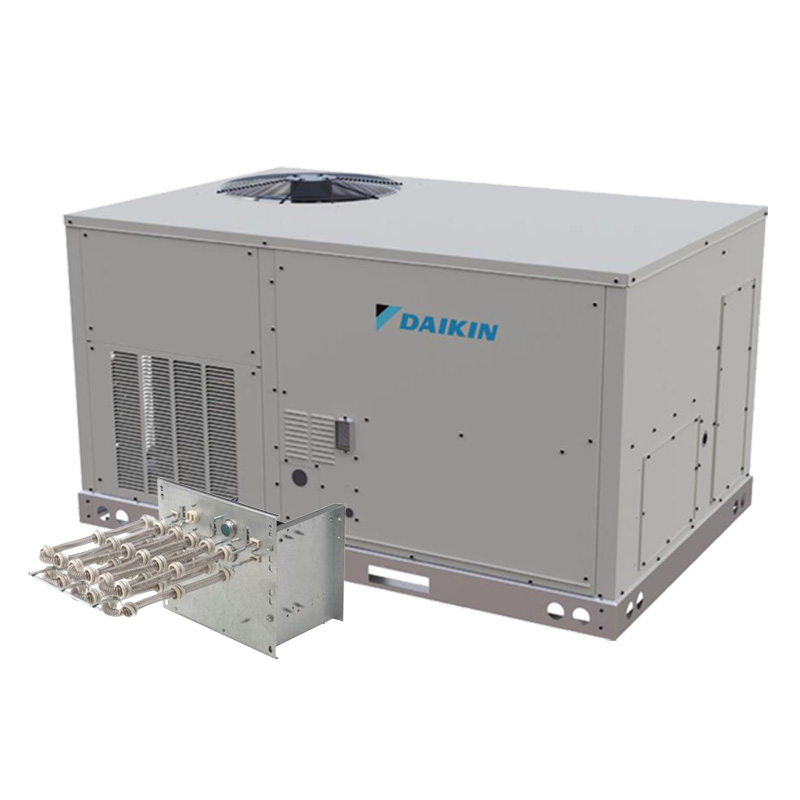
Daikin 5 Ton Commercial Package Unit AC With Electric Heat – 13.7 SEER2, 460/3/60, Single Stage, R32
View on AC Direct see your lowest price →Check current price on AC Direct →
Key features
- 5-ton cooling capacity on 460V/3-phase/60Hz commercial power
- 13.7 SEER2 single-stage cooling, meets current federal minimum efficiency standard
- Electric heat strips included, eliminating the need for a separate gas line
- R-32 refrigerant with lower global warming potential than R-410A
- Self-contained rooftop or ground-mount package design, no separate indoor air handler required
- 12-year parts warranty available with registration within 60 days of installation
About this system
The Daikin 5-Ton Commercial Package Unit with electric heat is built for mid-size commercial spaces, light industrial buildings, rooftop installations, and large retail or office suites that need a self-contained all-in-one system. At 5 tons of cooling capacity, it handles roughly 2,000 to 2,500 square feet of commercial space under normal load conditions, though actual coverage depends heavily on insulation, ceiling height, and internal heat gain. The 460/3/60 voltage configuration means this unit is wired for three-phase commercial power, making it a non-starter for standard residential or single-phase light commercial applications without significant electrical infrastructure already in place.
The 13.7 SEER2 rating sits at the federal minimum efficiency threshold for commercial packaged equipment, which means operating costs will be higher than two-stage or variable-capacity alternatives but the upfront purchase price reflects that tradeoff. R-32 refrigerant is a meaningful forward-looking choice: it has a lower global warming potential than the R-410A it replaces and is becoming the industry standard, so technician familiarity and parts availability should improve over time. Single-stage operation keeps the mechanical design straightforward and repair costs relatively predictable, though it does mean the compressor runs at full capacity or not at all, which can lead to humidity management challenges in shoulder seasons or in climates where outdoor temps vary widely.
This Daikin package unit is a solid, no-frills commercial workhorse from a manufacturer with a well-documented reputation for durable builds and long service life. The 13.7 SEER2 rating keeps purchase price accessible but means higher ongoing utility costs compared to premium-efficiency alternatives, and the three-phase 460V requirement limits the buyer pool to those with the right commercial electrical service already in place. Known weaknesses around circuit board reliability and parts support are worth factoring into any long-term ownership plan.
Overall score is the average of the five ratings above.
What we like
- Daikin's commercial build quality is consistently rated among the most durable in the industry by HVAC experts
- R-32 refrigerant is better positioned for long-term regulatory compliance than R-410A systems
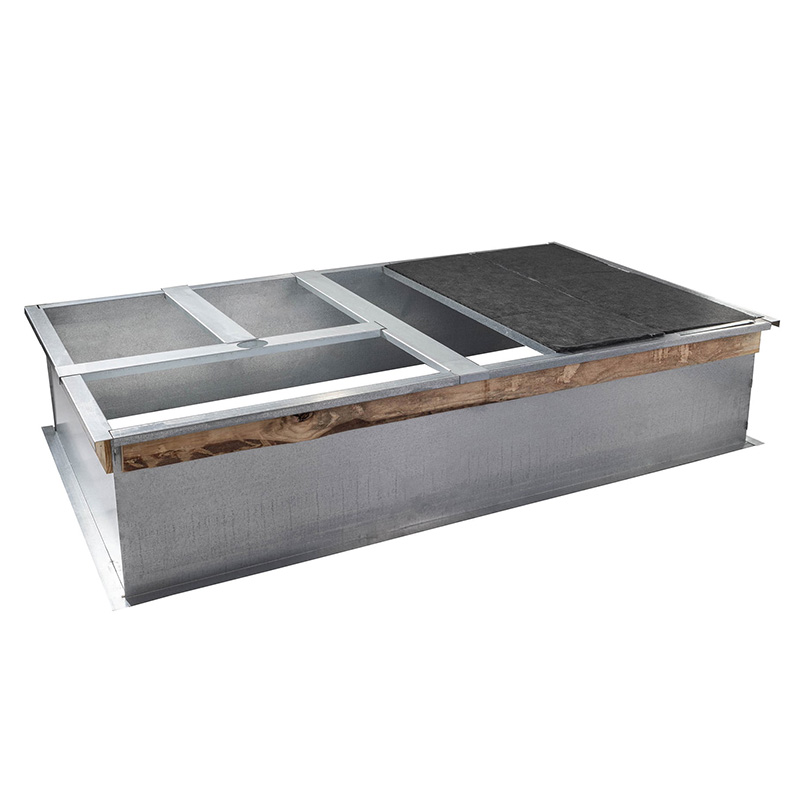
- Self-contained package design simplifies installation when rooftop curb or slab is already prepared
- Electric heat eliminates dependence on gas lines or separate heating equipment
- 12-year parts warranty is competitive for commercial equipment when registration is completed on time
Trade-offs
- 13.7 SEER2 is baseline efficiency, so energy costs over a 10-15 year lifespan will be meaningfully higher than 15+ SEER2 alternatives
- Three-phase 460V power requirement rules out most light commercial and all residential applications without costly electrical upgrades
- Circuit board and electronic control failures are the most frequently documented complaint, and parts sourcing from Daikin dealers has drawn consistent criticism
- Single-stage operation provides limited humidity control and can cause short-cycling in mild weather
What homeowners and pros say about Daikin
Among HVAC professionals who work on commercial equipment, Daikin’s package units earn consistent respect for mechanical durability and build quality, with experts and Consumer Reports placing Daikin among the longer-lasting brands in the industry. That reputation for longevity is one of the primary reasons facilities managers and property owners continue to specify Daikin despite a higher upfront cost relative to some competitors. However, the praise for hardware quality is frequently offset by frustration with the service side of ownership. PissedConsumer data for the brand reflects a score of approximately 1.4 out of 5, a figure that skews heavily toward complaints about pricing disputes, warranty processing delays, and difficulty obtaining parts through Daikin’s dealer network in a timely way. That channel captures dissatisfied customers disproportionately, but the complaints are specific and consistent enough to take seriously when planning a service strategy.
The documented failure modes most worth monitoring on this class of Daikin commercial equipment are electronic control board errors, which are the most commonly reported issue and can leave a unit throwing fault codes or completely unresponsive until the board is replaced. Compressor failures and cooling power loss have also been reported, though they appear less frequently than control issues. Owners should budget for periodic board inspections and ensure their service contractor has access to Daikin-specific diagnostic tools. Noise increases over time, including rattling or humming at start-up and shutdown, have been noted in aged units. Registering the unit within 60 days of installation to secure the 12-year parts warranty is essential, as the gap between registered and unregistered coverage is substantial and warranty claim handling is already one of the brand’s weaker points according to owner feedback.
Sources: PissedConsumer Daikin reviews, AHRI Directory of Certified Product Performance, U.S. DOE appliance and equipment efficiency standards, Daikin product specifications.
What it costs to run
At 13.7 SEER2, cooling this 5-ton system for a typical 1200-hour cooling season at the U.S. average electricity rate of $0.17/kWh works out to roughly $893 per year in cooling, about $20 less per year than a minimum-efficiency 13.4 SEER2 unit of the same size. Your real cost depends on your climate and local rate.
Method: (60,000 BTU/hr ÷ 13.7 SEER2) × 1200 hours ÷ 1000 × $0.17/kWh. Rate source: U.S. EIA average; cooling hours: moderate-climate estimate.
How it compares
| Brand | Comparable model | SEER2 | Stage | Price position |
|---|---|---|---|---|
| Daikin | 5-Ton Commercial Package Unit with Electric Heat (this unit) | 13.7 | Single-stage | Value pick among commercial package units at this efficiency tier |
| Carrier | WeatherMaster 50XC | 14.0-16.0 | Single-stage / Two-stage depending on config | Typically priced at a moderate premium over this Daikin at equivalent tonnage |
| Trane | Precedent Series (WSC/YSC) | 13.8-15.0 | Single-stage | Typically priced at a moderate to significant premium over this Daikin, with stronger dealer service network |
| Lennox | LCA/LGA Commercial Packaged Unit | 14.0-16.0 | Single-stage / Two-stage depending on config | Typically priced at a comparable to slight premium over this Daikin, with stronger efficiency options in the same series |
Competitor rows are comparable single-stage units at similar efficiency; price is relative position, not a quote.
Questions about this system
Does this unit work on standard single-phase commercial power?
No. This unit is rated for 460V/3-phase/60Hz power only. If your building has single-phase service, you would need a phase converter or a completely different unit. Confirm your electrical service with your electrician before purchasing.
What does single-stage operation mean for a building that has varying cooling loads throughout the day?
Single-stage means the compressor runs at one fixed capacity, either full on or fully off. In shoulder seasons or during periods of mild outdoor temperatures, the unit may satisfy the thermostat call quickly and cycle off before it has adequately dehumidified the space. Buildings with highly variable loads may benefit more from a two-stage or variable-capacity commercial package unit.
How does the 12-year parts warranty work and what can void it?
Daikin's 12-year parts warranty requires product registration within 60 days of installation by a licensed contractor. Missing that registration window typically drops coverage to a shorter baseline period. Labor is not covered under the manufacturer warranty, so factor in service call costs separately.
Is R-32 refrigerant harder to find or more expensive to service than R-410A?
R-32 is becoming increasingly common as the industry transitions away from R-410A, and most commercial HVAC technicians in major markets are already certified to handle it. In rural or smaller markets, you may want to confirm technician availability before purchasing. Over the next several years, R-32 availability is expected to improve as R-410A is phased down.
What are the most common repair issues documented for Daikin commercial package units?
The most frequently reported failure modes for Daikin commercial equipment include electronic control board errors that can leave the unit unresponsive or stuck in fault codes, compressor performance degradation or outright failure in some units, and increasing noise including rattling or humming during start and stop cycles. Parts sourcing and warranty claim handling have also drawn repeated complaints from owners and contractors.
Specifications
| Cooling capacity | 5 Ton |
| Efficiency | 13.7 SEER2 |
| Refrigerant | R-32 |