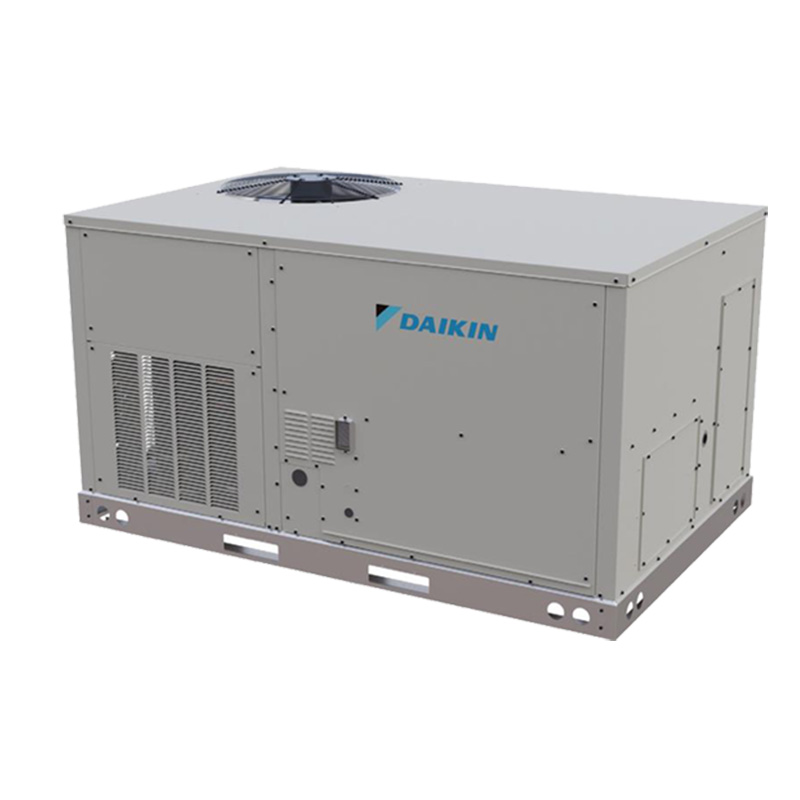
Daikin 6 Ton AC And 140000 BTU Gas/Electric Commercial Package Unit – 16.7 IEER, Two Stage, 81% AFUE, R32
View on AC Direct see your lowest price →Check current price on AC Direct →
Key features
- 6-ton / 140,000 BTU gas-electric commercial rooftop package configuration
- Two-stage cooling compressor for part-load efficiency and humidity control
- 16.7 IEER commercial cooling efficiency rating
- 81% AFUE single-stage gas heat section
- R-32 refrigerant, lower GWP than R-410A
- 12-year parts warranty with required registration within 60 days of installation
About this system
The Daikin 6-ton gas/electric commercial package unit is a rooftop or pad-mounted all-in-one system designed for light commercial buildings, large retail spaces, small office complexes, and other applications that need serious cooling and heating capacity without a separate indoor air handler. At 140,000 BTU of gas heating with an 81% AFUE furnace section and a two-stage compressor on the cooling side, this unit handles spaces where a residential system would simply be undersized. The R-32 refrigerant charge is a genuine plus: R-32 has a lower global warming potential than R-410A and is increasingly the direction the industry is heading, so this unit is better positioned for long-term serviceability as R-410A is phased out.
The two-stage compressor is one of the most practical features here. On mild days the unit runs at the lower stage, reducing energy draw and keeping the space from being overcooled in short bursts. On the hottest days it ramps to full capacity. The 16.7 IEER (Integrated Energy Efficiency Ratio, the commercial cooling efficiency metric) is a solid mid-tier commercial rating, meaningfully better than minimum-code units but not at the top of what the market offers. The 81% AFUE on the gas heat section is code-compliant but sits at the lower end of available efficiency, so buildings with heavy winter heating loads will feel that in gas bills compared to a 90%+ unit. Buyers need to weigh whether the installed cost savings now offset higher operating costs over the life of the equipment.
This Daikin commercial package unit delivers reliable two-stage cooling with a forward-looking R-32 refrigerant circuit and a competitive efficiency rating for the class, backed by Daikin's reputation for long equipment life. The 81% AFUE heating section and Daikin's well-documented parts and service frustrations are real drawbacks that buyers in heating-heavy climates or remote markets should weigh carefully before committing.
Overall score is the average of the five ratings above.
What we like
- Two-stage compressor improves part-load efficiency and reduces temperature swings
- R-32 refrigerant offers lower environmental impact and better long-term parts availability than R-410A
- 16.7 IEER is above minimum-code efficiency for the commercial class
- Daikin's build quality is consistently rated among the more durable and longer-lasting in the industry by HVAC experts and Consumer Reports
- All-in-one package configuration simplifies the mechanical footprint and rooftop installation
Trade-offs
- 81% AFUE heating efficiency is at the low end, which adds up in gas costs over years of heavy heating use
- Electronic control boards and circuit boards are the most frequently reported failure point, sometimes causing error codes or full system shutdowns
- Parts availability and warranty claim handling are consistent complaints, with slow turnaround times reported across Daikin's service network
- Daikin commands premium pricing, and the combination of premium cost with entry-level heating efficiency makes the value case harder to justify in cold climates
What homeowners and pros say about Daikin
Among HVAC professionals who work on commercial rooftop equipment, Daikin’s package units have a reputation for solid mechanical construction and longer-than-average service life, a view reflected in Consumer Reports and industry expert assessments that consistently place Daikin among the more durable brands. That durability reputation does real work for a 6-ton commercial unit expected to run hard for a decade or more. The shift to R-32 refrigerant is broadly seen as a smart move among technicians preparing for the ongoing phase-down of R-410A. However, the same contractors are quick to flag electronic control board failures as the most common call they make on Daikin commercial equipment, where error codes and unresponsive controls can sideline a building until a board is sourced. Compressor performance issues and increasing mechanical noise over time are also documented patterns worth building a maintenance schedule around.
On the owner and facilities-manager side, Daikin’s rating on complaint-heavy review channels like PissedConsumer sits at roughly 1.4 out of 5, driven overwhelmingly by frustrations with parts lead times and warranty claim processing rather than with the equipment itself failing catastrophically. That gap between equipment durability ratings and service experience ratings is a real pattern worth taking seriously. For a commercial building operator, it reinforces the case for working with a well-stocked Daikin commercial dealer from day one and confirming parts access before a service emergency, rather than discovering the supply chain limitations when a control board fails in August.
Sources: PissedConsumer Daikin reviews, AHRI Directory of Certified Product Performance, U.S. DOE appliance and equipment efficiency standards, Daikin product specifications.
How it compares
| Brand | Comparable model | SEER2 | Stage | Price position |
|---|---|---|---|---|
| Daikin | 6-Ton Gas/Electric Commercial Package Unit (R-32, Two-Stage) | N/A (IEER 16.7) | Two-stage | Premium tier |
| Carrier | 48TC/50TC Commercial Package Unit | N/A (IEER mid-tier) | Single-stage or two-stage depending on configuration | Comparable premium positioning, often slightly lower installed cost than Daikin |
| Trane | Precedent PKG Series (6-ton gas/electric) | N/A (IEER mid-tier) | Single-stage or two-stage | Premium tier, similar to or slightly above Daikin depending on market |
| Lennox | LRP16 Commercial Package Unit | N/A (IEER up to 16+ range) | Two-stage | Premium tier, broadly comparable to Daikin with stronger domestic parts network in many regions |
Competitor rows are comparable single-stage units at similar efficiency; price is relative position, not a quote.
Questions about this system
What does IEER mean and how does 16.7 IEER compare to other commercial package units?
IEER stands for Integrated Energy Efficiency Ratio and is the standard efficiency metric for commercial cooling equipment, accounting for performance across a range of part-load conditions rather than just peak conditions. A 16.7 IEER is above the federal minimum for this equipment class and sits in the mid-tier range, offering meaningful energy savings over baseline units but leaving room above it for premium-efficiency commercial equipment in the 18+ IEER range.
Is 81% AFUE good enough, or should I be looking at a higher-efficiency heating section?
81% AFUE means roughly 19 cents of every gas dollar is lost as exhaust heat, which is acceptable in climates where heating is a secondary concern for a few months per year. In colder regions or buildings with high ventilation requirements, the difference between 81% and a 90%+ AFUE unit adds up over thousands of operating hours, and a higher-efficiency alternative may pay back the premium cost difference within a few years of operation.
Why does this unit use R-32 instead of R-410A, and does that affect service costs?
R-32 has a lower global warming potential than R-410A and is being adopted broadly as the industry moves away from R-410A under current environmental regulations. For service, R-32 is readily available and its adoption is expanding, so finding it should not be a problem with a qualified commercial HVAC technician. One practical note: R-32 requires technicians and equipment certified for A2L mildly flammable refrigerants, so confirm your service contractor is equipped for it before signing a maintenance agreement.
What are the most common failure points I should watch for on this Daikin commercial unit?
The documented failure modes most reported on Daikin commercial equipment are electronic control board errors that can leave the unit throwing error codes or completely unresponsive, compressor performance degradation over time, and increasing mechanical noise including rattling or humming on startup and shutdown. Parts availability and the pace of warranty claim processing are the most frequently cited service frustrations, so establishing a relationship with a Daikin-authorized commercial dealer before you need emergency service is worth doing at installation.
What is required to keep the 12-year parts warranty valid?
Daikin requires the unit to be registered within 60 days of installation to qualify for the 12-year parts warranty; missing that window typically drops coverage to a shorter baseline period. Registration is the owner or installer's responsibility, not automatic, so this should be confirmed and documented at the time of commissioning. Labor coverage is separate and depends on the installing contractor's own warranty terms.
Specifications
| Cooling capacity | 6 Ton |
| Furnace output | 140000 BTU |
| Furnace efficiency | 81% AFUE |
| Refrigerant | R-32 |