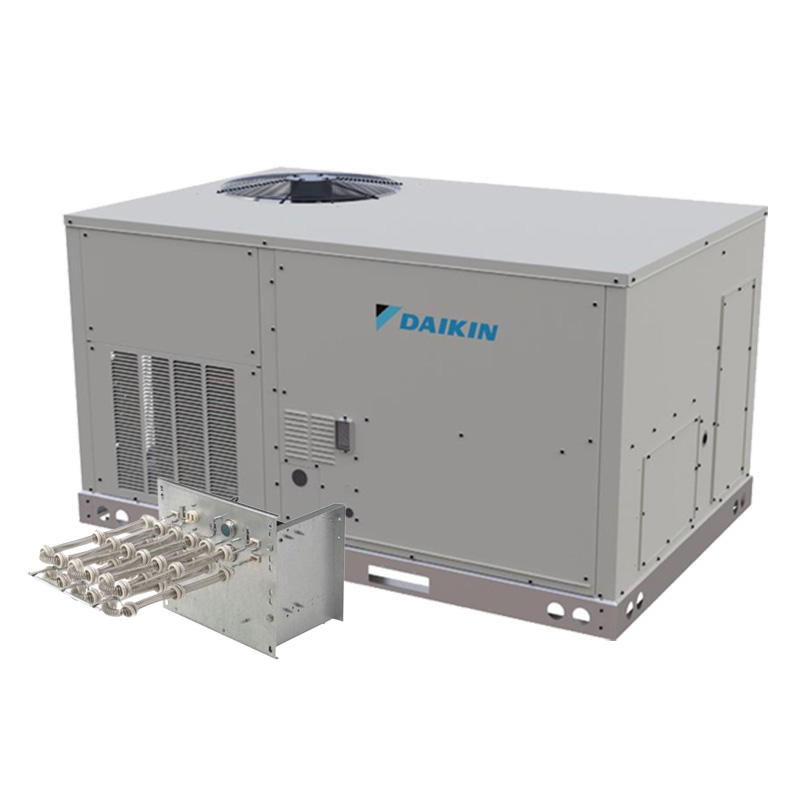
Daikin 6 Ton Commercial Package Unit AC With Electric Heat – 16.7 IEER, 208-230/3/60, Two Stage, R32
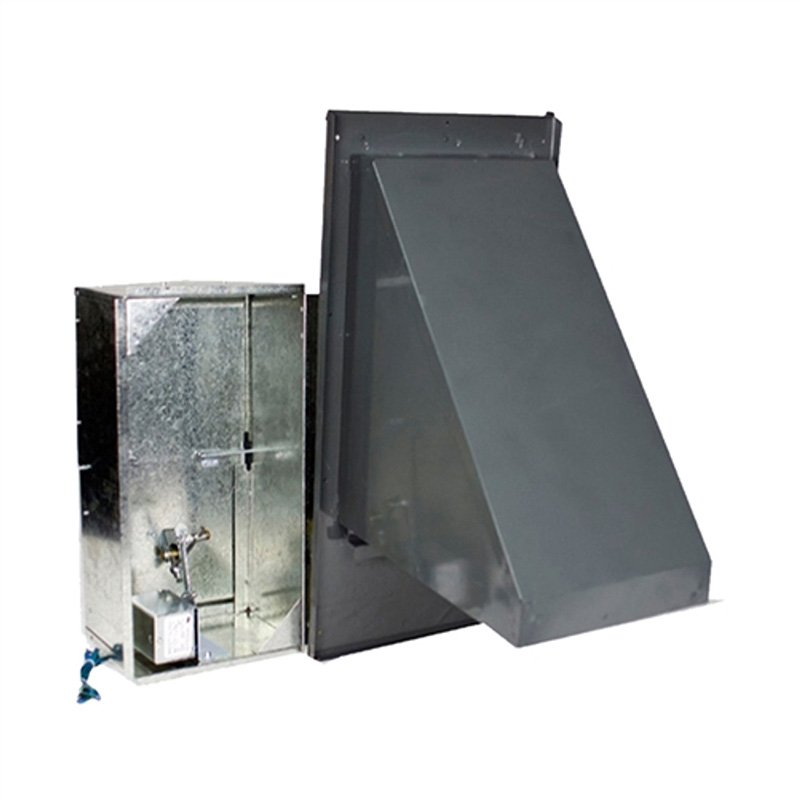
View on AC Direct see your lowest price →Check current price on AC Direct →
Key features
- 6-ton cooling capacity in a single self-contained package unit configuration
- Two-stage compressor for part-load efficiency and improved humidity control
- 16.7 IEER rated efficiency for the commercial packaged unit class
- R-32 refrigerant with lower global warming potential than R-410A
- Electric heat strips included, no gas line or flue required
- 208-230V / 3-phase / 60Hz electrical supply compatibility
About this system
The Daikin 6-ton commercial package unit with electric heat is a self-contained rooftop or ground-mount system built for light commercial applications: small office buildings, retail spaces, restaurants, and similar structures where a single cabinet needs to handle both cooling and heating without a separate indoor air handler. At 6 tons of cooling capacity, it serves spaces roughly in the 2,400 to 3,600 square-foot range depending on insulation, internal loads, and climate. The two-stage compressor operation is a meaningful practical advantage over single-stage units, allowing the system to run at a lower capacity during mild weather and only ramp to full output when demand peaks, which translates to better humidity control, quieter part-load operation, and reduced compressor cycling wear over time.
This unit runs on R-32 refrigerant, a lower-global-warming-potential alternative that is increasingly standard across commercial Daikin lines and positions the system well ahead of the ongoing phase-out of R-410A. The 208-230V/3-phase/60Hz electrical configuration is standard for light commercial service in the United States, though it does mean a dedicated three-phase supply is required, which most commercial buildings already have but some converted or smaller properties may not. With a rated 16.7 IEER (Integrated Energy Efficiency Ratio), efficiency is competitive for the commercial package unit class, though IEER and SEER2 are not directly comparable metrics. Buyers evaluating this against residential-style equipment should note that commercial packaged units are rated under different testing standards.
Electric heat strips rather than a gas heat exchanger simplify installation and eliminate the need for a gas line, flue, or heat exchanger maintenance, but operating costs for electric resistance heat are higher than gas in most utility markets. This configuration suits climates where heating is a secondary, shoulder-season need, or facilities with access to favorable electric rates. The package format also consolidates all refrigerant-containing components on the rooftop or pad, which simplifies leak detection compliance and keeps mechanical equipment out of occupied space.
This Daikin commercial package unit offers a well-specified two-stage system with a forward-looking refrigerant and competitive IEER efficiency for light commercial use. Build quality and longevity are genuine strengths backed by expert assessments, but documented control board issues, parts availability concerns, and a customer service reputation that trails the hardware quality mean buyers should plan for the possibility of frustrating service experiences. For facilities with a reliable commercial HVAC contractor already familiar with Daikin equipment, it is a solid long-term investment; for those relying heavily on Daikin's own support network, expectations should be tempered.
Overall score is the average of the five ratings above.
What we like
- Two-stage operation reduces cycling, improves humidity control, and eases wear on the compressor at part load
- R-32 refrigerant is lower GWP than R-410A and positions the system well for regulatory longevity
- Daikin is consistently rated by HVAC experts and Consumer Reports as one of the longer-lasting brands in the industry
- 16.7 IEER is competitive for commercial packaged units in this capacity class
- Self-contained package format keeps all refrigerant components outside occupied space, simplifying leak compliance
Trade-offs
- Electronic control boards and circuit errors are the most documented failure mode, sometimes leaving the unit unresponsive or throwing error codes without clear resolution
- Parts availability and warranty claims handling draw consistent complaints, which is a real risk for a commercial facility that cannot tolerate extended downtime
- Electric resistance heat carries higher operating costs than gas in most markets, making this a poor fit for cold climates with heavy heating loads
- Requires a three-phase electrical supply, which adds cost or may be unavailable at some smaller or converted commercial properties
What homeowners and pros say about Daikin
Owner and technician feedback on Daikin commercial equipment splits along a familiar fault line. On one side, HVAC professionals and long-term evaluators such as Consumer Reports consistently place Daikin among the most durable brands in the industry, crediting its manufacturing standards and component quality with above-average system lifespans. On the other side, complaint-focused platforms tell a sharper story: PissedConsumer aggregates Daikin reviews at around 1.4 out of 5, a figure that reflects the self-selecting nature of that channel but is hard to ignore entirely. The consistent themes in those complaints are price shock, slow or unhelpful customer service responses, and frustration with parts procurement rather than outright hardware catastrophe.
For this specific commercial package unit, the failure modes worth knowing going in are documented and specific. Electronic control board errors are the most reported issue, sometimes resulting in unresponsive units or persistent error codes that require board replacement rather than a simple fix. Some units have shown compressor cooling loss or outright compressor failure over time. There are also reports of units growing noisier with age, with rattling or humming on startup and shutdown. None of these failure modes are unique to Daikin, but the parts availability and warranty handling complaints add a layer of practical risk that does not appear in the build-quality narrative alone. Buyers who go in with a strong service contractor and a realistic plan for eventual board or compressor work will likely see the durability Daikin is known for; those expecting the manufacturer’s own support to carry them through service events may find the experience frustrating.
Sources: PissedConsumer Daikin reviews, AHRI Directory of Certified Product Performance, U.S. DOE appliance and equipment efficiency standards, Daikin product specifications.
How it compares
| Brand | Comparable model | SEER2 | Stage | Price position |
|---|---|---|---|---|
| Daikin | 6-Ton Commercial Package Unit with Electric Heat, Two-Stage, R-32, 16.7 IEER | N/A (16.7 IEER) | Two-stage | Premium price tier for commercial packaged units |
| Carrier | WeatherMaster 50XC / 50XCQ Series (6-ton, two-stage, commercial package) | IEER rated, comparable commercial tier | Two-stage | Similar premium pricing to Daikin; parts and service network generally broader |
| Trane | Precedent PKG-SVX (6-ton commercial package, electric heat option) | IEER rated, comparable commercial tier | Single-stage or two-stage depending on configuration | Premium tier, typically priced in line with or slightly above Daikin; strong service network |
| Lennox | LRP16 / LGH Series (6-ton commercial rooftop package, electric heat) | IEER rated, competitive commercial efficiency | Two-stage available in class | Premium tier, competitive with Daikin; dealer network can be more limited in some regions |
Competitor rows are comparable single-stage units at similar efficiency; price is relative position, not a quote.
Questions about this system
Does this unit require three-phase power, and what if my building only has single-phase service?
Yes, this unit is rated for 208-230V/3-phase/60Hz only. If your building has single-phase service, you would need to either have a utility upgrade performed or choose a different unit rated for single-phase operation. Running a three-phase motor on single-phase power through a converter is generally not recommended for equipment of this size.
How does the 16.7 IEER compare to SEER2 ratings I see on residential equipment?
IEER (Integrated Energy Efficiency Ratio) is the standard efficiency metric for commercial unitary equipment and is tested under a different protocol than SEER2, which is used for residential and light-commercial split systems. The two numbers are not directly comparable. A 16.7 IEER is a competitive rating within the commercial packaged unit category for this capacity class, but you cannot translate it into an equivalent SEER2 figure.
What does the 12-year parts warranty actually cover, and are there registration requirements?
Daikin's 12-year parts warranty covers replacement parts but requires registration within 60 days of installation. Missing that window typically drops coverage to a shorter default period. The warranty covers parts cost but not labor, and the documented complaints around Daikin's parts support and warranty claim handling mean it is worth confirming your contractor's process for registration and keeping copies of all paperwork.
Is R-32 refrigerant widely available for service, and are there any handling differences compared to R-410A?
R-32 availability is growing rapidly as the industry shifts away from R-410A, and most commercial HVAC suppliers are stocking it. Technicians do need to be aware that R-32 is classified as mildly flammable (A2L), which requires appropriate handling procedures and equipment, though it is not considered a high-risk refrigerant in practice. Confirm that your service contractor is familiar with A2L refrigerant handling before committing.
The documented failure mode mentions control board errors. How serious is that risk for a commercial facility?
Control board and electronic error issues are the most frequently cited failure mode in owner and technician feedback on Daikin commercial equipment. For a commercial facility, the concern is less about whether a board eventually fails and more about lead time on replacement parts, since Daikin's parts availability has drawn consistent complaints. Establishing a service agreement with a contractor who stocks common Daikin control components, or sourcing a spare board at installation, is a practical mitigation step worth discussing with your contractor.
Specifications
| Cooling capacity | 6 Ton |
| Refrigerant | R-32 |