Daikin 6 Ton Commercial Package Unit Heat Pump AC – 16.7 IEER, 208-230/3/60, Two Stage, R32
View on AC Direct see your lowest price →Check current price on AC Direct →
Key features
- 16.7 IEER two-stage commercial package heat pump
- 6-ton capacity for light commercial applications
- R-32 refrigerant with lower global warming potential than R-410A
- 208-230V / 3-phase / 60Hz electrical configuration
- Two-stage compressor reduces cycling and improves part-load efficiency
- Self-contained package design simplifies rooftop or ground-level installation
About this system
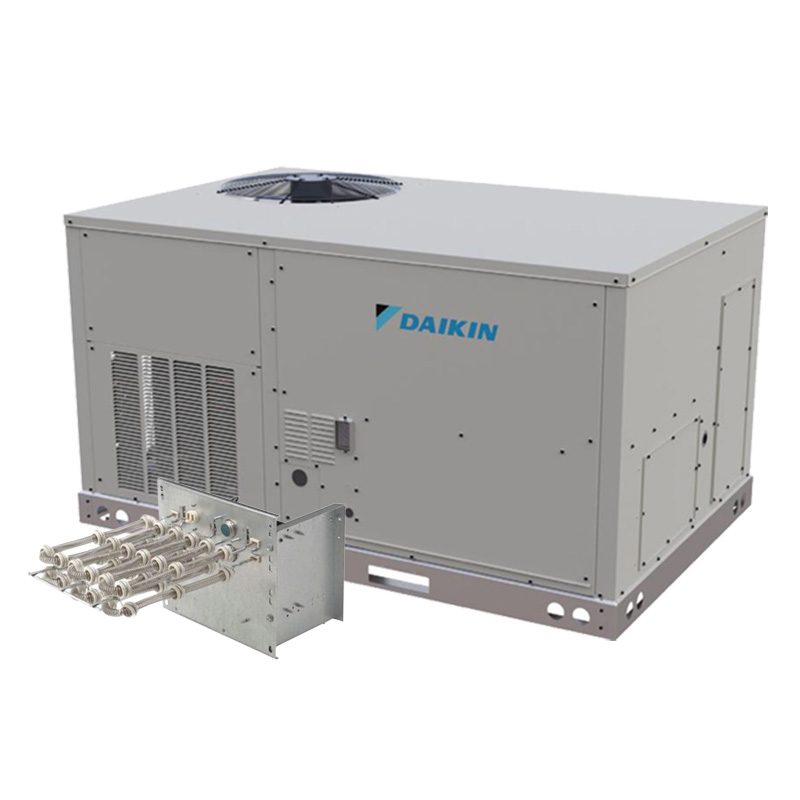
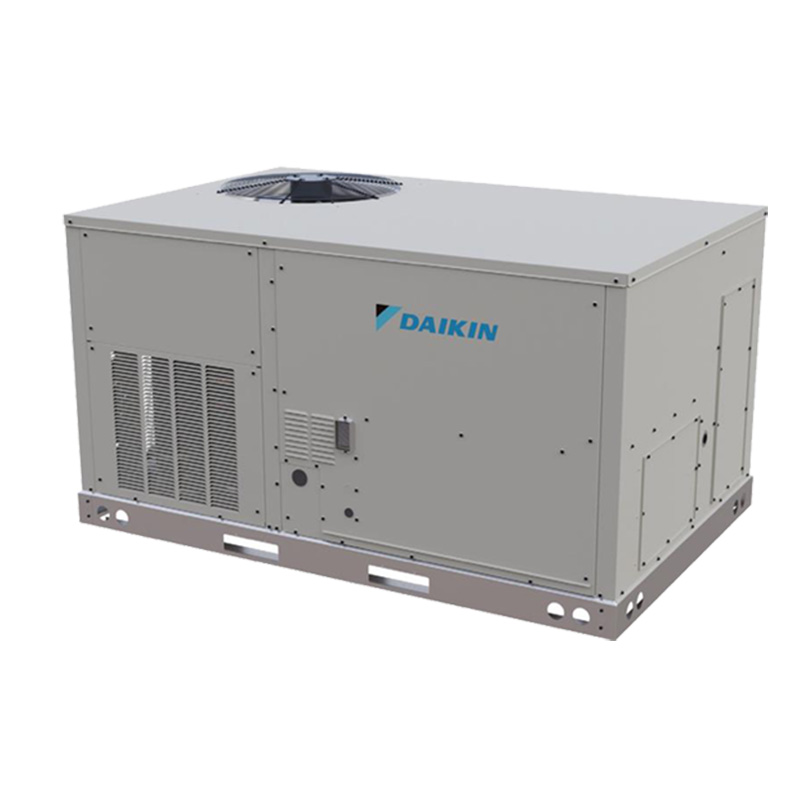
The Daikin 6-Ton Commercial Package Unit Heat Pump operates as a self-contained system where the compressor, coil, air handler, and controls all live in a single rooftop or ground-level cabinet. That configuration makes it a practical choice for light commercial buildings, retail spaces, restaurants, and small office suites that lack the mechanical room space for split-system components. At 6 tons, it is sized to condition roughly 2,400 to 3,000 square feet of commercial floor space, depending on insulation, ceiling height, and occupancy load.
The 16.7 IEER (Integrated Energy Efficiency Ratio) rating is the commercial-equipment equivalent of SEER2 and is the figure that matters for comparing packaged rooftop units. 16.7 IEER is a solid mid-to-upper efficiency result for a 6-ton commercial package heat pump, meaningfully above the federal minimum for this equipment class. Two-stage compression is a genuine operational advantage: the unit runs on a lower stage during moderate demand, reducing energy consumption, limiting temperature swings, and cutting compressor cycling. R-32 refrigerant carries a lower global warming potential than R-410A and is increasingly the standard for new commercial equipment as regulatory pressure on high-GWP refrigerants continues to build.
Three-phase power (208-230/3/60) is standard for commercial installations of this size and rules out residential applications entirely. Buyers should confirm their building’s electrical service before purchasing, as adding three-phase service where it does not exist is a significant infrastructure cost. Daikin positions this unit at the premium end of the commercial packaged market, so the upfront investment is higher than mid-tier competitors, but the brand’s documented build quality and component longevity are part of what justifies that positioning.
This Daikin commercial package unit delivers above-average efficiency at 16.7 IEER, genuinely useful two-stage operation, and the kind of mechanical durability that has earned Daikin its reputation among long-term reliability rankings. The trade-offs are a premium price, a customer service record that draws repeated criticism, and documented issues with electronic controls and parts support that become particularly painful in a commercial setting where downtime has direct business costs.
Overall score is the average of the five ratings above.
What we like
- 16.7 IEER exceeds federal minimum by a meaningful margin, supporting lower operating costs over the equipment's life
- Two-stage compression reduces energy use during partial-load conditions, which is the majority of a system's operating hours
- R-32 refrigerant is forward-compatible with evolving low-GWP regulations
- Self-contained package design eliminates refrigerant line sets and reduces installation labor in rooftop applications
- Daikin's build quality is consistently recognized by Consumer Reports and HVAC industry experts as among the longer-lasting in the commercial segment
Trade-offs
- Premium price point is higher than mid-tier commercial competitors such as Carrier and Trane at similar efficiency levels
- Electronic control board errors are the most documented failure mode, and a non-responsive unit in a commercial space creates immediate operational problems
- Parts availability and warranty claim handling draw consistent complaints, which is a serious concern when a business cannot wait weeks for a replacement board or compressor
- 12-year parts warranty requires registration within 60 days of installation, and missing that window reverts coverage to a shorter default period
What homeowners and pros say about Daikin
Owner and facility manager feedback on Daikin commercial equipment tends to split along a consistent line. On channels like PissedConsumer, Daikin scores around 1.4 out of 5, driven heavily by complaints about price, billing disputes with service contractors, and difficulty getting parts or warranty claims processed in a reasonable time. HVAC professionals and independent reviewers tell a different story: Consumer Reports and industry experts consistently rank Daikin among the longer-lasting commercial HVAC brands, emphasizing build quality and compressor durability. For this 6-ton package unit specifically, the documented failure modes buyers should understand going in are electronic control board errors that can render the unit unresponsive or stuck in error code loops, compressors that in some units lose capacity or fail earlier than the equipment’s expected lifespan, and a gradual increase in operating noise including rattling or humming on startup and shutdown cycles.
The through-line in professional installer commentary is that Daikin commercial equipment rewards buyers who proactively secure a service relationship with a certified Daikin commercial contractor before installation, not after the first breakdown. Parts availability is geographically uneven, and waiting on a board or valve in the middle of summer is a real risk that owner reviews repeatedly describe. The 12-year parts warranty has real value if registration is handled promptly and the contractor knows how to process a claim, but both of those conditions require active management. For a business owner willing to do that groundwork, the efficiency and longevity credentials are legitimate. For an owner who needs a unit they can hand off and forget, the service infrastructure around Daikin may frustrate more than the hardware itself satisfies.
Sources: PissedConsumer Daikin reviews, AHRI Directory of Certified Product Performance, U.S. DOE appliance and equipment efficiency standards, Daikin product specifications.
How it compares
| Brand | Comparable model | SEER2 | Stage | Price position |
|---|---|---|---|---|
| Daikin | 6-Ton Commercial Package Heat Pump, 16.7 IEER, Two-Stage, R-32 | N/A (16.7 IEER) | Two-stage | Premium tier |
| Carrier | 48XC / WeatherMaker 48XC Series 6-Ton Commercial Package Heat Pump | N/A (IEER ~15-16 range for comparable tier) | Two-stage | Comparable to slightly below Daikin at this efficiency tier |
| Trane | Precedent WSC/WCC Series 6-Ton Commercial Package Heat Pump | N/A (IEER ~15-16 range for comparable tier) | Single-stage or two-stage depending on configuration | Comparable to Daikin; strong dealer network typically reduces service cost |
| Lennox | LRP16HP Series 6-Ton Commercial Package Heat Pump | N/A (IEER ~16 range for comparable tier) | Two-stage | Comparable to slightly below Daikin; broader parts availability in many markets |
Competitor rows are comparable single-stage units at similar efficiency; price is relative position, not a quote.
Questions about this system
Does this unit require three-phase power and what happens if my building only has single-phase service?
Yes, the 208-230/3/60 specification means three-phase power is required and there is no field workaround. If your building has only single-phase service, you would need an electrician to evaluate whether three-phase can be brought to the site, which can be a substantial infrastructure cost that should be priced before purchasing the unit.
What does 16.7 IEER actually mean and how does it compare to the minimum standard?
IEER measures efficiency across a range of part-load operating conditions, not just at peak capacity, making it the most realistic efficiency metric for commercial packaged equipment. The federal minimum IEER for a 6-ton commercial package heat pump in this class is roughly 12 to 13, so 16.7 represents a meaningful step up that typically translates to lower monthly energy costs over the unit's service life.
How important is it to register the unit within 60 days of installation to get the full warranty?
It is critical. Daikin's 12-year parts warranty is conditional on registration within 60 days of the installation date, and that deadline is strictly enforced. Failing to register drops coverage to a shorter base warranty, which is a significant financial exposure on a commercial unit at this price point.
What are the most common service issues reported on Daikin commercial package units?
The most documented failure mode is electronic control board errors, which can leave the unit throwing error codes or becoming unresponsive. Compressor performance issues and gradual increases in operating noise are also reported. The larger operational concern is that parts availability and warranty handling consistently draw complaints, so having a service contractor with established Daikin commercial parts access before you need them is worth planning for.
Can this unit provide both heating and cooling, and how does it perform in cold climates?
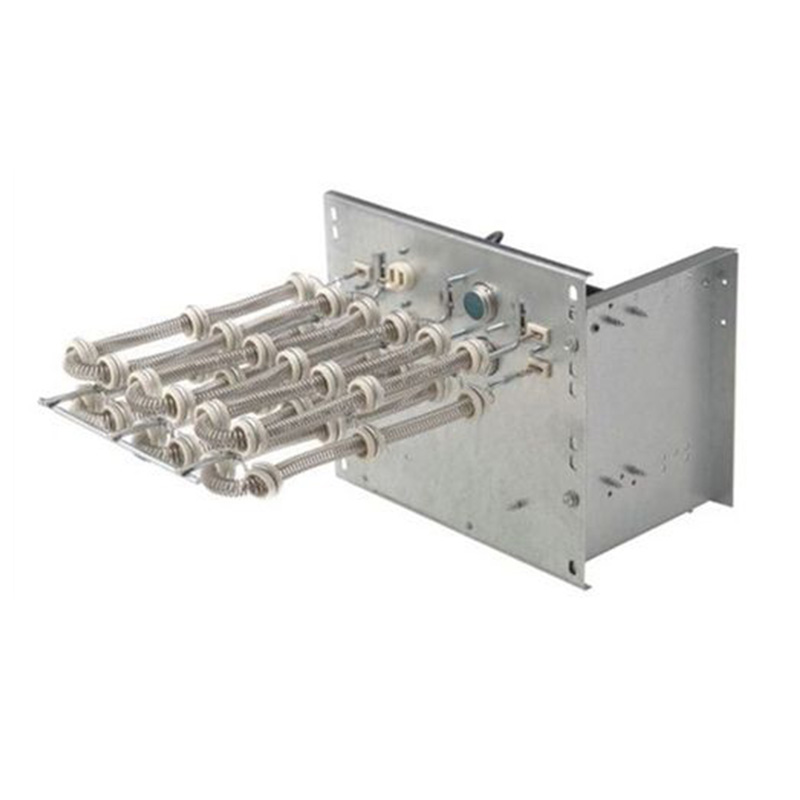
Yes, it is a heat pump, meaning it handles both heating and cooling from the same refrigerant circuit. Like all air-source heat pumps, heating capacity and efficiency decrease as outdoor temperatures drop, and in climates that regularly see temperatures below 20 to 25 degrees Fahrenheit, supplemental heat may be needed. This is a standard heat pump limitation, not specific to Daikin, and your mechanical contractor can calculate whether supplemental heat strips are appropriate for your location.
Specifications
| Cooling capacity | 6 Ton |
| Refrigerant | R-32 |