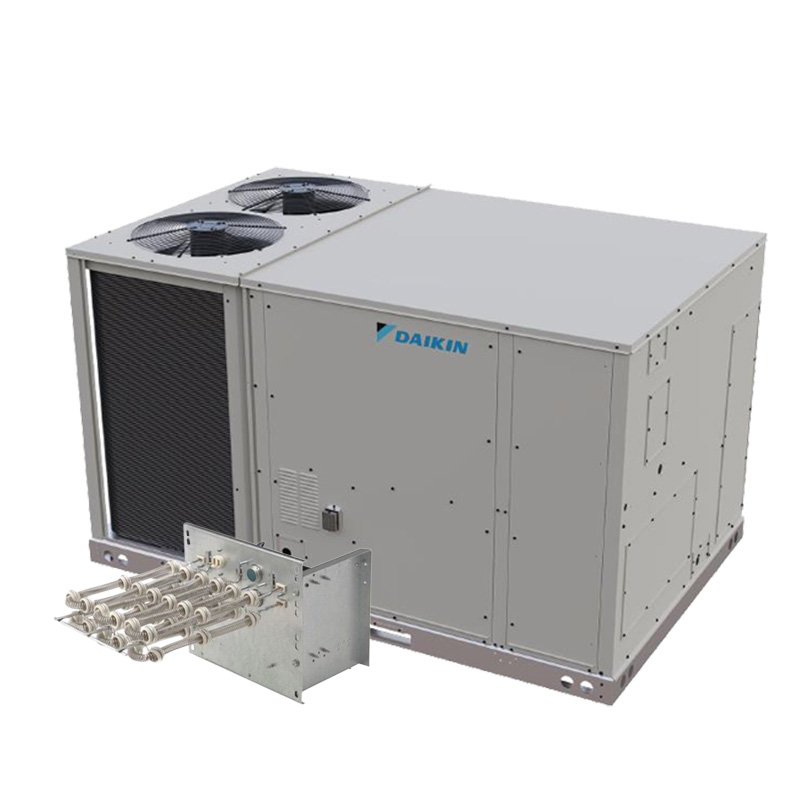
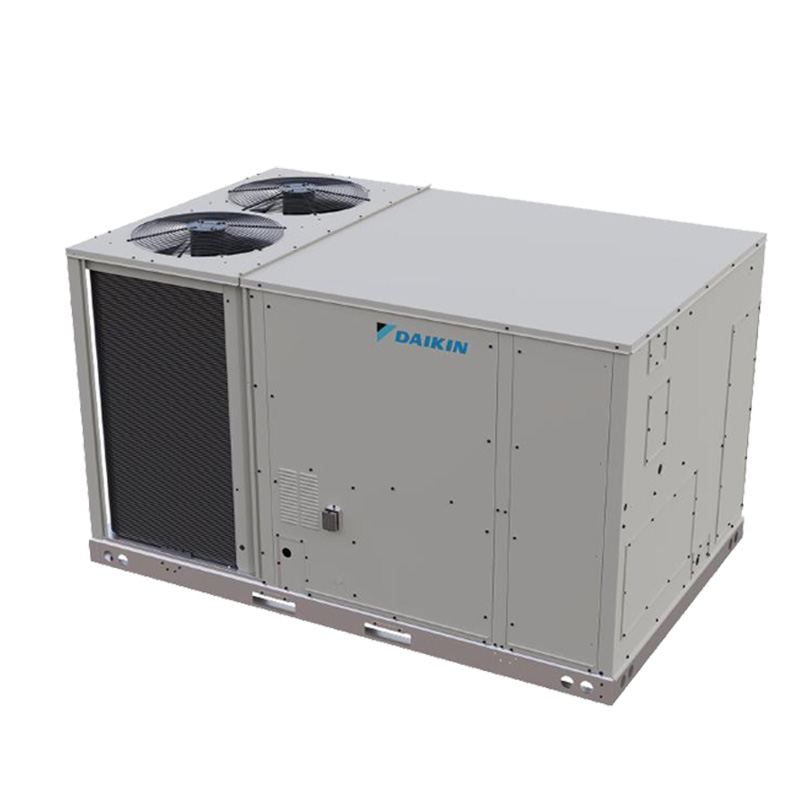
Daikin 7.5 Ton Commercial Package Unit Heat Pump AC – 16 IEER, 208-230/3/60, Two Stage, R32
View on AC Direct see your lowest price →Check current price on AC Direct →
Key features
- 7.5-ton two-stage heat pump in a single packaged cabinet for simplified rooftop or ground-level installation
- 16 IEER efficiency rating, above federal commercial minimum for package heat pumps in this capacity class
- R-32 refrigerant with lower global-warming potential than R-410A; requires certified technician familiarity
- Three-phase 208-230V/60Hz power configuration suited to commercial electrical infrastructure
- Two-stage compressor reduces part-load energy use, humidity fluctuation, and compressor cycling stress
- 12-year parts warranty available with registration within 60 days of installation date
About this system
The Daikin 7.5-ton commercial package unit heat pump is a self-contained rooftop or ground-level system designed for light commercial applications: small office buildings, retail spaces, restaurants, and multi-tenant suites that need both heating and cooling from a single cabinet. At 7.5 tons, it covers roughly 2,500 to 3,500 square feet depending on insulation, ceiling height, and internal heat loads. The three-phase 208-230V electrical configuration is standard for commercial construction and requires a dedicated panel circuit sized for that draw, so this is not a drop-in replacement for a residential single-phase setup.
The two-stage compressor is the standout functional detail here. Rather than running full-blast or not at all, the unit can operate at a reduced stage during mild conditions, which cuts energy consumption, reduces humidity swings, and extends compressor life by avoiding constant hard starts. The 16 IEER rating (Integrated Energy Efficiency Ratio, the commercial equivalent of SEER) is competitive for a package heat pump in this class, sitting above the federal minimum but below the top tier of premium variable-speed units now entering the market. R-32 refrigerant is a lower global-warming-potential option compared to R-410A and is increasingly common in newer Daikin commercial equipment. It does require technicians who are familiar with its slightly higher operating pressures.
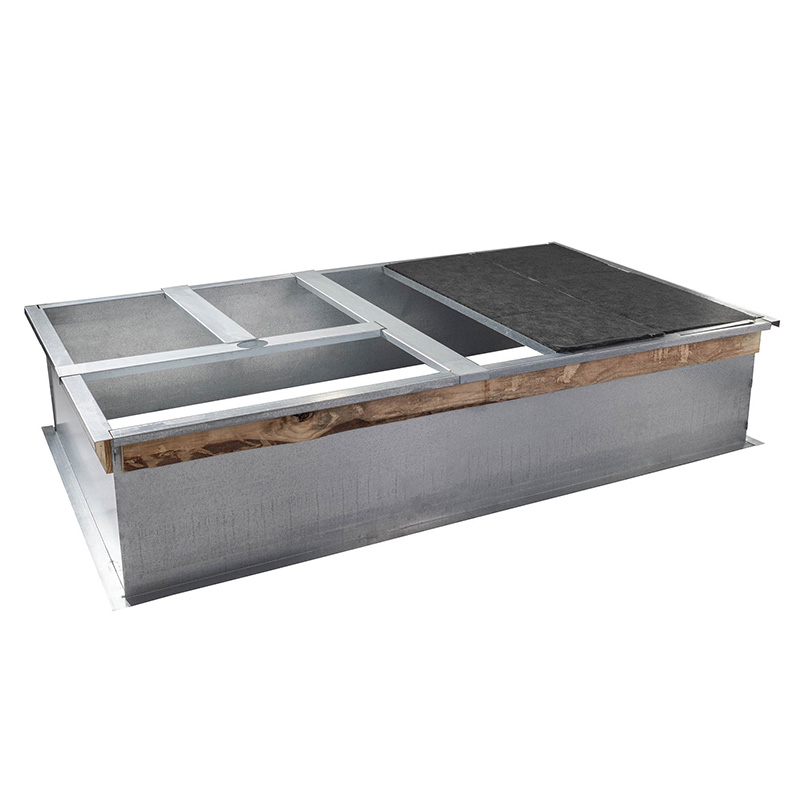
Buyers should understand that commercial package units are inherently more complex to install and commission than residential split systems. Curb mounting, ductwork connections, crane access for rooftop placement, three-phase electrical work, and controls integration all add to project cost and timeline. Daikin’s reputation for durable build quality is a genuine advantage in a commercial setting where downtime is expensive, but the brand’s well-documented service and parts availability issues deserve serious consideration when evaluating total cost of ownership.
The Daikin 7.5-ton commercial package heat pump is a well-built, mid-to-upper-efficiency option for light commercial buyers who want two-stage performance and R-32 refrigerant in a single cabinet. The 16 IEER rating and Daikin's documented durability are genuine strengths, but the premium price, consistent parts-availability complaints, and the brand's historically poor service ratings mean buyers should budget for extended service contracts and vet local technician familiarity with R-32 and Daikin controls before committing.
Overall score is the average of the five ratings above.
What we like
- Two-stage operation meaningfully improves part-load efficiency and humidity control versus single-stage commercial units
- 16 IEER sits above the federal commercial minimum and reduces operating costs compared to baseline-efficiency alternatives
- Daikin is consistently recognized by HVAC experts and Consumer Reports as one of the longer-lasting commercial HVAC brands
- R-32 refrigerant has roughly 68% lower global-warming potential than R-410A, aligning with tightening environmental regulations
- Self-contained packaged configuration simplifies installation footprint and eliminates indoor air handler placement decisions
Trade-offs
- Electronic control boards and circuit board errors are the most frequently documented failure mode, and parts sourcing draws persistent complaints from service contractors
- Premium brand pricing means higher upfront cost than comparable-efficiency units from some competitors, with no guarantee of faster service response
- R-32 requires technicians specifically trained and equipped for its higher-pressure characteristics, which can complicate service in smaller markets
- The 12-year parts warranty requires registration within 60 days of install, and warranty claims have generated consistent complaints about handling and turnaround
What homeowners and pros say about Daikin
Among HVAC professionals who work with Daikin commercial equipment, the consistent theme is that the hardware itself is built to last, with the brand earning recognition from Consumer Reports and industry experts as one of the more durable commercial lines available. Technicians who are well-versed in Daikin systems often speak positively about build quality and compressor longevity under normal operating conditions. That durability reputation does real work for commercial buyers where downtime is expensive and replacement cycles matter. The two-stage and R-32 features on this particular unit align with where commercial HVAC is heading from both an efficiency and regulatory standpoint, and experienced installers tend to flag those as genuine advantages over older single-stage R-410A alternatives.
The other side of the conversation is harder to ignore. On PissedConsumer, Daikin scores approximately 1.4 out of 5, a heavily complaint-weighted channel, but the volume of service and parts grievances from that audience mirrors what commercial contractors say privately: getting warranty parts quickly and resolving electronic control board errors, the most commonly documented failure mode on Daikin commercial equipment, can be a frustrating process. Compressor performance degradation and units growing progressively noisier over time are also failure patterns that appear repeatedly in field reports. For a commercial buyer, this makes pre-purchase vetting of local Daikin service coverage less optional and more essential, especially given the 60-day registration window that gates the 12-year parts warranty.
Sources: PissedConsumer Daikin reviews, AHRI Directory of Certified Product Performance, U.S. DOE appliance and equipment efficiency standards, Daikin product specifications.
How it compares
| Brand | Comparable model | SEER2 | Stage | Price position |
|---|---|---|---|---|
| Daikin | 7.5-Ton Commercial Package Heat Pump, Two-Stage, R-32 | N/A (16 IEER) | Two-stage | Premium tier |
| Carrier | 48LC/50LC Commercial Package Heat Pump (7.5-ton) | N/A (IEER ~15-16 depending on configuration) | Single-stage or two-stage options | Comparable to slightly below Daikin at this capacity |
| Trane | Precedent WCD/WCH Series (7.5-ton package heat pump) | N/A (IEER ~15-16 class) | Single-stage or two-stage options | Comparable to Daikin, with broader national service network |
| Lennox | LRP16HP (commercial package heat pump, 7.5-ton class) | N/A (IEER ~16 class) | Two-stage | Generally comparable to Daikin at premium-tier pricing |
Competitor rows are comparable single-stage units at similar efficiency; price is relative position, not a quote.
Questions about this system
Does this unit require a crane for rooftop installation, and what does that add to the project?
Most 7.5-ton commercial package units weigh between 500 and 700 pounds and require a crane or heavy-lift equipment for rooftop placement, which typically adds several hundred dollars to installation cost depending on site access and local crane rental rates. Ground-level pad installation avoids this cost but requires a dedicated equipment pad and adequate clearance. Your installing contractor should assess site conditions before quoting.
What does three-phase 208-230V power mean for my building, and do I need an electrician?
Three-phase power is standard in most commercial buildings but is not available in typical residential construction. Before purchasing, confirm your building's electrical service includes three-phase capacity and that your panel can support the unit's amperage draw. A licensed commercial electrician must run the dedicated circuit, and this work should be factored into total project cost.
Are R-32 refrigerant and Daikin controls something any HVAC contractor can service?
Not all contractors are equally familiar with R-32's higher operating pressures or Daikin's proprietary control and diagnostic systems. Parts availability for Daikin commercial equipment is a documented complaint from service technicians, so it is worth confirming before purchase that a qualified Daikin commercial service partner operates in your area. This is especially important given that electronic control board issues are the most frequently reported failure mode for Daikin commercial units.
How do I make sure I get the 12-year parts warranty?
Daikin requires product registration within 60 days of the installation date to activate the 12-year parts coverage. Without registration, the default warranty period applies and will be shorter. Keep your installation documentation and register promptly through Daikin's website or through your installing contractor, as warranty claim handling has drawn consistent complaints and missing the registration window removes your strongest protection.
How does two-stage operation affect my energy bills compared to a single-stage commercial package unit?
On mild days when cooling or heating demand is moderate, a two-stage unit runs at its lower stage, consuming less electricity and running longer cycles that remove more humidity from the space. Over a full cooling season, this typically produces measurable energy savings versus a single-stage unit of the same capacity, though actual savings depend heavily on your climate, operating hours, and building envelope. The 16 IEER rating reflects this blended performance across load conditions.
Specifications
| Cooling capacity | 7.5 Ton |
| Refrigerant | R-32 |