Daikin AURORA MXTH 4-Zone 36,000 BTU Ductless Mini-Split Heat Pump Condenser – Heats Down to -13°F, Factory-Installed Drain Pan, Up to 20 SEER2, R32 (4MXTH36AVJU9)
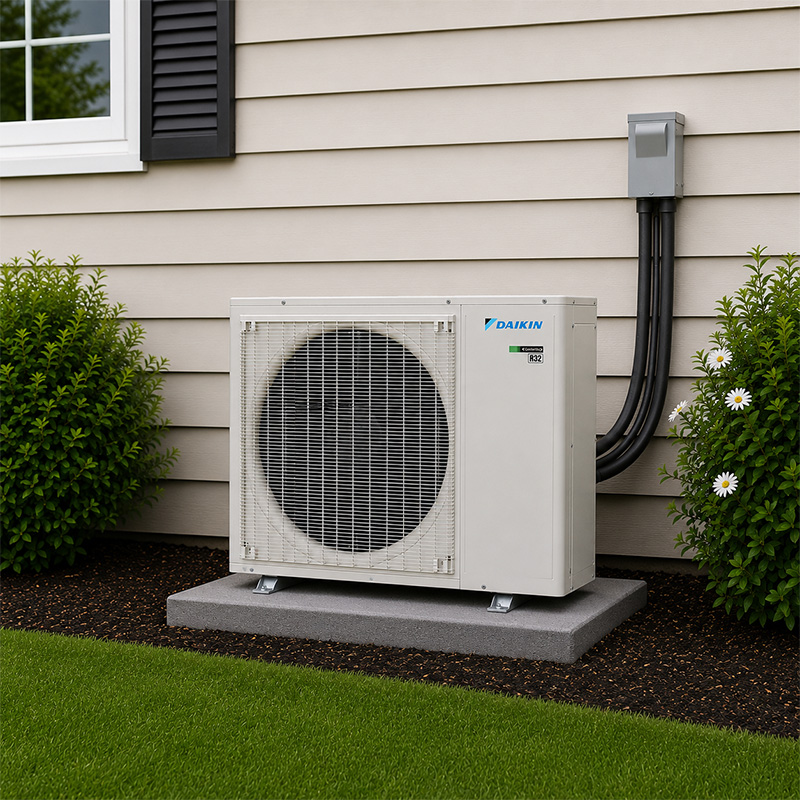
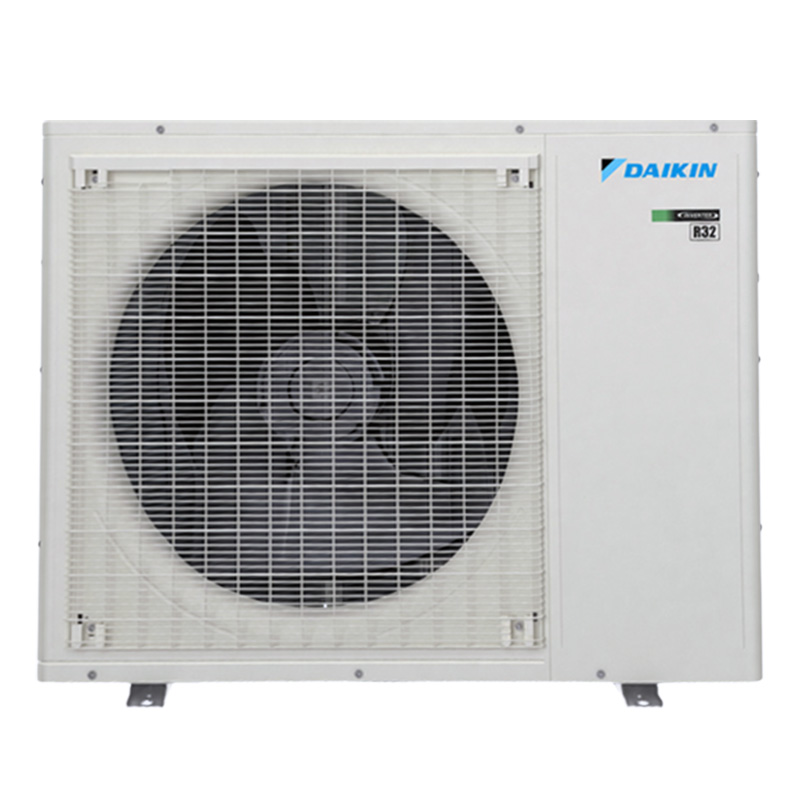
View on AC Direct see your lowest price →Check current price on AC Direct →
Key features
- Heats down to -13°F ambient for year-round use in cold climates
- Up to 20 SEER2 efficiency with variable-speed inverter compressor
- Supports up to 4 independently controlled indoor zones
- 36,000 BTU (3-ton) total capacity across all zones
- R-32 refrigerant with lower global warming potential than R-410A
- Factory-installed drain pan helps prevent freeze damage at the base in winter
About this system
The Daikin AURORA MXTH 4-Zone 36,000 BTU ductless mini-split condenser (model 4MXTH36AVJU9) is a multi-zone outdoor unit built for homeowners who need whole-home or whole-floor comfort without ductwork. At 3 tons of nominal capacity spread across up to four indoor air handlers, it suits additions, converted garages, older homes that never had ducts, or any situation where running new ductwork would be prohibitively expensive or disruptive. The standout headline spec is cold-weather performance: the AURORA line is rated to deliver heat down to -13°F ambient, making it a credible primary heating source in northern climates rather than just a shoulder-season supplement.
The system runs on R-32 refrigerant, which carries a lower global warming potential than the R-410A it replaces and is becoming the new industry standard. Efficiency tops out at a rated 20 SEER2, which places it solidly in the upper tier of multi-zone inverter systems, though real-world SEER2 in a four-zone configuration will depend heavily on how many zones are active simultaneously and how the indoor units are matched. The factory-installed drain pan on the outdoor unit is a practical cold-climate feature that keeps standing water from freezing under the condenser and cracking the base pan, a minor but appreciated detail for northern installs. This is a condenser-only listing, meaning indoor air handlers are purchased and matched separately, which gives flexibility but adds to project planning complexity.
The Daikin AURORA 4-zone condenser is a well-engineered cold-climate multi-split that earns its premium price tag through genuine -13°F heating capability and solid long-term durability credentials. The trade-offs are real: parts support and warranty service are recurring pain points, and the 12-year parts warranty requires timely registration to activate. Buyers who work with an experienced Daikin dealer and register promptly will get a capable, long-lasting system; those who cut corners on installation or dealer selection are more likely to encounter the brand's well-documented service frustrations.
Overall score is the average of the five ratings above.
What we like
- Genuine -13°F low-ambient heating makes it viable as a primary heat source in cold northern climates
- 20 SEER2 efficiency rating is competitive at the upper end of the multi-zone category
- R-32 refrigerant is more environmentally responsible and increasingly preferred by installers
- Factory-installed drain pan is a practical cold-climate detail absent on many competing condensers
- Daikin's track record for hardware longevity is consistently rated among the best in the industry by HVAC experts and Consumer Reports
Trade-offs
- Electronic control board failures and unexplained error codes are the most frequently reported reliability issue
- Parts availability and warranty claim handling draw consistent complaints, making dealer choice critical
- The 12-year parts warranty requires registration within 60 days of installation or it is forfeited
- Premium pricing means upfront cost is higher than mid-tier multi-zone competitors at similar SEER2 ratings
What homeowners and pros say about Daikin
On dedicated HVAC contractor forums and trade review channels, Daikin’s hardware reputation holds up well. Experienced installers cite long compressor life and consistent inverter performance as reasons they recommend the AURORA line for cold-climate customers who need reliable heat below zero. Consumer Reports and industry experts consistently place Daikin among the longer-lasting brands, which is a meaningful counterweight to the brand’s rough showing on complaint-driven platforms. On PissedConsumer, Daikin sits around 1.4 out of 5 across a few dozen reviews, but that channel skews heavily toward frustrated customers rather than a representative cross-section, and the complaints center on price shock and service delays rather than early mechanical failure.
The specific failure modes worth knowing before you buy: electronic control board errors are the most commonly reported issue across Daikin multi-zone systems, occasionally leaving units unresponsive or cycling through error codes until a board replacement can be sourced. Some owners and techs report compressor performance degrading ahead of expected lifespan, and units can develop rattling or humming sounds at startup and shutdown as they age. The most persistent theme across negative reviews is parts availability and warranty claim handling. Daikin’s service infrastructure in North America has drawn repeated criticism for slow response and hard-to-source components. The 12-year parts warranty is genuinely competitive on paper, but its value depends almost entirely on having a local dealer who can navigate the claim process efficiently. Buyers who lock in a reputable, Daikin-authorized contractor before purchase are far better positioned than those who shop on price alone.
Sources: PissedConsumer Daikin reviews, AHRI Directory of Certified Product Performance, U.S. DOE appliance and equipment efficiency standards, Daikin product specifications.
What it costs to run
At 20 SEER2, cooling this 36,000 BTU system for a typical 1200-hour cooling season at the U.S. average electricity rate of $0.17/kWh works out to roughly $367 per year in cooling, about $181 less per year than a minimum-efficiency 13.4 SEER2 unit of the same size. Your real cost depends on your climate and local rate.
Method: (36,000 BTU/hr ÷ 20 SEER2) × 1200 hours ÷ 1000 × $0.17/kWh. Rate source: U.S. EIA average; cooling hours: moderate-climate estimate.
How it compares
| Brand | Comparable model | SEER2 | Stage | Price position |
|---|---|---|---|---|
| Daikin | AURORA MXTH 4-Zone 36,000 BTU (4MXTH36AVJU9) | 20 | Variable | Premium pick |
| Mitsubishi | MXZ-4C36NAHZ2 4-Zone 36,000 BTU Hyper-Heating INVERTER | 18.8 | Variable | Similar to slightly higher than this Daikin |
| Fujitsu | AOU36RLXFZH1 4-Zone 36,000 BTU Halcyon Hyper-Heat | 19 | Variable | Similar to this Daikin, depending on dealer |
| LG | LMU36CHV 4-Zone 36,000 BTU Multi VS | 20 | Variable | Typically lower than this Daikin |
Competitor rows are comparable single-stage units at similar efficiency; price is relative position, not a quote.
Questions about this system
Do I have to buy the indoor air handlers separately, and are they interchangeable with other brands?
Yes, this listing is for the outdoor condenser only; compatible Daikin indoor units must be purchased and specified separately by your installer. The system is designed to work with Daikin-matched air handlers, and mixing brands is not supported and will void the warranty.
What happens to the 12-year parts warranty if I forget to register?
Without registration within 60 days of installation, the warranty reverts to Daikin's base unregistered coverage, which is significantly shorter. Registration is the homeowner's or installer's responsibility, so confirm this step is completed before your installer leaves the job.
Can this unit actually heat my home when outdoor temperatures drop below 0°F, or is the -13°F spec a marketing number?
The AURORA line is specifically engineered for cold-climate operation and the -13°F rating reflects real low-ambient heating capability, not a cutoff point. Heating capacity does derate as temperatures drop, so your installer should do a proper Manual J load calculation to confirm the system is sized for your worst-case design temperature.
What does the factory-installed drain pan actually do, and is it necessary in my climate?
The drain pan sits under the outdoor unit and collects condensate during the defrost cycle, preventing water from pooling and freezing solid beneath the condenser base in sub-freezing weather. It is primarily relevant in climates that see extended periods below freezing; in mild climates it provides little benefit but does no harm.
What are the most common things that go wrong with this type of Daikin unit after a few years?
Based on documented failure patterns across the AURORA and broader Daikin lineup, electronic control board errors are the most reported issue, sometimes causing the system to lock out or throw error codes that require a technician visit. Some units also develop compressor performance issues over time, and units can become progressively noisier with rattling or humming at startup and shutdown. Parts sourcing can be slow, so having a dealer with a reliable Daikin distributor relationship matters.
Specifications
| Efficiency | 20 SEER2 |
| Furnace output | 36,000 BTU |
| Refrigerant | R-32 |