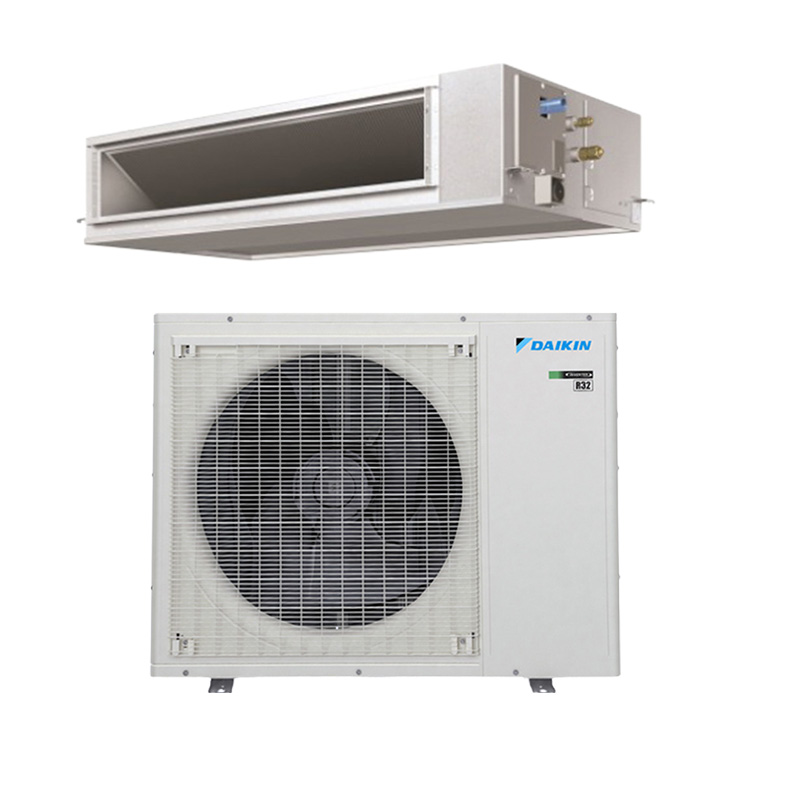
Daikin SkyAir 42,000 BTU Single-Zone Horizontal Ducted Mini-Split Heat Pump System, R32
View on AC Direct see your lowest price →Check current price on AC Direct →
Key features
- 42,000 BTU capacity with inverter-driven variable-speed compressor for continuous modulation
- 18.9 SEER2 efficiency rating, high-efficiency tier for ducted inverter heat pumps
- Horizontal indoor unit configuration for ceiling plenum or tight mechanical space installs
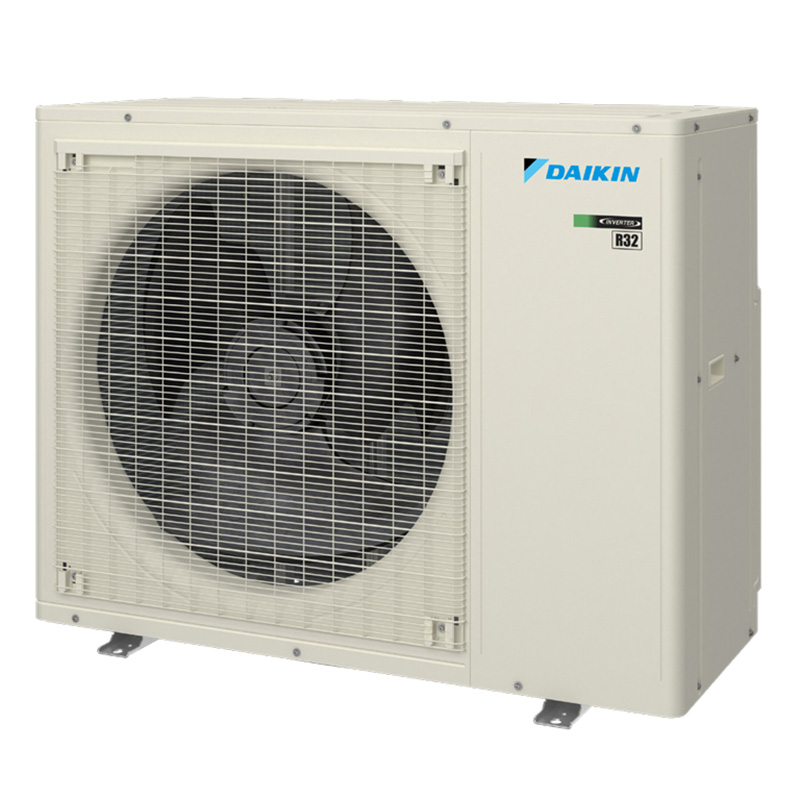
- R-32 refrigerant with lower global warming potential than R-410A
- Single-zone system paired with RZA42AAVJU outdoor unit
- 12-year parts warranty available with registration within 60 days of installation
About this system
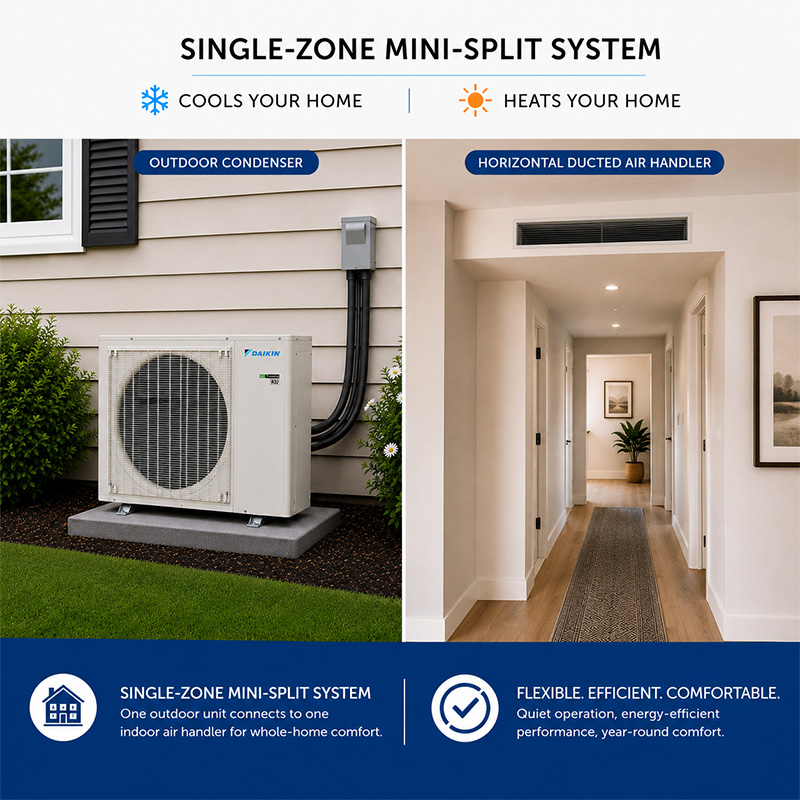
The Daikin SkyAir RZA42AAVJU is a 42,000 BTU (roughly 3.5-ton equivalent) single-zone horizontal ducted mini-split heat pump designed for spaces that need real heating and cooling capacity without a full conventional duct system. The horizontal indoor unit mounts in a ceiling plenum or tight mechanical space and connects to existing or short duct runs, making it a practical fit for commercial suites, large open-plan living areas, restaurants, or additions where a standard air handler won’t fit. At 18.9 SEER2, it sits solidly in the high-efficiency tier, well above the federal minimum and competitive with the upper range of standard ducted inverter systems.
The RZA42AAVJU runs on R-32 refrigerant, which carries a lower global warming potential than the R-410A it replaces and is increasingly the industry standard at this efficiency level. The inverter-driven variable-speed compressor modulates output continuously rather than cycling on and off, which improves dehumidification, reduces temperature swings, and lowers operating costs compared to single- or two-stage units of the same capacity. That said, this is a ducted configuration, so airflow performance depends heavily on how the duct work is sized and installed. It is not a plug-and-play system, and the horizontal orientation adds complexity versus a vertical or wall-mount unit.
Daikin positions this product toward light commercial and high-end residential buyers who want European-grade build quality and inverter efficiency in a ducted format. The price reflects that positioning. Buyers coming from commodity brands will notice the difference immediately on the invoice, and should weigh that against the documented long-term durability advantage and the specific support trade-offs Daikin carries.
The Daikin SkyAir RZA42AAVJU delivers genuine high-efficiency performance and long-term build quality in a ducted format that suits commercial and large residential spaces well. The premium price is real, and so are the documented issues with electronic controls, parts availability, and customer service. Buyers who prioritize equipment longevity and have a reliable local Daikin dealer will likely find the trade-off worthwhile; those who need responsive factory support or easy parts sourcing should think carefully.
Overall score is the average of the five ratings above.
What we like
- 18.9 SEER2 places it in the high-efficiency tier, meaningfully above federal minimums for real operating cost savings
- Inverter compressor continuously modulates capacity, improving comfort and dehumidification versus staged systems
- Daikin consistently rated among longer-lasting HVAC brands by Consumer Reports and independent HVAC experts
- R-32 refrigerant is lower GWP and increasingly well-supported by technicians as the industry transitions
- Horizontal ducted format opens installation options in commercial ceilings and tight residential mechanical spaces where vertical units won't fit
Trade-offs
- Electronic control board errors are the most frequently documented failure mode, sometimes leaving the system fully unresponsive
- Parts availability and warranty claims handling draw consistent complaints, which matters at this price point
- Premium pricing over comparable-efficiency units from Mitsubishi or Fujitsu requires a clear long-term value case
- Horizontal ducted configuration adds installation complexity and cost compared to standard wall-mount or vertical units
What homeowners and pros say about Daikin
Among HVAC professionals who have installed and serviced Daikin equipment across its commercial and high-efficiency residential lines, the brand earns consistent respect for build quality and long service life. Consumer Reports and independent HVAC experts place Daikin among the more durable brands in the category, the opposite end of the spectrum from the picture painted on complaint-heavy platforms. PissedConsumer scores Daikin at roughly 1.4 out of 5, but that channel disproportionately captures buyers in active disputes, and the reviews concentrate heavily on pricing and post-sale service friction rather than equipment failure rates over time. The honest read is that the hardware tends to last, but the support experience when something goes wrong is a real weak point that owners at this price tier reasonably find frustrating.
For the SkyAir horizontal ducted platform specifically, the failure modes worth knowing before you buy are electronic control and circuit board errors, which represent the most common complaint and can leave the system unresponsive or stuck throwing error codes until a board replacement arrives. Compressor degradation appears in a meaningful portion of long-term service records, and some units develop rattling or humming on startup and shutdown as they age. The parts availability and warranty handling complaints are not unique to one region and appear consistently enough to be taken seriously, particularly because the 12-year parts warranty requires registration within 60 days of install and covers only parts, not labor. Buyers who have an experienced, well-stocked local Daikin dealer tend to report better outcomes than those who rely on factory support directly.
Sources: PissedConsumer Daikin reviews, AHRI Directory of Certified Product Performance, U.S. DOE appliance and equipment efficiency standards, Daikin product specifications.
What it costs to run
At 18.9 SEER2, cooling this 42,000 BTU system for a typical 1200-hour cooling season at the U.S. average electricity rate of $0.17/kWh works out to roughly $453 per year in cooling, about $186 less per year than a minimum-efficiency 13.4 SEER2 unit of the same size. Your real cost depends on your climate and local rate.
Method: (42,000 BTU/hr ÷ 18.9 SEER2) × 1200 hours ÷ 1000 × $0.17/kWh. Rate source: U.S. EIA average; cooling hours: moderate-climate estimate.
How it compares
| Brand | Comparable model | SEER2 | Stage | Price position |
|---|---|---|---|---|
| Daikin | SkyAir RZA42AAVJU | 18.9 | Variable | Premium tier |
| Mitsubishi | City Multi PEFY / PFFY horizontal ducted series | 17.0-19.0 (varies by configuration) | Variable | Similar to or slightly above Daikin at this capacity |
| Fujitsu | Halcyon ARSTG36-42 horizontal concealed ducted series | 17.5-19.0 (varies by model) | Variable | Comparable to Daikin, sometimes modestly lower at this capacity |
| LG | Multi V and Art Cool horizontal ducted units (ARNU series) | 17.0-18.5 (varies by model) | Variable | Generally positioned at or slightly below Daikin at comparable BTU |
Competitor rows are comparable single-stage units at similar efficiency; price is relative position, not a quote.
Questions about this system
What kind of space is the horizontal ducted configuration actually designed for, and can I use it in a residential attic?
The horizontal indoor unit is built to sit in a ceiling plenum, above a drop ceiling, or in a mechanical chase where vertical clearance is limited. Residential attic installs are technically possible but add complexity around condensate drainage, refrigerant line routing, and insulation clearances. A qualified installer familiar with Daikin SkyAir units should assess the space before you commit.
How does 18.9 SEER2 translate to actual energy savings compared to a standard 14 or 15 SEER2 system?
At 42,000 BTU capacity running in a typical climate, moving from a 15 SEER2 to an 18.9 SEER2 system can reduce cooling-season electricity consumption by roughly 20 to 25 percent, though actual savings depend heavily on local utility rates, run hours, and how well the duct work is sealed. The inverter compressor also avoids the energy spikes of on-off cycling, which helps at part-load conditions that make up most of the operating season.
What are the most common problems owners report with this system?
Electronic control board and circuit board errors are the most documented issue, sometimes causing the unit to throw error codes or become unresponsive. Some units also show compressor performance loss over time, and noise complaints involving rattling or humming on startup and shutdown appear in service records. Parts availability and the warranty claims process are the most consistent service-side frustrations.
What does the 12-year parts warranty actually require, and what does it cover?
The 12-year parts warranty requires you to register the unit with Daikin within 60 days of installation; missing that window drops coverage to a shorter base warranty. It covers parts, not labor, so out-of-pocket costs for a warranty repair still include technician time, which can be substantial for a system at this complexity level. Read the warranty terms carefully before install day.
Is R-32 refrigerant harder to service than R-410A, and do local HVAC technicians know how to work with it?
R-32 requires the same EPA Section 608 certification as R-410A, so any licensed HVAC technician is legally qualified to handle it. Practically, familiarity is growing quickly as manufacturers across the industry shift to R-32, but in some markets you may still encounter technicians less experienced with it. Confirming your local contractor has worked with R-32 systems before scheduling service is a reasonable step.
Specifications
| Efficiency | 18.9 SEER2 |
| Furnace output | 42,000 BTU |
| Configuration | Horizontal |
| Refrigerant | R-32 |
| Model | RZA42AAVJU |