MrCool EasyPro 18,000 BTU Ductless Mini Split Heat Pump System, 230V – 5th Generation | Includes DIY Install Kit, 20 SEER2, R454B
View on AC Direct see your lowest price →Check current price on AC Direct →
Key features
- 18,000 BTU capacity suits rooms up to approximately 1,000 sq ft
- 20 SEER2 efficiency rating, upper tier for single-zone mini splits
- Pre-charged quick-connect line sets included, no vacuum pump required
- R-454B refrigerant, a lower-GWP next-generation refrigerant
- 5th-generation platform with meaningfully improved first-year reliability over prior generations
- 230V operation with both heating and cooling capability as a heat pump
About this system
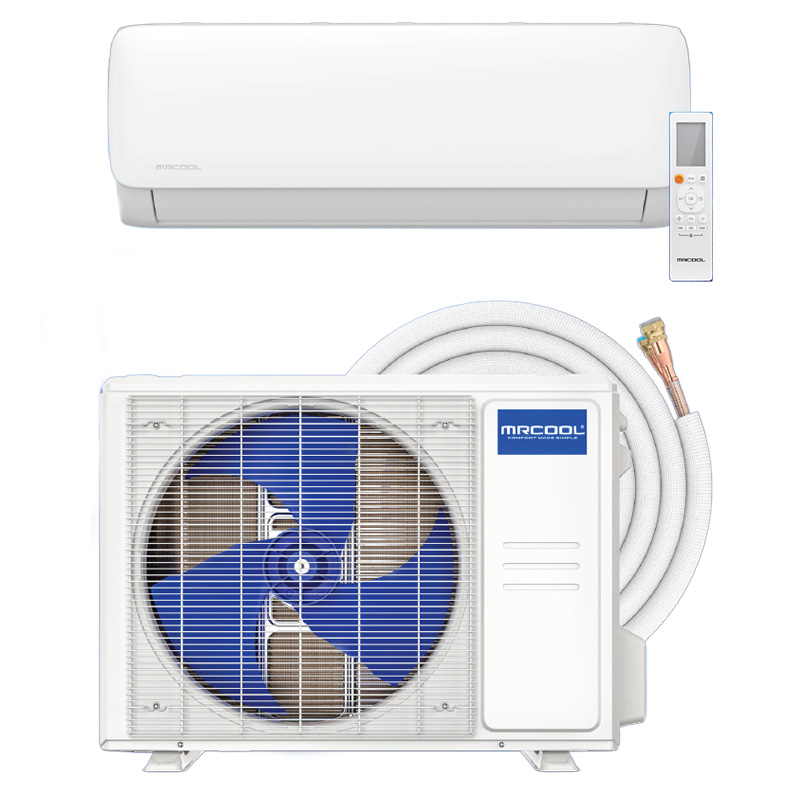
The MrCool EasyPro 18,000 BTU 5th-Generation Ductless Mini Split is a single-zone heat pump system designed for spaces roughly 700 to 1,000 square feet, covering a medium-sized living room, master suite, garage workshop, or converted bonus room. Running on 230V and rated at 20 SEER2, it lands in the upper tier of efficiency for the category, which means real energy savings over older or lower-rated units when replacing window AC or electric baseboard heat. It uses R-454B refrigerant, a lower-global-warming-potential replacement for R-410A that is becoming the new standard across the industry.
What sets this system apart from contractor-installed mini splits is the pre-charged line set included in the DIY Install Kit. MrCool ships the refrigerant already inside quick-connect line sets, so a homeowner with basic tools and comfort working around electricity can mount the indoor air handler, run the lines, and commission the system without hiring a technician or owning a vacuum pump. That proposition is the core of the brand. The 5th-generation platform represents a genuine step forward in build quality over earlier MrCool generations, with documented first-year reliability around 85 percent, though that also means roughly 1 in 7 units will have a problem in year one, so the buyer needs to go in clear-eyed about that trade-off.
The MrCool EasyPro 18K 5th Gen is a legitimately capable mini split at an attractive price point for a homeowner willing to do the install and accept limited professional service support. The 20 SEER2 rating and pre-charged line set are real advantages, but warranty enforcement is difficult and local repair options are thin, so it rewards buyers who are handy and realistic about the risks.
Overall score is the average of the five ratings above.
What we like
- 20 SEER2 efficiency is competitive with premium brands at a lower upfront cost
- Pre-charged DIY line sets genuinely eliminate the need for a vacuum pump or HVAC license in most states
- 5th-generation reliability is substantially better than earlier MrCool generations
- Includes both heating and cooling in one system, replacing multiple appliances
- R-454B refrigerant is forward-compatible with upcoming regulatory shifts away from R-410A
Trade-offs
- Roughly 1 in 7 units experiences a problem in the first year, above what premium competitors see
- Warranty claims are documentation-heavy and owners report the company looking for reasons to deny coverage
- Few local HVAC technicians will service MrCool, leaving most repairs on the owner
- Customer service has documented complaints of long hold times and slow email-based troubleshooting
What homeowners and pros say about MRCOOL
Homeowners who have installed the MrCool EasyPro on platforms like Home Depot rate popular DIY models around 4.5 out of 5, and the most consistent praise centers on exactly what the brand promises: a straightforward self-install that does not require a professional on site. Buyers who are comfortable with basic construction tasks report the quick-connect line sets work as described and that first-season cooling and heating performance meets expectations. The 5th-generation platform has clearly earned some goodwill back after earlier generations, where failure rates in the first two years ran close to 25 percent, a figure that made it hard for many owners to recommend the brand at all.
The more cautious feedback, echoed across HVAC professional forums and owner groups, focuses on what happens after installation if something goes wrong. The specific failure mode of a loose coupling near the air handler has been documented in some units, and while that is a fixable issue for a mechanically inclined owner, it points to quality control that premium brands do not exhibit at this price tier. Warranty coverage exists on paper, but owners describe a claims process designed around documentation requirements that are easy to fail, and phone support complaints include long hold times and resolutions that come primarily through email threads rather than dispatched service. With about 85 percent of 5th-gen units running reliably past year one, the odds favor a good outcome, but the remaining 15 percent face a support structure that is notably thinner than what a Mitsubishi or Daikin dealer network provides.
Sources: Better Business Bureau MRCOOL reviews, PickHVAC MRCOOL review, AHRI Directory of Certified Product Performance, U.S. DOE appliance and equipment efficiency standards.
What it costs to run
At 20 SEER2, cooling this 18,000 BTU system for a typical 1200-hour cooling season at the U.S. average electricity rate of $0.17/kWh works out to roughly $184 per year in cooling, about $90 less per year than a minimum-efficiency 13.4 SEER2 unit of the same size. Your real cost depends on your climate and local rate.
Method: (18,000 BTU/hr ÷ 20 SEER2) × 1200 hours ÷ 1000 × $0.17/kWh. Rate source: U.S. EIA average; cooling hours: moderate-climate estimate.
How it compares
| Brand | Comparable model | SEER2 | Stage | Price position |
|---|---|---|---|---|
| MrCool | EasyPro 18,000 BTU 5th Gen DIY | 20 | Variable | Value pick |
| Mitsubishi | MSZ-GL18NA / MUZ-GL18NA (GL Series) | 19.5 | Variable | Significantly higher, professional install typically required |
| Daikin | Aurora RXL Series 18,000 BTU | 19.5 | Variable | Moderately higher, dealer-installed |
| Fujitsu | XLTH Series 18,000 BTU (AOU18RLXFZH) | 20 | Variable | Higher, certified contractor install expected |
Competitor rows are comparable single-stage units at similar efficiency; price is relative position, not a quote.
Questions about this system
Can I really install this myself, or do I need an HVAC license?
In most states a homeowner can legally install their own HVAC system on their own property, and the pre-charged quick-connect line sets mean you do not need a vacuum pump or refrigerant certification for the line connection itself. You will still need to make a 230V electrical connection, which requires comfort with wiring and, in most jurisdictions, a permit and inspection, so factor that in before you start.
What is the warranty, and how hard is it actually to use?
MrCool offers a limited parts and compressor warranty on 5th-gen units, but owners consistently report the claims process is documentation-heavy and the company scrutinizes installs closely for any reason to deny coverage. Keep every photo from your installation, save all paperwork, and register the product immediately after install to give yourself the best chance of a successful claim.
What happens if the unit breaks and I cannot find a local tech to fix it?
This is the real risk with MrCool. Most independent HVAC contractors are reluctant to service pre-charged DIY systems, especially if they did not install it. A documented failure mode on earlier units was a loose coupling near the air handler, which a handy owner could address, but a refrigerant leak or compressor failure likely means returning to MrCool's phone or email support, which has a mixed reputation for responsiveness.
Is 18,000 BTU the right size for my space?
A rough industry guideline is around 20 BTU per square foot for average ceiling heights and insulation, which puts 18,000 BTU at roughly 700 to 900 square feet. However, high ceilings, poor insulation, lots of south-facing windows, or a very hot or cold climate will all reduce that effective range, and oversizing causes short cycling, humidity problems, and premature wear, so an accurate room assessment before buying matters.
How does R-454B compare to R-410A and should I care?
R-454B is a next-generation refrigerant with a significantly lower global warming potential than R-410A, and the EPA is phasing R-410A out of new equipment. Buying R-454B now means your system is not at risk of becoming harder to service as R-410A availability tightens over the next decade. The practical difference in day-to-day performance is minimal for the homeowner.
Specifications
| Efficiency | 20 SEER2 |
| Furnace output | 18,000 BTU |
| Refrigerant | R-454B |