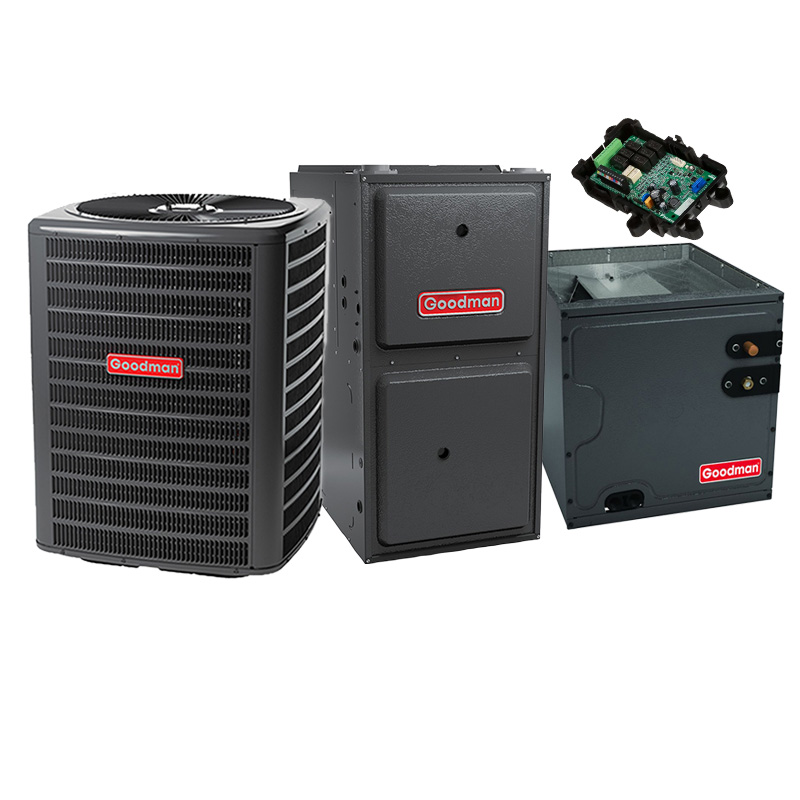
Goodman 1.5 Ton 13.8 SEER2 40000 BTU 96% AFUE Gas Furnace With R32 Air Condenser and Coil System – Upflow
View on AC Direct see your lowest price →Check current price on AC Direct →
Key features
- 1.5-ton capacity matched for smaller homes and additions up to roughly 900 sq ft depending on climate and insulation
- 13.8 SEER2 cooling efficiency meets current federal minimums for most U.S. climate zones
- 96% AFUE gas furnace extracts 96 cents of heat from every dollar of natural gas consumed
- R-32 refrigerant with lower global warming potential than R-410A, aligning with industry regulatory direction
- Upflow configuration designed for basement or utility-closet installations with ductwork above
- Complete matched system: condenser, evaporator coil, and furnace from one manufacturer for simplified warranty coverage
About this system
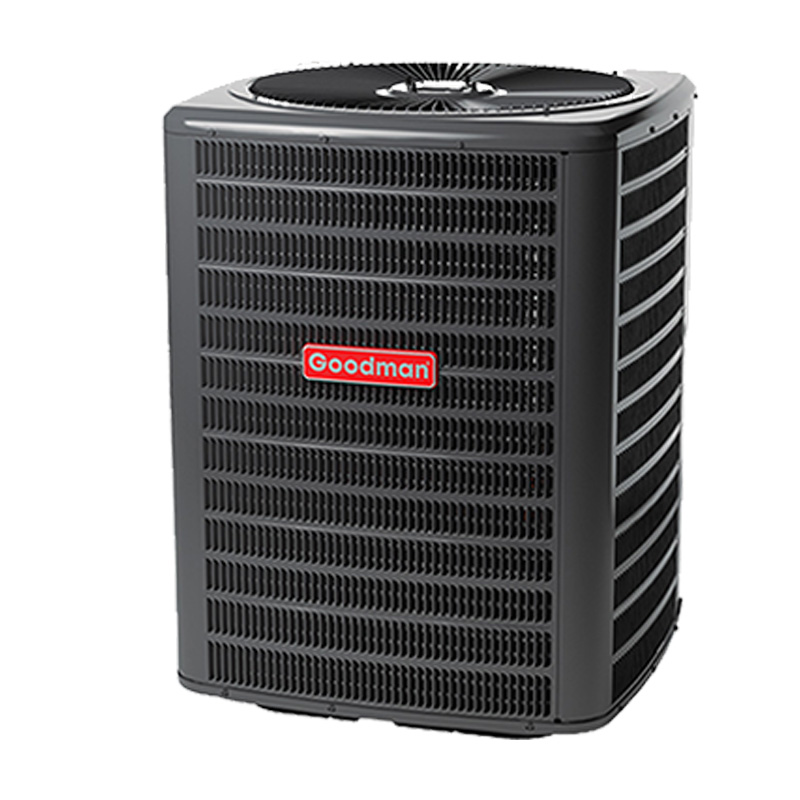
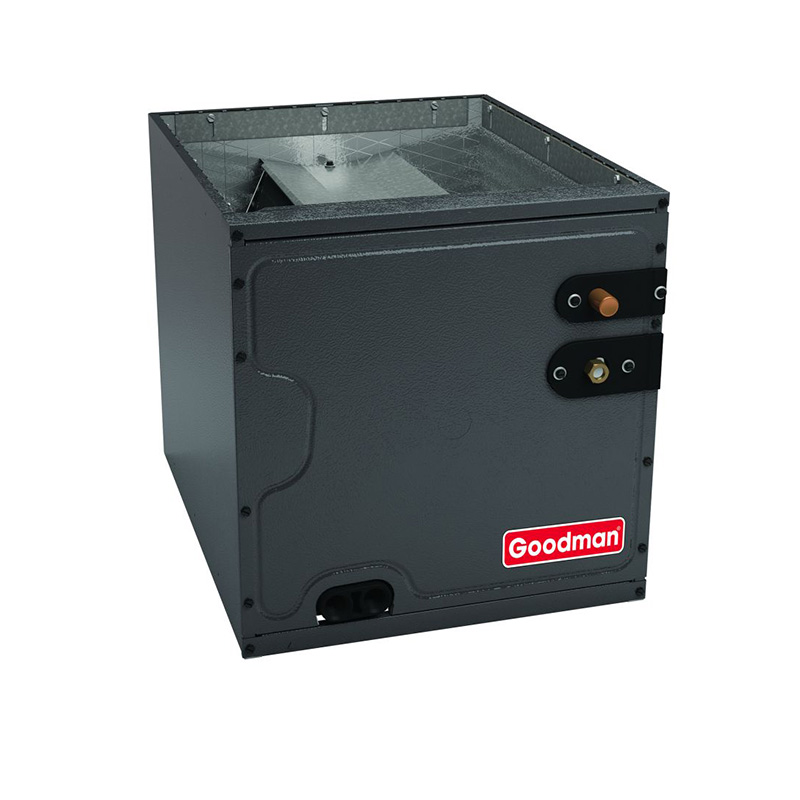
This Goodman upflow system pairs a 1.5-ton R-32 air condenser and matching evaporator coil with a 40,000 BTU, 96% AFUE gas furnace, making it a complete heating and cooling solution sized for smaller homes, conditioned basements, or well-insulated additions in the 600 to 900 square foot range. The 13.8 SEER2 rating clears the federal minimum for most U.S. climate zones, so it qualifies for installation today without compliance headaches, though it sits near the bottom of the efficiency ladder rather than the top. R-32 refrigerant is a meaningful forward step: it carries a lower global warming potential than the R-410A it replaces and is the direction the industry is heading.
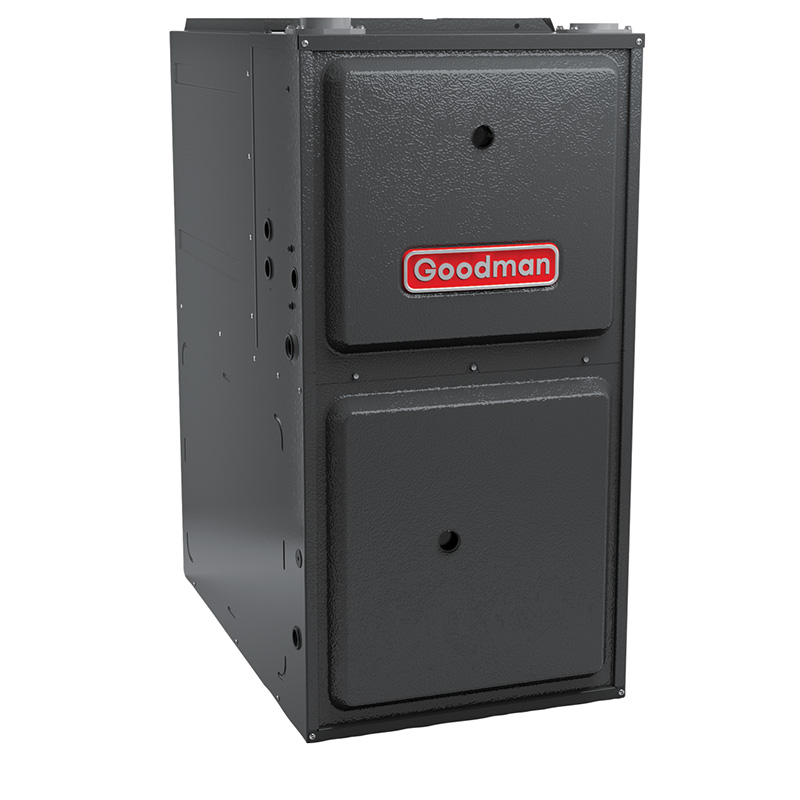
The 96% AFUE furnace is the standout spec here. Extracting 96 cents of heat from every dollar of gas is solidly high-efficiency territory, and for a household that runs the furnace heavily through winter, that rating can meaningfully reduce monthly gas bills compared to an 80% unit. The upflow configuration suits the most common forced-air layout, where the furnace sits in a basement or utility closet and air rises into the duct system above. Buyers who need a horizontal or downflow setup will need a different package. At Goodman’s typical price point, sitting 15 to 25 percent below Trane, Lennox, and Carrier equivalents, this system is aimed squarely at budget-conscious homeowners, rental property owners, and anyone replacing aging equipment without wanting to stretch into premium-brand pricing.
This Goodman package delivers a high-efficiency furnace and code-compliant cooling at a price that undercuts major premium brands by a meaningful margin, making it a practical choice when budget is the primary constraint. The 96% AFUE furnace is genuinely strong, but the 13.8 SEER2 cooling is entry-level, and Goodman's documented repair history means buyers should budget for component replacements after the first several years. It is a reasonable system installed well; it is a frustrating one installed carelessly.
Overall score is the average of the five ratings above.
What we like
- 96% AFUE furnace offers real long-term gas savings compared to 80% efficiency alternatives
- Price sits 15 to 25 percent below comparable Trane, Lennox, and Carrier systems, lowering the upfront barrier
- R-32 refrigerant is forward-looking and aligns with ongoing regulatory shifts away from R-410A
- Complete matched system simplifies warranty claims and eliminates compatibility guesswork
- Upflow layout covers the most common residential installation scenario without modification
Trade-offs
- 13.8 SEER2 is the floor of current efficiency standards, not a selling point for energy-conscious buyers
- Dual-run capacitors are the most frequently reported failure, typically surfacing within the first decade and costing $300 to $600 to fix
- Compressor lifespan averages 10 to 14 years versus 15 to 20 years for premium-brand compressors, raising longer-term replacement risk
- Evaporator coil leaks and first-year refrigerant charge issues appear in a notable share of owner reports, underlining how dependent this system is on installer quality
What homeowners and pros say about Goodman
Homeowners who post about Goodman online tend to sort into two groups: those who got a clean install from a knowledgeable contractor and have had few problems, and those who ran into trouble early and watched repair bills climb. Goodman’s ConsumerAffairs score sits around 2.5 out of 5, a number pulled down by complaint-heavy users who report that costs start escalating around year seven. Google dealer reviews, which capture a broader cross-section of buyers, average roughly 3.8 out of 5, where the most repeated reason people choose Goodman is straightforwardly that it costs less upfront. Neither number is a reason to panic or to celebrate without context.
HVAC technicians who service Goodman equipment regularly point to dual-run capacitor failures as the most common call-back, a repair that typically runs $300 to $600 and is not unusual for any brand after several years. More consequential are evaporator coil leaks, which appear with enough frequency in owner reports to be worth noting, and compressor longevity that generally lands in the 10 to 14 year range rather than the 15 to 20 years associated with premium brands. For this specific package, a handful of first-year refrigerant leak reports in owner communities tend to trace back to installation or initial charge issues rather than factory defects, which reinforces what experienced technicians say consistently: with Goodman, the installer matters at least as much as the equipment itself.
Sources: ConsumerAffairs Goodman owner reviews, AHRI Directory of Certified Product Performance, U.S. DOE appliance and equipment efficiency standards, Goodman product specification sheets.
What it costs to run
At 13.8 SEER2, cooling this 1.5-ton system for a typical 1200-hour cooling season at the U.S. average electricity rate of $0.17/kWh works out to roughly $266 per year in cooling, about $8 less per year than a minimum-efficiency 13.4 SEER2 unit of the same size. Your real cost depends on your climate and local rate.
Method: (18,000 BTU/hr ÷ 13.8 SEER2) × 1200 hours ÷ 1000 × $0.17/kWh. Rate source: U.S. EIA average; cooling hours: moderate-climate estimate.
How it compares
| Brand | Comparable model | SEER2 | Stage | Price position |
|---|---|---|---|---|
| Goodman | GSX14 / GMVC96 / CAPF (this system) | 13.8 | Single-stage | Value pick |
| Carrier | Comfort 13 Series (24ACC3) | 13.8 | Single-stage | Typically 15 to 25 percent more than this Goodman package |
| Trane | XR13 Series | 13.8 | Single-stage | Typically 15 to 25 percent more than this Goodman package |
| Lennox | Merit 13ACX Series | 13.8 | Single-stage | Typically 15 to 25 percent more than this Goodman package |
Competitor rows are comparable single-stage units at similar efficiency; price is relative position, not a quote.
Questions about this system
Is 1.5 tons enough for my house, or should I size up?
A 1.5-ton system is generally appropriate for roughly 600 to 900 square feet in a moderately insulated home, but the right answer depends on your climate zone, ceiling height, window area, and insulation quality. Oversizing is a common and costly mistake: a unit too large for the space will short-cycle, reducing dehumidification and stressing components. Have an HVAC contractor perform a Manual J load calculation before purchasing.
What does the R-32 refrigerant change about ownership or service?
R-32 has a lower global warming potential than R-410A and is mildly flammable, which means technicians need specific handling certification to service it. Most established HVAC companies are already certified or are in the process of becoming so, but it is worth confirming before you book a service call. Refrigerant costs for R-32 are currently comparable to R-410A.
Goodman has mixed reviews online. How worried should I be?
Goodman scores around 2.5 out of 5 on ConsumerAffairs, a channel that skews heavily toward complaints, and roughly 3.8 out of 5 across Google dealer reviews where affordability is consistently praised. The documented failure modes to watch for are dual-run capacitor failures, evaporator coil leaks, and compressor wear after 10 to 14 years. A well-executed installation and a service plan with a reputable local contractor address most of the risk.
The 96% AFUE sounds great. How much will it actually save on gas?
Savings depend on your current furnace efficiency, local gas prices, and how cold your winters are. Replacing a common 80% AFUE unit with this 96% model means roughly 16 percent less gas burned for the same heat output. In a climate with long heating seasons, that difference can be substantial over five to ten years, often offsetting a portion of the system cost.
Does this system qualify for the federal energy efficiency tax credit?
The furnace at 96% AFUE meets the efficiency threshold for the 25C federal tax credit, which can cover 30 percent of qualifying equipment and installation costs up to a $600 annual cap for furnaces as of current IRS guidance. The 13.8 SEER2 air conditioner portion may not meet the higher SEER2 threshold required for central AC credits; confirm current requirements with a tax professional or the ENERGY STAR website before filing.
Specifications
| Cooling capacity | 1.5 Ton |
| Efficiency | 13.8 SEER2 |
| Furnace output | 40000 BTU |
| Furnace efficiency | 96% AFUE |
| Configuration | Upflow |
| Refrigerant | R-32 |