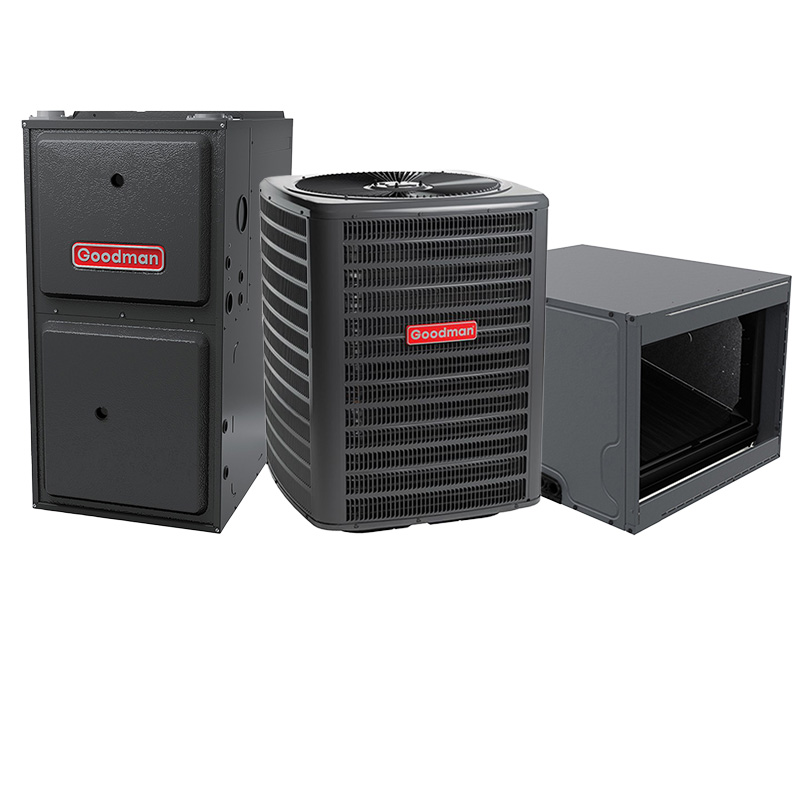
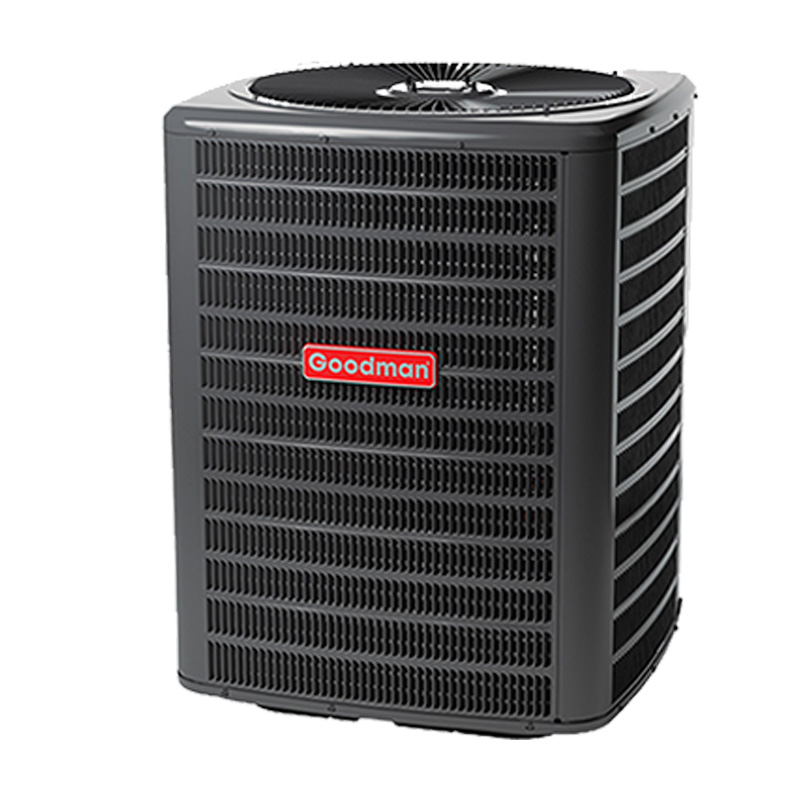
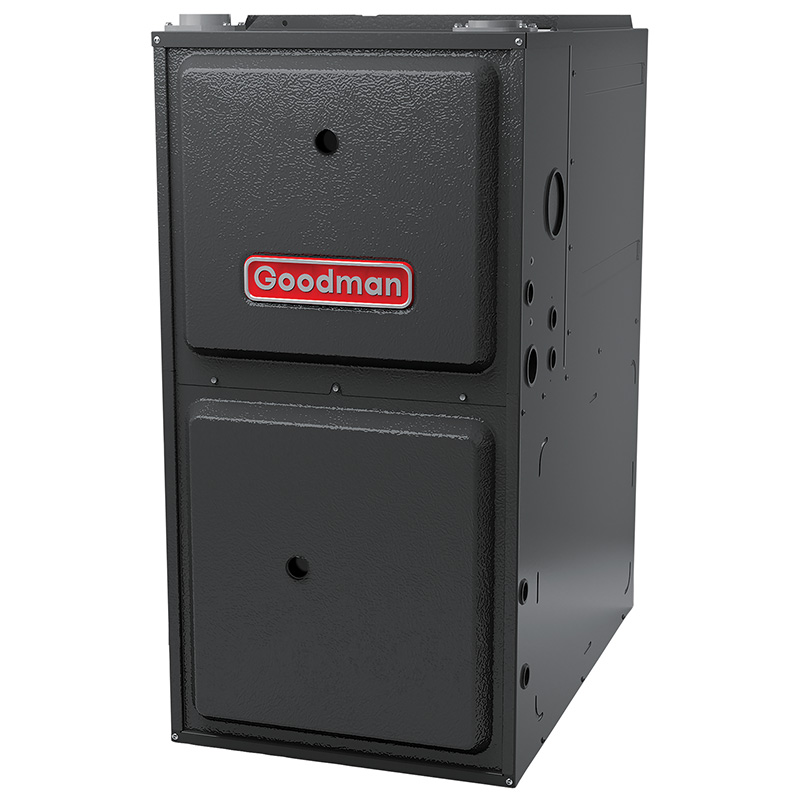
Goodman 1.5 Ton 13.8 SEER2 40000 BTU 96% AFUE Two Stage Multi-Speed ECM Gas Furnace System – Horizontal | R32
View on AC Direct see your lowest price →Check current price on AC Direct →
Key features
- 96% AFUE two-stage gas furnace reduces short-cycling and lowers heating bills vs. single-stage
- Multi-speed ECM blower motor cuts electrical draw and delivers quieter, more even airflow
- 1.5-ton / 13.8 SEER2 cooling meets 2023 DOE minimum efficiency standards
- Horizontal configuration designed for attic, crawlspace, or side-discharge installs
- R-32 refrigerant with lower global-warming potential than R-410A
- Goodman value pricing typically runs 15 to 25 percent below Trane, Lennox, and Carrier equivalents
About this system
This Goodman 1.5-ton horizontal system is built for smaller homes, conditioned crawlspaces, attic installations, and tight mechanical closets where a vertical unit simply will not fit. The 40,000 BTU, 96% AFUE two-stage furnace is the centerpiece: two-stage firing means the burner runs at a lower capacity on mild days, reducing short-cycling, evening out temperatures, and trimming gas bills compared with a single-stage equivalent. The multi-speed ECM blower motor adds another layer of efficiency by drawing less electricity than a standard PSC motor, and it ramps airflow gradually rather than blasting on at full speed, which most homeowners notice as quieter, more consistent comfort.
On the cooling side, 13.8 SEER2 sits at the legal minimum for new equipment in most U.S. climate regions under the 2023 DOE standards, so this unit clears the bar but does not exceed it by a meaningful margin. That is a deliberate cost trade-off: the savings on upfront price are real, but a homeowner in a hot climate running the system four to five months a year will see smaller utility savings over the equipment’s life compared with a 16 or 17 SEER2 system. R-32 refrigerant is a lower global-warming-potential alternative to R-410A, and it is increasingly standard across the industry, so future service availability should be reasonable. Horizontal configuration adds installation complexity and limits which contractors can commission it correctly, which matters more for Goodman than for premium brands because Goodman’s long-term reliability leans heavily on how well the system is set up from day one.
This system offers a legitimate combination of two-stage heating and ECM fan technology at a price point that premium brands cannot match, making it a sensible choice for budget-conscious buyers who hire a skilled installer and plan to maintain the equipment consistently. The 13.8 SEER2 cooling rating is code-compliant but not competitive on efficiency, and Goodman's documented repair history after year seven means the lifetime cost picture is less rosy than the sticker price suggests. Buyers who prioritize long-term reliability or who live in high-usage climates should weigh that trade-off carefully before committing.
Overall score is the average of the five ratings above.
What we like
- Two-stage furnace operation delivers noticeably more even heating than single-stage alternatives at this price tier
- ECM blower motor reduces electricity use and runs quieter than standard PSC motors
- 96% AFUE is a strong heating efficiency rating that will satisfy most cold-climate performance expectations
- R-32 refrigerant is increasingly well-supported by the service industry as the market transitions away from R-410A
- Entry-level price point leaves budget room for a quality installation, which is the single biggest factor in how long the system lasts
Trade-offs
- 13.8 SEER2 is the regulatory minimum, meaning cooling efficiency lags behind mid- and high-efficiency alternatives from any brand
- Dual-run capacitors and evaporator coil leaks are documented recurring failure points, with repair costs rising noticeably after roughly year seven
- Compressor lifespan averages 10 to 14 years versus 15 to 20 years for premium-brand compressors, a meaningful gap over the equipment's life
- Horizontal configuration limits the installer pool and raises the stakes on commissioning quality, which is already the critical variable with Goodman equipment
What homeowners and pros say about Goodman
Homeowners who weigh in on Goodman tend to split along a clear fault line: those who had a skilled installer and kept up with maintenance are generally satisfied, while those who did not report frustration with repair bills that start climbing around year seven or eight. That pattern is consistent with Goodman’s ConsumerAffairs rating of approximately 2.5 out of 5, a channel that skews toward people motivated to complain, where the recurring theme is exactly that post-warranty repair cost concern. Google dealer reviews tell a more balanced story, averaging around 3.8 out of 5 across locations, with affordability mentioned most often as the reason buyers chose the brand in the first place.
HVAC technicians who service Goodman equipment in the field tend to view it as a workable value brand rather than a premium one. The dual-run capacitor is the failure they see most often, and they generally describe it as a quick, inexpensive fix when caught during a maintenance visit. Evaporator coil leaks and compressor longevity are the more serious concerns: Goodman compressors are documented to average 10 to 14 years of service life compared with 15 to 20 years for premium-brand units, and coil leaks show up in enough owner accounts to be taken seriously rather than dismissed. For this particular horizontal two-stage system, technicians would add that the configuration itself raises the installation bar, meaning a buyer’s experience with Goodman will depend even more than usual on who does the initial setup and whether that contractor is comfortable with horizontal applications specifically.
Sources: ConsumerAffairs Goodman owner reviews, AHRI Directory of Certified Product Performance, U.S. DOE appliance and equipment efficiency standards, Goodman product specification sheets.
What it costs to run
At 13.8 SEER2, cooling this 1.5-ton system for a typical 1200-hour cooling season at the U.S. average electricity rate of $0.17/kWh works out to roughly $266 per year in cooling, about $8 less per year than a minimum-efficiency 13.4 SEER2 unit of the same size. Your real cost depends on your climate and local rate.
Method: (18,000 BTU/hr ÷ 13.8 SEER2) × 1200 hours ÷ 1000 × $0.17/kWh. Rate source: U.S. EIA average; cooling hours: moderate-climate estimate.
How it compares
| Brand | Comparable model | SEER2 | Stage | Price position |
|---|---|---|---|---|
| Goodman | 1.5 Ton 13.8 SEER2 96% AFUE Two-Stage ECM Horizontal R-32 | 13.8 | Two-stage | Value pick |
| Carrier | Performance 13 / 14 Series (24ACC3 / 58CVA pairing) | 13.4 to 14.3 | Single-stage | Typically 15 to 25 percent more than this Goodman system |
| Trane | XR14 / S8X2 pairing | 14.0 to 14.5 | Single-stage | Typically 15 to 25 percent more than this Goodman system |
| Lennox | Merit ML14XC1 / ML196E pairing | 13.8 to 14.3 | Single-stage | Typically 15 to 25 percent more than this Goodman system |
Competitor rows are comparable single-stage units at similar efficiency; price is relative position, not a quote.
Questions about this system
Is 13.8 SEER2 going to cost me significantly more to run than a higher-efficiency unit?
Compared with a 16 SEER2 system, the difference in annual cooling costs on a 1.5-ton unit is modest in absolute dollars, but it compounds over 10 to 15 years. In a climate where you run the AC four or more months a year, the gap becomes noticeable, and a higher-efficiency unit may eventually offset part of its premium purchase price. In a mild climate with a short cooling season, the payback period for a higher-SEER2 unit is often longer than the equipment's useful life.
What does horizontal configuration actually mean, and can any HVAC contractor install it?
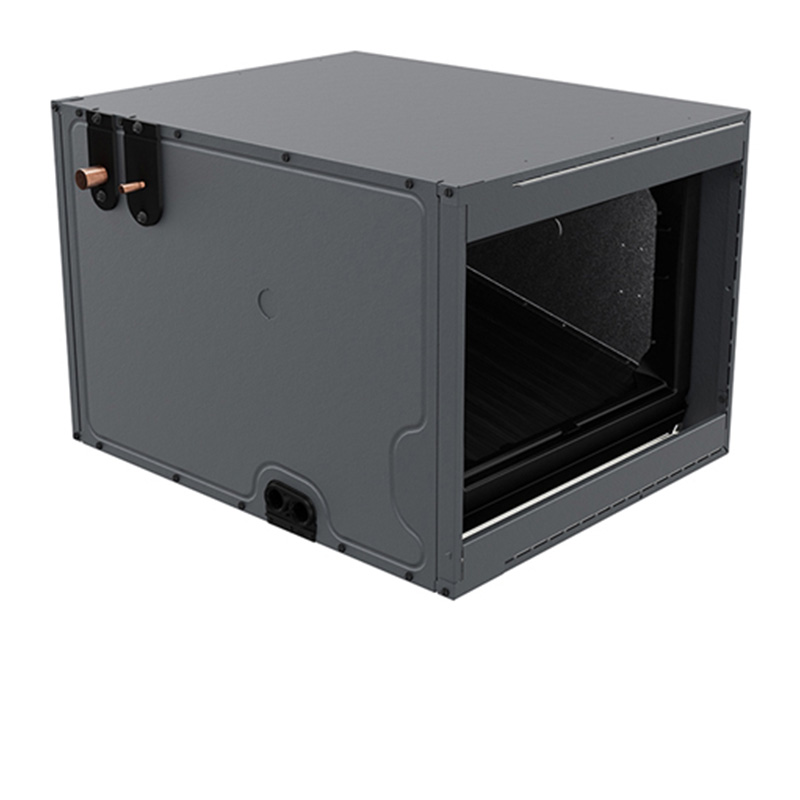
Horizontal means the air handler is oriented on its side, discharging air out one end rather than downward or upward, which is required in attic and crawlspace applications where vertical clearance is limited. Not every contractor works with horizontal installs regularly, and proper refrigerant line routing, condensate drainage, and airflow balancing are more involved than in a standard upright setup. You should specifically ask any bidding contractor how many horizontal Goodman systems they have commissioned in the past year.
What are the most likely repairs I should budget for over the first 10 years?
Based on documented owner experience with Goodman equipment, the dual-run capacitor is the most common failure, typically a straightforward repair in the 300 to 600 dollar range. Evaporator coil leaks appear in a meaningful share of owner reports and are a more expensive fix. A small minority of owners report refrigerant leaks within the first year, which usually points to an installation or initial charge issue rather than a manufacturing defect.
Does R-32 refrigerant change anything about how I maintain or service the system?
R-32 requires technicians with the appropriate certification and equipment, but it is widely stocked and supported as the industry has been transitioning to it. Most established HVAC service companies already carry it. The main thing to confirm is that the contractor you hire for annual maintenance is comfortable working with R-32, which the majority of active commercial operations now are.
How does Goodman's warranty on this system actually work, and are there conditions I should know about?
Goodman typically offers a 10-year parts warranty when the equipment is registered within a set window after installation, dropping to a shorter period if registration is missed. The warranty covers parts but not labor, which can be a significant out-of-pocket cost on more complex repairs. Some dealers offer extended labor coverage as an add-on, and given Goodman's documented repair frequency after year seven, that option is worth pricing out at the time of purchase.
Specifications
| Cooling capacity | 1.5 Ton |
| Efficiency | 13.8 SEER2 |
| Furnace output | 40000 BTU |
| Furnace efficiency | 96% AFUE |
| Configuration | Horizontal |
| Refrigerant | R-32 |