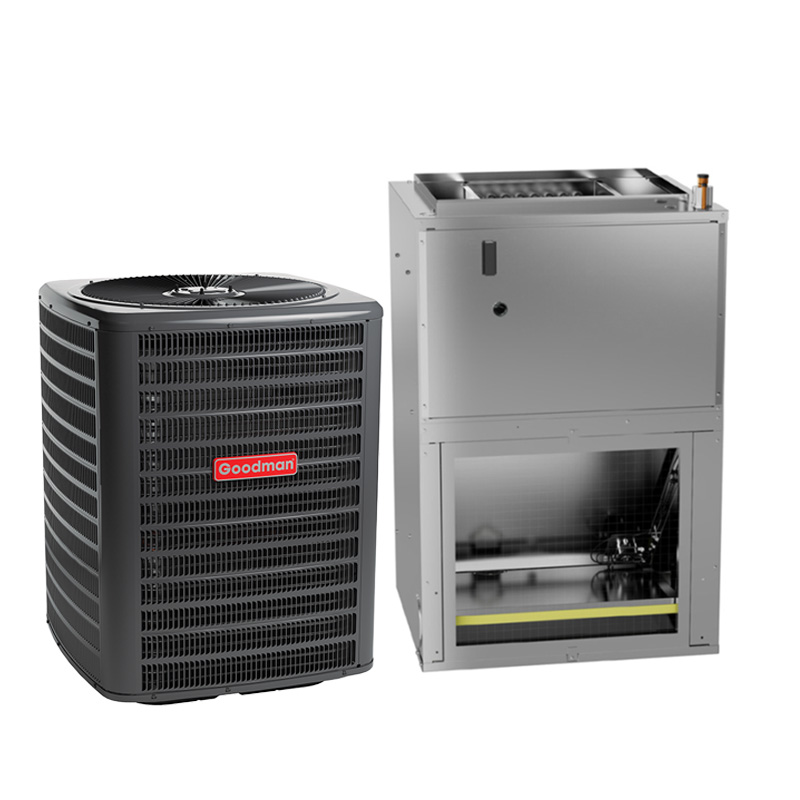
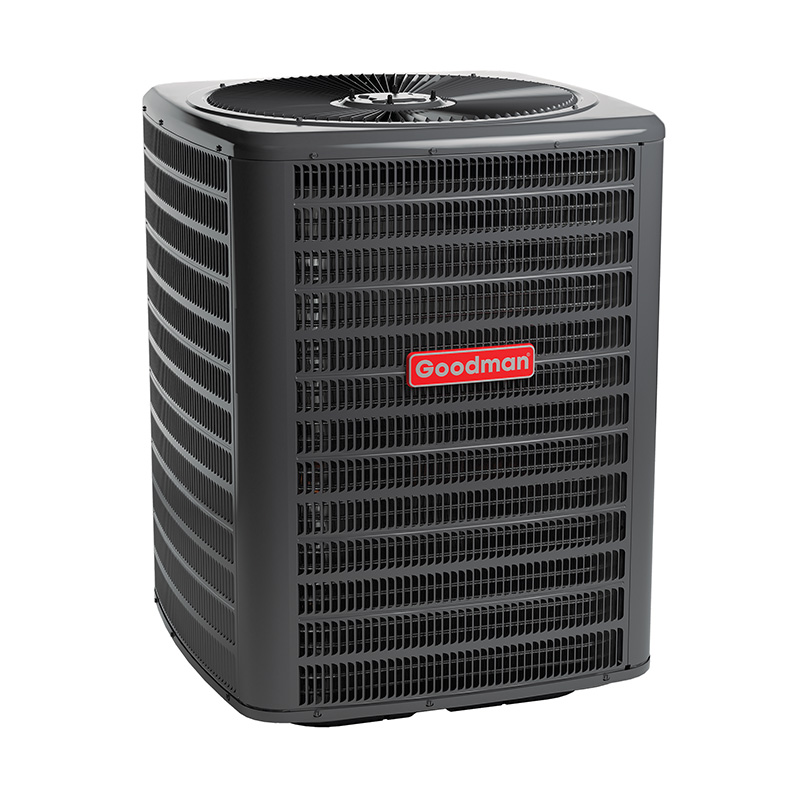
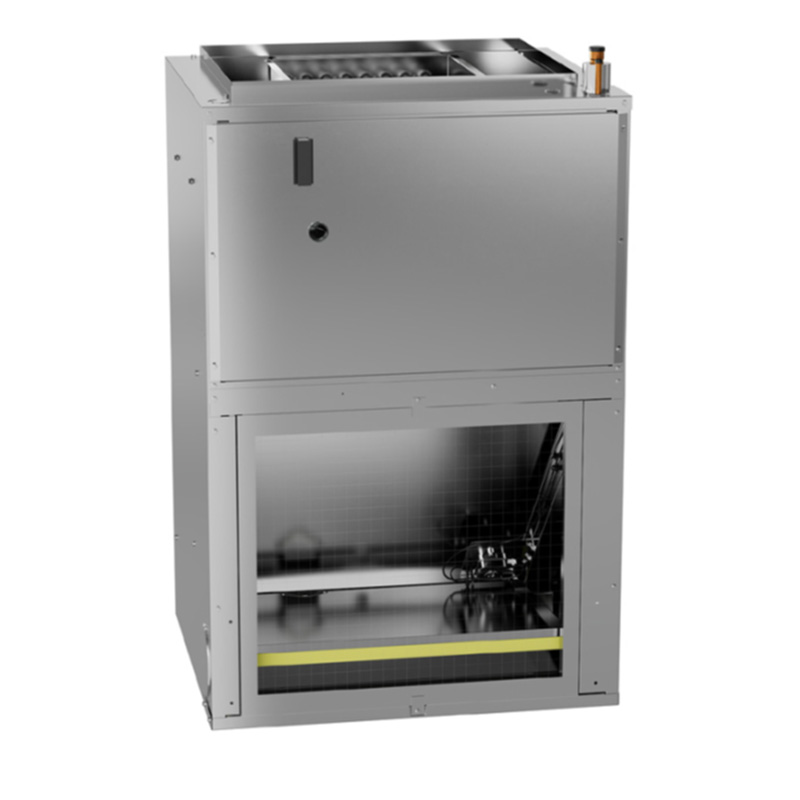
Goodman 1.5 Ton 14.3 SEER2 R32 Air Conditioner Split System With 3kW Heater Built-In Wall-Mounted Air Handler
View on AC Direct see your lowest price →Check current price on AC Direct →
Key features
- 1.5-ton cooling capacity suited for smaller zones, additions, or single rooms
- 14.3 SEER2 efficiency rating meets current federal minimum standards
- R-32 refrigerant with lower global warming potential than outgoing R-410A
- Wall-mounted air handler eliminates the need for attic or closet installation space
- 3 kW electric heater built into the air handler for supplemental or mild-climate heat
- Split-system design compatible with standard line sets and thermostat controls
About this system
The Goodman 1.5-ton 14.3 SEER2 R-32 split system is built around a wall-mounted air handler with a 3 kW electric heater already integrated, making it a compact heating and cooling solution for smaller spaces. A 1.5-ton capacity targets rooms and additions in roughly the 600-to-900-square-foot range, depending on ceiling height, insulation, and climate zone. The wall-mount configuration suits applications where attic or closet space for a traditional air handler is not available, such as sunrooms, converted garages, bonus rooms, or single-zone additions.
At 14.3 SEER2, this system meets the current federal minimum efficiency standard for most U.S. regions without exceeding it. That means lower upfront equipment cost compared to higher-tier units, but also higher operating costs than a 16 or 18 SEER2 alternative over the system’s life. The switch to R-32 refrigerant is a genuine long-term positive: R-32 has a lower global warming potential than the R-410A it replaces and is increasingly available from HVAC supply houses, which matters for future service. The built-in 3 kW heater provides supplemental or primary heat for mild climates or well-insulated small spaces, though it will not substitute for a dedicated heating system in a cold-winter region.
This Goodman system is a competitively priced, practical choice for small-zone cooling and supplemental heat where ductwork is not an option and budget is a priority. Efficiency sits at the entry-level tier, and long-term ownership costs will depend heavily on installation quality and luck with components known to wear in Goodman equipment. Buyers who can tolerate that trade-off and want to minimize upfront spend will find it a workable fit.
Overall score is the average of the five ratings above.
What we like
- Priced roughly 15 to 25 percent below comparable Carrier, Trane, and Lennox single-zone systems
- Wall-mount air handler expands installation options in spaces without duct infrastructure
- R-32 refrigerant is more environmentally responsible and increasingly serviceable
- Integrated 3 kW heater eliminates need for a separate heating appliance in mild climates
- Simple single-stage operation keeps controls and service straightforward for technicians
Trade-offs
- 14.3 SEER2 is the efficiency floor, not a standout rating, meaning higher monthly operating costs than mid- or high-efficiency alternatives
- Dual-run capacitors are the most commonly reported failure point in Goodman equipment, typically requiring a repair in the 300 to 600 dollar range at some point in the system's life
- Evaporator coil leaks and refrigerant loss show up in a meaningful share of owner reports, with early leaks often tied to installation or charge issues
- Compressor lifespan averages 10 to 14 years in documented experience, shorter than the 15 to 20 years commonly seen from premium-brand compressors
What homeowners and pros say about Goodman
Homeowners shopping Goodman on review platforms get a split picture. On ConsumerAffairs, where dissatisfied owners are more likely to post, Goodman sits at roughly 2.5 out of 5, with the recurring complaint being that repair bills climb noticeably after about year 7. The specific failures that come up most often are dual-run capacitors, which are generally a quick and relatively low-cost fix in the 300 to 600 dollar range, and evaporator coil leaks, which are a more involved and costly repair. Google dealer reviews paint a more moderate picture, averaging around 3.8 out of 5 across locations, where affordability is the most commonly cited reason buyers chose Goodman in the first place.
HVAC technicians tend to speak about Goodman practically rather than dismissively. The consensus in the trade is that install quality is the single biggest variable in how long any Goodman system lasts, which puts a lot of weight on choosing the right contractor rather than just the right equipment. Compressor lifespan in documented owner experience averages 10 to 14 years for Goodman, compared to 15 to 20 years for premium brands, and a small but notable share of owners report refrigerant loss in the first year that professionals typically trace back to installation or charge problems rather than factory defects. For this particular wall-mount R-32 system, those same patterns apply, and the R-32 refrigerant transition does not change the underlying reliability picture in either direction.
Sources: ConsumerAffairs Goodman owner reviews, AHRI Directory of Certified Product Performance, U.S. DOE appliance and equipment efficiency standards, Goodman product specification sheets.
What it costs to run
At 14.3 SEER2, cooling this 1.5-ton system for a typical 1200-hour cooling season at the U.S. average electricity rate of $0.17/kWh works out to roughly $257 per year in cooling, about $17 less per year than a minimum-efficiency 13.4 SEER2 unit of the same size. Your real cost depends on your climate and local rate.
Method: (18,000 BTU/hr ÷ 14.3 SEER2) × 1200 hours ÷ 1000 × $0.17/kWh. Rate source: U.S. EIA average; cooling hours: moderate-climate estimate.
How it compares
| Brand | Comparable model | SEER2 | Stage | Price position |
|---|---|---|---|---|
| Goodman | 1.5-Ton 14.3 SEER2 R-32 Wall-Mount Split with 3 kW Heater | 14.3 | Single-stage | Value pick |
| Carrier | Comfort Series (24ACC4) | 14.3 | Single-stage | Typically 15 to 25 percent more than Goodman |
| Trane | XR14 Series | 14.3 | Single-stage | Typically 15 to 25 percent more than Goodman |
| Lennox | Merit ML14XC1 Series | 14.3 | Single-stage | Typically 15 to 25 percent more than Goodman |
Competitor rows are comparable single-stage units at similar efficiency; price is relative position, not a quote.
Questions about this system
Is the built-in 3 kW heater enough to heat my space through winter?
For mild climates or well-insulated smaller rooms, 3 kW of electric resistance heat can cover light heating loads. In regions with sustained freezing temperatures, this heater is better treated as a supplement to a primary heating system rather than a standalone heat source, since 3 kW will struggle to maintain comfortable temperatures on the coldest days.
Why does this system use R-32 instead of R-410A, and does that affect servicing?
R-32 has a lower global warming potential than R-410A, and the HVAC industry is broadly shifting toward it as R-410A is phased down under environmental regulations. Most licensed HVAC technicians can handle R-32 with standard equipment, and supply availability is growing, so routine service and recharges should not be harder to obtain than with R-410A systems.
What are the most common repairs I should budget for over the life of this unit?
Dual-run capacitor failure is the most frequently reported issue in Goodman equipment and typically costs 300 to 600 dollars to repair. Evaporator coil leaks also appear in a notable share of owner reports and can be more costly to address. Keeping a relationship with a reliable technician and scheduling annual maintenance will catch early signs of either problem before they escalate.
Does this system require a licensed installer, or can it be a DIY project?
Refrigerant handling legally requires an EPA Section 608 certification, and improper line set connections or charge errors are the documented cause of early refrigerant leaks in a minority of Goodman installations. Beyond legal requirements, Goodman's own reputation leans heavily on install quality as the single biggest predictor of longevity, so a properly licensed HVAC technician is strongly recommended.
How does Goodman's warranty on this system compare to premium brands?
Goodman typically offers a 10-year parts warranty when registered within a set window after installation, which is competitive on paper with Carrier, Trane, and Lennox offerings at similar tiers. The practical difference is that premium brands have fewer documented component failures within that window, so a comparable warranty covers more risk with Goodman than it does with higher-reliability competitors.
Specifications
| Cooling capacity | 1.5 Ton |
| Efficiency | 14.3 SEER2 |
| Refrigerant | R-32 |