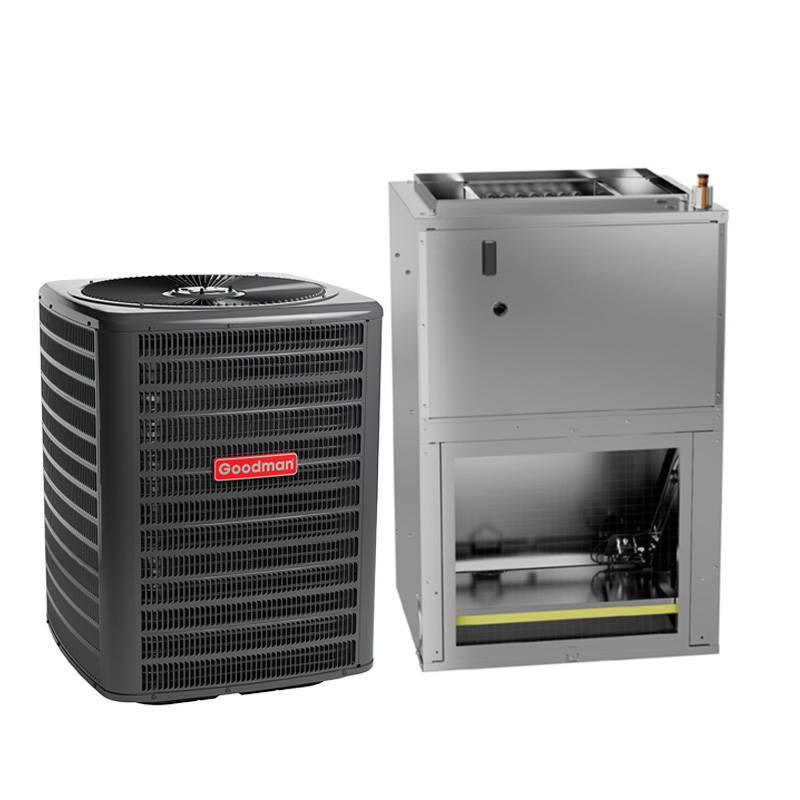
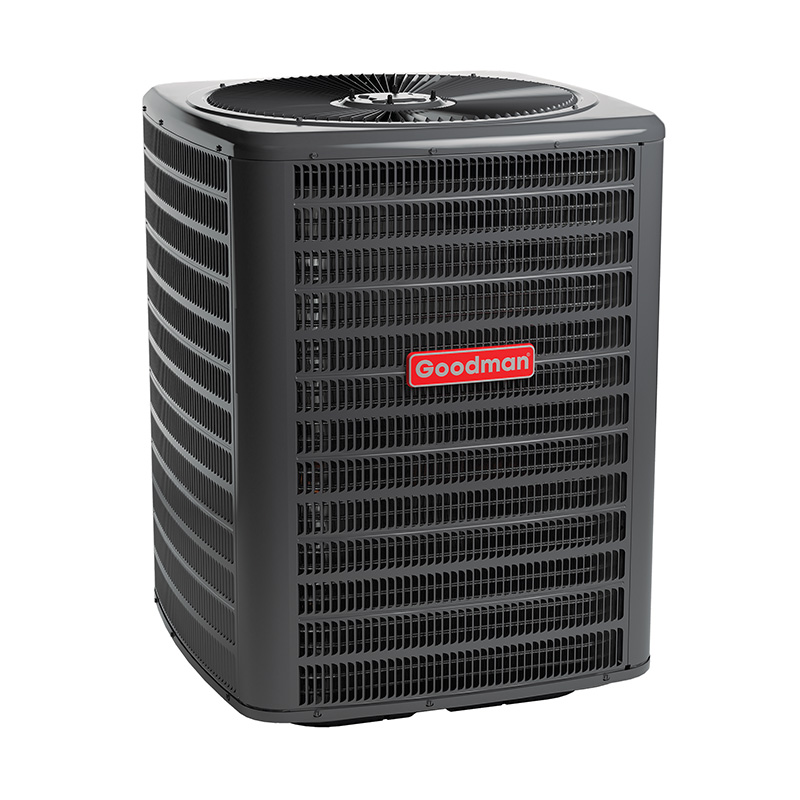
Goodman 1.5 Ton 14.3 SEER2 R32 Air Conditioner Split System With 5kW Heater Built-In Wall-Mounted Air Handler
View on AC Direct see your lowest price →Check current price on AC Direct →
Key features
- 14.3 SEER2 efficiency rating meets 2023 federal minimum standards
- R-32 refrigerant with lower global warming potential than R-410A
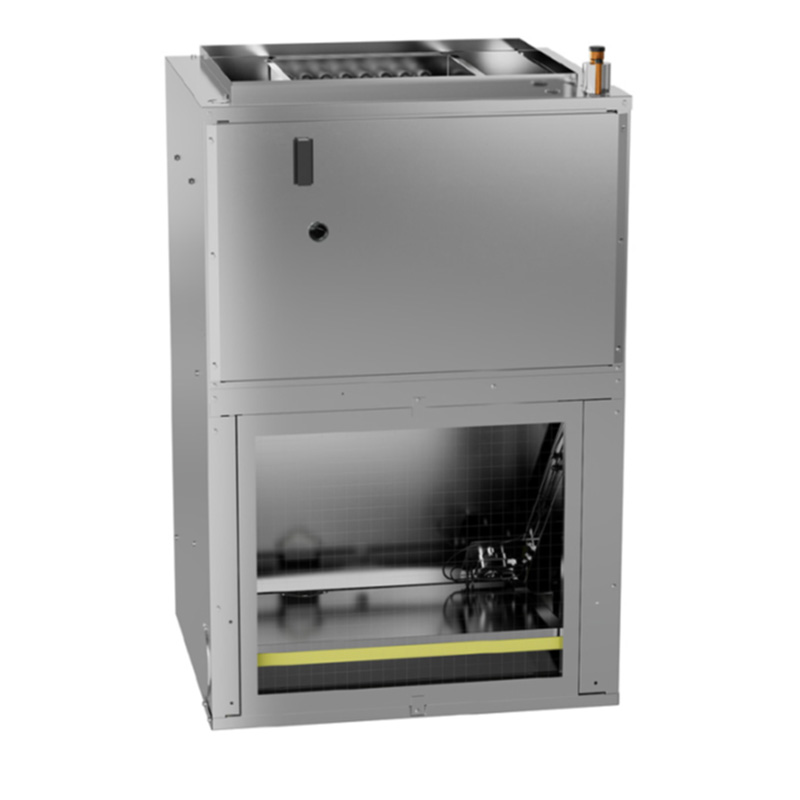
- 5 kW electric resistance heater built into wall-mounted air handler
- Wall-mount air handler suits rooms where floor or ceiling space is limited
- 1.5-ton (roughly 18,000 BTU) capacity sized for approximately 500 to 700 sq ft
- Split-system design requires professional refrigerant line installation and charge
About this system
The Goodman 1.5 Ton 14.3 SEER2 R-32 split system with a built-in 5 kW wall-mounted air handler is a compact, all-in-one cooling and supplemental heating solution sized for spaces in the 500 to 700 square foot range, such as a master bedroom addition, garage conversion, sunroom, or small apartment. The wall-mounted air handler eliminates the need for a separate indoor unit placement on a utility closet floor, making it a practical fit for tight or irregularly shaped spaces where a conventional ducted or floor-standing unit would be awkward to install.
At 14.3 SEER2, this system sits right at the federal minimum efficiency threshold that took effect in 2023, which means it is not an efficiency standout but meets current legal requirements for most U.S. climate zones. R-32 refrigerant is a step forward from older R-410A systems: it has a lower global warming potential and slightly better heat-transfer characteristics. The integrated 5 kW electric resistance heater handles shoulder-season chill without a separate heating appliance, though it is not a substitute for a heat pump in climates with sustained cold winters. Buyers who prioritize upfront cost over long-term energy savings will find this configuration honest value; those expecting premium efficiency numbers should look at higher SEER2 tiers.
This Goodman system delivers a solid entry-level cooling and supplemental heating solution at a price point noticeably below comparable Carrier, Trane, and Lennox equipment. The 14.3 SEER2 rating is adequate but not impressive, and long-term ownership costs depend heavily on install quality and luck with components like the dual-run capacitor and evaporator coil. It suits budget-conscious buyers who want a functional, code-compliant system today and accept that repair costs may start climbing after year seven.
Overall score is the average of the five ratings above.
What we like
- Priced 15 to 25 percent below comparable Carrier, Trane, and Lennox equipment
- R-32 refrigerant is more environmentally responsible than legacy R-410A
- Built-in 5 kW heater adds shoulder-season comfort without a separate appliance
- Wall-mount air handler format suits additions and conversions with limited floor space
- Meets current 2023 federal minimum SEER2 standards across all U.S. climate zones
Trade-offs
- 14.3 SEER2 is the efficiency floor, not a selling point, and will cost more to run than higher-SEER2 alternatives over time
- Compressor lifespan averages 10 to 14 years versus 15 to 20 years for premium brands
- Dual-run capacitor failures and evaporator coil leaks are documented recurring issues
- A minority of owners report refrigerant leaks in the first year, typically tied to install or initial charge quality
What homeowners and pros say about Goodman
Homeowners who chose Goodman equipment tend to split into two camps that reflect the brand’s real track record. Those who had a skilled installer do clean, thorough work often report years of uneventful operation and cite the lower upfront cost as the main reason they would buy again. Goodman’s Google dealer reviews average around 3.8 out of 5 across hundreds of reviews per location, and affordability is the most consistent theme in the positive feedback. For a wall-mount split like this one, where proper line-set work and refrigerant charge are especially critical, that praise almost always comes with the implicit caveat that the installer mattered as much as the equipment.
The less favorable picture comes through on ConsumerAffairs, where Goodman scores around 2.5 out of 5 on a platform that, by its nature, draws more complaint-driven reviews. The recurring pattern there is repair costs that climb noticeably after roughly year seven. The documented failure modes on Goodman equipment are specific: dual-run capacitors go out and typically cost 300 to 600 dollars to fix, evaporator coil leaks appear in a meaningful share of long-term owner accounts, compressors tend to reach the end of their useful life at 10 to 14 years rather than the 15 to 20 years more common on premium brands, and a minority of buyers report refrigerant leaks within the first year that trace back to installation or initial charge issues. HVAC technicians who work on both Goodman and premium brands generally describe Goodman as a serviceable product that rewards a careful install and punishes a hasty one more than the competition does.
Sources: ConsumerAffairs Goodman owner reviews, AHRI Directory of Certified Product Performance, U.S. DOE appliance and equipment efficiency standards, Goodman product specification sheets.
What it costs to run
At 14.3 SEER2, cooling this 1.5-ton system for a typical 1200-hour cooling season at the U.S. average electricity rate of $0.17/kWh works out to roughly $257 per year in cooling, about $17 less per year than a minimum-efficiency 13.4 SEER2 unit of the same size. Your real cost depends on your climate and local rate.
Method: (18,000 BTU/hr ÷ 14.3 SEER2) × 1200 hours ÷ 1000 × $0.17/kWh. Rate source: U.S. EIA average; cooling hours: moderate-climate estimate.
How it compares
| Brand | Comparable model | SEER2 | Stage | Price position |
|---|---|---|---|---|
| Goodman | 1.5 Ton 14.3 SEER2 R-32 Wall-Mount Split with 5kW Heater | 14.3 | Single-stage | Value pick |
| Carrier | Comfort Series (24ACC6) | 14.3 | Single-stage | Typically 15 to 25 percent more than Goodman |
| Trane | XR14 Series | 14.3–15 | Single-stage | Typically 15 to 25 percent more than Goodman |
| Lennox | Merit Series (ML14XC1) | 14.3 | Single-stage | Typically 15 to 25 percent more than Goodman |
Competitor rows are comparable single-stage units at similar efficiency; price is relative position, not a quote.
Questions about this system
Will the 5 kW heater be enough to heat my room in winter, or do I need a separate heating system?
The 5 kW electric resistance heater is best described as supplemental heating for mild shoulder-season temperatures. In climates with sustained cold winters, it will struggle to maintain comfortable temperatures on its own and will run up your electric bill if used as a primary heat source. For year-round heating in cold climates, a heat pump system would be a more efficient choice.
Can I install this wall-mounted air handler myself to save money?
The air handler mounting itself is straightforward, but the refrigerant line set must be brazed, pressure-tested, evacuated, and charged by an EPA 608-certified technician. Skipping professional installation is one of the documented causes of first-year refrigerant leaks with Goodman equipment, and it will void your warranty. Budget for a licensed HVAC installer.
What is the most common repair I should expect, and what does it cost?
Dual-run capacitor failure is the most frequently reported issue on Goodman systems and typically runs between 300 and 600 dollars for a service call and part. Evaporator coil leaks are a secondary concern that shows up in a meaningful share of long-term owner reviews and can cost significantly more to address. Setting aside a small service fund after year five is a reasonable precaution.
Is R-32 refrigerant harder or more expensive to service than the R-410A I am used to?
R-32 is becoming more common and most licensed technicians can handle it, but it is still less universally stocked than R-410A. It is classified as mildly flammable (A2L), so technicians need specific training and equipment. In most metro areas this is not a problem, but in rural markets you may want to confirm your local HVAC service provider is R-32 certified before purchasing.
How does the 14.3 SEER2 rating translate to my actual electric bill?
SEER2 is a seasonal average, not a guaranteed monthly number, and real-world costs vary with local electricity rates, climate, and how often you run the system. What the 14.3 SEER2 rating tells you is that this system is at the low end of current efficiency standards, so a 16 or 18 SEER2 unit would cost less to operate each month. For a 1.5-ton unit running in a hot climate, the annual difference between 14.3 and 18 SEER2 can add up to a meaningful figure over a decade.
Specifications
| Cooling capacity | 1.5 Ton |
| Efficiency | 14.3 SEER2 |
| Refrigerant | R-32 |