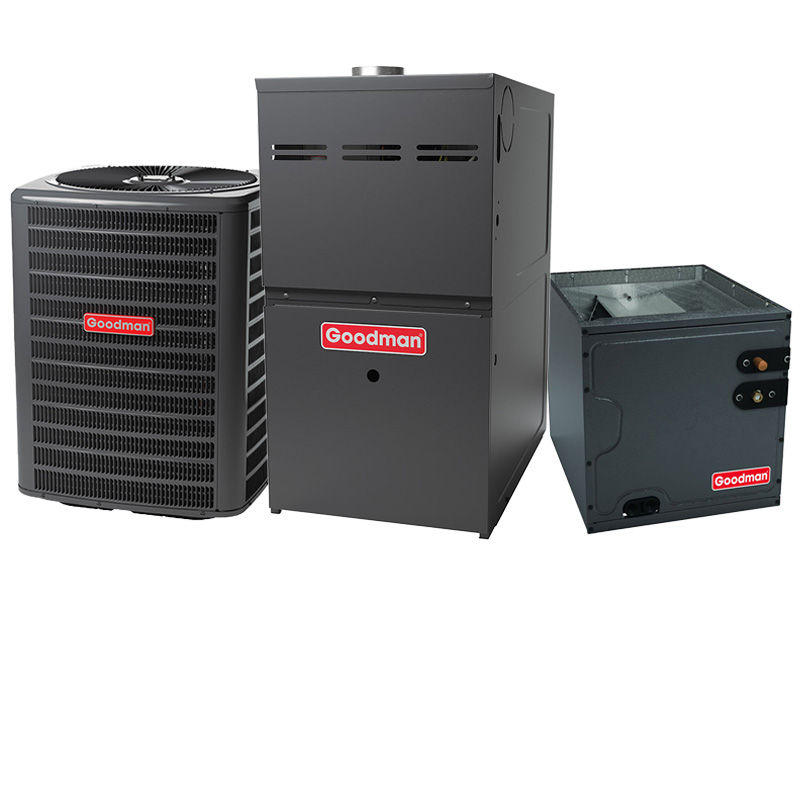
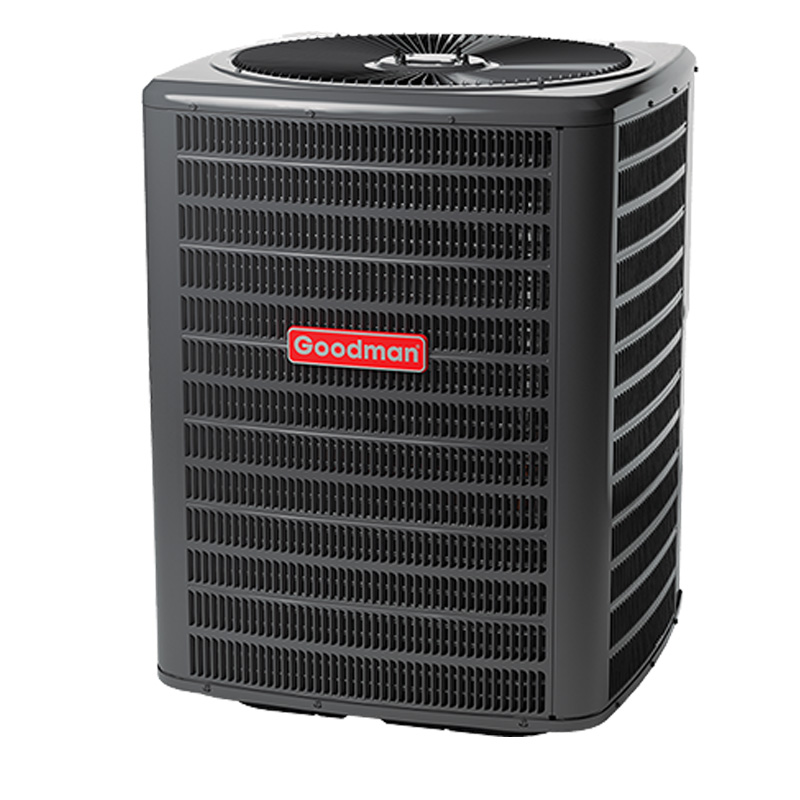
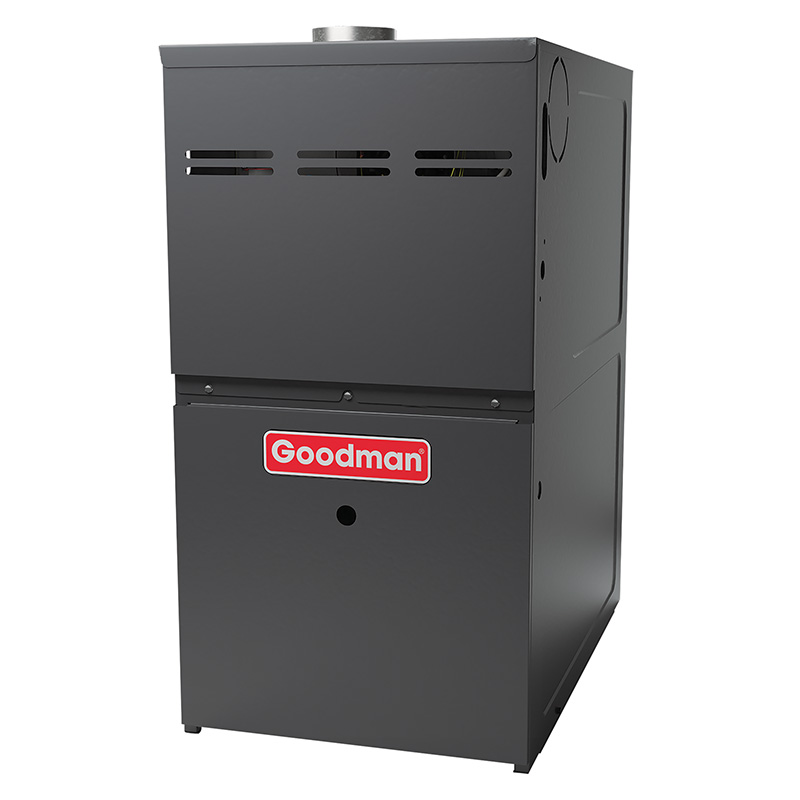
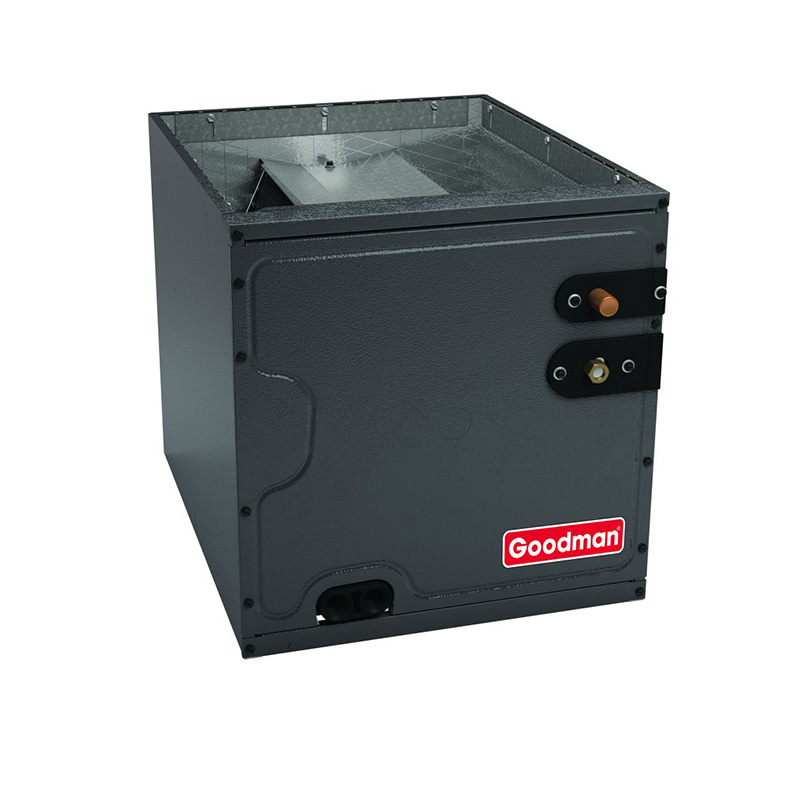
Goodman 1.5 Ton 14.5 SEER2 40000 BTU 80% AFUE Multi-Speed ECM Gas Furnace System – Upflow | R32
View on AC Direct see your lowest price →Check current price on AC Direct →
Key features
- 14.5 SEER2 cooling efficiency meets 2023 federal minimum standards for most U.S. regions
- 80% AFUE gas furnace: 80 cents of every fuel dollar converted to heat
- 1.5-ton / 40,000 BTU capacity suited to smaller conditioned spaces
- Multi-speed ECM blower motor improves humidity control and reduces noise at part load
- R-32 refrigerant: lower global-warming potential than R-410A, now the industry direction
- Upflow configuration for standard basement, closet, or slab utility-room installs
About this system
The Goodman 1.5-ton, 14.5 SEER2, 40,000 BTU upflow system is sized for smaller homes and conditioned spaces typically in the 600-to-900 square foot range, depending on local climate, insulation, and ceiling height. The 1.5-ton cooling capacity sits at the low end of residential systems, making it well suited to condos, small ranch homes, additions, or zone systems where the load calculation genuinely calls for it. The furnace side runs at 80% AFUE, meaning 80 cents of every dollar spent on gas goes to usable heat, which meets the federal minimum for most northern regions and is a reasonable baseline for mild-to-moderate heating climates.
The system uses R-32 refrigerant, a lower-global-warming-potential refrigerant that is becoming the industry standard as manufacturers phase out R-410A. The multi-speed ECM blower motor is a meaningful upgrade over a single-speed PSC motor: it ramps airflow up and down to match demand, which helps with humidity control, quieter part-load operation, and modest energy savings on the air-handler side. The upflow configuration means the air enters from the bottom and exits the top, which is standard for basements, closets with return air below the unit, or utility rooms on a slab. Buyers should confirm their duct geometry matches this configuration before ordering.
This Goodman system delivers code-compliant efficiency and a useful ECM blower at a price point that undercuts comparable Carrier, Trane, and Lennox equipment by 15 to 25 percent. The trade-off is a brand track record that shows higher rates of capacitor failures, evaporator coil leaks, and shorter average compressor lifespan than premium competitors. It is a reasonable buy for cost-conscious owners who budget for maintenance and choose an installer carefully.
Overall score is the average of the five ratings above.
What we like
- Lower upfront cost versus comparable Carrier, Trane, and Lennox systems in the same efficiency tier
- Multi-speed ECM motor improves comfort and humidity management compared to single-speed alternatives
- R-32 refrigerant is forward-compatible with the industry's ongoing transition away from R-410A
- 80% AFUE is adequate for mild and moderate heating climates and keeps fuel costs predictable
- 14.5 SEER2 satisfies current federal minimums and avoids the premium pricing of higher-efficiency tiers for buyers who do not need them
Trade-offs
- Dual-run capacitors are the most commonly reported failure, typically around year 5 to 8, adding a $300-$600 service call
- Evaporator coil leaks appear in a notable share of owner reports and can be expensive to address out of warranty
- Average compressor lifespan of 10 to 14 years runs shorter than the 15 to 20 years documented on premium brands
- A minority of first-year owners report refrigerant leaks, usually tied to install or charge quality, underscoring how heavily outcomes depend on the installing contractor
What homeowners and pros say about Goodman
Homeowners who buy Goodman equipment most often point to price as the deciding factor, and that holds for this 1.5-ton upflow system. Across dealer-level Google reviews, which average around 3.8 out of 5, the word that comes up repeatedly is affordability. The picture on ConsumerAffairs is rougher: the brand sits at roughly 2.5 out of 5, and while that platform skews toward owners motivated to file a complaint, the recurring theme is real: repair costs that start climbing after about year 7, often tied to the dual-run capacitors that are Goodman’s most commonly documented failure point. A capacitor swap typically runs $300 to $600 and is not a catastrophic repair, but owners who budget only for the purchase price sometimes find the service bills come as a surprise.
HVAC technicians tend to have a more nuanced view of Goodman than the brand’s lowest review scores suggest. Many installers note that the equipment performs reasonably well when sized correctly and commissioned carefully, and that the ECM blower motor on this system is a genuine comfort upgrade over a basic single-speed unit. The areas where pros flag concern are evaporator coil leaks, which appear in enough owner reports to warrant attention, and compressor longevity that tends to top out around 10 to 14 years on average rather than the 15 to 20 years more commonly seen on Trane, Lennox, or Carrier compressors. A small share of first-year refrigerant leak reports also surface, and experienced installers typically attribute those to workmanship rather than the equipment itself, which is another reason technician skill matters as much as the brand on the nameplate.
Sources: ConsumerAffairs Goodman owner reviews, AHRI Directory of Certified Product Performance, U.S. DOE appliance and equipment efficiency standards, Goodman product specification sheets.
What it costs to run
At 14.5 SEER2, cooling this 1.5-ton system for a typical 1200-hour cooling season at the U.S. average electricity rate of $0.17/kWh works out to roughly $253 per year in cooling, about $21 less per year than a minimum-efficiency 13.4 SEER2 unit of the same size. Your real cost depends on your climate and local rate.
Method: (18,000 BTU/hr ÷ 14.5 SEER2) × 1200 hours ÷ 1000 × $0.17/kWh. Rate source: U.S. EIA average; cooling hours: moderate-climate estimate.
How it compares
| Brand | Comparable model | SEER2 | Stage | Price position |
|---|---|---|---|---|
| Goodman | 1.5T 14.5 SEER2 / 40K BTU 80% AFUE ECM Upflow R-32 | 14.5 | Multi-speed | Value pick |
| Carrier | Comfort Series (24ACC / 58SB pairing) | 14.5-15 | Single-stage | Typically 15 to 25 percent more than this Goodman system |
| Trane | XR14 / S8X1 pairing | 14.5-15 | Single-stage | Typically 15 to 25 percent more than this Goodman system |
| Lennox | ML14XC1 / ML180 pairing | 14.5 | Single-stage | Typically 15 to 25 percent more than this Goodman system |
Competitor rows are comparable single-stage units at similar efficiency; price is relative position, not a quote.
Questions about this system
Is 1.5 tons actually enough cooling capacity for my house?
A 1.5-ton system is generally appropriate for roughly 600 to 900 square feet in a well-insulated home, though climate zone, ceiling height, window area, and local heat gain all affect the right size. An oversized system will short-cycle and leave humidity high; an undersized one will run constantly. Always have a contractor perform a Manual J load calculation before you order.
What does 14.5 SEER2 mean in practical terms, and is it worth upgrading to a higher rating?
SEER2 is the seasonal energy efficiency ratio under updated test conditions; 14.5 is the current federal minimum for most of the country. Moving from 14.5 to 16 or 18 SEER2 can reduce cooling energy use by roughly 10 to 20 percent, but on a 1.5-ton system running in a small space, the dollar savings per year are modest. For most buyers in this size range, the payback period on a higher-efficiency unit is long enough that 14.5 SEER2 is the practical choice.
What is R-32 refrigerant and does it change how this system is serviced?
R-32 is a single-component refrigerant with a lower global-warming potential than R-410A, and it is mildly flammable (A2L classification), which means technicians need specific training and tools to work with it safely. Most professional HVAC contractors are already being certified on A2L refrigerants as the industry transitions, but confirm your service provider is equipped before booking maintenance.
How reliable is Goodman, and what are the most likely repair calls over the life of this system?
Goodman carries a ConsumerAffairs score of around 2.5 out of 5, a channel that skews toward complaints, with recurring mentions of repair costs after year 7. Dealer-level Google reviews average around 3.8 out of 5. The most documented failure points are dual-run capacitors (a relatively inexpensive fix in the $300 to $600 range), evaporator coil leaks, and compressor longevity that averages 10 to 14 years versus 15 to 20 for premium brands. A small percentage of owners also report refrigerant leaks in the first year, typically an installation or initial charge issue.
Does this system work in an upflow-only configuration, and what if my closet or utility room is set up differently?
Yes, this unit is designed specifically for upflow installations where return air enters at the bottom and conditioned air exits at the top. If your duct layout requires downflow or horizontal airflow, you would need a different model. Confirm your mechanical room layout and duct entry points with your installer before purchasing, because returning or exchanging a system of this size is costly.
Specifications
| Cooling capacity | 1.5 Ton |
| Efficiency | 14.5 SEER2 |
| Furnace output | 40000 BTU |
| Furnace efficiency | 80% AFUE |
| Configuration | Upflow |
| Refrigerant | R-32 |