Goodman 1.5 Ton 14.5 SEER2 40000 BTU 80% AFUE Two Stage Multi-Speed ECM Gas Furnace System – Horizontal | R32
View on AC Direct see your lowest price →Check current price on AC Direct →
Key features
- 1.5-ton cooling capacity with 14.5 SEER2 efficiency rating
- 40,000 BTU two-stage ECM gas furnace at 80% AFUE
- Horizontal configuration designed for attic or crawlspace installs
- R-32 refrigerant with lower global warming potential than R-410A
- Multi-speed ECM blower motor for reduced electricity use and even airflow
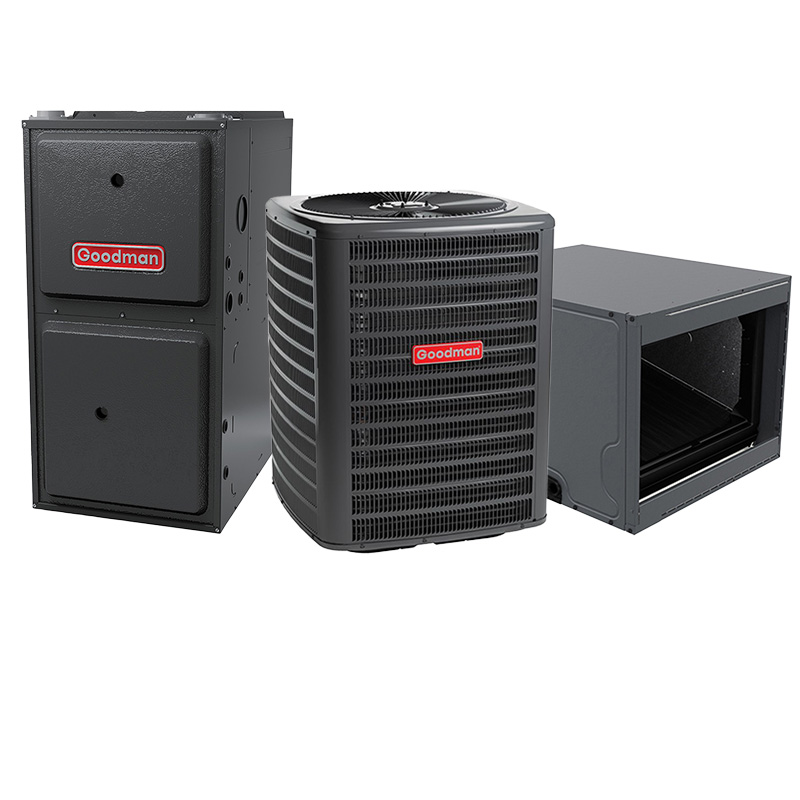
- Factory-matched system shipped as a coordinated split-system package
About this system
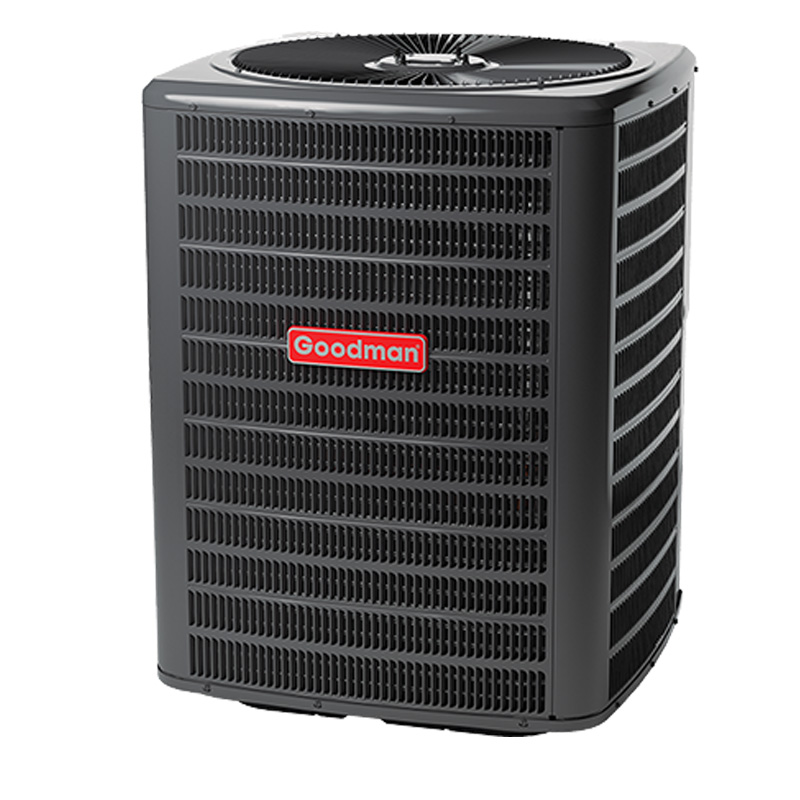
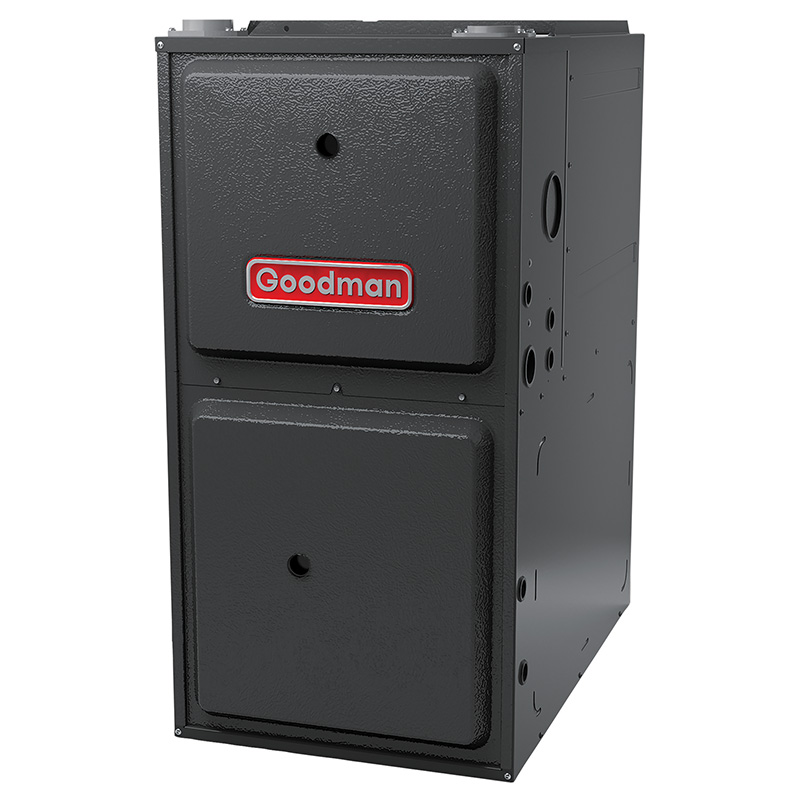
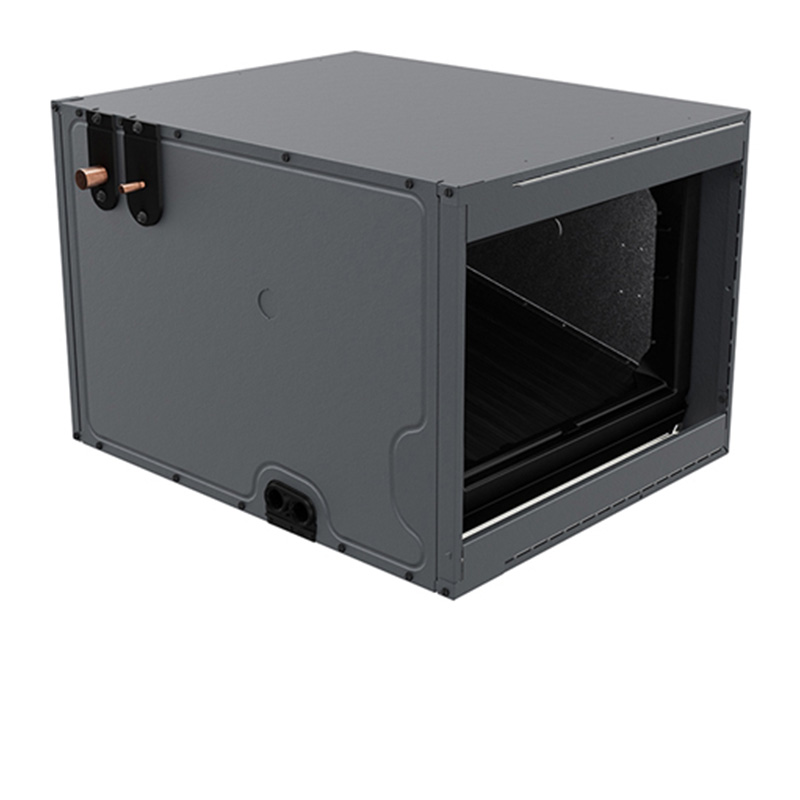
The Goodman GLXS4BA1810 is a 1.5-ton, 14.5 SEER2 split system paired with a 40,000 BTU 80% AFUE two-stage, multi-speed ECM gas furnace, configured for horizontal installation. That configuration makes it a practical choice for attic-mount or crawlspace setups where a vertical cabinet simply will not fit. At 1.5 tons, this system is sized for smaller homes and conditioned spaces roughly in the 600 to 900 square foot range, depending on local climate, insulation quality, and window load.
The two-stage furnace and variable-speed ECM blower motor are the standout specs here. Two-stage heating means the furnace runs on a lower fire most of the time, cycling less aggressively and delivering more even temperatures than a single-stage unit. The ECM motor uses significantly less electricity than a standard PSC blower and helps maintain consistent airflow across both heating and cooling modes. R-32 refrigerant, used in the cooling side, carries a lower global warming potential than the R-410A it replaces and is increasingly common in new residential equipment. The 14.5 SEER2 rating clears the federal minimum for most U.S. regions but sits at the lower end of the efficiency spectrum, so operating costs will be higher than a 16 or 17 SEER2 alternative over the long haul.
This system suits homeowners replacing aging equipment in a small home or addition who want a horizontal-install-capable package without paying a premium-brand price. The trade-off is that Goodman’s long-term reliability record is more variable than Carrier, Trane, or Lennox, and realizing the full value of this equipment depends heavily on the quality of the installing contractor.
The GLXS4BA1810 delivers a capable two-stage, ECM-equipped system at a price point meaningfully below comparable Carrier or Trane packages, making it a reasonable budget-conscious option for small spaces needing horizontal installation. Its 14.5 SEER2 efficiency just clears federal minimums and will cost more to operate annually than higher-efficiency alternatives. Long-term ownership costs hinge significantly on installation quality and the luck of the draw with component longevity.
Overall score is the average of the five ratings above.
What we like
- Two-stage furnace and ECM blower provide better comfort and more even temperatures than single-stage equipment
- Horizontal configuration opens up attic and crawlspace installation scenarios that most vertical systems cannot accommodate
- R-32 refrigerant is a forward-looking choice with lower environmental impact than R-410A
- Priced 15 to 25 percent below comparable Carrier, Trane, and Lennox systems, lowering the upfront barrier
- Factory-matched components reduce compatibility guesswork and can simplify warranty administration
Trade-offs
- 80% AFUE furnace efficiency is the federal minimum threshold and will result in higher heating bills compared to 90%+ condensing alternatives
- 14.5 SEER2 sits at the low end of the current efficiency range, so cooling operating costs are higher than mid- or high-efficiency options
- Dual-run capacitors and evaporator coil leaks are documented recurring failure points that can add repair costs, particularly after year 7
- Compressor lifespan averages 10 to 14 years versus 15 to 20 years for premium brands, which affects total cost of ownership projections
What homeowners and pros say about Goodman
Homeowners who have purchased Goodman equipment tend to land in two camps: those who got a solid installation and years of trouble-free service, and those who encountered repair bills sooner than expected. On ConsumerAffairs, Goodman scores around 2.5 out of 5, but that channel skews heavily toward owners with complaints, and the recurring theme is repair costs climbing after roughly year 7, which aligns with the brand’s documented weaker points: dual-run capacitor failures, evaporator coil leaks, and compressor longevity averaging 10 to 14 years rather than the 15 to 20 years more common with Carrier, Trane, or Lennox. Google dealer reviews tell a more balanced story, averaging around 3.8 out of 5, where the most consistent praise is the lower upfront price relative to premium brands.
Among HVAC installers, Goodman has a reputation as workable equipment that rewards a careful installation. Technicians frequently note that many of the problems owners attribute to the brand trace back to improper refrigerant charge, duct sizing issues, or poor electrical connections at startup, all of which are installer variables rather than factory defects. The two-stage ECM configuration in this system is genuinely a step up from Goodman’s entry-level single-stage offerings and brings real comfort benefits when installed correctly. The honest takeaway is that the savings on day one are real, but so is the moderately higher probability of a mid-life repair. Buyers who choose an experienced, well-reviewed local Goodman dealer and keep up with annual maintenance tend to have significantly better outcomes than those who go with the lowest-bid installer.
Sources: ConsumerAffairs Goodman owner reviews, AHRI Directory of Certified Product Performance, U.S. DOE appliance and equipment efficiency standards, Goodman product specification sheets.
What it costs to run
At 14.5 SEER2, cooling this 1.5-ton system for a typical 1200-hour cooling season at the U.S. average electricity rate of $0.17/kWh works out to roughly $253 per year in cooling, about $21 less per year than a minimum-efficiency 13.4 SEER2 unit of the same size. Your real cost depends on your climate and local rate.
Method: (18,000 BTU/hr ÷ 14.5 SEER2) × 1200 hours ÷ 1000 × $0.17/kWh. Rate source: U.S. EIA average; cooling hours: moderate-climate estimate.
How it compares
| Brand | Comparable model | SEER2 | Stage | Price position |
|---|---|---|---|---|
| Goodman | GLXS4BA1810 | 14.5 | two-stage | Value pick |
| Carrier | Performance 14 (24ACC4) | 14.3 | single-stage | 15 to 25 percent higher than Goodman |
| Trane | XR14s | 14.5 | single-stage | 15 to 25 percent higher than Goodman |
| Lennox | Merit ML14XC1 | 14.3 | single-stage | 20 to 30 percent higher than Goodman |
Competitor rows are comparable single-stage units at similar efficiency; price is relative position, not a quote.
Questions about this system
Why does this system use a horizontal configuration, and can it be installed vertically?
The GLXS4BA1810 furnace cabinet is engineered specifically for horizontal airflow, which suits attic trusses, crawlspaces, and tight mechanical rooms where a vertical upflow or downflow cabinet will not fit. Installing it in a non-horizontal orientation is not supported and would void the warranty, so confirm your installation space before purchasing.
Is 80% AFUE good enough, or should I look at a 96% condensing furnace instead?
An 80% AFUE furnace keeps installation simpler because it vents with standard metal flue pipe rather than PVC condensate lines, which matters in some existing homes. However, 20 cents of every dollar of gas is lost as exhaust, so in colder climates with high heating loads, the annual operating cost difference versus a 96% unit adds up meaningfully over 10 or more years. If your heating season is long or gas prices in your area are high, the higher-efficiency option often pays back the price gap within 5 to 8 years.
What is the most common repair this system will need, and how much does it cost?
Based on documented owner experience with Goodman equipment, dual-run capacitors are the most frequently reported failure, typically showing up as a system that will not start or struggles to start. This is generally a straightforward repair in the $300 to $600 range including labor. Evaporator coil leaks are a secondary concern and carry a higher repair cost, often exceeding $1,000 depending on refrigerant charges and labor.
Does the R-32 refrigerant require a specially certified technician to service?
Yes. R-32 is classified as a mildly flammable (A2L) refrigerant, and the EPA requires technicians to be certified to handle it under Section 608 rules updated for A2L refrigerants. Most licensed HVAC technicians in newer markets are already trained, but it is worth confirming with your service contractor before scheduling work, particularly in areas where R-32 equipment is still new.
How does Goodman's warranty compare to Carrier or Trane on this type of system?
Goodman typically offers a 10-year parts limited warranty on registered equipment, which is competitive on paper with Carrier and Trane's standard residential coverage at the same tier. The practical difference often comes down to what the dealer network will honor and how responsive the local distributor is when a claim arises; Goodman's dealer support has received mixed feedback compared to premium brands, so choosing an established local dealer matters as much as the written warranty terms.
Specifications
| Cooling capacity | 1.5 Ton |
| Efficiency | 14.5 SEER2 |
| Furnace output | 40000 BTU |
| Furnace efficiency | 80% AFUE |
| Configuration | Horizontal |
| Refrigerant | R-32 |
| Model | GLXS4BA1810 |