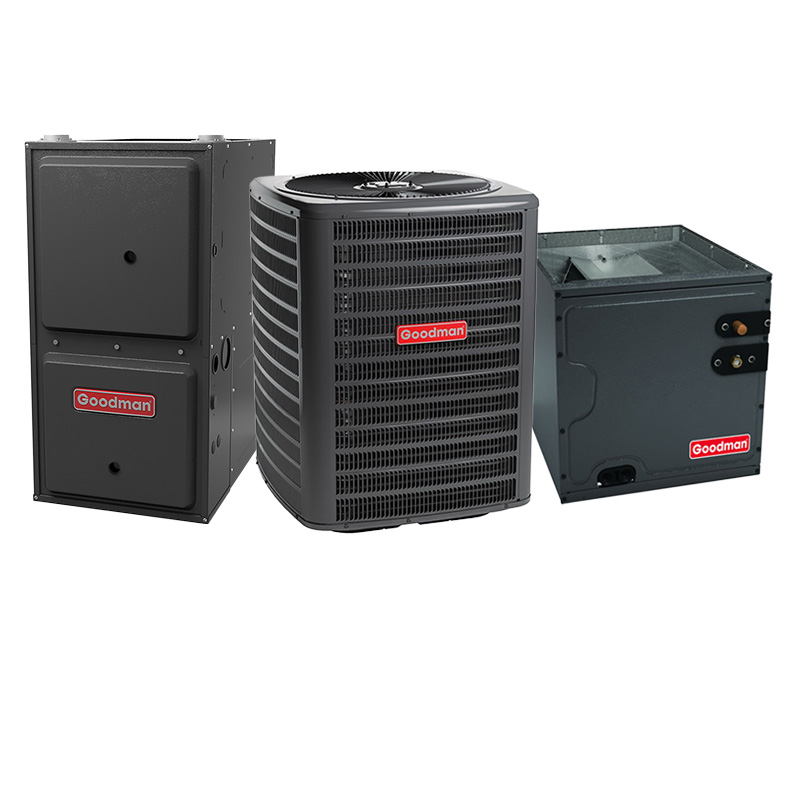
Goodman 1.5 Ton 14.5 SEER2 60000 BTU 80% AFUE Multi-Speed ECM Gas Furnace System – Downflow | R32
View on AC Direct see your lowest price →Check current price on AC Direct →
Key features
- 1.5-ton cooling capacity with 14.5 SEER2 efficiency rating
- 60,000 BTU 80% AFUE gas furnace for baseline heating efficiency
- Multi-speed ECM blower motor for quieter, more consistent airflow
- Downflow configuration for installations above basement or underfloor ductwork
- R-32 refrigerant charge for current EPA compliance and lower GWP
- Priced 15 to 25 percent below comparable Trane, Lennox, and Carrier systems
About this system
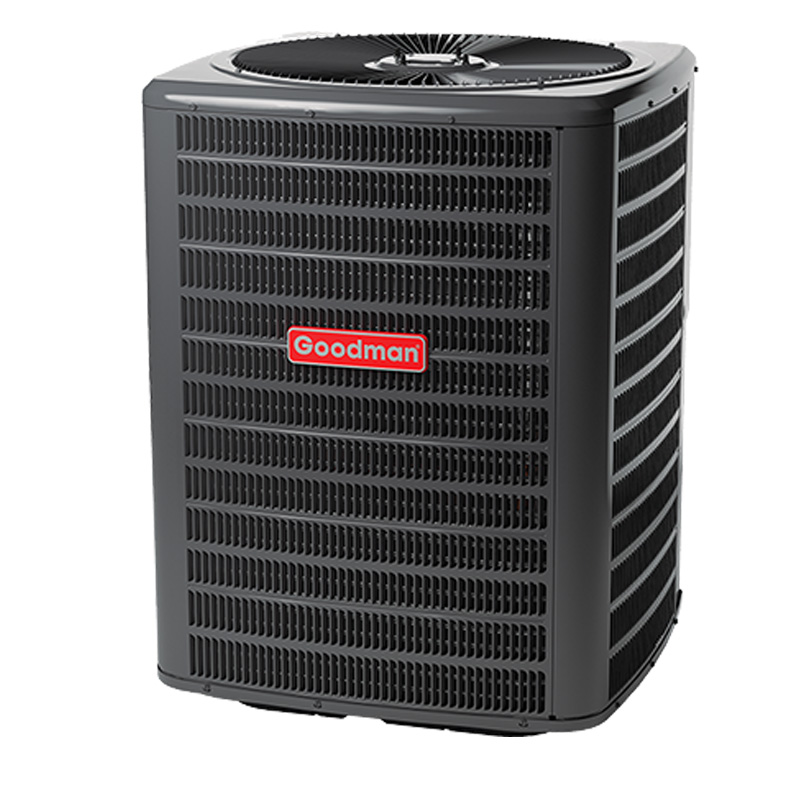
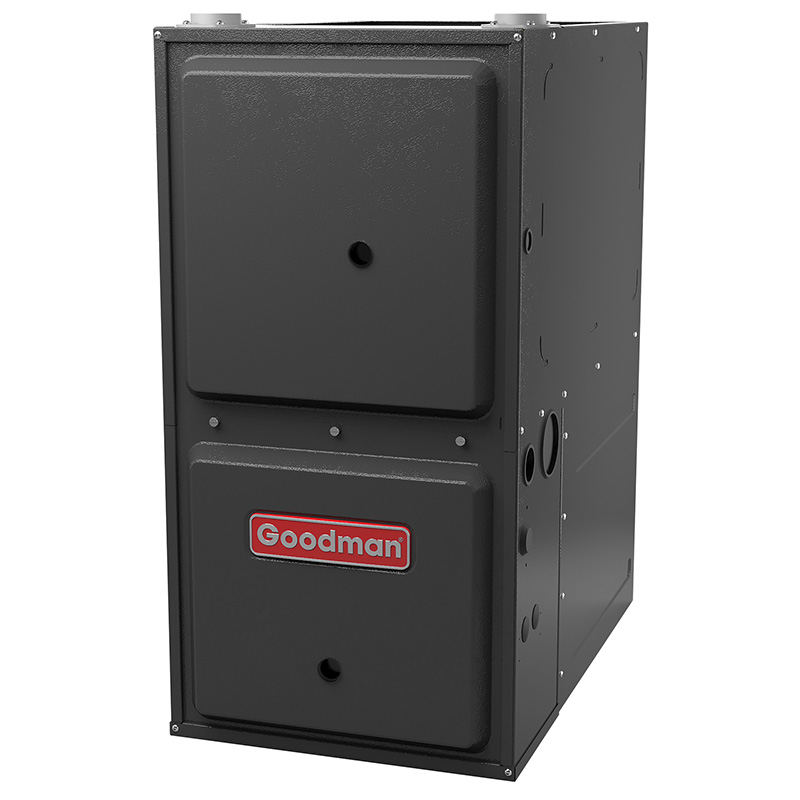
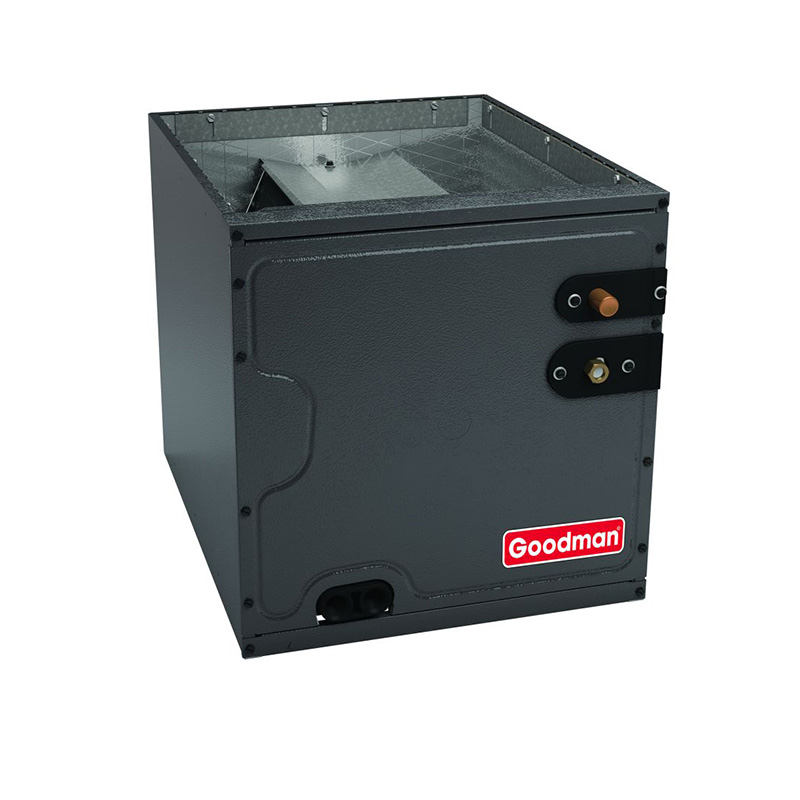
This Goodman bundle pairs a 1.5-ton, 14.5 SEER2 cooling system with a 60,000 BTU, 80% AFUE multi-speed ECM gas furnace in a downflow configuration, meaning warm air exits through the bottom of the air handler and travels down into the duct system below. That setup is common in homes where the furnace sits on the main floor above a basement or a slab with underfloor ducts. The R-32 refrigerant charge is a meaningful detail: R-32 has a lower global warming potential than the outgoing R-410A and is increasingly standard under newer EPA regulations, so this system is positioned for the current compliance landscape.
At 1.5 tons and 60,000 BTU, this bundle is sized for smaller homes, typically in the 600 to 900 square foot range depending on climate, insulation, and window area. The multi-speed ECM motor on the furnace is a real comfort upgrade over single-speed units: it ramps air delivery up or down to match demand, which reduces temperature swings, runs quieter at partial load, and costs less to operate than a standard PSC motor. The 80% AFUE furnace is a baseline-efficiency unit, meaning one dollar in five of the gas you burn exits as exhaust. Homes in cold climates should weigh whether a 95% or 96% AFUE upgrade pencils out over the system’s life, though in mild climates the payback on the premium can be very long.
Goodman prices this category of equipment 15 to 25 percent below comparable Trane, Lennox, and Carrier bundles, which makes it attractive for landlords, budget-conscious homeowners, and smaller replacement jobs where long-term reliability is less critical than upfront cost. The trade-off is that Goodman’s documented compressor lifespan and owner satisfaction scores trail the premium tier, and the system’s real-world longevity depends heavily on the quality of the installation.
This Goodman bundle is a straightforward, code-compliant system that delivers honest baseline performance at a price most premium brands cannot match in this size class. The ECM motor and R-32 refrigerant are genuine advantages, but the 80% AFUE furnace and Goodman's documented reliability history mean buyers are trading long-term peace of mind for upfront savings. It is a reasonable choice when budget is the primary driver and a qualified installer is in the picture.
Overall score is the average of the five ratings above.
What we like
- Priced 15 to 25 percent below Trane, Lennox, and Carrier equivalents
- Multi-speed ECM blower reduces temperature swings and runs quieter at partial load
- R-32 refrigerant aligns with current and near-future EPA regulations
- 14.5 SEER2 meets or exceeds current federal minimums with a modest efficiency margin
- Downflow design fits a common installation scenario without requiring field conversion
Trade-offs
- 80% AFUE means 20 cents of every gas dollar is lost as exhaust, a real cost in cold climates
- Dual-run capacitor failures and evaporator coil leaks are documented recurring issues
- Compressor lifespan averages 10 to 14 years versus 15 to 20 years for premium brands
- A minority of owners report refrigerant leaks within the first year, typically tied to install or charge problems
What homeowners and pros say about Goodman
Homeowners who choose Goodman equipment often point to the price gap as the deciding factor, and dealer Google reviews averaging around 3.8 out of 5 reflect a base of customers who got solid results at a price that fit their budget. The praise is almost always about affordability and the installer’s work rather than the equipment itself standing out. ConsumerAffairs tells a different story, with Goodman sitting at roughly 2.5 out of 5 on that platform, but that channel skews heavily toward owners who had problems and wanted somewhere to vent, so the gap between those two scores is partly a sampling issue rather than a flat contradiction.
HVAC technicians who work on Goodman equipment regularly flag dual-run capacitor failures as the most routine service call, typically showing up after the first several years and usually resolved for 300 to 600 dollars. More serious are evaporator coil leaks, which appear in a meaningful share of owner accounts and can mean a costlier repair or refrigerant loss. Compressor longevity is a real concern: Goodman compressors tend to average 10 to 14 years in practice, whereas premium brand compressors more commonly reach 15 to 20, a gap that matters if you plan to stay in the home long term. A smaller group of owners has reported refrigerant issues within the first year on systems like this one, and technicians generally point to install or charge errors rather than factory defects as the source. For this specific 1.5-ton downflow bundle, correct line set sizing, precise R-32 charge, and proper static pressure setup at install are not optional details.
Sources: ConsumerAffairs Goodman owner reviews, AHRI Directory of Certified Product Performance, U.S. DOE appliance and equipment efficiency standards, Goodman product specification sheets.
What it costs to run
At 14.5 SEER2, cooling this 1.5-ton system for a typical 1200-hour cooling season at the U.S. average electricity rate of $0.17/kWh works out to roughly $253 per year in cooling, about $21 less per year than a minimum-efficiency 13.4 SEER2 unit of the same size. Your real cost depends on your climate and local rate.
Method: (18,000 BTU/hr ÷ 14.5 SEER2) × 1200 hours ÷ 1000 × $0.17/kWh. Rate source: U.S. EIA average; cooling hours: moderate-climate estimate.
How it compares
| Brand | Comparable model | SEER2 | Stage | Price position |
|---|---|---|---|---|
| Goodman | 1.5 Ton 14.5 SEER2 / 60K BTU 80% AFUE Downflow R-32 Bundle | 14.5 | Multi-speed | Value pick |
| Carrier | Comfort 14 (24ACC4 series) with 58MCA 80% AFUE furnace | 14.3 | Single-stage | Moderately higher than Goodman |
| Trane | XR14S with S8X1 80% AFUE furnace | 14.3 | Single-stage | Moderately to significantly higher than Goodman |
| Lennox | Merit ML14XC1 with ML180 80% AFUE furnace | 14.3 | Single-stage | Moderately higher than Goodman |
Competitor rows are comparable single-stage units at similar efficiency; price is relative position, not a quote.
Questions about this system
Is 80% AFUE going to cost me noticeably more to heat my home compared to a high-efficiency furnace?
In a mild climate or a small home with moderate heating loads, the difference is small enough that the premium unit rarely pays back. In a cold climate where you run the furnace hard from October through March, a 95% AFUE furnace can save a meaningful amount annually, and the payback period on the price difference is worth calculating before you commit to the 80% unit.
Why does this system use R-32 instead of R-410A?
R-32 has a significantly lower global warming potential than R-410A and is part of the industry shift driven by updated EPA regulations phasing down high-GWP refrigerants. From a homeowner standpoint, R-32 operates at similar pressures and is widely available, though your service technician should be certified to handle it since it is mildly flammable, unlike R-410A.
What does the downflow configuration mean and how do I know if my home needs it?
Downflow means the furnace discharges conditioned air out the bottom rather than the top or side, so it needs to sit above the ductwork, typically on a main floor above a basement or crawl space with ducts running below. If your current furnace is already a downflow unit and the duct connection is at the floor, this system drops in cleanly. If your ducts enter from the top or side, you need a different configuration.
What are the most common repairs I should budget for with a Goodman system?
Dual-run capacitor failures are the most frequently reported issue and typically run 300 to 600 dollars to repair, which is a low-cost fix in the HVAC world. Evaporator coil leaks appear in a meaningful portion of owner reviews and can be more expensive. Budgeting for a service contract or keeping a relationship with a local HVAC technician after year six or seven is a reasonable precaution.
How important is the installer for a Goodman system specifically?
Very important. Goodman technicians and independent reviewers consistently note that Goodman performance leans harder on install quality than premium brands do, meaning a rushed or incorrect install creates more problems in the long run than it would with equipment that has tighter factory tolerances. Refrigerant charge accuracy, line set work, and duct static pressure balancing all matter significantly here.
Specifications
| Cooling capacity | 1.5 Ton |
| Efficiency | 14.5 SEER2 |
| Furnace output | 60000 BTU |
| Furnace efficiency | 80% AFUE |
| Configuration | Downflow |
| Refrigerant | R-32 |