Goodman 1.5 Ton 14.5 SEER2 60000 BTU 96% AFUE Multi-Speed ECM Gas Furnace System – Horizontal | R32
View on AC Direct see your lowest price →Check current price on AC Direct →
Key features
- 14.5 SEER2 cooling efficiency meets current federal minimum standards
- 96% AFUE gas furnace reclaims most heat that would otherwise vent as exhaust
- Multi-speed ECM blower motor reduces electricity use and improves airflow consistency
- Horizontal configuration designed for attic, crawl-space, or side-load installations
- R-32 refrigerant charge with lower global-warming potential than R-410A
- 1.5-ton / 60,000 BTU output sized for smaller conditioned spaces, typically 600 to 900 sq ft
About this system
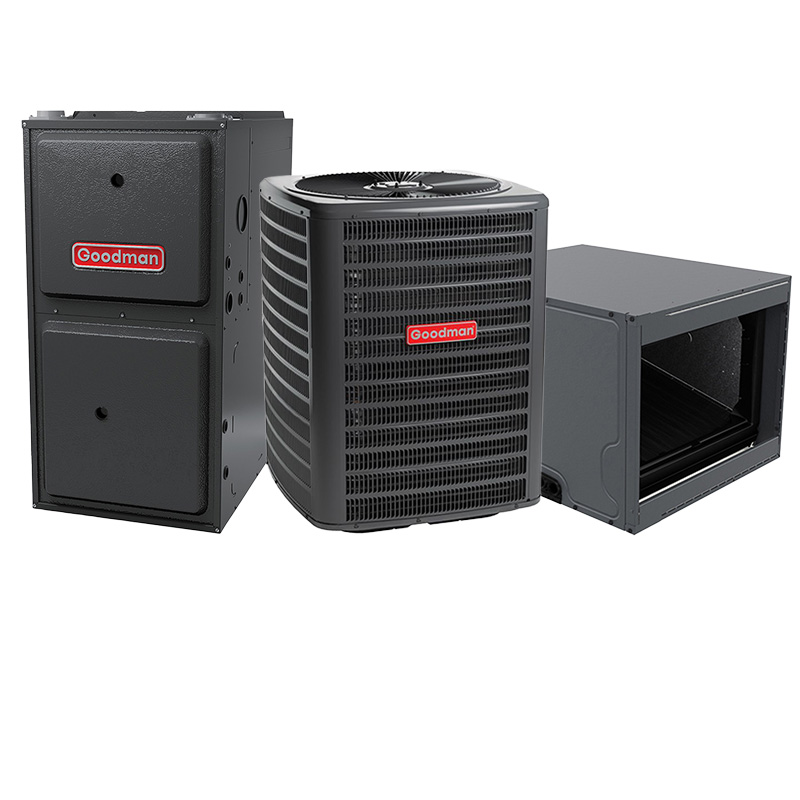
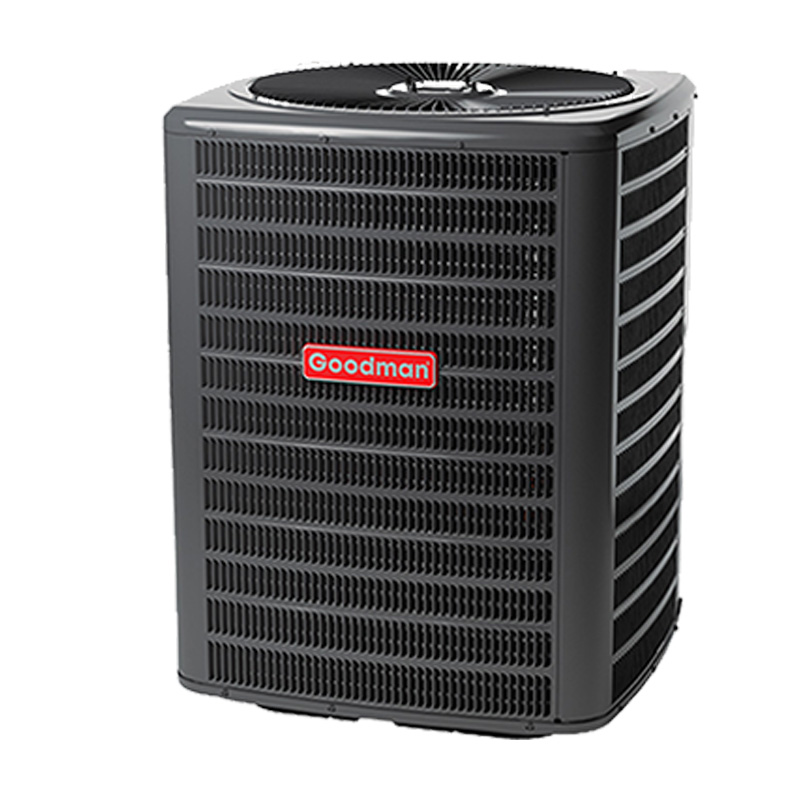
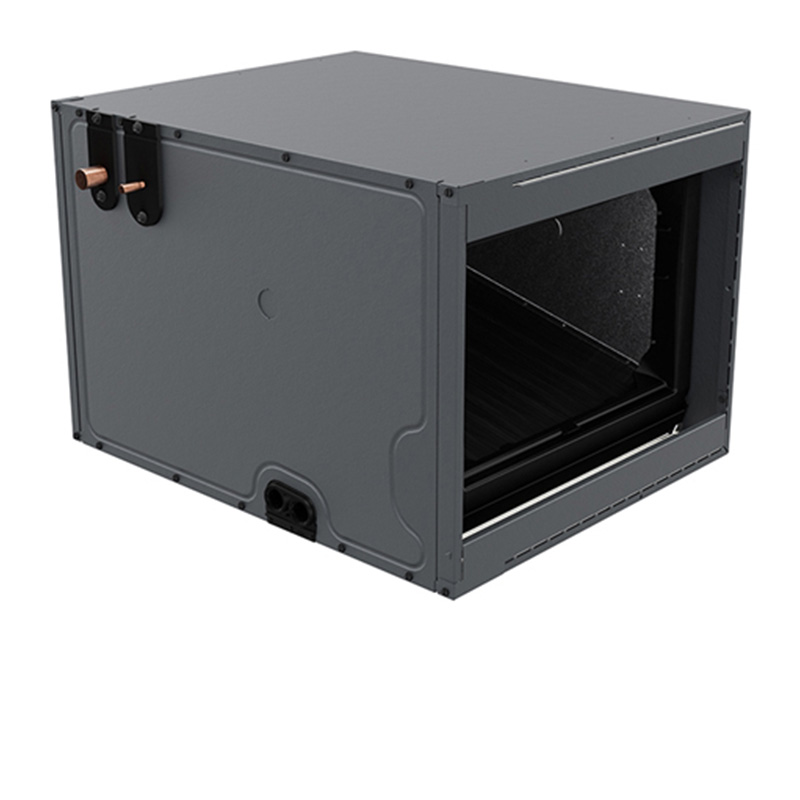
This Goodman bundle pairs a 1.5-ton, 14.5 SEER2 cooling system with a 60,000 BTU, 96% AFUE multi-speed ECM gas furnace in a horizontal configuration, making it a purpose-built option for attic installations, crawl-space platforms, and tight mechanical rooms where vertical clearance is unavailable. The R-32 refrigerant charge is a forward-looking choice: R-32 carries a lower global-warming potential than the R-410A it replaces and is increasingly the industry standard as manufacturers phase out older refrigerants. At 1.5 tons, the cooling capacity suits smaller homes and conditioned spaces generally in the 600 to 900 square foot range, though a proper Manual J load calculation by your installer should always confirm sizing before purchase.
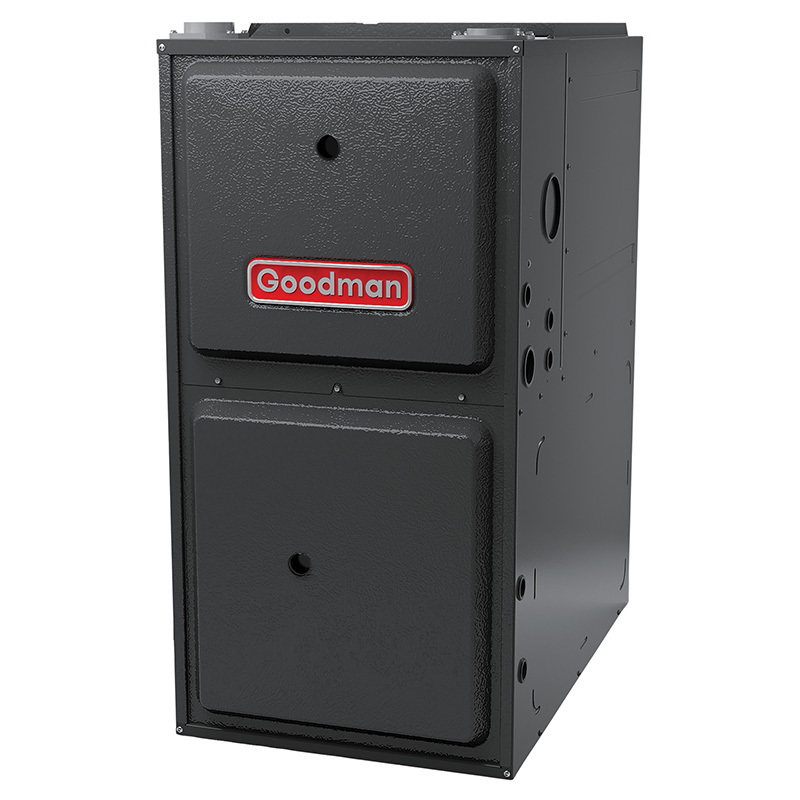
The 96% AFUE furnace is a high-efficiency unit, meaning only about four cents of every heating dollar escapes as exhaust. The multi-speed ECM blower motor adjusts airflow more precisely than a single-speed PSC motor, which tends to improve comfort consistency, reduce temperature swings, and lower blower electricity consumption over time. The 14.5 SEER2 efficiency rating sits at the current federal minimum baseline for most U.S. climate zones, so it meets code but does not exceed it by a wide margin. Buyers in climates with long, hot summers may want to weigh whether a higher SEER2 system would recover its cost premium through lower utility bills over the equipment’s lifespan.
This Goodman horizontal system is a straightforward, code-compliant option for smaller homes that need a horizontal-mount solution and want the long-term heating savings of a 96% AFUE furnace without paying premium-brand prices. The value proposition is real, but buyers should budget for potential mid-life component repairs and invest in a quality install from the start, since Goodman's performance record depends on it more than most brands. It is not the most efficient or most durable system on the market, and it is not trying to be.
Overall score is the average of the five ratings above.
What we like
- Priced roughly 15 to 25 percent below comparable Trane, Carrier, and Lennox systems
- 96% AFUE furnace delivers genuine long-term heating cost savings in colder climates
- ECM multi-speed blower cuts blower motor electricity use compared to standard PSC motors
- R-32 refrigerant is better positioned for long-term regulatory compliance than R-410A equipment
- Horizontal configuration fills a real gap for attic or crawl-space mechanical room installs
Trade-offs
- Dual-run capacitors are the brand's most reported failure point and typically need replacement within the first decade
- Evaporator coil leaks appear in a meaningful share of owner reports, which can be a costly mid-life repair
- Compressor lifespan averages 10 to 14 years, notably shorter than the 15 to 20 years more common in premium brands
- 14.5 SEER2 is the minimum efficiency tier, offering limited long-term utility savings compared to higher-SEER2 alternatives
What homeowners and pros say about Goodman
Homeowners who have lived with Goodman equipment for several years tend to land in two camps. The first group reports years of uneventful service and points to the lower upfront cost as money they were glad to keep in their pocket. The second group, more vocal on complaint-weighted channels like ConsumerAffairs where Goodman sits around 2.5 out of 5, describes frustration with repair bills that start accumulating after roughly year 7. The specific failure modes that show up repeatedly are not random: dual-run capacitor replacements are the most commonly reported issue and are generally a low-cost repair in the $300 to $600 range, but evaporator coil leaks are a more serious mid-life problem, and compressor lifespans that average 10 to 14 years fall noticeably short of the 15 to 20 years that owners of premium-brand equipment more often see. Google dealer reviews tell a somewhat rosier story, averaging around 3.8 out of 5, where the word that appears most often is affordable.
HVAC technicians who work on Goodman equipment regularly offer a consistent perspective: the brand is not a problem to install or service, and parts are widely available, but the outcome depends heavily on how carefully the system is commissioned at startup. Refrigerant charge accuracy, airflow balance, and proper line-set handling are all areas where a rushed install creates problems that get blamed on the equipment rather than the installation. For this specific horizontal system, technicians also flag access as a real consideration: attic and crawl-space installs can make routine service more time-consuming and expensive, and a coil leak in a tight mechanical room is a meaningfully bigger job than the same repair on a basement upflow unit. The value is real, but it is best realized by buyers who pair it with a careful installer and realistic expectations about mid-life maintenance.
Sources: ConsumerAffairs Goodman owner reviews, AHRI Directory of Certified Product Performance, U.S. DOE appliance and equipment efficiency standards, Goodman product specification sheets.
What it costs to run
At 14.5 SEER2, cooling this 1.5-ton system for a typical 1200-hour cooling season at the U.S. average electricity rate of $0.17/kWh works out to roughly $253 per year in cooling, about $21 less per year than a minimum-efficiency 13.4 SEER2 unit of the same size. Your real cost depends on your climate and local rate.
Method: (18,000 BTU/hr ÷ 14.5 SEER2) × 1200 hours ÷ 1000 × $0.17/kWh. Rate source: U.S. EIA average; cooling hours: moderate-climate estimate.
How it compares
| Brand | Comparable model | SEER2 | Stage | Price position |
|---|---|---|---|---|
| Goodman | 1.5T 14.5 SEER2 / 96% AFUE Horizontal R-32 Bundle | 14.5 | Multi-speed | Value pick |
| Carrier | Comfort Series (24ACC6 / 58CVA pairing) | 14.5-15 | Single-stage | Typically 15 to 25 percent more than this Goodman bundle |
| Trane | XR14 / S9X1 pairing | 14.5-15 | Single-stage | Typically 15 to 25 percent more than this Goodman bundle |
| Lennox | Merit Series (14ACX / ML196 pairing) | 14.5-15 | Single-stage | Typically 15 to 25 percent more than this Goodman bundle |
Competitor rows are comparable single-stage units at similar efficiency; price is relative position, not a quote.
Questions about this system
Is a horizontal-configuration system harder to service than a standard upflow unit?
It can be. Horizontal units installed in attics or crawl spaces often give technicians less room to work, which can increase labor time and cost for repairs like coil replacements or blower motor swaps. Confirm with your installer that the unit will have adequate service clearance on all sides before it goes in.
Will my existing R-410A line set work with this R-32 system?
Possibly, but it is not guaranteed. R-32 operates at similar pressures to R-410A, and many copper line sets are compatible, but they must be clean, leak-free, and properly sized. Your installer should inspect and flush the existing line set before reusing it; installing a new R-32 system on a contaminated or degraded line set is a common source of early refrigerant leaks.
What does the 96% AFUE rating actually mean for my heating bills?
It means 96 cents of every dollar of gas input converts to usable heat, with only about 4 cents lost through the flue. Compared to an older 80% AFUE furnace, you could reduce gas consumption for heating by roughly 16 to 20 percent, though actual savings depend on local gas prices, home insulation, and thermostat habits.
Goodman has mixed reviews online. How worried should I be about reliability?
The concern is legitimate but worth context. Goodman scores around 2.5 out of 5 on ConsumerAffairs, a channel that skews toward complaints, where repair costs after roughly year 7 are a recurring theme. Google dealer reviews average closer to 3.8 out of 5, where affordability is frequently praised. The most documented failure modes are dual-run capacitor failures (a relatively inexpensive fix in the $300 to $600 range), evaporator coil leaks, and compressor lifespans that average shorter than premium brands. A strong install and a multi-year service agreement can meaningfully reduce your exposure.
Is 1.5 tons the right size for my home, or should I go larger to be safe?
Bigger is not better with HVAC equipment. An oversized system short-cycles, which means it runs in brief bursts, fails to properly dehumidify the space, and wears components faster. A 1.5-ton unit typically suits spaces in the 600 to 900 square foot range, but climate, insulation levels, window area, and ceiling height all affect the correct size. Have your installer perform a Manual J load calculation before committing to any tonnage.
Specifications
| Cooling capacity | 1.5 Ton |
| Efficiency | 14.5 SEER2 |
| Furnace output | 60000 BTU |
| Furnace efficiency | 96% AFUE |
| Configuration | Horizontal |
| Refrigerant | R-32 |