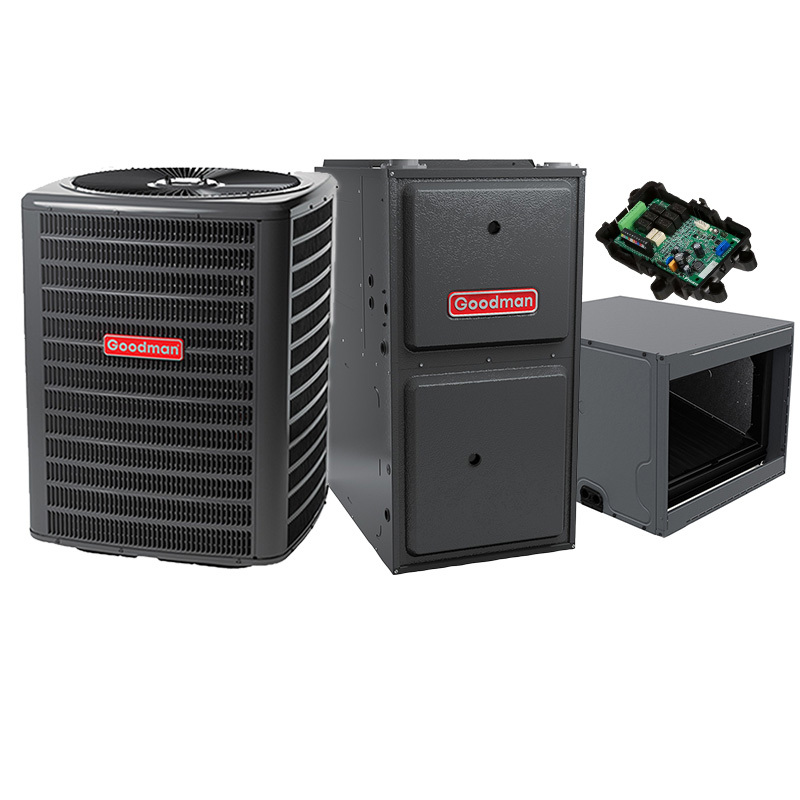
Goodman 1.5 Ton 14.5 SEER2 80000 BTU 96% AFUE Gas Furnace With R32 Air Condenser and Coil System – Horizontal
View on AC Direct see your lowest price →Check current price on AC Direct →
Key features
- 96% AFUE condensing furnace with secondary heat exchanger for low fuel waste
- 14.5 SEER2 single-stage cooling sized for smaller homes up to roughly 900 sq ft
- R-32 refrigerant with lower global-warming potential than legacy R-410A
- Horizontal configuration for crawl space, attic, or side-load mechanical room installs
- 1.5-ton cooling capacity matched to the included evaporator coil
- Priced 15 to 25 percent below comparable Trane, Lennox, and Carrier systems
About this system
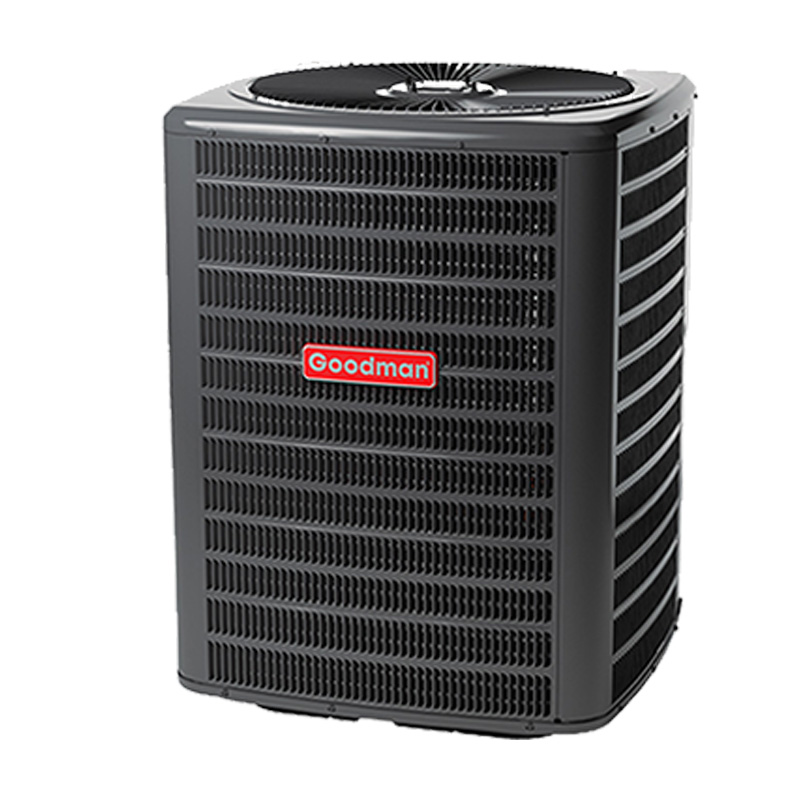
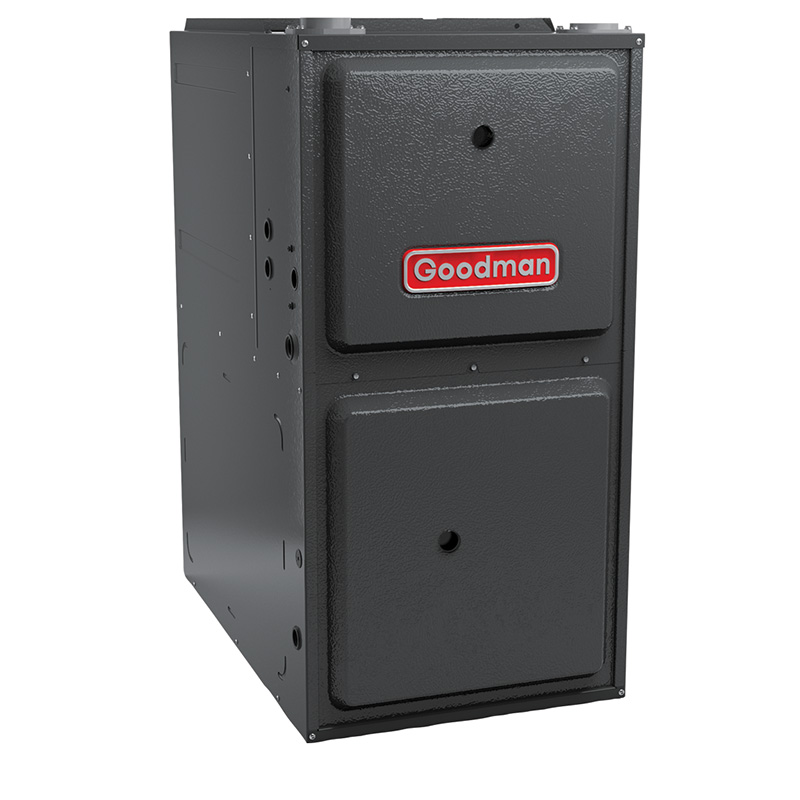
This Goodman horizontal system pairs a 1.5-ton, 14.5 SEER2 R-32 air condenser and coil with an 80,000 BTU, 96% AFUE gas furnace in a horizontal configuration, making it a practical choice for homes where the air handler must sit on its side, such as in a crawl space, attic, or tight mechanical closet. The horizontal layout is less common than upflow or downflow installs, so confirming that your existing ductwork and plenum are set up for it before purchase is essential. At 1.5 tons, the cooling capacity is sized for smaller homes, typically in the 600 to 900 square foot range depending on local climate, insulation quality, and window exposure.
The 96% AFUE rating on the furnace is a genuine high-efficiency number, meaning only about four cents of every dollar spent on gas is lost as exhaust. That qualifies it as a condensing furnace, which requires a secondary heat exchanger and a condensate drain line. The 14.5 SEER2 efficiency sits at the entry level of current federal minimums, which is honest to say but not a weakness for most buyers replacing an older unit. R-32 refrigerant is a newer, lower global-warming-potential option compared to R-410A, and it simplifies service in the years ahead as the HVAC industry transitions away from older refrigerants. This system suits budget-conscious homeowners who want a real efficiency gain on the heating side without paying premium-brand prices.
This Goodman horizontal bundle delivers a legitimately high-efficiency furnace and code-compliant cooling at a price point that is hard to match from premium brands. The trade-off is a documented pattern of component failures after year seven and compressor longevity that trails the competition, so it rewards buyers who budget for periodic maintenance and keep a service contract in mind. For a smaller home where upfront cost matters and a reliable installer is already lined up, it earns its place in the conversation.
Overall score is the average of the five ratings above.
What we like
- 96% AFUE is a genuine high-efficiency furnace rating that lowers monthly gas bills compared to standard 80% units
- Priced significantly below Trane, Carrier, and Lennox systems at similar specs, freeing budget for a strong installation
- R-32 refrigerant is forward-compatible as the industry moves away from older refrigerants
- Horizontal configuration fills a real need for homes where vertical equipment placement is not possible
- Replacement parts, especially capacitors, are widely stocked and relatively inexpensive to service
Trade-offs
- Compressor lifespan averages 10 to 14 years versus 15 to 20 years typically seen in premium-brand compressors
- Evaporator coil leaks appear in a meaningful share of owner reviews and can be costly if the unit is out of warranty
- ConsumerAffairs score of about 2.5 out of 5 reflects a pattern of repair costs climbing after roughly year seven
- 14.5 SEER2 is the low end of current efficiency tiers, so operating costs will be higher than a 17 or 18 SEER2 alternative over a long ownership period
What homeowners and pros say about Goodman
Homeowners who have purchased Goodman systems tend to split sharply along two lines: those who had a skilled installer and report years of trouble-free operation, and those who encountered problems and feel the brand underdelivered. On Google dealer reviews, Goodman equipment averages around 3.8 out of 5 across hundreds of location-level reviews, where affordability and accessible parts are the most consistent praise. On ConsumerAffairs, which skews toward people motivated to report problems, the brand sits at roughly 2.5 out of 5, with recurring complaints about repair costs that begin climbing after approximately year seven of ownership. The honest read is that Goodman is not a set-it-and-forget-it brand at the same level as Trane or Carrier.
HVAC technicians who work on Goodman equipment regularly point to dual-run capacitors as the most common service call, a failure that is annoying but usually inexpensive to fix in the 300 to 600 dollar range. More significant are the evaporator coil leaks that appear in a notable share of owner accounts, which can become expensive repairs once the parts warranty expires. Compressor longevity is the other documented gap: Goodman compressors tend to average 10 to 14 years in service, compared to 15 to 20 years that premium-brand compressors often reach. For this horizontal system specifically, those trade-offs are worth weighing against the meaningful upfront savings, particularly if the money saved goes toward a high-quality installation and a maintenance plan that catches capacitor and refrigerant issues early.
Sources: ConsumerAffairs Goodman owner reviews, AHRI Directory of Certified Product Performance, U.S. DOE appliance and equipment efficiency standards, Goodman product specification sheets.
What it costs to run
At 14.5 SEER2, cooling this 1.5-ton system for a typical 1200-hour cooling season at the U.S. average electricity rate of $0.17/kWh works out to roughly $253 per year in cooling, about $21 less per year than a minimum-efficiency 13.4 SEER2 unit of the same size. Your real cost depends on your climate and local rate.
Method: (18,000 BTU/hr ÷ 14.5 SEER2) × 1200 hours ÷ 1000 × $0.17/kWh. Rate source: U.S. EIA average; cooling hours: moderate-climate estimate.
How it compares
| Brand | Comparable model | SEER2 | Stage | Price position |
|---|---|---|---|---|
| Goodman | 1.5T 14.5 SEER2 / 96% AFUE Horizontal Bundle (this system) | 14.5 | Single-stage | Value pick |
| Carrier | Comfort Series 14 (24ACC4 condensing unit with FE4A coil and 58MXA furnace) | 14-15 | Single-stage | Typically 15 to 25 percent more than this Goodman system |
| Trane | XR14 / XB80 series split system | 14.5 | Single-stage | Typically 20 to 30 percent more than this Goodman system |
| Lennox | Merit ML14XC1 condenser with CBX25UHV coil and ML196E furnace | 14-15 | Single-stage | Typically 20 to 35 percent more than this Goodman system |
Competitor rows are comparable single-stage units at similar efficiency; price is relative position, not a quote.
Questions about this system
Why does this system have to be installed horizontally, and can it be converted to upflow later?
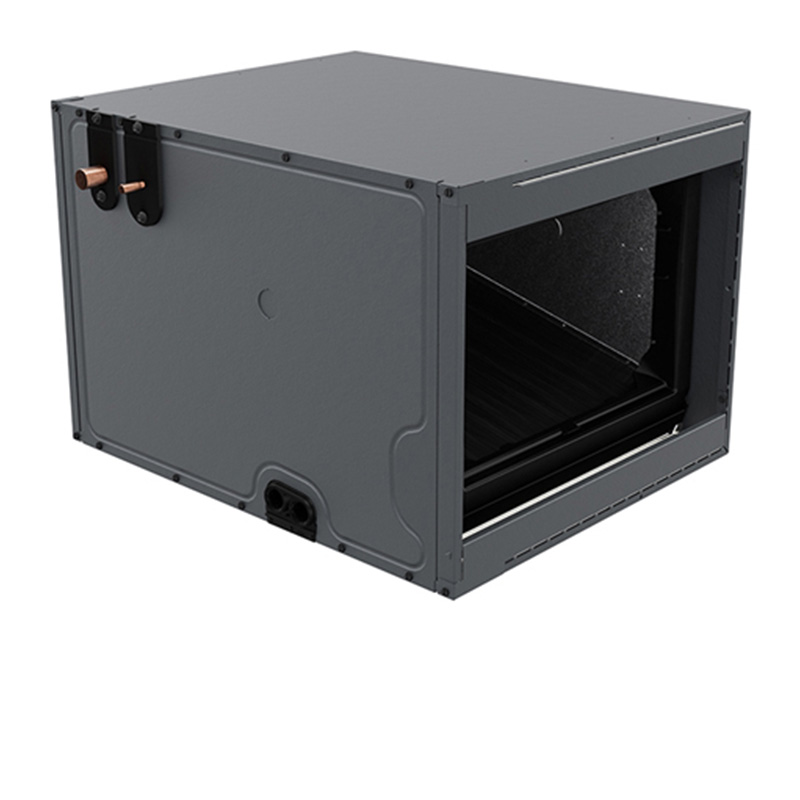
The coil cabinet and air handler in this bundle are configured at the factory for horizontal airflow, meaning the components are oriented and drained for a side-lying install. Converting to an upflow configuration typically requires a different coil cabinet entirely, so plan your mechanical room layout carefully before purchasing and confirm the orientation with your installer.
What does the 96% AFUE rating actually mean for my gas bill compared to my old furnace?
A 96% AFUE furnace converts 96 cents of every dollar of gas into usable heat and exhausts only about four cents. If you are replacing a standard 80% AFUE unit, you could see heating costs drop by roughly 15 to 20 percent in a cold climate, though actual savings depend on your home's insulation, thermostat habits, and local gas rates.
Is R-32 refrigerant safe, and will local technicians be able to service it?
R-32 is mildly flammable but has been used widely in Europe and Asia for years with a strong safety record when handled properly. Most certified HVAC technicians in the U.S. are already being trained on R-32 as it becomes the industry standard, though you should confirm that your local service provider has experience with it before any repair.
How worried should I be about the dual-run capacitor failures mentioned in owner reports?
Capacitor failure is the most commonly reported issue with Goodman equipment and typically shows up as the unit failing to start or short-cycling. The repair is usually straightforward and costs roughly 300 to 600 dollars, which is one of the lower-cost service calls in HVAC. Asking your installer to check and replace the capacitor at each annual tune-up is a reasonable precaution.
Is 1.5 tons enough for my house, or should I size up?
A 1.5-ton system is generally appropriate for conditioned spaces in the 600 to 900 square foot range, but the right answer depends on your local climate, ceiling height, insulation levels, window area, and duct design. Oversizing is a common and costly mistake that causes short-cycling and humidity problems, so insist that your contractor performs a Manual J load calculation rather than sizing by square footage alone.
Specifications
| Cooling capacity | 1.5 Ton |
| Efficiency | 14.5 SEER2 |
| Furnace output | 80000 BTU |
| Furnace efficiency | 96% AFUE |
| Configuration | Horizontal |
| Refrigerant | R-32 |