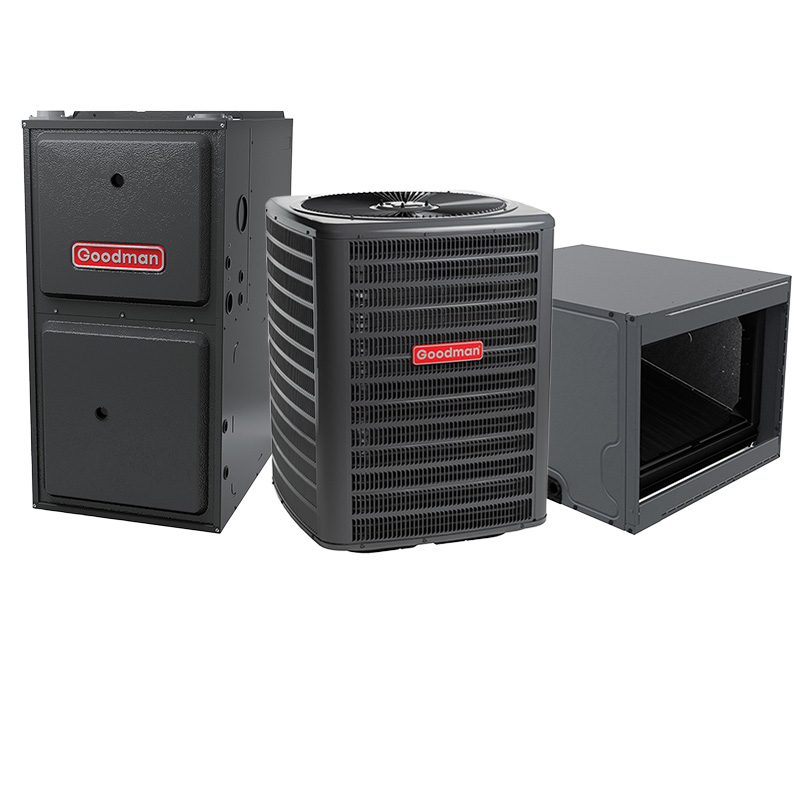
Goodman 1.5 Ton 14.5 SEER2 R32 AC System with 40,000 BTU 96% AFUE Gas Furnace – California & Colorado Ultra Low NOx, Horizontal, Multi-Speed ECM
View on AC Direct see your lowest price →Check current price on AC Direct →
Key features
- 14.5 SEER2 cooling efficiency meets current federal minimums with modest operating cost savings
- 96% AFUE condensing gas furnace rated for high-efficiency heating in all climate zones
- R-32 refrigerant formulation complies with California and Colorado Ultra Low NOx and low-GWP requirements
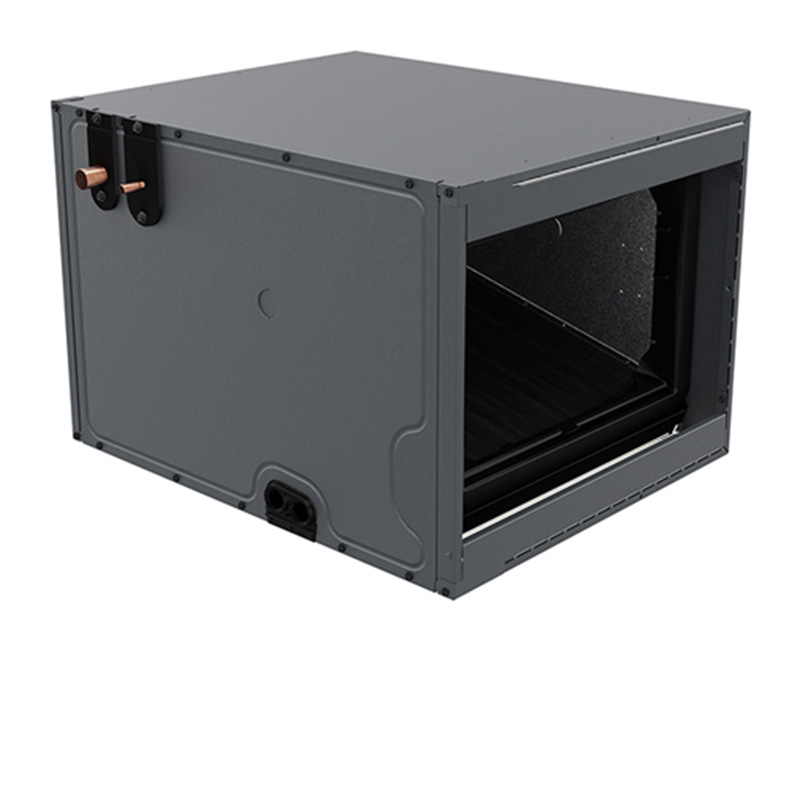
- Horizontal cabinet orientation designed for attic, crawlspace, or manufactured-home installations
- Multi-speed ECM blower motor reduces electrical consumption and improves dehumidification at part load
- 40,000 BTU heat output sized for smaller zones, additions, or well-insulated smaller homes
About this system
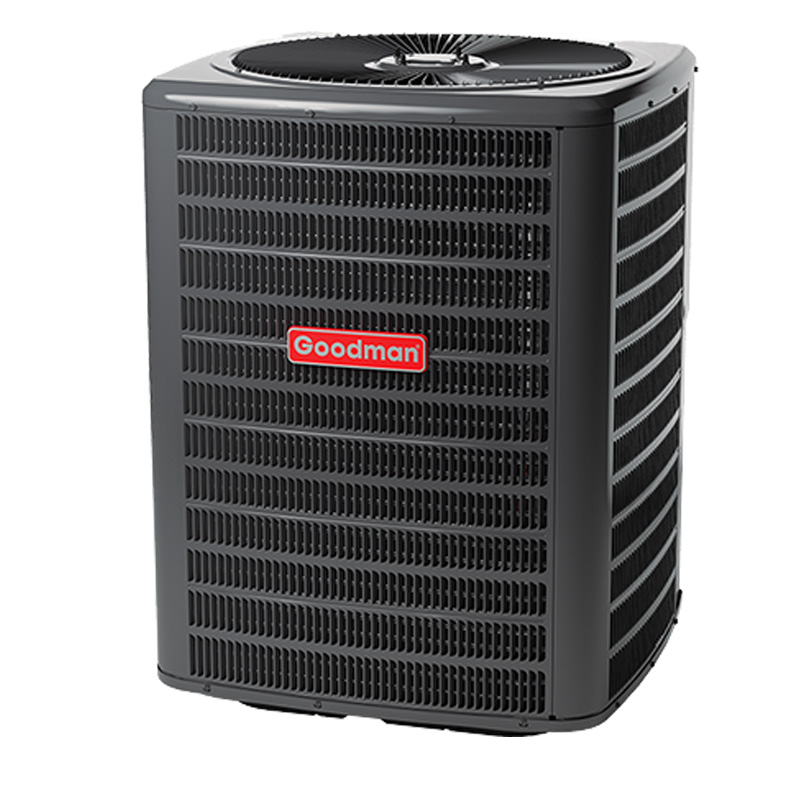
The Goodman 1.5-ton 14.5 SEER2 R-32 system paired with a 40,000 BTU 96% AFUE gas furnace is built specifically for smaller conditioned spaces, typically homes or additions in the 500 to 750 square foot range that need both cooling and high-efficiency heating. The horizontal configuration makes it a practical fit for attic installs, crawlspace air handlers, and manufactured homes where upright cabinet clearance is not available. The R-32 refrigerant charge meets California Air Resources Board requirements and Colorado’s low-GWP regulations, so buyers in those states can purchase and install this system without regulatory headaches.
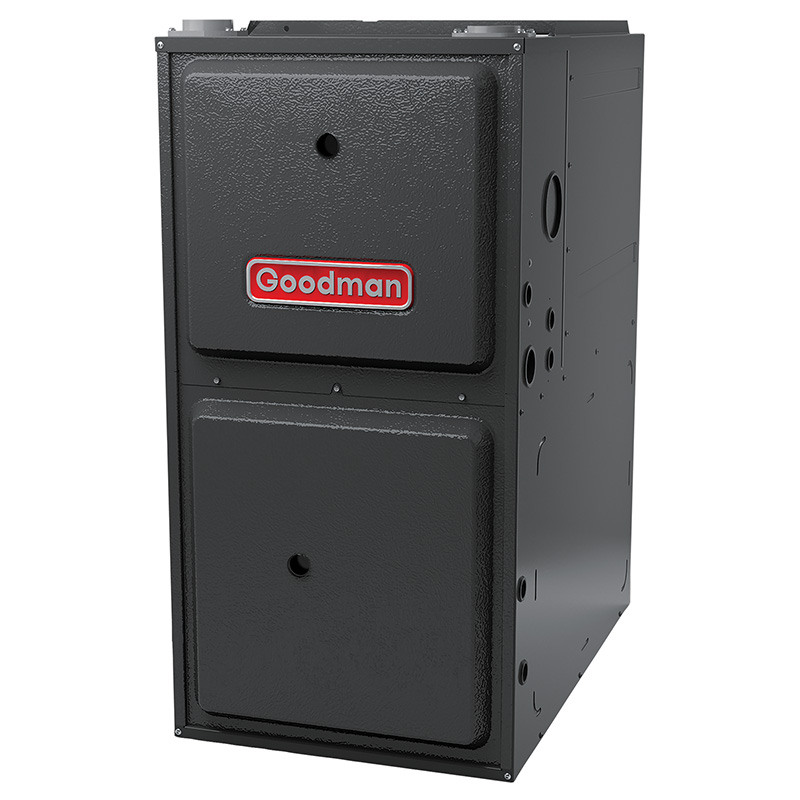
On the heating side, a 96% AFUE rating means roughly 96 cents of every dollar spent on gas becomes usable heat, placing this furnace in the condensing category and well above the federal minimums for most northern climate zones. The multi-speed ECM blower motor adjusts airflow more precisely than a standard PSC motor, which helps with humidity control, reduces sound levels at part-load operation, and cuts blower electricity consumption meaningfully over a season. For a small-zone system in a regulated state, this combination of specs hits a practical sweet spot without pushing into premium price territory.
This system delivers a compliant, reasonably efficient solution for small-zone installs in regulated states at a price point well below comparable Carrier, Trane, or Lennox equipment. The specs are solid and the ECM motor adds genuine value, but Goodman's real-world longevity lags premium brands and installation quality will determine whether this system performs well for a decade or becomes a recurring repair cost. Buyers who want the lowest upfront number and are willing to budget for potential mid-cycle repairs will find it a reasonable choice.
Overall score is the average of the five ratings above.
What we like
- Priced roughly 15 to 25 percent below comparable Trane, Lennox, and Carrier systems, leaving room in the budget for a quality install
- 96% AFUE condensing furnace delivers genuine fuel savings over 80% AFUE equipment, especially in cold climates
- R-32 refrigerant meets California and Colorado regulatory requirements out of the box, no workarounds needed
- Multi-speed ECM blower improves comfort and lowers blower electricity costs compared to standard single-speed PSC motors
- Horizontal configuration solves a real installation problem for attic and manufactured-home applications where vertical units do not fit
Trade-offs
- Compressor lifespan averages 10 to 14 years versus 15 to 20 years typical of premium brands, meaning earlier replacement is more likely
- Dual-run capacitor failures are the most commonly documented repair issue, typically appearing after year 7 and costing $300 to $600 per event
- A meaningful share of owner reports cite evaporator coil leaks, which can be a costly mid-cycle repair if not caught early
- A minority of owners report refrigerant leaks within the first year, most traceable to install or initial charge quality rather than the equipment itself
What homeowners and pros say about Goodman
Homeowners who have lived with Goodman equipment tend to split along a clear fault line. Those who had an experienced installer, proper sizing, and a maintenance plan report years of ordinary operation and appreciate the lower purchase price. Those who ran into problems point to capacitor failures, coil leaks, and compressor issues that arrived sooner than expected, which aligns with Goodman’s ConsumerAffairs rating of about 2.5 out of 5 where repair costs after roughly year 7 are the most common complaint thread. Google dealer reviews tell a somewhat more positive story at around 3.8 out of 5, where the most repeated comment is that the equipment delivers acceptable performance at a price that competing brands cannot match at the entry level.
HVAC technicians generally frame Goodman as install-quality dependent more than most brands, meaning a careful, experienced contractor can get strong results from this equipment while a rushed or inexperienced install will surface problems faster. The documented weak points for Goodman systems broadly, including dual-run capacitor failures in the $300 to $600 repair range, evaporator coil leaks showing up in a meaningful share of owner accounts, and compressor lifespans that tend to land in the 10 to 14 year range rather than the 15 to 20 years more typical of Trane or Carrier, are real considerations for this specific system. For a 1.5-ton horizontal application in a regulated state, the R-32 compliance and 96% AFUE furnace pairing add genuine functional value, but those documented reliability patterns do not disappear because the configuration is specialized.
Sources: ConsumerAffairs Goodman owner reviews, AHRI Directory of Certified Product Performance, U.S. DOE appliance and equipment efficiency standards, Goodman product specification sheets.
What it costs to run
At 14.5 SEER2, cooling this 1.5-ton system for a typical 1200-hour cooling season at the U.S. average electricity rate of $0.17/kWh works out to roughly $253 per year in cooling, about $21 less per year than a minimum-efficiency 13.4 SEER2 unit of the same size. Your real cost depends on your climate and local rate.
Method: (18,000 BTU/hr ÷ 14.5 SEER2) × 1200 hours ÷ 1000 × $0.17/kWh. Rate source: U.S. EIA average; cooling hours: moderate-climate estimate.
How it compares
| Brand | Comparable model | SEER2 | Stage | Price position |
|---|---|---|---|---|
| Goodman | GSXH5-18 / GMVC96 Series (1.5T, Horizontal, R-32) | 14.5 | Single-stage | Value pick |
| Carrier | Comfort 14 Series (24ACC4) | 14.3-14.5 | Single-stage | Typically 15 to 25 percent more than Goodman |
| Trane | XR14 Series | 14.3-15.0 | Single-stage | Typically 15 to 25 percent more than Goodman |
| Lennox | Merit ML14 Series | 14.3-15.0 | Single-stage | Typically 15 to 25 percent more than Goodman |
Competitor rows are comparable single-stage units at similar efficiency; price is relative position, not a quote.
Questions about this system
Why does this system specifically say California and Colorado Ultra Low NOx? Can I install it in other states?
California and Colorado have stricter NOx emission limits for residential gas appliances than most other states, and this furnace is certified to meet those stricter thresholds. It can generally be installed in other states as well since it meets or exceeds requirements elsewhere, but you should confirm with your local jurisdiction and installer that no additional permitting steps apply.
What does the horizontal configuration actually mean, and does it limit where this system can go?
Horizontal means the furnace cabinet is designed to lie on its side with airflow moving through it lengthwise, which is necessary in low-clearance spaces like attics or under-floor crawlspaces. It cannot simply be stood upright and used as a vertical unit, so confirm your install location matches the orientation before purchasing.
R-32 is newer to residential systems in the U.S. Will my installer know how to handle it, and is servicing harder to find?
R-32 requires technicians to use specific recovery equipment and follow slightly different handling procedures than R-410A, including additional safety precautions since R-32 is mildly flammable. Most licensed HVAC technicians in California and Colorado have already encountered R-32 as manufacturers transition away from R-410A, but it is worth confirming your service contractor is equipped for it before signing a maintenance agreement.
Goodman has mixed reviews online. What is actually behind the negative feedback?
Goodman scores around 2.5 out of 5 on ConsumerAffairs, a channel that attracts frustrated owners more than satisfied ones, with repair cost complaints surfacing most often after year 7. Google dealer reviews land closer to 3.8 out of 5, where affordability is the most common positive note. The documented failure patterns center on dual-run capacitors, evaporator coil leaks, and compressor lifespans that run shorter than premium-brand equipment, so the negative reviews are not simply noise.
Is 1.5 tons enough for my space, and how do I know this unit is not undersized?
Sizing depends on your climate zone, insulation levels, window area, ceiling height, and solar exposure, not square footage alone. A proper Manual J load calculation is the only reliable way to confirm the right tonnage for your specific conditions. Installing an undersized unit in a hot climate will cause the system to run continuously without reaching setpoint, while oversizing creates short-cycling and humidity problems, so have a licensed contractor run the numbers before purchasing.
Specifications
| Cooling capacity | 1.5 Ton |
| Efficiency | 14.5 SEER2 |
| Furnace output | 40,000 BTU |
| Furnace efficiency | 96% AFUE |
| Configuration | Horizontal |
| Refrigerant | R-32 |