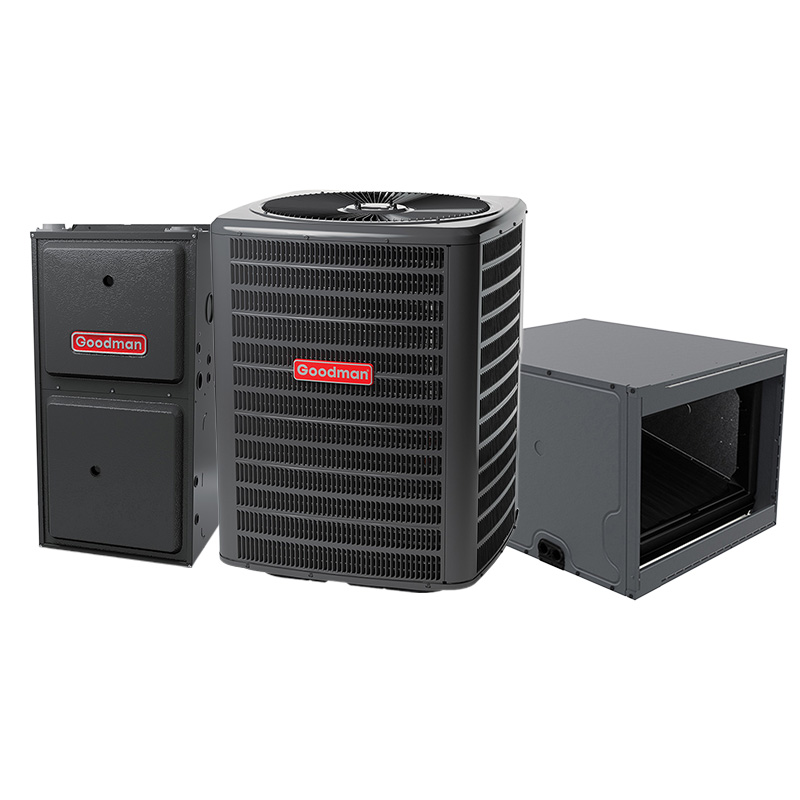
Goodman 1.5 Ton 14.5 SEER2 AC & Gas Furnace System – Multi-Speed, 40000 BTU Gas Furnace, 92% AFUE, Horizontal, R32
View on AC Direct see your lowest price →Check current price on AC Direct →
Key features
- 1.5-ton cooling capacity rated at 14.5 SEER2 for entry-level high-efficiency performance
- 40,000 BTU gas furnace with 92% AFUE, reclaiming most fuel energy as usable heat
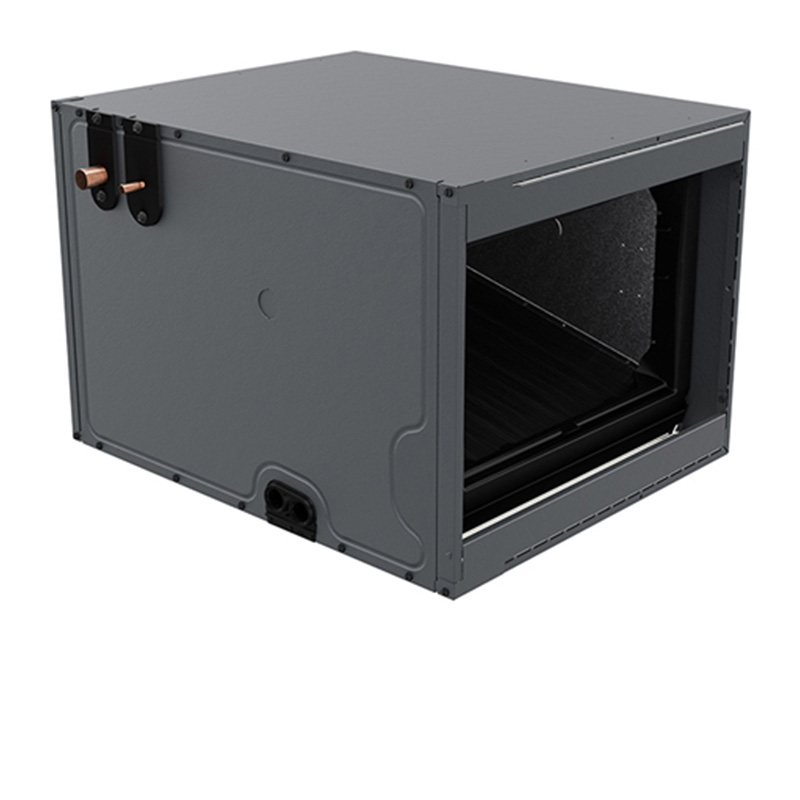
- Horizontal configuration designed for attic or crawl-space installations
- R-32 refrigerant with lower global-warming potential than R-410A
- Multi-speed blower motor for improved airflow and dehumidification versus single-speed
- Matched system design engineered to meet current AHRI efficiency certification requirements
About this system
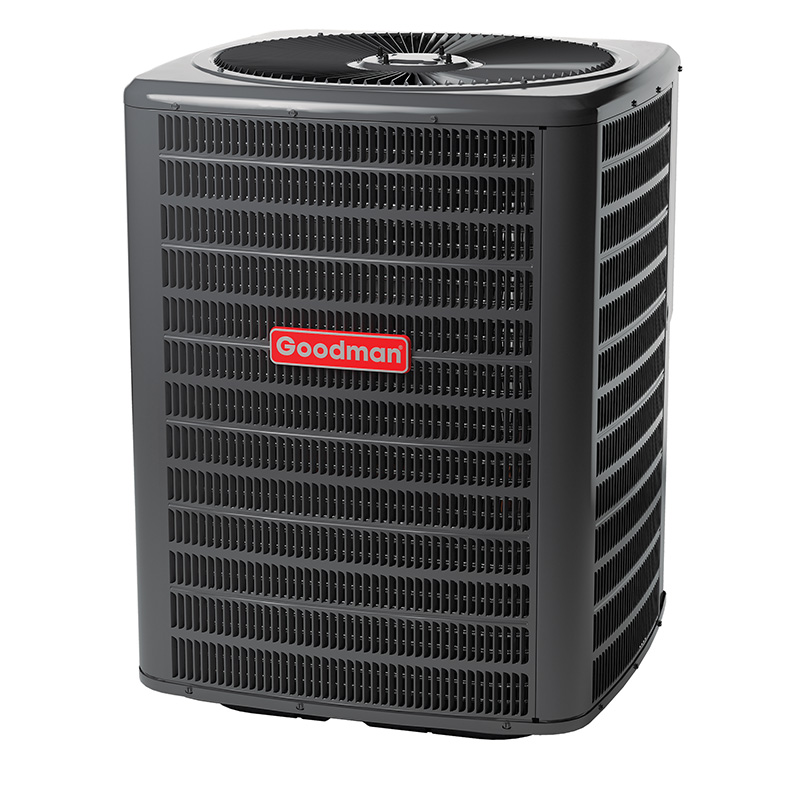
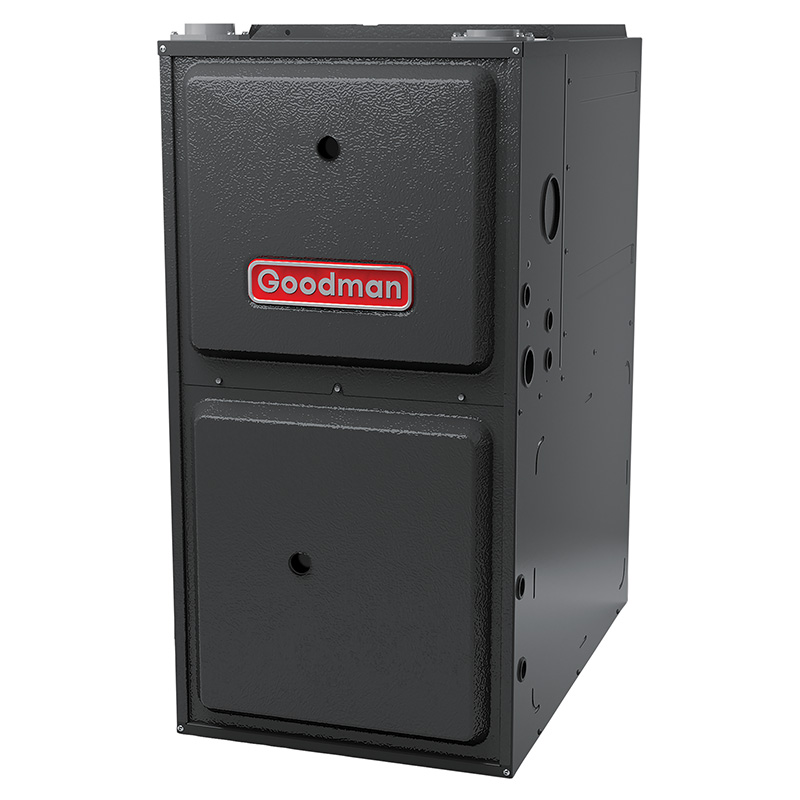
The Goodman GLXS5BA1810D pairs a 1.5-ton, 14.5 SEER2 air conditioner with a 40,000 BTU, 92% AFUE gas furnace in a horizontal configuration, making it a practical fit for crawl-space or attic installations where vertical clearance is limited. The R-32 refrigerant charge is a meaningful step forward for environmental responsibility, carrying a lower global-warming potential than the R-410A it replaces, and it also operates at lower pressures which can modestly ease system stress over time. At 1.5 tons, this system is sized for smaller homes, conditioned spaces roughly in the 600 to 900 square foot range depending on local climate, insulation quality, and window exposure.
The 92% AFUE furnace sits at the entry point of the high-efficiency tier, meaning roughly 92 cents of every dollar spent on gas goes toward heat rather than venting as exhaust. That is a measurable improvement over standard 80% AFUE units, though it falls short of the 96% to 98% AFUE achievable with premium two-stage or modulating furnaces. The multi-speed blower helps the system manage airflow more smoothly than a single-speed unit would, improving dehumidification and comfort distribution without the full cost of a variable-speed motor. Buyers who want a no-frills, code-compliant replacement system at a lower upfront cost than name-brand alternatives will find this package straightforward to evaluate.
This Goodman bundle is a competent, budget-conscious replacement system for small homes with horizontal-mount requirements. It delivers genuine efficiency gains over older equipment at a price point that undercuts premium brands by a meaningful margin, but buyers should plan for the real possibility of component repairs after year seven and budget accordingly. The value proposition is strongest when installed by an experienced technician who verifies refrigerant charge and coil connections carefully.
Overall score is the average of the five ratings above.
What we like
- Lower upfront cost, typically 15 to 25 percent less than comparable Carrier, Trane, or Lennox packages
- 92% AFUE furnace meaningfully reduces gas consumption compared to standard 80% AFUE equipment
- R-32 refrigerant is more environmentally responsible and increasingly standard in new equipment
- Horizontal configuration directly addresses attic and crawl-space installs where few alternatives fit
- Multi-speed blower improves comfort and humidity control over basic single-speed designs
Trade-offs
- Dual-run capacitors are a documented common failure point, typically showing up within the first several years of service
- Evaporator coil leaks appear in a notable share of owner reports, which can be a costly mid-life repair
- Compressor lifespan averages 10 to 14 years, shorter than the 15 to 20 years typical of premium brands
- A minority of owners report refrigerant leaks in the first year, often tied to install quality rather than the equipment itself
What homeowners and pros say about Goodman
Homeowners who have installed Goodman equipment tend to split into two camps. Those who hired experienced, detail-oriented technicians and kept up with maintenance often report years of trouble-free operation and point to the lower purchase price as money well spent. Those who ran into problems frequently cite repair bills climbing after the seven-year mark, with dual-run capacitor failures and evaporator coil leaks showing up as recurring complaints, both documented failure modes that appear across owner reviews. Goodman’s ConsumerAffairs score sits at roughly 2.5 out of 5, a reflection of that complaint-heavy channel, while Google dealer reviews average around 3.8 out of 5, where the most common praise is straightforwardly about affordability.
HVAC technicians tend to view Goodman as a workable budget option with a caveat: install quality matters more with this brand than with premium alternatives, and cutting corners on refrigerant charge verification or coil seating raises the odds of early problems, including the first-year refrigerant leaks that a minority of owners report. Compressor lifespan averaging 10 to 14 years versus the 15 to 20 years typical of Trane, Carrier, or Lennox is a real difference, not a marketing claim, and is worth factoring into total cost of ownership over a decade-plus horizon. For this specific horizontal system, where access for future service may already be constrained by the installation location, investing in a careful initial installation and committing to annual capacitor checks is the most effective way to manage the documented risk profile of the brand.
Sources: ConsumerAffairs Goodman owner reviews, AHRI Directory of Certified Product Performance, U.S. DOE appliance and equipment efficiency standards, Goodman product specification sheets.
What it costs to run
At 14.5 SEER2, cooling this 1.5-ton system for a typical 1200-hour cooling season at the U.S. average electricity rate of $0.17/kWh works out to roughly $253 per year in cooling, about $21 less per year than a minimum-efficiency 13.4 SEER2 unit of the same size. Your real cost depends on your climate and local rate.
Method: (18,000 BTU/hr ÷ 14.5 SEER2) × 1200 hours ÷ 1000 × $0.17/kWh. Rate source: U.S. EIA average; cooling hours: moderate-climate estimate.
How it compares
| Brand | Comparable model | SEER2 | Stage | Price position |
|---|---|---|---|---|
| Goodman | GLXS5BA1810D | 14.5 | Single-stage | Value pick |
| Carrier | Performance 14 Series (24ACC4) | 14.3 to 15.0 | Single-stage | Typically 15 to 25 percent more than this Goodman package |
| Trane | XR14 Series | 14.3 to 15.0 | Single-stage | Typically 15 to 25 percent more than this Goodman package |
| Lennox | Merit 14 Series (ML14XC1) | 14.3 to 15.0 | Single-stage | Typically 15 to 25 percent more than this Goodman package |
Competitor rows are comparable single-stage units at similar efficiency; price is relative position, not a quote.
Questions about this system
Is a horizontal configuration harder to service than a standard upflow installation?
Horizontal units installed in tight attics or crawl spaces can be more difficult to access for routine maintenance and repairs, which can increase labor time and cost. It is worth confirming with your installer that the unit will be positioned with enough clearance for filter changes, coil cleaning, and potential component replacement without having to move the unit. This is not a drawback unique to Goodman, but it is worth factoring into long-term service costs.
What is R-32 refrigerant and does it require special handling compared to R-410A?
R-32 is a single-component refrigerant with a global-warming potential roughly 68 percent lower than R-410A. It is mildly flammable, which means technicians need certification to handle it and your installer must use compatible equipment and follow proper procedures. For the homeowner, day-to-day operation is no different, but you should confirm that any service technician you call is R-32 certified.
Goodman has mixed reviews online. Should that concern me with this specific system?
Goodman carries a ConsumerAffairs score of around 2.5 out of 5, a channel that skews toward complaints, with repair costs after roughly year seven being the recurring theme. Google dealer reviews average around 3.8 out of 5, where affordability is the most cited positive. The brand is a legitimate value option, but the documented failure modes, including dual-run capacitor failures, evaporator coil leaks, and compressor lifespans of 10 to 14 years, are real trade-offs to weigh against the lower purchase price.
Is 1.5 tons the right size for my space, and what happens if it is not?
An undersized unit will run constantly and struggle to cool on peak days, while an oversized unit will short-cycle, reducing humidity removal and increasing wear. A proper Manual J load calculation by your installer is the only reliable way to confirm sizing for your specific home, insulation level, and climate. Do not rely on square footage rules of thumb alone.
What maintenance should I plan for to get the most life out of this system?
Annual professional tune-ups that include capacitor testing are especially important with Goodman equipment, since dual-run capacitors are the most commonly reported failure point and catching degradation early avoids compressor strain. Keeping coils clean, changing filters on schedule, and having refrigerant charge verified after installation are the highest-impact steps a homeowner can take to push toward the upper end of the expected service life.
Specifications
| Cooling capacity | 1.5 Ton |
| Efficiency | 14.5 SEER2 |
| Furnace output | 40000 BTU |
| Furnace efficiency | 92% AFUE |
| Configuration | Horizontal |
| Refrigerant | R-32 |
| Model | GLXS5BA1810D |