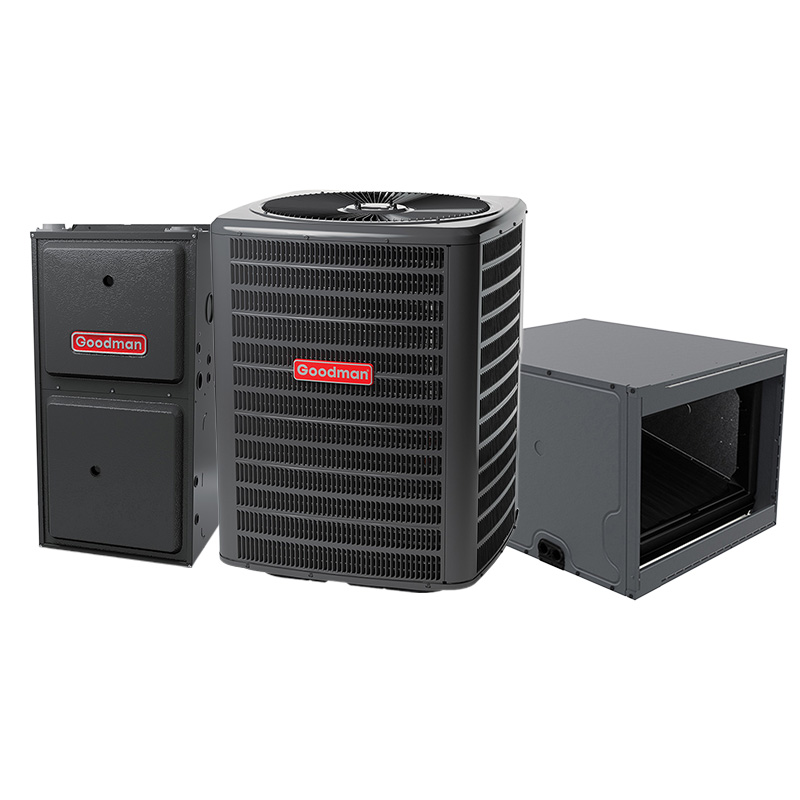
Goodman 1.5 Ton 14.5 SEER2 AC & Gas Furnace System – Multi-Speed, 60000 BTU Gas Furnace, 92% AFUE, Horizontal, R32
View on AC Direct see your lowest price →Check current price on AC Direct →
Key features
- 1.5-ton cooling capacity with 14.5 SEER2 efficiency rating
- 60,000 BTU gas furnace at 92% AFUE, multi-speed blower
- Horizontal configuration for attic, crawlspace, or side-discharge installs
- R-32 refrigerant with lower global-warming potential than R-410A
- Single-stage compressor operation, straightforward controls
- Priced 15 to 25 percent below comparable Trane, Carrier, and Lennox systems
About this system
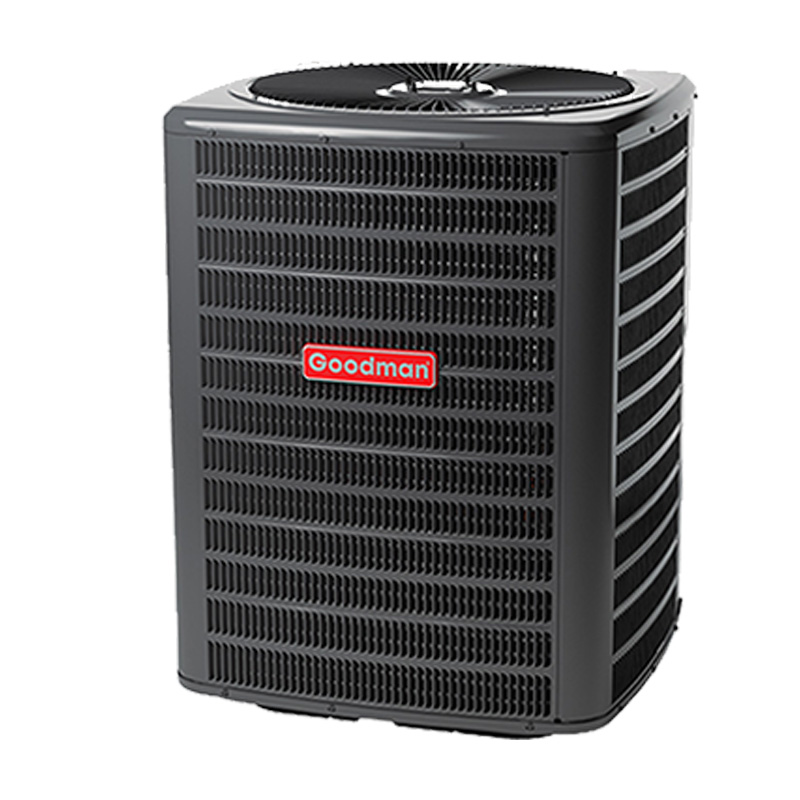
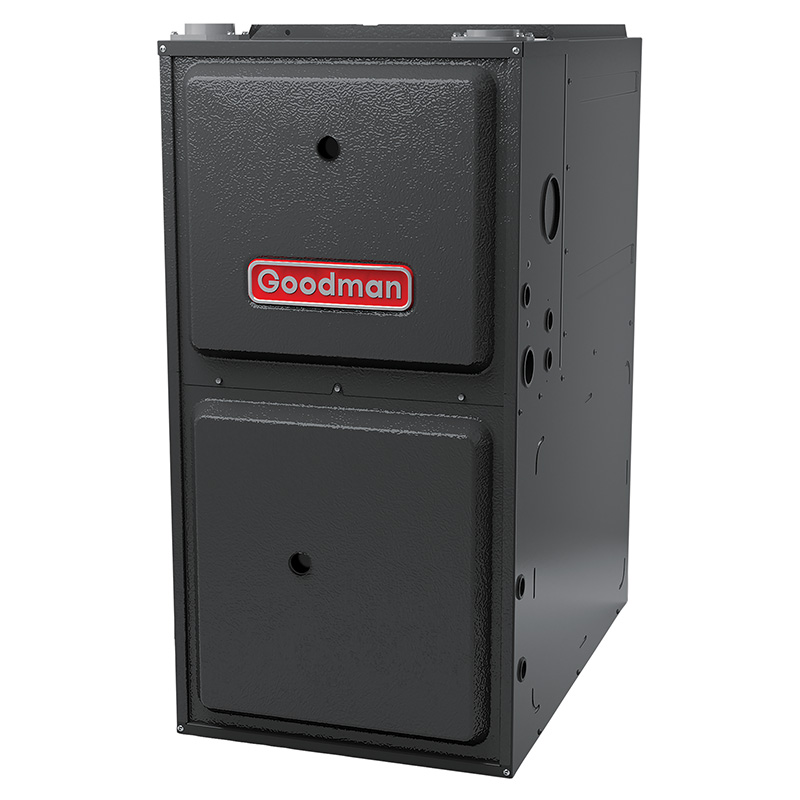
The Goodman GLXS3BN1810D pairs a 1.5-ton, 14.5 SEER2 single-stage condensing unit with a 60,000 BTU, 92% AFUE multi-speed gas furnace configured for horizontal installation. That horizontal layout is the defining detail here: this system is built for attic or crawlspace installations where vertical clearance is limited, making it a practical fit for ranch-style homes, manufactured housing, and tight mechanical rooms. At 1.5 tons, it is sized for smaller conditioned spaces, typically 600 to 900 square feet depending on climate zone, insulation, and window load, so a proper Manual J load calculation before purchase is not optional.
The 14.5 SEER2 rating lands at the current federal minimum efficiency threshold for most U.S. regions, which means operating costs are serviceable but not exceptional compared to 16 SEER2 or higher systems. The 92% AFUE furnace recovers 92 cents of heat energy from every dollar of gas burned, a meaningful step above the 80% AFUE entry tier but short of the 96 to 98% condensing furnace range. R-32 refrigerant is a lower global-warming-potential alternative to R-410A, and its adoption signals where the industry is heading, though it does require technicians certified and equipped for R-32 service. Multi-speed furnace fan operation provides slightly better humidity control and quieter low-demand operation compared to single-speed blowers.
The Goodman GLXS3BN1810D is a no-frills, budget-accessible system that covers the basics for small spaces requiring a horizontal-install solution, and it delivers that at a price point premium brands cannot match. The efficiency specs are adequate rather than impressive, and long-term ownership costs hinge heavily on installation quality and the luck of the draw with components. Buyers who go in with clear expectations and budget for potential repairs after year seven will find reasonable value; those expecting premium-brand longevity without premium-brand spending may be disappointed.
Overall score is the average of the five ratings above.
What we like
- Lowest acquisition cost in its efficiency class, typically 15 to 25 percent below Carrier, Trane, and Lennox equivalents
- Horizontal configuration addresses a real installation need that not every system accommodates
- 92% AFUE furnace delivers solid heating efficiency above the 80% AFUE entry tier
- R-32 refrigerant is forward-compatible with tightening environmental regulations
- Multi-speed blower improves comfort and humidity management over single-speed alternatives
Trade-offs
- Dual-run capacitor failures are the most frequently reported repair, typically surfacing within the first decade and costing $300 to $600 per incident
- Evaporator coil leaks appear in a meaningful share of owner reviews, a potential mid-life expense
- Compressor lifespan averages 10 to 14 years versus 15 to 20 years for premium brands, shortening the replacement cycle
- A minority of owners report refrigerant leaks in the first year, most traced to installation or initial charge issues rather than the equipment itself
What homeowners and pros say about Goodman
Homeowners rating Goodman equipment on ConsumerAffairs give the brand roughly 2.5 out of 5, though that platform draws disproportionately from frustrated owners rather than satisfied ones. The recurring pattern in those reviews is not early catastrophic failure but rather repair costs that begin climbing after about year seven, which erodes the upfront savings for owners who did not anticipate ongoing maintenance expenses. Google dealer reviews paint a moderately better picture, averaging around 3.8 out of 5 across hundreds of reviews per location, with affordability cited most often as the reason buyers chose Goodman and were glad they did. The honest takeaway is that this brand occupies a real and legitimate spot in the market for buyers where first cost is the binding constraint.
HVAC technicians who work on Goodman equipment regularly point to two recurring issues on this product line. Dual-run capacitors are the most common service call, typically a straightforward repair in the $300 to $600 range that most homeowners encounter at least once before the ten-year mark. Evaporator coil leaks show up in a meaningful portion of owner accounts and represent a more expensive mid-life repair. Compressor longevity on Goodman equipment tends to average 10 to 14 years, which is a real and documented gap compared to the 15 to 20-year expectation from premium brands. Technicians consistently note that installation quality is the single biggest variable in how any Goodman system performs, meaning a careful, experienced installer can close much of the gap with higher-tier brands, while a rushed or under-qualified install compounds every inherent weakness in the equipment.
Sources: ConsumerAffairs Goodman owner reviews, AHRI Directory of Certified Product Performance, U.S. DOE appliance and equipment efficiency standards, Goodman product specification sheets.
What it costs to run
At 14.5 SEER2, cooling this 1.5-ton system for a typical 1200-hour cooling season at the U.S. average electricity rate of $0.17/kWh works out to roughly $253 per year in cooling, about $21 less per year than a minimum-efficiency 13.4 SEER2 unit of the same size. Your real cost depends on your climate and local rate.
Method: (18,000 BTU/hr ÷ 14.5 SEER2) × 1200 hours ÷ 1000 × $0.17/kWh. Rate source: U.S. EIA average; cooling hours: moderate-climate estimate.
How it compares
| Brand | Comparable model | SEER2 | Stage | Price position |
|---|---|---|---|---|
| Goodman | GLXS3BN1810D | 14.5 | Single-stage | Value pick |
| Carrier | Comfort 14 Series (24ACC4) | 14.3 to 14.5 | Single-stage | Typically 15 to 25 percent more than this Goodman |
| Trane | XR14c Series | 14.3 to 15.0 | Single-stage | Typically 15 to 25 percent more than this Goodman |
| Lennox | Merit 14ACX Series | 14.3 to 15.0 | Single-stage | Typically 15 to 25 percent more than this Goodman |
Competitor rows are comparable single-stage units at similar efficiency; price is relative position, not a quote.
Questions about this system
Why is this system rated horizontal only, and can it be installed in other orientations?
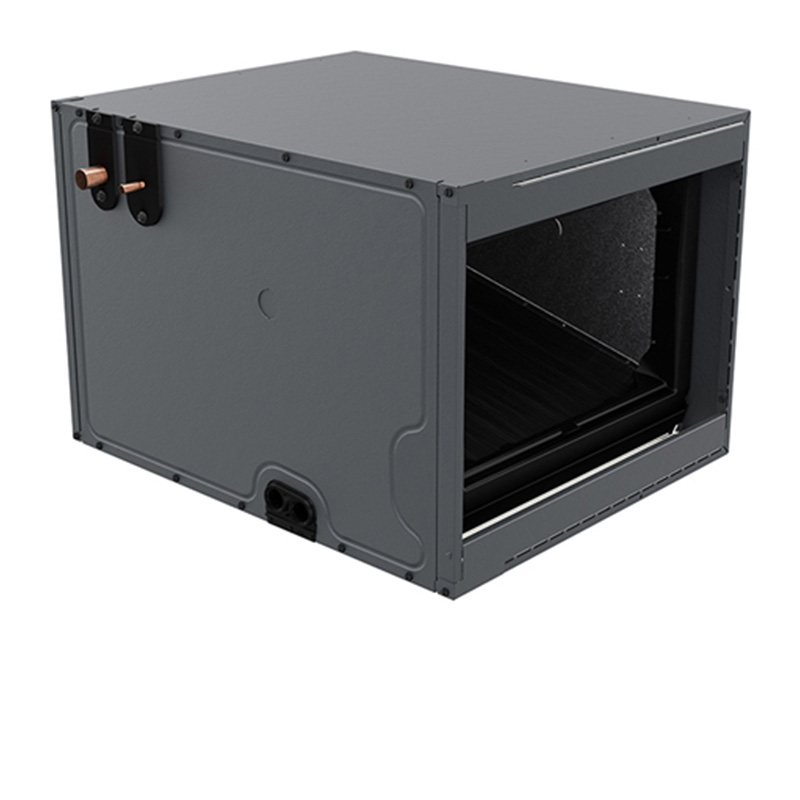
The GLXS3BN1810D furnace cabinet and coil assembly are specifically engineered for horizontal airflow, meaning the air handler lies on its side rather than standing upright. Installing it in a vertical orientation would compromise drainage, heat exchanger function, and likely void the warranty, so this unit should only be used where a horizontal layout is required or strongly preferred.
My technician mentioned R-32. Is that harder to service than R-410A, and will every HVAC company handle it?
R-32 is a mildly flammable refrigerant classified A2L, which requires technicians to use R-32-rated equipment and follow updated safety handling procedures. Most established HVAC companies are already equipped or transitioning, but it is worth confirming your service provider's R-32 certification before signing a maintenance contract, especially in rural areas where fewer contractors may have updated their tools.
What is the actual warranty on this Goodman system, and what do I need to do to keep it valid?
Goodman typically offers a 10-year parts warranty when the system is registered online within a set window after installation, dropping to a shorter period if registration is missed. The warranty covers parts replacement but not labor costs, which can be significant, so a separate labor warranty through your installing contractor or an extended service plan is worth pricing out at the time of purchase.
Is 1.5 tons and 14.5 SEER2 enough for my space, and how do I know if this is properly sized?
Sizing depends on your home's square footage, insulation levels, window area, climate zone, and ceiling height, and 1.5 tons covers roughly 600 to 900 square feet under typical conditions. The only reliable way to confirm fit is a Manual J load calculation performed by your contractor before purchase; an oversized system will short-cycle and leave humidity problems, while an undersized one will run constantly and wear out faster.
What should I budget for repairs beyond the initial purchase and install, given Goodman's track record?
Based on documented failure patterns, it is reasonable to set aside funds for a dual-run capacitor replacement ($300 to $600) at some point in the first decade, as this is the most commonly reported failure on Goodman equipment. Evaporator coil leaks are a less predictable but real risk, and compressor replacement or system turnover becomes more likely after 10 to 14 years, earlier than premium-brand averages.
Specifications
| Cooling capacity | 1.5 Ton |
| Efficiency | 14.5 SEER2 |
| Furnace output | 60000 BTU |
| Furnace efficiency | 92% AFUE |
| Configuration | Horizontal |
| Refrigerant | R-32 |
| Model | GLXS3BN1810D |