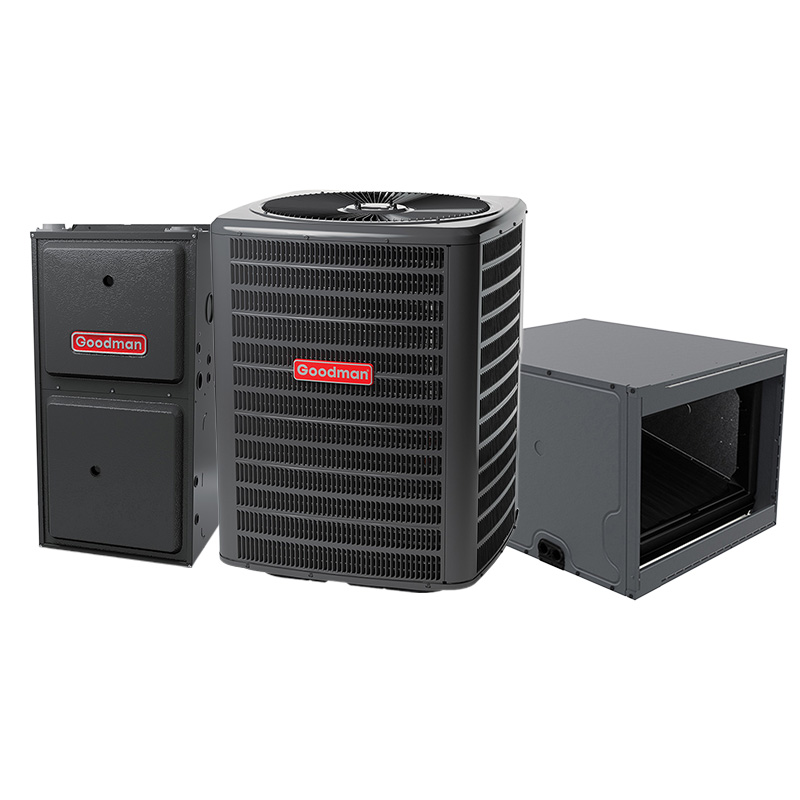
Goodman 1.5 Ton 14.5 SEER2 AC & Gas Furnace System – Multi-Speed, 80000 BTU Gas Furnace, 92% AFUE, Horizontal, R32
View on AC Direct see your lowest price →Check current price on AC Direct →
Key features
- 1.5-ton single-stage cooling rated at 14.5 SEER2 efficiency
- 80,000 BTU multi-speed gas furnace at 92% AFUE
- Horizontal configuration for attic, crawlspace, or side-discharge installs
- R-32 refrigerant with lower global warming potential than R-410A
- Multi-speed blower for quieter part-load airflow versus single-speed
- Priced 15 to 25 percent below comparable Trane, Carrier, and Lennox systems
About this system
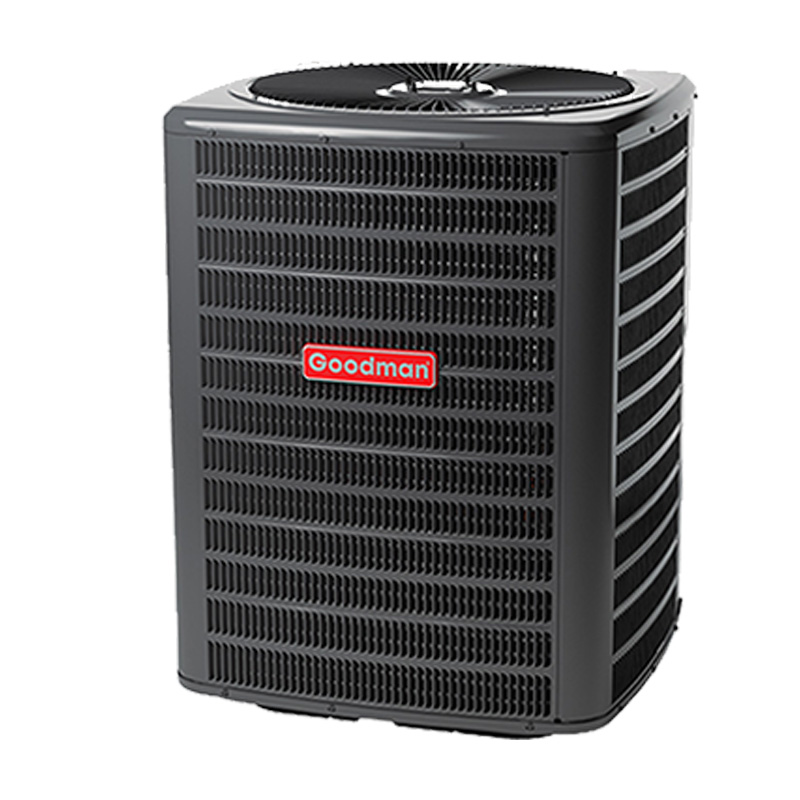
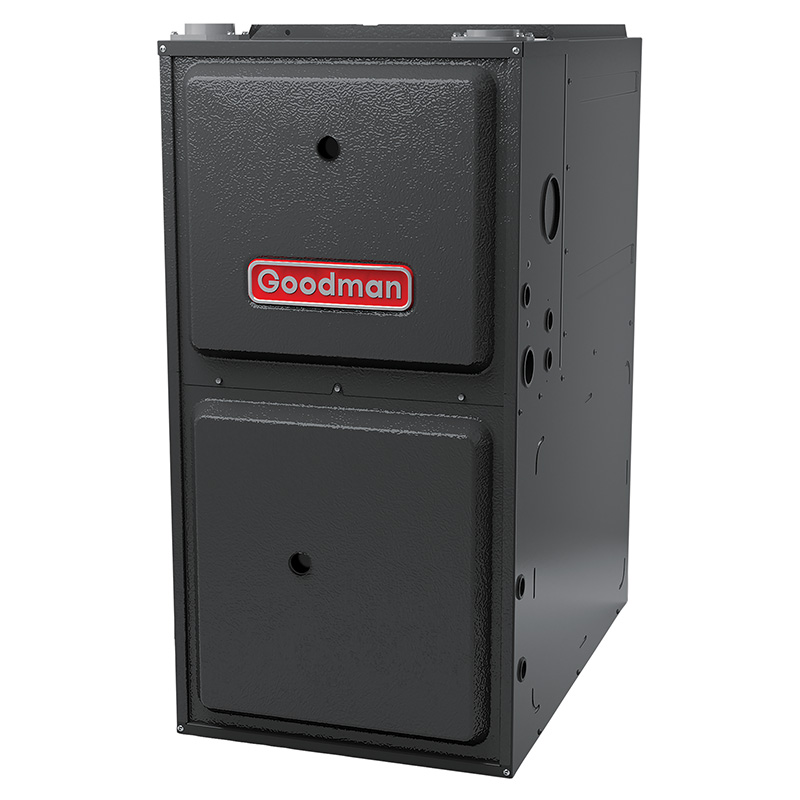
The Goodman GLXS3BN1810D pairs a 1.5-ton, 14.5 SEER2 single-stage central air conditioner with an 80,000 BTU, 92% AFUE multi-speed gas furnace configured for horizontal installation. That horizontal orientation makes it a practical fit for attic installations, crawlspaces, and tight utility rooms where upflow units simply cannot stand upright. The 1.5-ton capacity is sized for smaller homes, typically in the 600 to 900 square foot range depending on insulation, climate, and ceiling height, so a proper Manual J load calculation before purchase is worth doing.
On the efficiency side, 14.5 SEER2 clears the federal minimums for most regions without reaching premium-tier territory, and 92% AFUE puts the furnace solidly in the mid-efficiency category. It will burn noticeably less gas than an 80% AFUE unit but will not match the savings of a 96% or 98% condensing furnace. The system uses R-32 refrigerant, which has a lower global warming potential than the R-410A it replaces and is becoming the standard across the industry. R-32 requires technicians who are current on handling procedures, so confirm that detail with your installer before scheduling.
This Goodman bundle is a cost-accessible entry point for homeowners who need a horizontal-configuration system and want to avoid the premium markup of top-tier brands. The efficiency numbers are honest but not exceptional, and the long-term ownership experience depends heavily on installation quality and a willingness to budget for potential component repairs after year seven. It is not the most durable option on the market, but for buyers who are price-sensitive and work with a skilled installer, it does a credible job.
Overall score is the average of the five ratings above.
What we like
- Upfront cost is meaningfully lower than comparable Carrier, Trane, or Lennox systems
- Horizontal configuration is genuinely rare and useful for attic or crawlspace installs
- 92% AFUE furnace delivers real gas savings over standard 80% AFUE units
- R-32 refrigerant is better positioned for long-term regulatory compliance
- Multi-speed blower improves comfort and reduces noise compared to single-speed alternatives
Trade-offs
- Dual-run capacitors are a documented early failure point, typically adding a 300 to 600 dollar repair bill
- Evaporator coil leaks appear in a meaningful share of owner reports over the system's life
- Compressor lifespan averages 10 to 14 years, shorter than the 15 to 20 years typical of premium brands
- ConsumerAffairs rating sits around 2.5 out of 5, with recurring complaints about repair costs climbing after year seven
What homeowners and pros say about Goodman
Homeowners who choose Goodman most often point to the lower purchase price as the deciding factor, and that pattern holds for this system. Google dealer reviews for Goodman installers average around 3.8 out of 5, where satisfied buyers consistently credit affordability and adequate cooling performance. The picture on ConsumerAffairs is less encouraging, with scores hovering near 2.5 out of 5, driven largely by owners who encountered repair costs that felt steep relative to what they originally paid. The complaint pattern there tends to emerge after roughly year seven, when the system’s value proposition gets tested by its first significant component failure.
HVAC technicians who work on Goodman equipment regularly point to dual-run capacitors as the most common repair call, a failure that typically runs 300 to 600 dollars and is not catastrophic but does add up over time. Evaporator coil leaks are a secondary concern that shows up in a meaningful share of owner accounts, and compressor lifespans for Goodman units tend to land in the 10 to 14 year range, compared to the 15 to 20 years that technicians associate with premium brands like Trane and Carrier. Refrigerant leaks in the first year are reported by a smaller group of owners and usually trace back to install or initial charge issues rather than a factory defect, which underscores why technician quality matters as much as the equipment itself with this brand.
Sources: ConsumerAffairs Goodman owner reviews, AHRI Directory of Certified Product Performance, U.S. DOE appliance and equipment efficiency standards, Goodman product specification sheets.
What it costs to run
At 14.5 SEER2, cooling this 1.5-ton system for a typical 1200-hour cooling season at the U.S. average electricity rate of $0.17/kWh works out to roughly $253 per year in cooling, about $21 less per year than a minimum-efficiency 13.4 SEER2 unit of the same size. Your real cost depends on your climate and local rate.
Method: (18,000 BTU/hr ÷ 14.5 SEER2) × 1200 hours ÷ 1000 × $0.17/kWh. Rate source: U.S. EIA average; cooling hours: moderate-climate estimate.
How it compares
| Brand | Comparable model | SEER2 | Stage | Price position |
|---|---|---|---|---|
| Goodman | GLXS3BN1810D | 14.5 | Single-stage | Value pick |
| Carrier | Comfort Series (24ACC6) | 14.3 to 15 | Single-stage | Typically 15 to 25 percent more than this Goodman system |
| Trane | XR14 Series | 14.3 to 15 | Single-stage | Typically 15 to 25 percent more than this Goodman system |
| Lennox | Merit Series (ML14XC1) | 14.3 to 15 | Single-stage | Typically 15 to 25 percent more than this Goodman system |
Competitor rows are comparable single-stage units at similar efficiency; price is relative position, not a quote.
Questions about this system
Is 1.5 tons enough for my home, or should I size up?
A 1.5-ton unit is generally appropriate for spaces in the 600 to 900 square foot range, but the right answer depends on your home's insulation, window area, ceiling height, and local climate. Have your installer perform a Manual J load calculation before committing to a size, since an oversized unit will short-cycle and an undersized one will run constantly.
What does the horizontal configuration actually mean for installation?
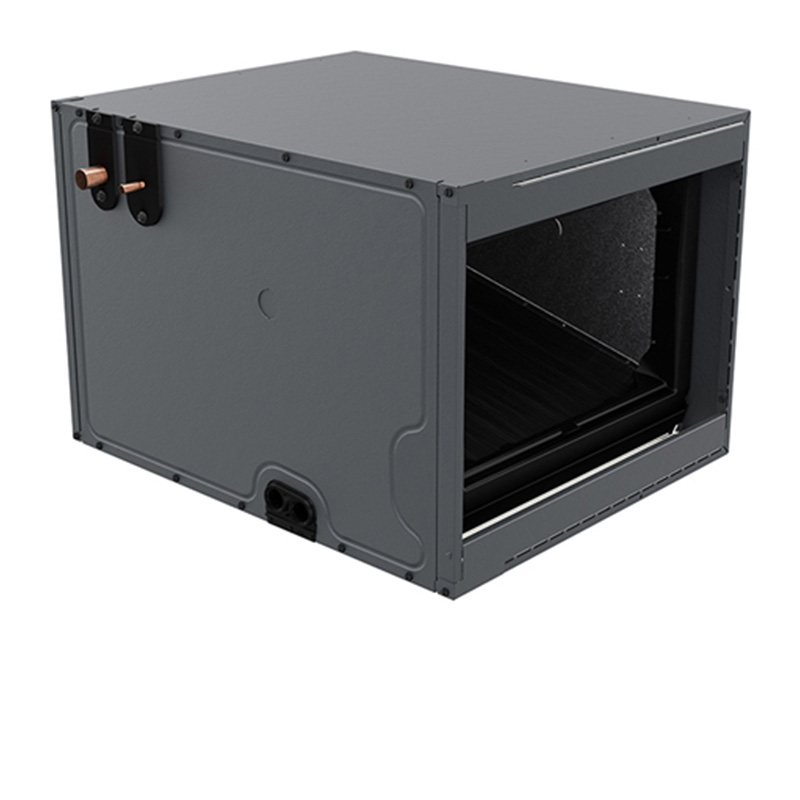
Horizontal means the furnace is designed to lie on its side, with airflow moving sideways rather than straight up or down. This is common in attic and crawlspace setups where vertical clearance is limited. If your existing system is upflow or downflow, converting to horizontal typically requires changes to ductwork connections and possibly a new coil cabinet, so get a detailed quote before assuming it is a direct swap.
Does my technician need any special certification to work with R-32 refrigerant?
R-32 is an A2L refrigerant, meaning it is mildly flammable, which requires technicians to follow updated handling and recovery procedures. Not all HVAC technicians have completed the relevant training yet, so it is worth asking your contractor directly whether they are current on A2L refrigerant handling before scheduling the install.
Goodman has mixed reviews online. What should I realistically expect?
Goodman's ConsumerAffairs score sits around 2.5 out of 5, which reflects a complaint-heavy review channel where dissatisfied owners are more motivated to post than satisfied ones. Google dealer reviews average closer to 3.8 out of 5, with affordability cited most often as a positive. The documented failure points are dual-run capacitors (a relatively inexpensive fix), evaporator coil leaks, and compressor lifespans that tend to run shorter than premium brands. A well-executed installation and a service plan can reduce the impact of these risks.
What warranty does this Goodman system come with?
Goodman typically offers a 10-year parts warranty on registered equipment, which covers major components including the compressor and heat exchanger. Registration must usually be completed within a set window after installation to activate the full term, so do not skip that step. Labor is not covered by the manufacturer, meaning repair costs after the first year fall on the homeowner unless you purchase a separate service agreement.
Specifications
| Cooling capacity | 1.5 Ton |
| Efficiency | 14.5 SEER2 |
| Furnace output | 80000 BTU |
| Furnace efficiency | 92% AFUE |
| Configuration | Horizontal |
| Refrigerant | R-32 |
| Model | GLXS3BN1810D |