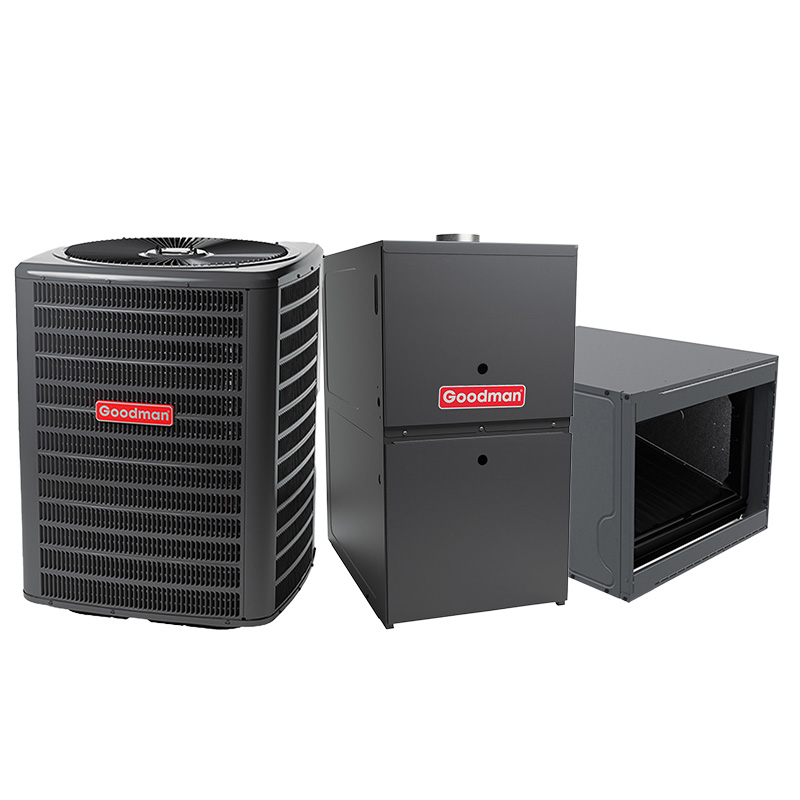
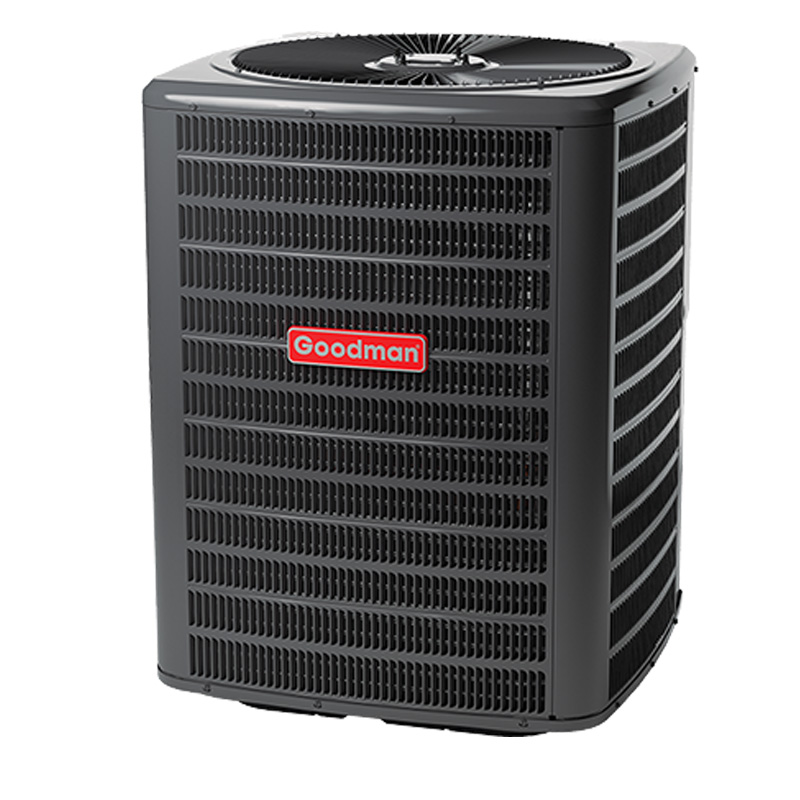
Goodman 1.5 Ton 14.5 SEER2 AC & Gas Furnace System – Two Stage Variable-Speed 60000 BTU Gas Furnace, 80% AFUE, Horizontal, R32
View on AC Direct see your lowest price →Check current price on AC Direct →
Key features
- 1.5-ton two-stage cooling at 14.5 SEER2 for entry-to-mid efficiency
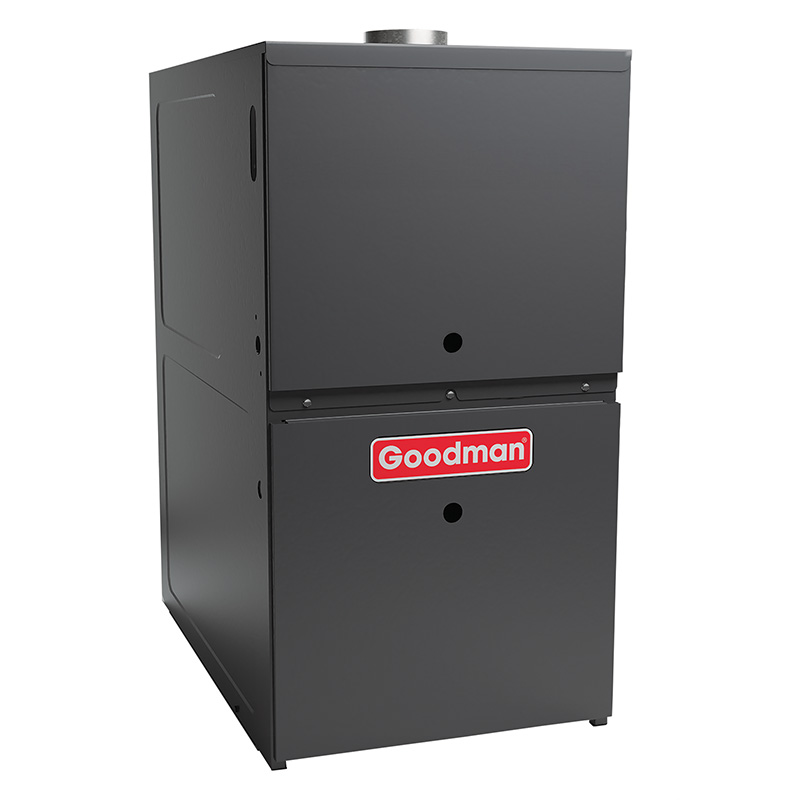
- 60,000 BTU horizontal gas furnace with 80% AFUE
- Variable-speed ECM blower motor for improved humidity and comfort control
- R-32 refrigerant with lower global warming potential than R-410A
- Two-stage compressor reduces short-cycling and improves dehumidification
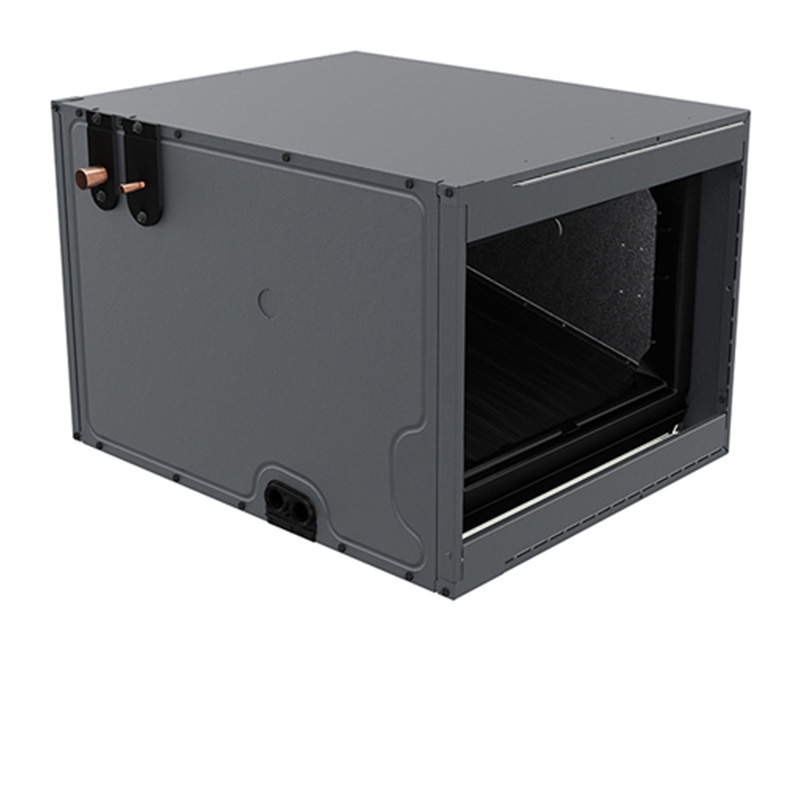
- Horizontal configuration designed for attic, crawlspace, or closet installs
About this system
The Goodman 1.5-ton 14.5 SEER2 split system pairs a two-stage, variable-speed air conditioner with a 60,000 BTU horizontal gas furnace rated at 80% AFUE. That combination is built for smaller homes, conditioned basements, additions, or any space where a standard upflow configuration is not practical and a horizontal installation is required. At 1.5 tons, the system is sized for roughly 600 to 900 square feet of conditioned space in a moderate climate, though a proper Manual J load calculation should always confirm sizing before purchase.
The 14.5 SEER2 rating clears the current federal minimum for most U.S. regions, landing in the entry-to-mid efficiency tier. It is not a high-efficiency system, but it is meaningfully better than the older 13 SEER equipment it commonly replaces. The two-stage compressor runs at a lower capacity most of the time, which improves humidity control and reduces short-cycling compared to a single-stage unit. Variable-speed blower motor operation further smooths airflow, cuts fan energy use, and tends to reduce indoor temperature swings. The 80% AFUE furnace returns 80 cents of heat for every dollar of gas burned, which is standard efficiency and adequate for mild-to-moderate heating climates but may increase long-run operating costs in cold regions where a 96% AFUE unit would pay back the price difference over time.
R-32 refrigerant is a newer, lower-global-warming-potential alternative to R-410A. It is mildly flammable, which requires certified technicians for handling and slightly limits the pool of contractors who currently stock it. Over time R-32 availability is expected to improve as the industry transitions away from R-410A under updated environmental regulations.
This system gives buyers a genuine two-stage, variable-speed setup at a price point that undercuts comparable Trane, Carrier, and Lennox equipment by 15 to 25 percent, which is a real advantage in a smaller application where premium hardware is hard to justify on payback alone. The trade-off is a brand track record that shows a higher incidence of component failures after year seven and compressor longevity that typically falls short of premium competitors. If the system is installed by a skilled contractor and maintained on schedule, it will perform reliably for most of its expected service life.
Overall score is the average of the five ratings above.
What we like
- Two-stage cooling and variable-speed blower deliver better humidity control than comparably priced single-stage systems
- Priced 15 to 25 percent below Trane, Carrier, and Lennox equipment at similar efficiency
- Horizontal configuration fills a real gap for attic and crawlspace installs where upflow is not possible
- R-32 refrigerant has a lower environmental footprint than the R-410A it replaces
- 14.5 SEER2 clears current federal minimums and improves on older 13 SEER replacements
Trade-offs
- 80% AFUE is standard, not high efficiency; operating costs will be higher than a 96% AFUE furnace in cold climates
- Compressor lifespan averages 10 to 14 years versus 15 to 20 years on premium brands, raising long-term replacement risk
- R-32 is mildly flammable and not universally stocked, so finding a qualified technician in some markets takes extra effort
- ConsumerAffairs reviews average around 2.5 out of 5, with repair costs after year seven as the recurring complaint
What homeowners and pros say about Goodman
Homeowners who have lived with Goodman equipment tend to split along a familiar line. Those who had a skilled contractor handle the installation and kept up with annual maintenance generally report years of unremarkable, functional service. Those who ran into trouble often trace the problems back to either a rushed install or components that failed after the seven-year mark, which lines up with the brand’s ConsumerAffairs score of around 2.5 out of 5, a channel where repair-cost frustration is the dominant theme. Google dealer reviews tell a more balanced story, averaging roughly 3.8 out of 5 across hundreds of reviews per location, where affordability is consistently the most-cited reason buyers chose Goodman in the first place.
HVAC technicians who service Goodman units frequently tend to call dual-run capacitors the first thing they expect to replace, usually a straightforward fix in the 300 to 600 dollar range. Evaporator coil leaks are a less predictable but well-documented concern in owner reports. Compressor longevity is a real talking point in the trade: Goodman compressors realistically average 10 to 14 years, while premium brand units often reach 15 to 20, a gap that matters most to buyers planning a long ownership horizon. A minority of owners have reported refrigerant leaks in the first year, which experienced technicians attribute to install or charge issues rather than factory defects, underscoring how heavily this brand’s real-world performance depends on who puts it in and how carefully the startup is done.
Sources: ConsumerAffairs Goodman owner reviews, AHRI Directory of Certified Product Performance, U.S. DOE appliance and equipment efficiency standards, Goodman product specification sheets.
What it costs to run
At 14.5 SEER2, cooling this 1.5-ton system for a typical 1200-hour cooling season at the U.S. average electricity rate of $0.17/kWh works out to roughly $253 per year in cooling, about $21 less per year than a minimum-efficiency 13.4 SEER2 unit of the same size. Your real cost depends on your climate and local rate.
Method: (18,000 BTU/hr ÷ 14.5 SEER2) × 1200 hours ÷ 1000 × $0.17/kWh. Rate source: U.S. EIA average; cooling hours: moderate-climate estimate.
How it compares
| Brand | Comparable model | SEER2 | Stage | Price position |
|---|---|---|---|---|
| Goodman | 1.5-Ton 14.5 SEER2 Two-Stage Variable-Speed Horizontal R-32 Bundle | 14.5 | Two-stage | Value pick |
| Carrier | Comfort 14 (CA14NA) with 80% AFUE 58STA Furnace | 14-14.5 | Single-stage | Typically 15 to 25 percent more than this Goodman system |
| Trane | XR14 (4TTR4) with 80% AFUE S8X1 Furnace | 14-14.5 | Single-stage | Typically 15 to 25 percent more than this Goodman system |
| Lennox | Merit 14ACX with 80% AFUE ML180 Furnace | 14-14.5 | Single-stage | Typically 15 to 25 percent more than this Goodman system |
Competitor rows are comparable single-stage units at similar efficiency; price is relative position, not a quote.
Questions about this system
Is a horizontal configuration harder to service than a standard upflow furnace?
It can be. Horizontal units are often installed in tighter spaces like attics or crawlspaces, which makes routine maintenance and component replacement more time-consuming and can increase labor costs. Make sure your contractor has experience with horizontal installs and can confirm safe access for future service calls before committing to this configuration.
Can any HVAC technician work on an R-32 system, or do I need a specialist?
R-32 requires a technician certified to handle mildly flammable refrigerants under EPA Section 608. Not every contractor currently stocks R-32 or carries the appropriate recovery equipment, so it is worth confirming this before you hire someone. Availability is improving as the industry transitions, but in some rural markets it may still be limited.
What are the most likely repairs I should budget for over the life of this system?
Dual-run capacitors are the most commonly reported failure on Goodman equipment and typically run 300 to 600 dollars to replace. Evaporator coil leaks appear in a meaningful share of owner reports and are a more significant repair. Compressors on this brand tend to average 10 to 14 years, so if you plan to own the home long-term, budgeting for a possible compressor replacement before the 15-year mark is prudent.
Will 80% AFUE be enough for my heating climate?
In mild-to-moderate heating climates, 80% AFUE is functional and meets code in most areas. In colder regions where the furnace runs heavily from November through March, the 15 to 20 percentage point gap between this furnace and a 96% AFUE unit can translate to a meaningful difference in annual gas bills. A local HVAC contractor can run a rough payback calculation based on your heating degree days and local gas rates.
Does Goodman's warranty cover both the AC and furnace in this bundle, and what are the conditions?
Goodman typically offers a 10-year parts limited warranty when the equipment is registered within a set window after installation, dropping to a shorter term if registration is missed. The warranty covers parts but not labor, so out-of-pocket repair costs can still be significant. Read the warranty documents for this specific model carefully, confirm registration deadlines with your installer, and ask whether a labor warranty or service agreement is available from your contractor.
Specifications
| Cooling capacity | 1.5 Ton |
| Efficiency | 14.5 SEER2 |
| Furnace output | 60000 BTU |
| Furnace efficiency | 80% AFUE |
| Configuration | Horizontal |
| Refrigerant | R-32 |