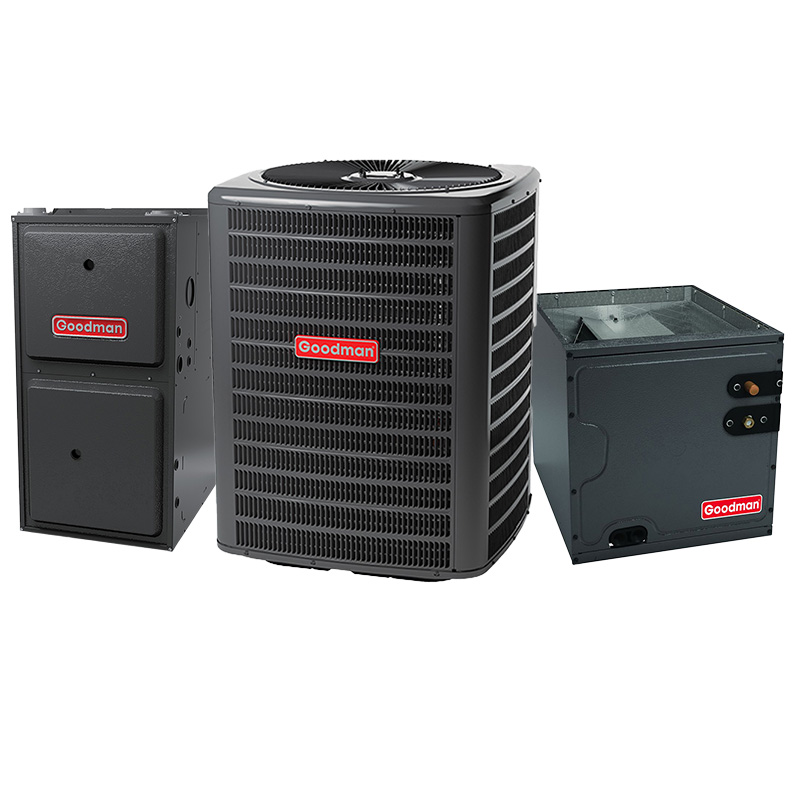
Goodman 1.5 Ton 14.5 SEER2 AC With 60000 BTU 96% AFUE 2-Stage Variable-Speed ECM Gas Furnace System – Upflow | R32
View on AC Direct see your lowest price →Check current price on AC Direct →
Key features
- 1.5-ton cooling capacity with 14.5 SEER2 efficiency rating
- 60,000 BTU two-stage gas furnace at 96% AFUE
- Variable-speed ECM blower motor for quieter, more consistent airflow
- R-32 refrigerant with lower global warming potential than R-410A
- Upflow configuration for basement or closet installations with overhead ductwork
- Goodman's 10-year parts warranty when registered within 60 days of installation
About this system
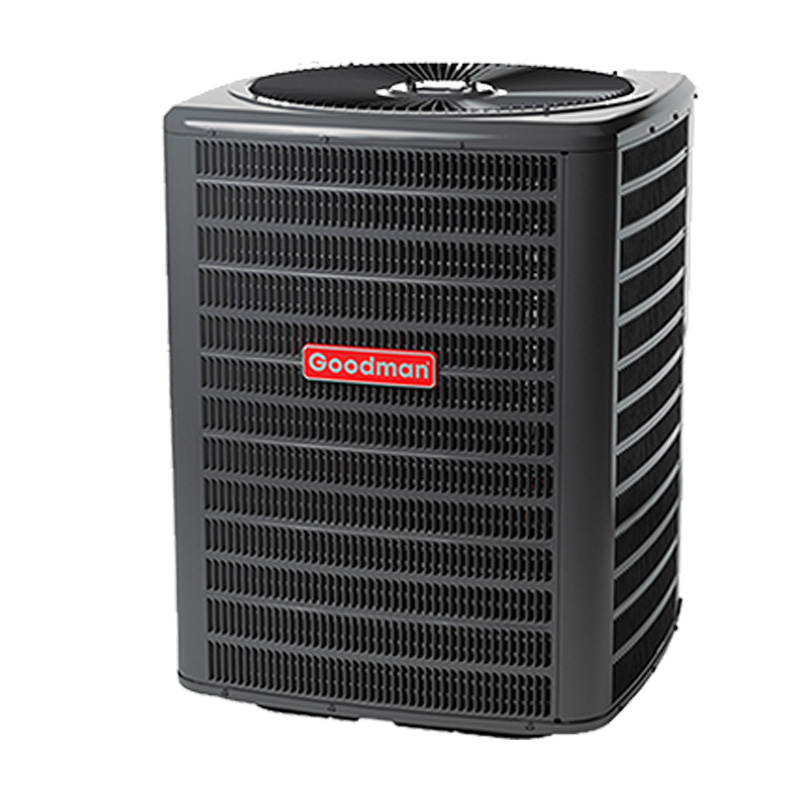
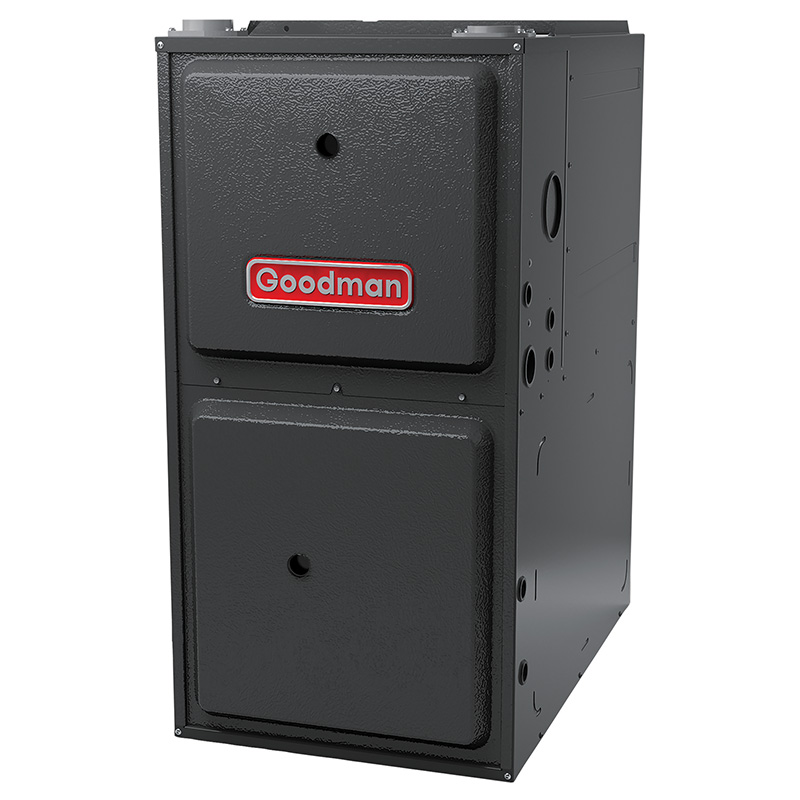
This Goodman bundle pairs a 1.5-ton, 14.5 SEER2 central air conditioner with a 60,000 BTU, 96% AFUE two-stage, variable-speed ECM gas furnace in an upflow configuration. The result is a heating-and-cooling system sized for smaller homes, condos, or tight floor plans, typically in the 600 to 900 square foot range depending on climate and insulation. The 96% AFUE rating means 96 cents of every dollar spent on gas goes toward usable heat, which puts this furnace solidly in the high-efficiency category and makes it eligible for federal tax credits under current energy efficiency incentive programs. The two-stage gas valve and variable-speed ECM blower work together to run at a lower output on mild days, reducing temperature swings and cycling noise compared to single-stage equipment.
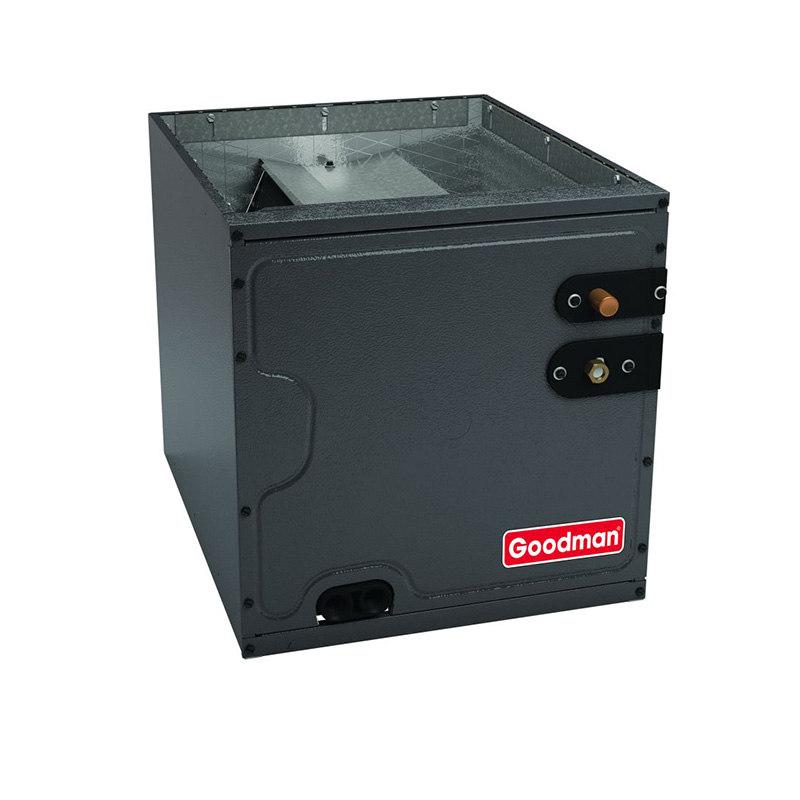
The R-32 refrigerant is a forward-looking choice. R-32 has a global warming potential roughly 68 percent lower than the R-410A it replaces, and it is the direction the industry is heading as R-410A faces regulatory phase-down. The upflow configuration means the air handler sits at floor level and discharges conditioned air upward through ductwork above, which is the most common residential setup in basements and closets. Buyers should confirm their existing duct layout before ordering, since upflow units cannot be field-converted to downflow or horizontal without dedicated multi-position equipment. The 14.5 SEER2 rating clears the federal minimum for most U.S. climate regions, though it sits at the lower end of the efficiency spectrum for new equipment.
This system delivers genuine high-efficiency heating alongside entry-level cooling efficiency, and the two-stage furnace with ECM blower is a meaningful comfort upgrade over single-stage equipment at this price point. Goodman's value pricing makes the bundle accessible, but buyers should factor in the brand's documented reliability history and budget accordingly for post-warranty service. The R-32 refrigerant future-proofs the cooling side, which is a practical plus for a system expected to run 12 or more years.
Overall score is the average of the five ratings above.
What we like
- 96% AFUE two-stage furnace provides strong heating efficiency and steady indoor temperatures
- Variable-speed ECM blower reduces energy use and noise during partial-load operation
- R-32 refrigerant is lower-GWP and aligns with upcoming industry refrigerant transitions
- Priced 15 to 25 percent below comparable Trane, Lennox, and Carrier bundles
- 10-year parts warranty (registered) offers reasonable coverage for a value-tier brand
Trade-offs
- 14.5 SEER2 sits at the federal minimum threshold, so cooling efficiency is modest compared to higher-tier options
- Dual-run capacitors are the most commonly reported failure point, typically appearing within the first several years of use
- Evaporator coil leaks and early refrigerant loss appear in a notable share of owner reviews, often tied to installation quality
- Compressor lifespan averages 10 to 14 years versus 15 to 20 years for premium brands, which matters on a long-term cost-of-ownership basis
What homeowners and pros say about Goodman
Homeowners who have purchased Goodman equipment tend to split fairly sharply. On Google dealer reviews, Goodman-installed systems average around 3.8 out of 5, with affordability being the praise that comes up most consistently. Buyers who got a clean installation from an experienced contractor and had no early issues generally report satisfaction with the value they received. On ConsumerAffairs, the picture is rougher, with scores sitting around 2.5 out of 5 on a channel that skews toward people reporting problems. The recurring theme there is repair costs climbing after roughly year seven, which lines up with the documented compressor lifespan of 10 to 14 years and the known tendency for dual-run capacitors to fail on Goodman units.
HVAC technicians who service multiple brands tend to have a consistent view: Goodman equipment can perform well for a long time, but install quality is the single biggest factor in how a unit holds up. The documented failure modes most worth watching are dual-run capacitor failures, which are common but typically a straightforward low-cost fix; evaporator coil leaks, which appear often enough in owner reviews to merit attention; and compressor longevity that trails premium brands by several years on average. A minority of owners have also reported refrigerant issues within the first year, which is generally traced to installation or initial charge quality rather than a manufacturing defect. For this specific system, the two-stage ECM furnace component is the stronger half of the bundle from a specs-versus-price standpoint, while the cooling side is functional but unspectacular at 14.5 SEER2.
Sources: ConsumerAffairs Goodman owner reviews, AHRI Directory of Certified Product Performance, U.S. DOE appliance and equipment efficiency standards, Goodman product specification sheets.
What it costs to run
At 14.5 SEER2, cooling this 1.5-ton system for a typical 1200-hour cooling season at the U.S. average electricity rate of $0.17/kWh works out to roughly $253 per year in cooling, about $21 less per year than a minimum-efficiency 13.4 SEER2 unit of the same size. Your real cost depends on your climate and local rate.
Method: (18,000 BTU/hr ÷ 14.5 SEER2) × 1200 hours ÷ 1000 × $0.17/kWh. Rate source: U.S. EIA average; cooling hours: moderate-climate estimate.
How it compares
| Brand | Comparable model | SEER2 | Stage | Price position |
|---|---|---|---|---|
| Goodman | This system (14.5 SEER2 AC + 96% AFUE 2-Stage ECM Furnace, R-32) | 14.5 | Two-stage furnace / standard AC | Value pick |
| Carrier | Comfort Series 14 (24ACC4) with 58MCA furnace | 14-15 | Single-stage | Typically 15 to 25 percent more than this Goodman bundle |
| Trane | XR14S with S9X2 furnace | 14-15 | Single-stage | Typically 15 to 25 percent more than this Goodman bundle |
| Lennox | Merit ML14XC1 with ML196E furnace | 14-15 | Single-stage | Typically 15 to 25 percent more than this Goodman bundle |
Competitor rows are comparable single-stage units at similar efficiency; price is relative position, not a quote.
Questions about this system
Does the R-32 refrigerant in this system require any special handling by my HVAC technician?
Yes. R-32 is classified as mildly flammable (A2L), so technicians need specific training and equipment approved for A2L refrigerants. Most larger HVAC companies are already certified, but it is worth confirming before scheduling installation or future service calls.
Why does this furnace have two stages if my home is small at 1.5 tons?
Two-stage operation lets the furnace run at a lower output on mild days, which improves comfort by reducing temperature swings and running longer, quieter cycles rather than short blasts of heat. Even in smaller homes it makes a noticeable difference in day-to-day comfort compared to single-stage equipment.
What are the most likely repair costs I should expect over the life of this system?
Dual-run capacitors are the most commonly documented failure on Goodman equipment and typically run 300 to 600 dollars to replace. Evaporator coil leaks and refrigerant issues have also been reported with some frequency, and the compressor averages a 10 to 14 year lifespan, shorter than premium brands, so budgeting for a replacement compressor or system refresh in that window is realistic.
Can I install this system myself to save on labor costs?
No. R-32 refrigerant handling requires EPA Section 608 certification, and gas furnace work requires licensed contractors in virtually every jurisdiction. Beyond licensing, Goodman's own warranty requires installation by a licensed HVAC professional, so self-installation would void the coverage.
How do I make sure the 10-year parts warranty stays valid?
You must register the product with Goodman within 60 days of installation. Without registration, coverage typically drops to a shorter baseline period. Keep your installation invoice and registration confirmation on file, as both may be required when making a warranty claim.
Specifications
| Cooling capacity | 1.5 Ton |
| Efficiency | 14.5 SEER2 |
| Furnace output | 60000 BTU |
| Furnace efficiency | 96% AFUE |
| Configuration | Upflow |
| Refrigerant | R-32 |