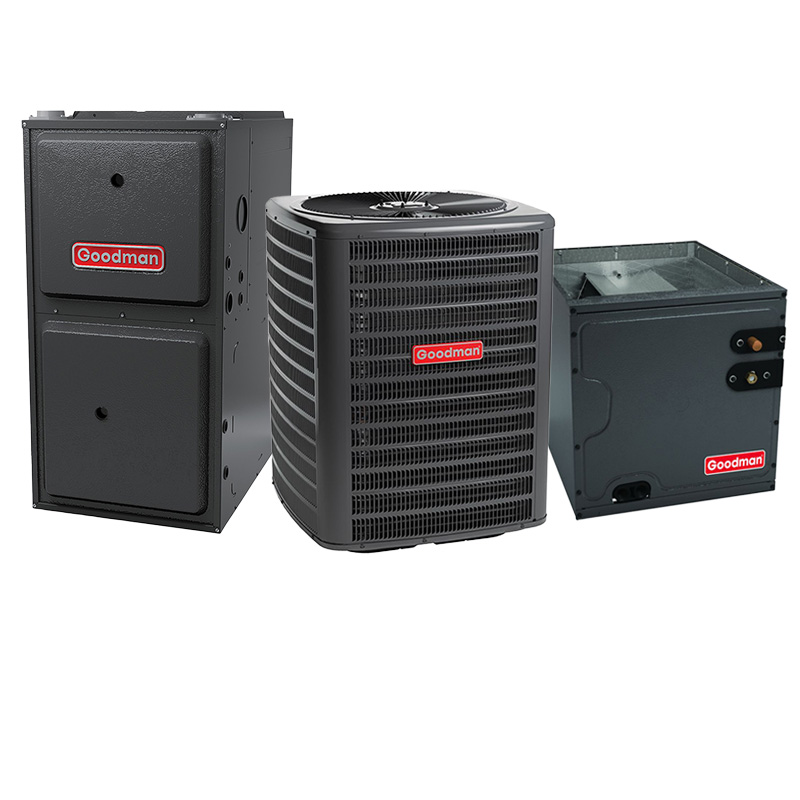
Goodman 1.5 Ton 14.7 SEER2 60000 BTU 80% AFUE Two Stage Multi-Speed ECM Gas Furnace System – Upflow | R32
View on AC Direct see your lowest price →Check current price on AC Direct →
Key features
- 1.5-ton cooling capacity with 14.7 SEER2 efficiency rating
- 60,000 BTU two-stage gas furnace at 80% AFUE
- Multi-speed ECM blower motor for quieter, more consistent airflow
- R-32 refrigerant with lower global warming potential than R-410A
- Upflow configuration for basement or closet installations with overhead ductwork
- Two-stage heating reduces short-cycling and temperature swings on moderate weather days
About this system
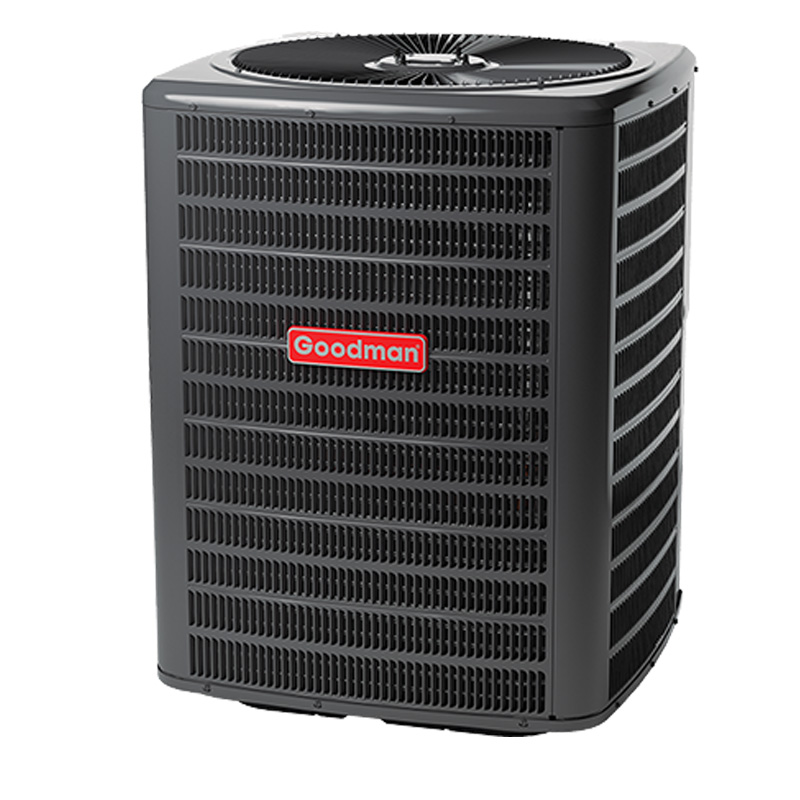
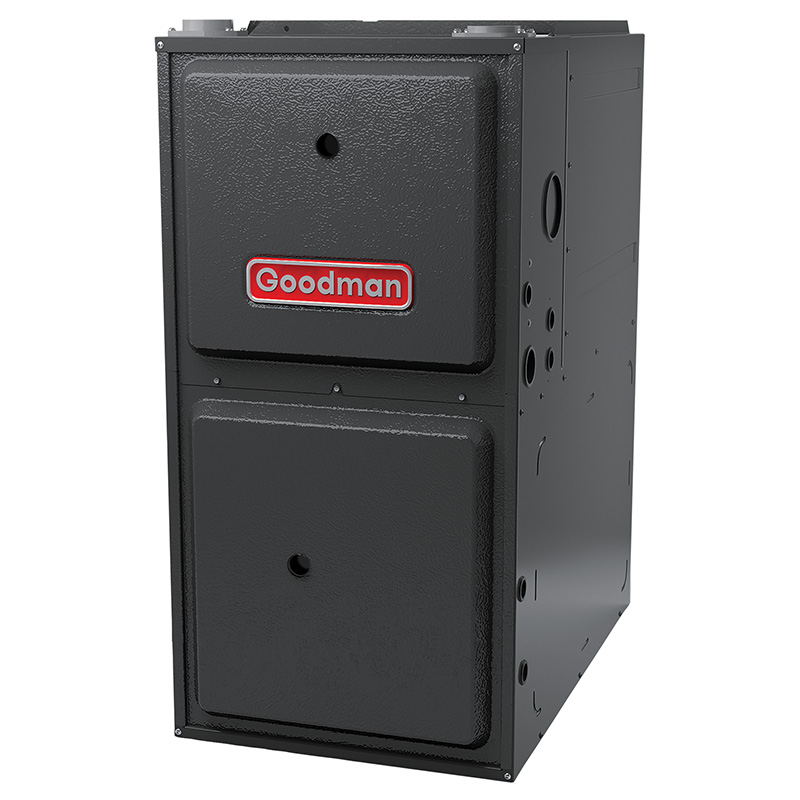
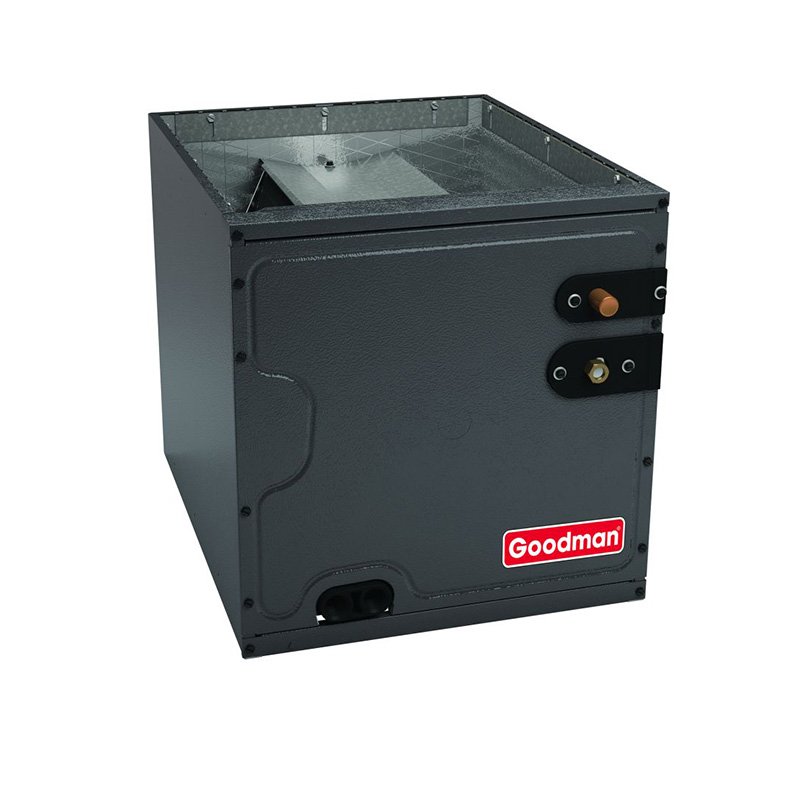
The Goodman GLXS4BA1810 pairs a 1.5-ton, 14.7 SEER2 R-32 condenser with a 60,000 BTU 80% AFUE two-stage, multi-speed ECM gas furnace in an upflow configuration. This combination is sized for smaller homes, condos, or well-insulated spaces in the 600 to 900 square foot range, depending on climate zone and building envelope. The two-stage furnace fires at a reduced capacity most of the time, ramping up only on the coldest days, which translates to fewer temperature swings and quieter operation compared to a single-stage unit. The multi-speed ECM blower reinforces that by running longer, lower-speed cycles that improve dehumidification and air distribution without spiking energy use.
At 14.7 SEER2, this system sits just above the federal minimum efficiency threshold now required in most U.S. regions, so it is not a high-efficiency unit by today’s standards. The 80% AFUE furnace means one dollar in five of your gas spend exits the flue rather than heating your home, which is standard for a non-condensing design but well behind 90% or 96% AFUE alternatives. R-32 refrigerant is a meaningful forward-looking choice: it has a lower global warming potential than R-410A and is the direction much of the industry is heading, so technicians and parts availability should improve over time. This system suits buyers who want reliable two-stage comfort and a modern refrigerant without paying Carrier, Trane, or Lennox prices, and who understand that Goodman’s value proposition depends heavily on a quality installation.
This Goodman system delivers legitimate two-stage comfort and a forward-thinking refrigerant choice at a price point that undercuts major competitors by 15 to 25 percent. The 80% AFUE furnace and entry-level SEER2 rating keep long-term operating costs from being a strong suit, and the brand's track record of rising repair needs after year 7 is a real consideration. For budget-conscious buyers with a skilled installer lined up, the value math is reasonable; for those prioritizing long-term reliability with minimal service calls, premium brands warrant a close look.
Overall score is the average of the five ratings above.
What we like
- Two-stage furnace and ECM blower deliver noticeably more even temperatures and quieter operation than single-stage systems
- R-32 refrigerant is more environmentally responsible than R-410A and positions the system well as the industry transitions
- Purchase price runs 15 to 25 percent below equivalent Carrier, Trane, and Lennox configurations
- Upflow design fits the most common residential duct layout, simplifying installation in most homes
- Two-stage operation extends equipment run times at lower capacity, which improves humidity removal during cooling season
Trade-offs
- 80% AFUE is the low end of current furnace efficiency; homeowners in colder climates will pay noticeably more in gas costs versus a 96% AFUE unit over the system's life
- 14.7 SEER2 is just above minimum code in most regions, leaving meaningful energy savings on the table compared to 17 or 18 SEER2 systems
- Dual-run capacitors and evaporator coil leaks are the most documented failure points in owner feedback, and compressor lifespan averages 10 to 14 years versus 15 to 20 for premium brands
- System performance is highly dependent on installation quality, and a poor charge or leaky line set can cause refrigerant issues within the first year
What homeowners and pros say about Goodman
Homeowners discussing Goodman equipment on review platforms present a split picture. On ConsumerAffairs, where dissatisfied owners are disproportionately motivated to post, Goodman carries roughly a 2.5 out of 5 rating, and the recurring theme in negative reviews is repair costs that start accumulating after around year 7. Google dealer reviews trend more favorable at approximately 3.8 out of 5 across locations, where buyers most frequently highlight the lower purchase price relative to name-brand competitors. For this 1.5-ton two-stage system specifically, the upfront savings are genuine, but prospective buyers should budget for the documented weak points: dual-run capacitor failures are the single most commonly reported issue and are a straightforward low-cost repair, while evaporator coil leaks represent a more expensive and more disruptive failure mode that appears with enough frequency to be worth noting. Compressor longevity averaging 10 to 14 years versus 15 to 20 for premium brands is a real long-term cost consideration, particularly for a buyer planning to stay in the home for a decade or more.
HVAC technicians tend to have a pragmatic view of Goodman: the equipment is workable and parts are widely available, but they consistently point to installation quality as the variable that separates a Goodman system that performs reliably from one that generates recurring service calls. A small but documented share of owners experience refrigerant leaks within the first year, and technicians attribute most of those cases to line set issues or improper charging at installation rather than factory defects. For this specific system, the addition of R-32 refrigerant is a technologically current choice, and the two-stage furnace with ECM blower is a genuine comfort upgrade over a basic single-stage package. The honest summary from the field is that Goodman rewards buyers who invest in a careful, experienced installation and accept a somewhat shorter expected service life in exchange for a lower entry cost.
Sources: ConsumerAffairs Goodman owner reviews, AHRI Directory of Certified Product Performance, U.S. DOE appliance and equipment efficiency standards, Goodman product specification sheets.
What it costs to run
At 14.7 SEER2, cooling this 1.5-ton system for a typical 1200-hour cooling season at the U.S. average electricity rate of $0.17/kWh works out to roughly $250 per year in cooling, about $24 less per year than a minimum-efficiency 13.4 SEER2 unit of the same size. Your real cost depends on your climate and local rate.
Method: (18,000 BTU/hr ÷ 14.7 SEER2) × 1200 hours ÷ 1000 × $0.17/kWh. Rate source: U.S. EIA average; cooling hours: moderate-climate estimate.
How it compares
| Brand | Comparable model | SEER2 | Stage | Price position |
|---|---|---|---|---|
| Goodman | GLXS4BA1810 | 14.7 | two-stage | Value pick |
| Carrier | Comfort 14 (24ACC4 series) | 14 to 15 | single-stage | Typically 15 to 25 percent more than Goodman |
| Trane | XR14 series | 14 to 15 | single-stage | Typically 15 to 25 percent more than Goodman |
| Lennox | Merit ML14XC1 series | 14 to 15 | single-stage | Typically 15 to 25 percent more than Goodman |
Competitor rows are comparable single-stage units at similar efficiency; price is relative position, not a quote.
Questions about this system
Is 1.5 tons enough for my house, or should I go up to 2 tons?
A 1.5-ton system is typically appropriate for homes in the 600 to 900 square foot range depending on insulation levels, ceiling height, window area, and climate zone. Oversizing is a common and damaging mistake: a unit that is too large short-cycles, which increases wear and hurts humidity control. Have a licensed HVAC technician perform a Manual J load calculation before purchasing to confirm the right size for your specific home.
Why does this furnace only have 80% AFUE when other units offer 96%?
An 80% AFUE non-condensing furnace vents exhaust through a traditional metal flue, which limits efficiency but also keeps the unit simpler and less expensive to install in homes already equipped with a B-vent chimney. A 96% AFUE condensing furnace extracts so much heat that it vents cool exhaust through PVC pipe, which requires a new vent path and condensate drain. If your home already has a compatible flue and you are in a mild heating climate, 80% AFUE can be a reasonable trade-off; in cold climates, the gas savings from a high-efficiency furnace often justify the higher upfront cost within a few years.
What is R-32 refrigerant and will it be hard to find a technician who works with it?
R-32 is a single-component refrigerant with roughly one-third the global warming potential of R-410A, and it is the refrigerant most new residential systems are moving toward under updated EPA and industry guidelines. Technician familiarity with R-32 is growing rapidly, and it requires the same EPA 608 certification as other refrigerants, so availability should not be a meaningful obstacle in most markets today and will only improve over time.
What are the most common repairs on Goodman systems, and how expensive are they?
The most frequently reported failure on Goodman equipment is the dual-run capacitor, a relatively inexpensive fix that typically runs in the 300 to 600 dollar range including a service call. Evaporator coil leaks appear in a notable share of owner reviews and can be more costly, sometimes approaching or exceeding the cost of a full coil replacement. A smaller number of owners report refrigerant leaks within the first year, which is generally traced back to installation rather than a manufacturing defect. Compressors on Goodman units tend to average 10 to 14 years, somewhat shorter than the 15 to 20 years more commonly reported for premium brands.
Does this system qualify for any federal tax credits or utility rebates?
As of 2025, the federal Inflation Reduction Act tax credit for residential HVAC equipment generally requires higher efficiency thresholds, typically 15 SEER2 or above for split systems, so this 14.7 SEER2 unit likely does not qualify for the federal credit. Many utility companies offer their own rebate programs with varying efficiency minimums, so check directly with your local utility before purchase. A tax professional can confirm eligibility for any credits in your specific situation.
Specifications
| Cooling capacity | 1.5 Ton |
| Efficiency | 14.7 SEER2 |
| Furnace output | 60000 BTU |
| Furnace efficiency | 80% AFUE |
| Configuration | Upflow |
| Refrigerant | R-32 |
| Model | GLXS4BA1810 |